(7% discount is applied at checkout)
Cart is empty
Your go-to destination for cutting-edge server products
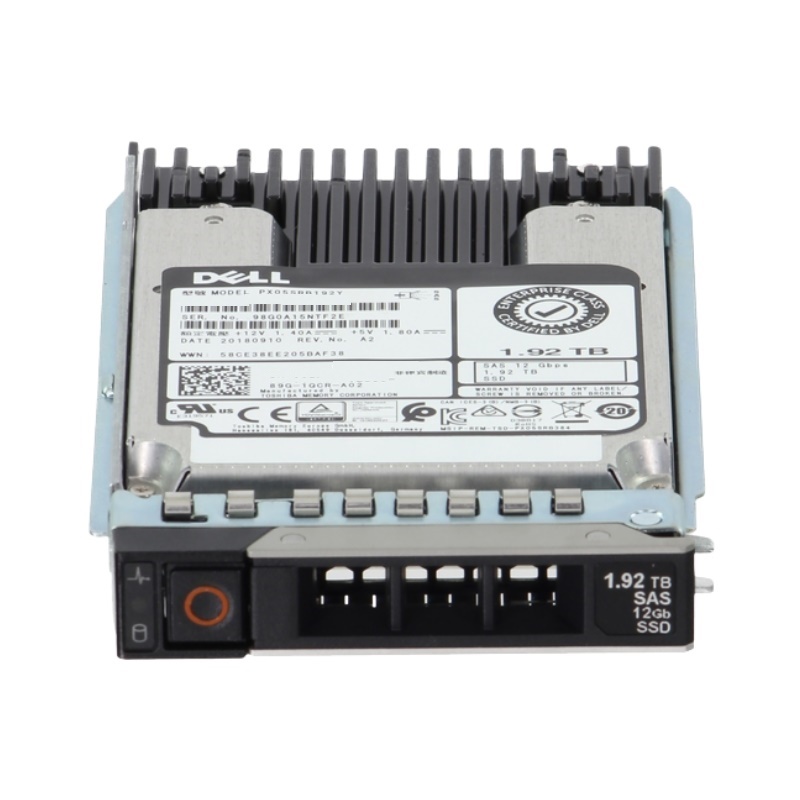


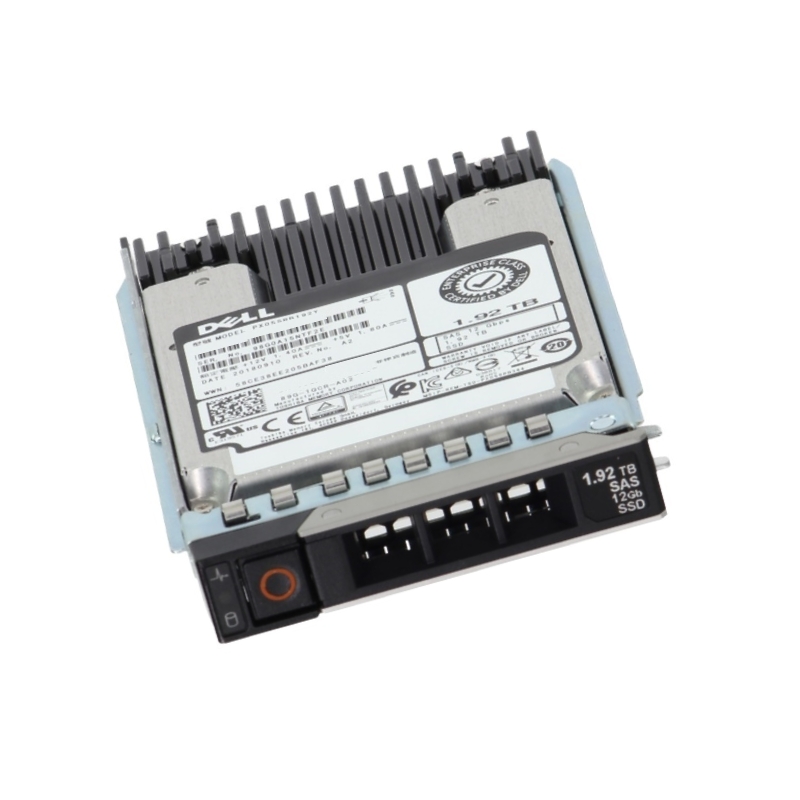
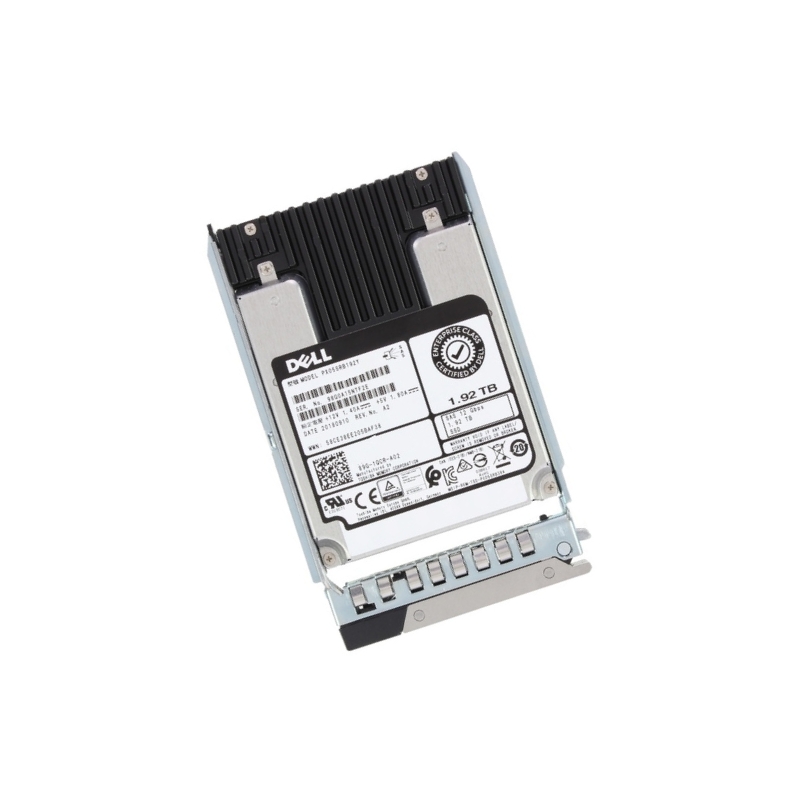
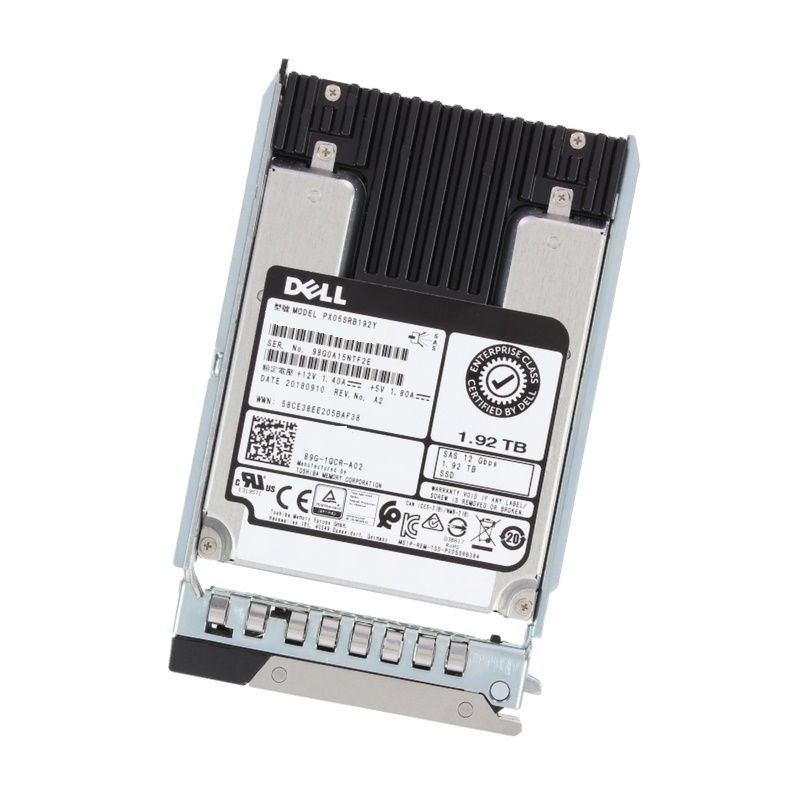
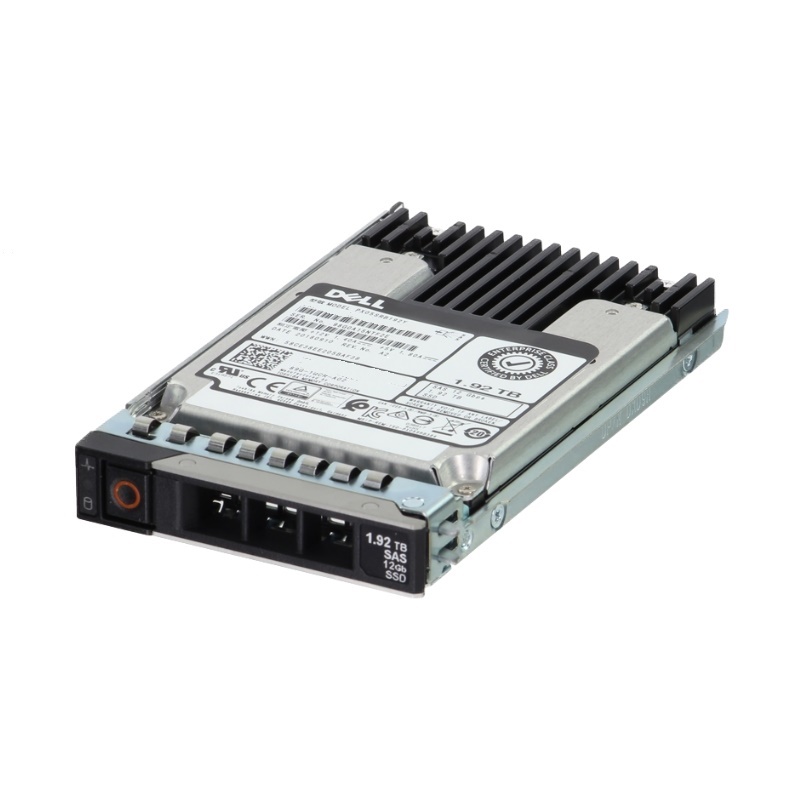
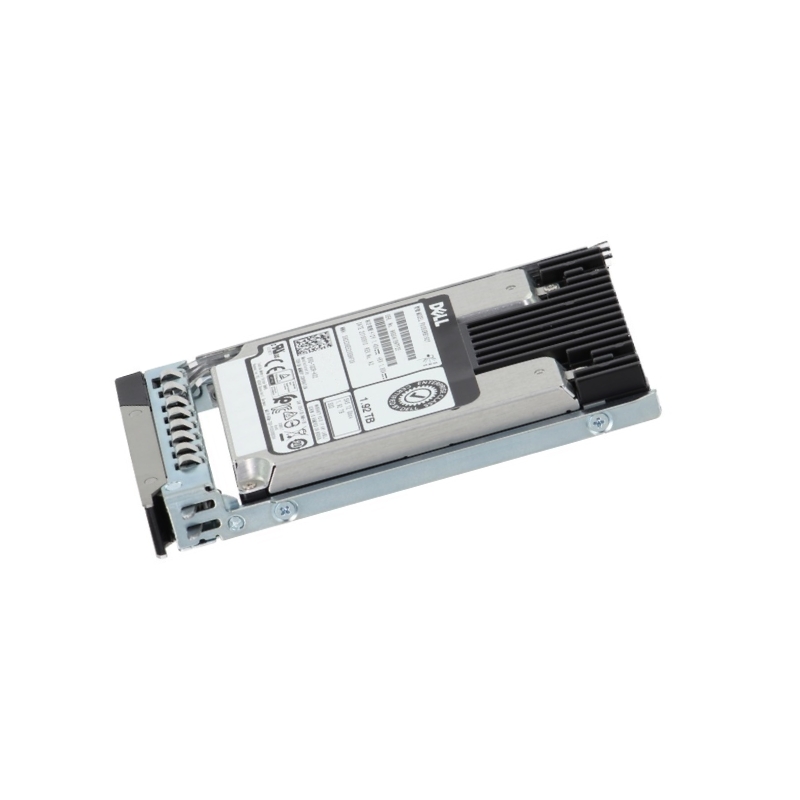
Dell 59XF2 12GBPS SAS 1.92TB Self Tlc Mixed Use 2.5in Hot-plug Solid State Drive. New Sealed in Box (NIB) with 1 Year Warranty
| SKU/MPN | Warranty | Price | Condition | You save |
|---|---|---|---|---|
| 59XF2 | 1 Year Warranty | $2,232.00 | New Sealed in Box (NIB) | You save: $781.20 (26%) |
| 59XF2 | 1 Year Warranty | Contact us for a price | Excellent Refurbished |
Enhance your enterprise storage with the Dell 1.92TB Self-Encrypting (SED) TLC SAS Mixed Use 12Gbps 2.5-inch Hot-Plug Solid State Drive. Designed with a tray for 14G, 15G, and 16G PowerEdge servers, this SSD delivers secure, high-speed, and reliable performance for demanding workloads.
The Dell 59XF2 12Gbps SAS 1.92TB Self-TLC Mixed Use 2.5in Hot-plug Solid State Drive category covers enterprise-class 2.5-inch SAS solid state drives engineered for mixed-use workloads in servers, storage arrays, and SAN/NAS environments. These drives combine a 12Gb/s SAS interface, high-capacity 1.92TB raw density, and Self-TLC NAND to deliver balanced performance, endurance and cost-effectiveness for database servers, virtualized infrastructures, OLTP, and heavy mixed read/write applications. This category page description focuses on what makes the 59XF2 SSD family valuable to IT buyers, systems engineers, and procurement teams: interface and protocol details, performance and latency characteristics, endurance and workload suitability, server compatibility, deployment best practices, monitoring and firmware considerations, and buying guidance for OEM Dell configurations and aftermarket sourcing.
The 12Gbps SAS (SAS-3) interface is a foundational characteristic of the Dell 59XF2 SSDs. Compared with SATA or older 6Gb/s SAS, 12Gb/s SAS provides higher sustained throughput, robust full-duplex communication and enterprise-grade link management. For mixed-use deployments where simultaneous high IOPS and heavy sequential transfers occur — such as virtualization hosts or high-concurrency database servers — the 12Gb/s SAS link reduces bottlenecks at the host connection layer and supports multi-pathing features that improve availability.
The 1.92TB capacity positions the drive for multiple roles: primary datastore for small to medium sized databases, high-performance tier in hybrid storage arrays, read/write cache devices for caching layers, or boot/OS and application volumes in dense virtualization environments. At this capacity, administrators can deploy fewer devices to reach target pool sizes—simplifying RAID group management and reducing power/cooling overheads compared with lower-capacity drives.
Self-TLC (Triple-Level Cell) NAND refers to drives that use internal controller logic and overprovisioning strategies to optimize TLC NAND for enterprise use. TLC typically offers lower cost per GB than MLC, but historically had lower endurance. Self-TLC enterprise SSDs mitigate that through advanced wear leveling, error correction (ECC), RAID inside the drive (flash-plane redundancy), and firmware tuned for mixed workloads. The result is a cost-efficient drive that still meets endurance needs for many mixed-use server workloads.
The 2.5-inch, hot-plug design is standard for modern enterprise servers and storage enclosures. Hot-plug support enables live replacement and serviceability with minimal downtime—critical for high-availability clusters. The small form factor allows denser drive population in servers and JBODs, supporting compact rack designs and reducing datacenter footprint.
In real-world mixed workloads — a mix of random reads/writes, sequential transfers, and mid-queue depth operations — the 59XF2 targets a balance between steady IOPS and sustainable throughput. Expect consistent low single-millisecond to sub-millisecond latencies for reads and optimized write paths that avoid lengthy write amplification. These characteristics help transactional systems maintain predictable response times under concurrent load.
Random IOPS is a key metric for virtualization and database workloads. The 12Gb/s SAS bus coupled with enterprise SSD controllers provides high sustained random I/O capability, allowing many VMs or database threads to operate with minimal queueing. When evaluating IOPS, consider both steady state performance (post-fill) and peak burst behavior—enterprise firmware aims to maintain steady state through smart garbage collection and overprovisioning.
For heavy sequential workloads like backups, large file transfers, and media operations, sequential throughput is equally important. The 59XF2 series leverages the full 12Gb/s channel to deliver high sequential read and write bandwidth, making these drives viable for sequential-heavy tasks when configured in appropriate RAID levels or in caching tiers.
Consistent low latency and quality-of-service (QoS) behaviour are vital for latency-sensitive applications. The enterprise controller in the 59XF2 prioritizes read latency and maintains write buffering to avoid spikes. When deployed with multi-pathing or in NVMe-like topologies through intelligent controllers, these drives can maintain predictable performance under load.
Enterprise SSDs are typically rated by Drive Writes Per Day (DWPD) or Total Bytes Written (TBW) over the warranty period. For a Self-TLC mixed-use drive, the manufacturer will publish endurance categories tuned for mixed read/write workloads (often 1 to 3 DWPD depending on firmware and overprovisioning). When planning deployments, align endurance ratings with expected write amplification and aggregate writes from VMs, databases, and log volumes to ensure long lifespan and consistent performance.
Data integrity features like power-loss protection (PLP), capacitors for volatile cache flushing, and robust on-drive metadata journaling are essential for enterprise use. The 59XF2 family targets safe power-off behavior to prevent data corruption during unexpected outages, and includes firmware-level safeguards to protect mapping tables and prevent prolonged rebuild times after power incidents.
Built-in error-correcting code (ECC), CRCs for transport and metadata, and end-to-end data protection ensure that data integrity is maintained from host to NAND. SMART attributes, vendor telemetry and health counters report wear levels, reallocated block counts, uncorrectable events and other vital statistics that help storage admins schedule maintenance and preempt failures.
Keep drive firmware up to date through OEM tools (e.g., Dell Lifecycle Controller, OpenManage) to benefit from bug fixes, performance tuning, and compatibility updates. Test firmware updates in validation environments before mass deployment and follow vendor-prescribed update procedures to avoid unexpected compatibility or performance regressions.
Consider configuring additional overprovisioning either via drive settings or storage pool options to improve write amplification and endurance. Many enterprise environments allocate an additional 7–28% overprovisioning depending on workload intensity; consult endurance specs and workload models to determine the right level.
Active monitoring of SMART attributes and vendor telemetry is crucial to predict failures and manage drive replacement cycles. Integrate drive health alerts into monitoring systems like Dell OpenManage, SNMP traps, or third-party monitoring suites to automate capacity planning and failure mitigation.
Establish policies that replace drives based on SMART warnings, escalating reallocated block counts, uncorrectable sector events, or reaching a pre-defined TBW threshold. A conservative replacement policy for critical systems minimizes the risk of simultaneous failures during rebuilds or peak activity windows.
When troubleshooting, collect firmware logs and vendor diagnostic outputs before initiating firmware updates or RMA requests. These logs provide essential evidence for vendor support cases and help engineers correlate host behavior with observed drive telemetry.
Many enterprise drives support TCG Opal, AES encryption, or controller-based encryption features. If on-drive encryption is available, ensure encryption keys are managed consistently with organizational key management policies. For secure decommissioning, use the manufacturer’s secure erase commands to cryptographically sanitize data and meet compliance requirements.
For regulated industries, document data handling, retention, and sanitization procedures for SSDs. Maintain chain-of-custody and secure wiping records for audits. Confirm that the drives meet required certifications (e.g., RoHS, WEEE) and inspect supplier documentation for any special disposal or handling requirements.
Compared to MLC (Multi-Level Cell) enterprise drives, Self-TLC models often deliver a lower cost per GB while offering acceptable endurance for mixed workloads. MLC may still lead in raw endurance for extreme write environments, while QLC (Quad-Level Cell) prioritizes capacity and cost over endurance and is less suitable for sustained mixed-write workloads. Choose Self-TLC when you require a balance between cost efficiency and endurance; choose MLC for write-heavy critical workloads; choose QLC for read-dominated, low-write archival scenarios.
NVMe delivers superior latency and higher parallelism via PCIe lanes, but SAS SSDs like the 59XF2 remain relevant due to their wide compatibility with existing SAS infrastructures, multi-path redundancy, and mature ecosystem management. NVMe is ideal for ultra-low-latency, high-concurrency workloads when server architectures are designed for NVMe at scale. SAS SSDs are favorable where backwards compatibility, predictable behavior with RAID controllers, and large-scale deployment in traditional SANs are priorities.


 Contact Us
 Information
 Catalog
 Solid State Drives (SSD)
 Network Switches
 Hard Disk Drives
 HBA & Controllers
 PC & Servers
 PC & Server Memory
 CPU & Processors
 Network Routers
 Power Supplies
 Tape Drives & Libraries
 Network Devices
 Computer & Network Cables