(7% discount is applied at checkout)
Cart is empty
Your go-to destination for cutting-edge server products
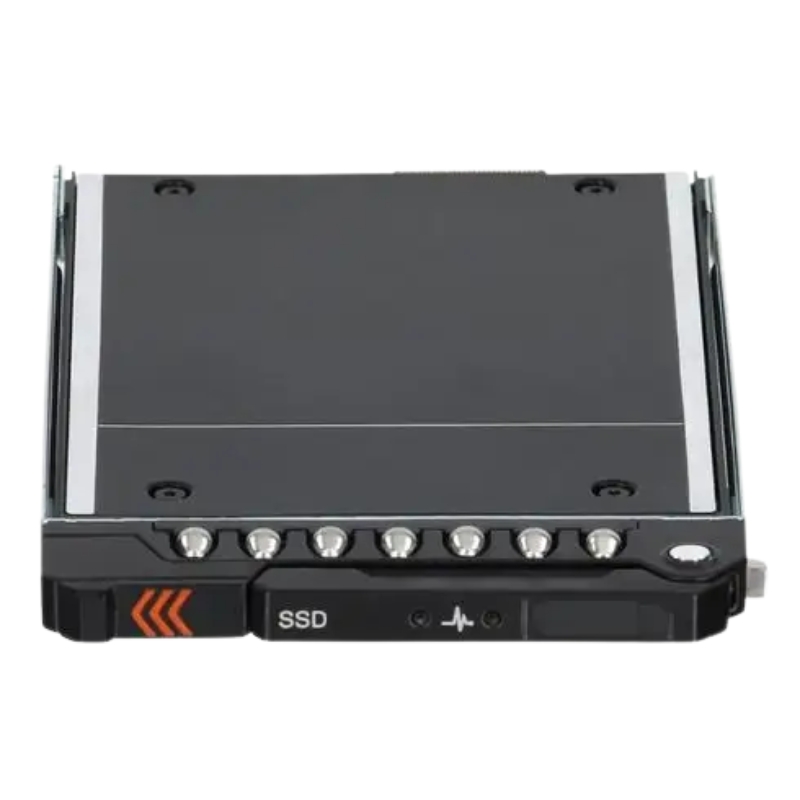


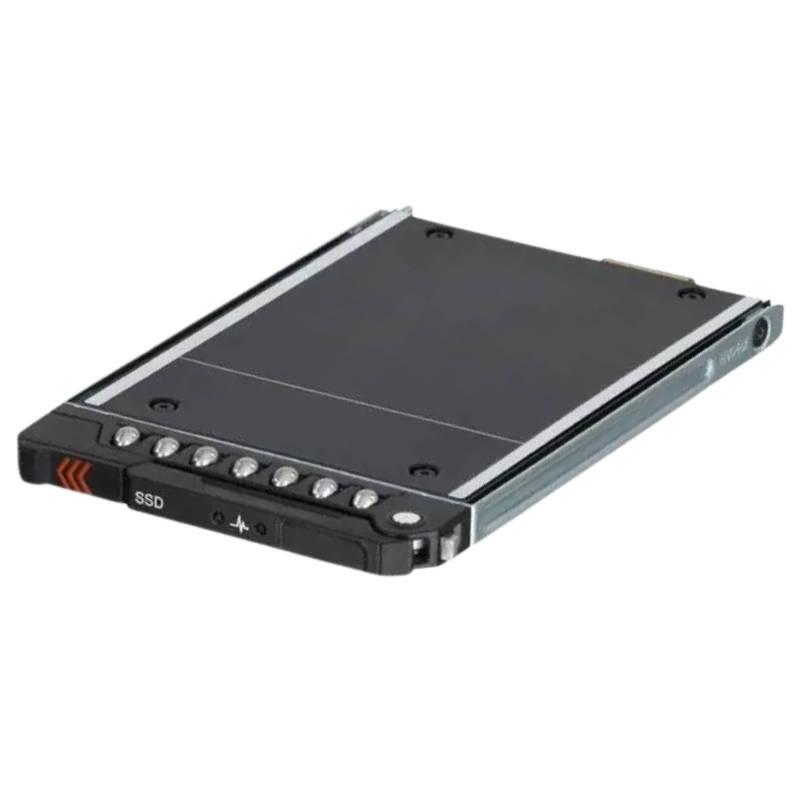
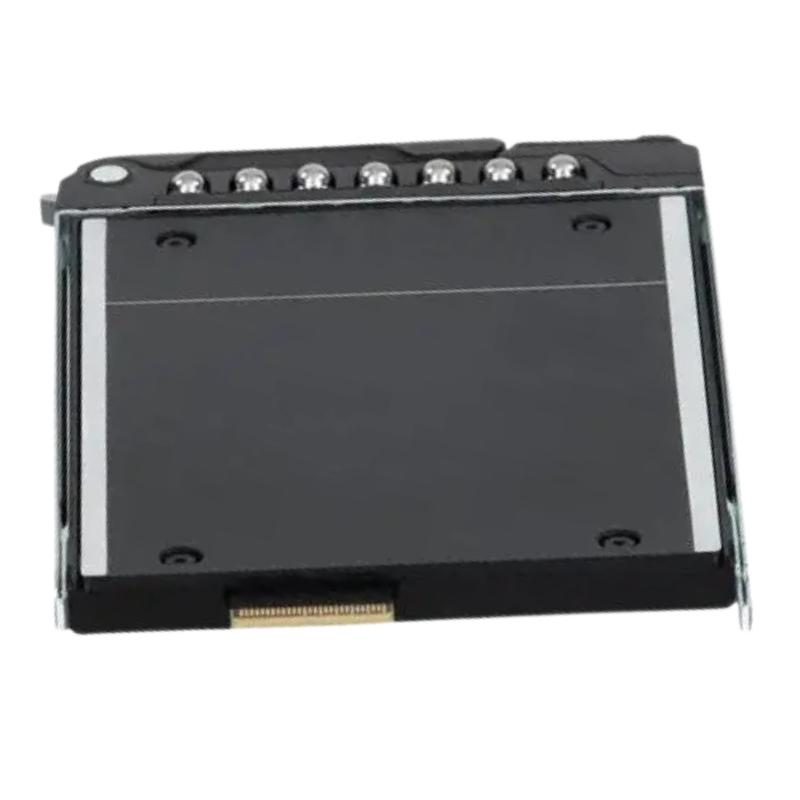
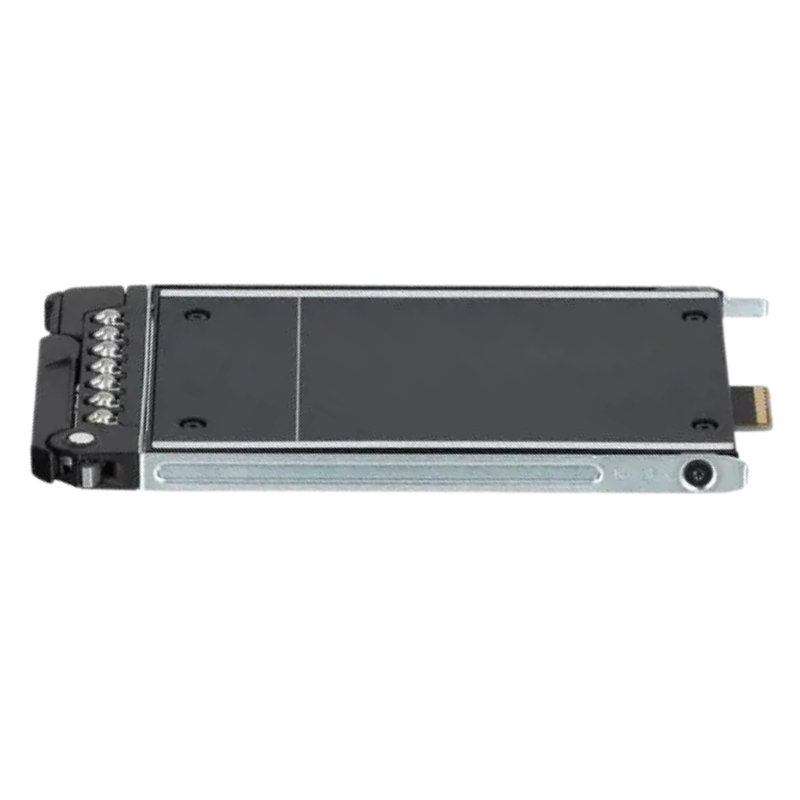
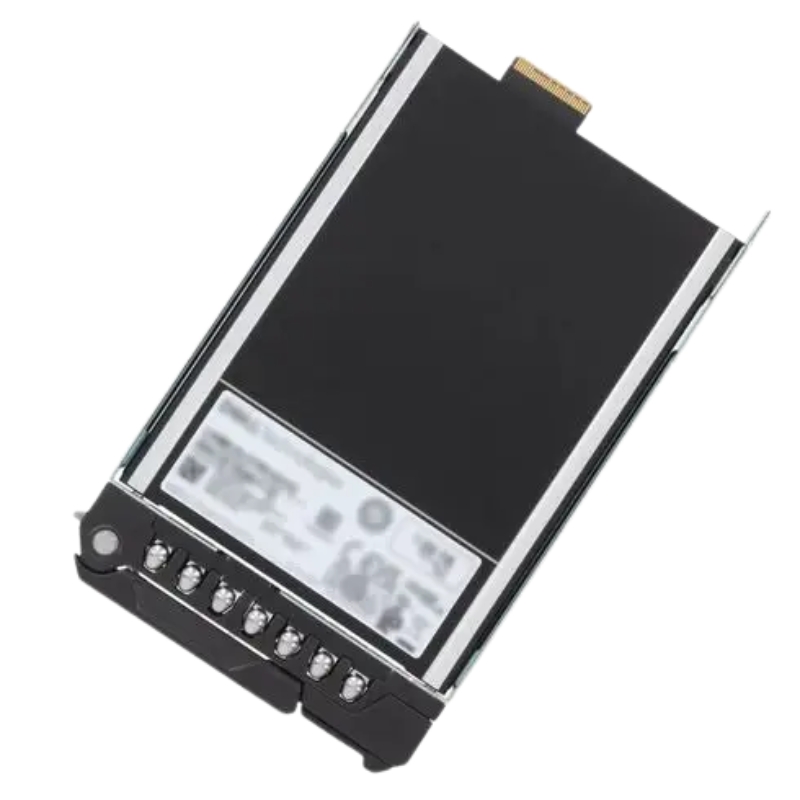
Dell 59Y5J 1.92TB PCI-E 5.0 NVMe 2.0 TLC E3.S 7.5mm SFF Read Intensive Enterprise Solid State Drive. Excellent Refurbished with 1 Year Replacement Warranty
The Dell 59Y5J represents a high-performance, high-capacity enterprise solid-state drive engineered for modern data center demands. This 1.92TB PCI Express® (PCIe) 5.0 NVMe™ SSD, in the compact yet powerful E3.S form factor, is a purpose-built storage solution designed specifically for Dell's 16th and 17th generation PowerEdge servers. It epitomizes the shift from legacy SAS and SATA interfaces to ultra-high-speed NVMe architectures, targeting read-intensive applications where low latency and consistent performance are critical.
The relentless growth of data demands storage solutions that deliver not just capacity, but transformative performance, unwavering reliability, and seamless integration. Enterprise-grade Solid State Drives (SSDs) are the bedrock of this modern infrastructure, enabling real-time analytics, high-frequency transactions, and massive virtualized environments. Within this critical category, Dell's proprietary drives stand out, engineered from the ground up to meet the extreme demands of PowerEdge server workloads. These drives represent a synergy of advanced NAND technology, PCIe® interface innovation, and deep firmware optimization, ensuring that storage is never the bottleneck in your mission-critical operations.
At the forefront of this enterprise storage evolution is the Dell part number 59Y5J, a meticulously engineered PCIe® 5.0 NVMe™ SSD in the E3.S form factor. This drive is not merely a storage device; it is a performance-optimized component designed for the next generation of Dell PowerEdge servers (16th and 17th generation). It embodies the latest standards in interface speed, form factor design, and NAND flash endurance, specifically tailored for read-intensive enterprise and data center applications. From cloud service providers handling vast datasets to financial institutions processing millions of transactions, the 59Y5J is built to deliver consistent, low-latency performance under sustained pressure.
Understanding the detailed specifications of the Dell 59Y5J is key to appreciating its role in your server infrastructure. Each parameter is a carefully chosen element of a larger performance and reliability equation.
The drive offers a usable capacity of 1.92 Terabytes, a strategic point in the capacity curve that balances density with performance and cost-effectiveness for read-centric tasks. At its heart lies Triple-Level Cell (TLC) 3D NAND flash memory. Enterprise-grade TLC, as used here, provides an excellent balance of endurance, performance, and cost-per-gigabyte compared to older Multi-Level Cell (MLC) or more expensive Quad-Level Cell (QLC) technologies. The "3D" stacking denotes a vertical layering of memory cells, significantly increasing density and reliability over planar NAND while improving write efficiency. Classified as "Read-Intensive," this SSD's NAND is optimized for workloads where write operations are significantly outnumbered by read operations, such as database querying, web serving, and virtual desktop infrastructure (VDI).
This is a cornerstone of the drive's performance. The Dell 59Y5J leverages the PCI Express® (PCIe) 5.0 interface, doubling the bandwidth per lane compared to the previous PCIe 4.0 generation. With a four-lane (x4) configuration operating at 32 Gigatransfers per second (GT/s) per lane, the interface provides a theoretical maximum bandwidth exceeding previous generations, drastically reducing data transfer bottlenecks. Coupled with this is the NVMe™ (Non-Volatile Memory Express) 2.0 protocol. Designed explicitly for flash storage, NVMe bypasses the legacy SAS and SATA protocols, utilizing a highly efficient queueing system that supports tens of thousands of parallel command queues compared to a single queue in older protocols. This combination ensures near-instantaneous data access with exceptionally low latency, unleashing the full potential of the underlying NAND flash.
The drive utilizes the E3.S (EDSFF E3.Short) form factor, a next-generation standard spearheaded by the enterprise and data center SSD community. The E3.S is designed to offer superior thermal performance, signal integrity, and density compared to the traditional 2.5-inch U.2 form factor. Critically, this Dell model maintains a 2.5-inch drive width but adopts the E3.S connector and elongated profile. With a mere 7.5mm thickness, it is an ultra-slim design that enables high-density storage configurations within PowerEdge servers, allowing more drives—and therefore more capacity and performance—to be packed into a limited chassis space. The included tray ensures secure, tool-less mounting and proper alignment within the dedicated hot-swap bays of compatible Dell PowerEdge servers.
Enterprise SSDs are categorized by their intended workload profile, which dictates their endurance rating and internal optimization. The Dell 59Y5J is explicitly engineered for Read-Intensive (RI) applications.
Endurance is quantified using two primary metrics: Terabytes Written (TBW) and Drive Writes Per Day (DWPD). The TBW specifies the total amount of data that can be written to the drive over its warranty period. DWPD indicates how many times the entire drive's capacity can be written to per day over the warranty period. For a read-intensive drive like the 59Y5J, the DWPD is typically lower (e.g., in the range of 0.5 to 1 DWPD) compared to a Mixed-Use or Write-Intensive drive. This reflects its optimized NAND and controller design for scenarios where data is written once and read many, many times. This tailored approach ensures cost-effective endurance for the vast majority of enterprise applications without over-provisioning.
The performance profile of the Dell 59Y5J makes it exceptionally well-suited for a range of demanding read-centric workloads. In Database Servers (OLTP/OLAP), its low latency accelerates query responses and reporting. For Virtualization & VDI, it allows for rapid boot storms and smooth operation of multiple virtual machines by quickly accessing shared gold images and user data. In Content Delivery Networks (CDN) and Web Serving, the drive can deliver massive amounts of static and dynamic content with minimal delay. It also excels as a boot drive for servers, ensuring fast OS and application startup, and is ideal for analytics workloads where large datasets are scanned and processed repeatedly.
The true value of a Dell-branded enterprise SSD is realized in its deep integration with the Dell PowerEdge server ecosystem. The 59Y5J is not a generic drive; it is validated, tested, and optimized for specific server generations.
Dell integrates its proprietary firmware on these drives, which is specifically tuned to work with the Dell PowerEdge BIOS, iDRAC (Integrated Dell Remote Access Controller), and system management software. This ensures predictable performance, enhances error handling, and enables advanced telemetry. The drive's health, temperature, wear indicators, and performance metrics are fully visible and can be proactively monitored through iDRAC and OpenManage Enterprise. This allows IT administrators to predict failures, plan maintenance, and optimize storage performance across the fleet from a single pane of glass.
The drive, with its included tray, is designed for direct, tool-less installation into the front-accessible hot-swap bays of supported PowerEdge 16th Generation (e.g., R660, R760, MX760c) and 17th Generation servers. Hot-swap capability is critical for maintaining uptime; a failing or outdated drive can be removed and replaced without powering down the server or interrupting other services running on the system. The drive's E3.S form factor and connector are keyed to prevent incorrect insertion, and the tray ensures proper airflow for cooling.
Enterprise environments demand consistent performance, not just high peak speeds. The Dell 59Y5J is engineered to maintain low latency and high Input/Output Operations Per Second (IOPS) even under sustained, heavy workloads. This is achieved through advanced controller algorithms, robust dynamic thermal throttling mechanisms, and high-quality components. Furthermore, enterprise SSDs like this one incorporate sophisticated Power Loss Protection (PLP) circuits. These circuits typically include arrays of capacitors that, in the event of an unexpected power failure, provide enough hold-up energy to complete any in-flight writes from the volatile cache to the non-volatile NAND memory. This prevents data corruption and is a non-negotiable feature for mission-critical storage.
The introduction of drives like the Dell 59Y5J signifies a major transition in data center storage architecture, moving beyond the capabilities of the previous generation.
Compared to a PCIe 4.0 NVMe drive, the PCIe 5.0 interface of the 59Y5J offers a near-doubling of sequential read/write bandwidth, significantly accelerating data-heavy tasks like large file transfers, video streaming, and scientific computing. When compared to even high-performance SAS or SATA SSDs, the difference is more profound. The NVMe protocol's parallel queueing reduces latency from milliseconds to microseconds, a critical improvement for transactional databases and real-time applications. The E3.S form factor also provides a more scalable and thermals-optimized path forward than the older 2.5-inch U.2 or 3.5-inch form factors, enabling the higher power budgets of PCIe 5.0 without sacrificing reliability.
The specific combination of capacity, performance profile, and form factor makes the Dell 59Y5J ideal for several key enterprise applications.
For relational databases (SQL Server, Oracle, MySQL) and NoSQL databases, low storage latency is paramount. The PCIe 5.0 NVMe interface drastically reduces query response times and accelerates transaction processing. The 1.92TB capacity provides ample space for large, active tables or indices, while the read-intensive endurance profile matches typical database access patterns which are often read-heavy.
The training phase of machine learning models involves iterative reads of massive datasets. Placing these datasets on a high-speed, low-latency storage tier like the 59Y5J can prevent the storage subsystem from becoming a bottleneck, allowing GPUs to remain fully utilized and reducing total training time. The E3.S density allows for large, fast storage pools within a single server or storage enclosure.
Scientific computing, financial modeling, and genomic sequencing workloads often involve reading large sequential files. The drive's high sequential read bandwidth enables researchers and analysts to load and process data sets more quickly, accelerating time-to-insight. When configured in a parallel file system across multiple server nodes, an array of these drives can deliver aggregate performance measured in hundreds of GB/s.
Enterprise SSDs like this one typically incorporate advanced Power Loss Protection (PLP) circuits. This involves integrated capacitors (or similar energy storage) that provide enough hold-up power in the event of a sudden power failure to complete any in-flight write operations from the volatile DRAM cache to the non-volatile NAND flash. This prevents data corruption and ensures write operations are atomic, a critical feature for maintaining database consistency and filesystem integrity.


 Contact Us
 Information
 Catalog
 Solid State Drives (SSD)
 Network Switches
 Hard Disk Drives
 HBA & Controllers
 PC & Servers
 PC & Server Memory
 CPU & Processors
 Network Routers
 Power Supplies
 Tape Drives & Libraries
 Network Devices
 Computer & Network Cables