(7% discount is applied at checkout)
Cart is empty
Your go-to destination for cutting-edge server products
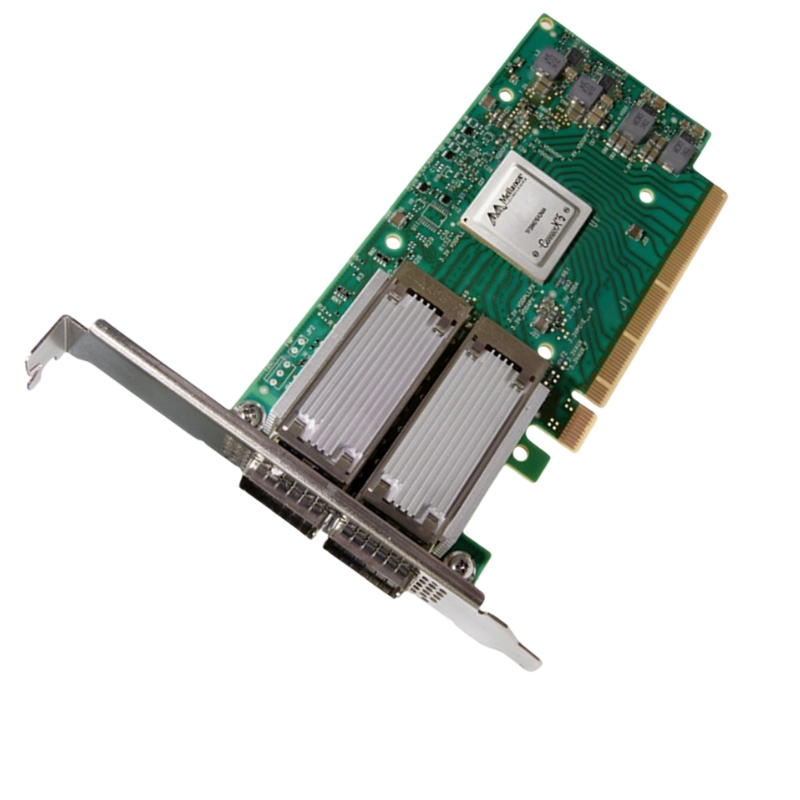


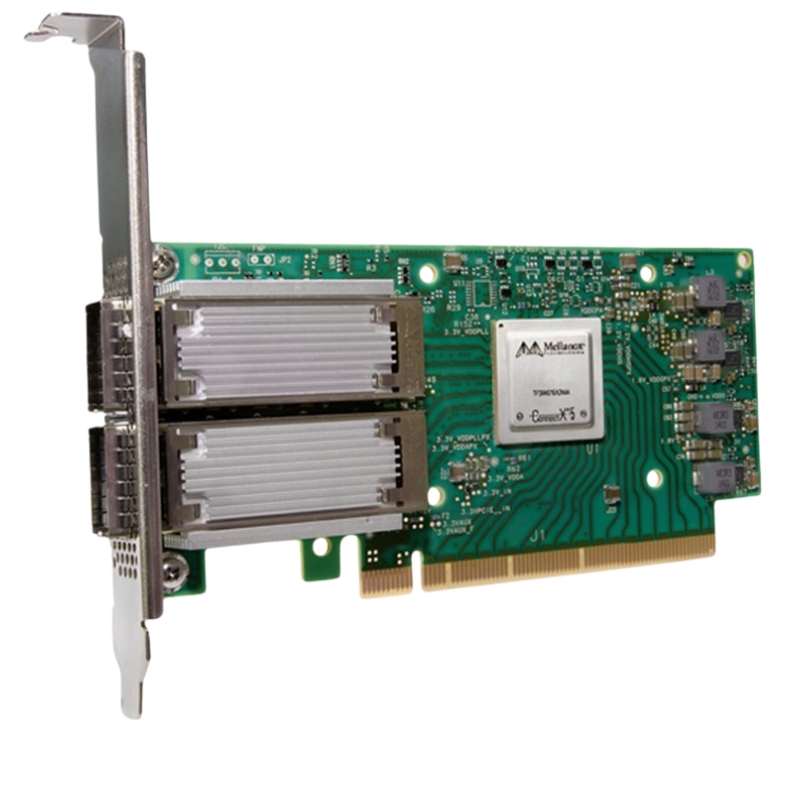
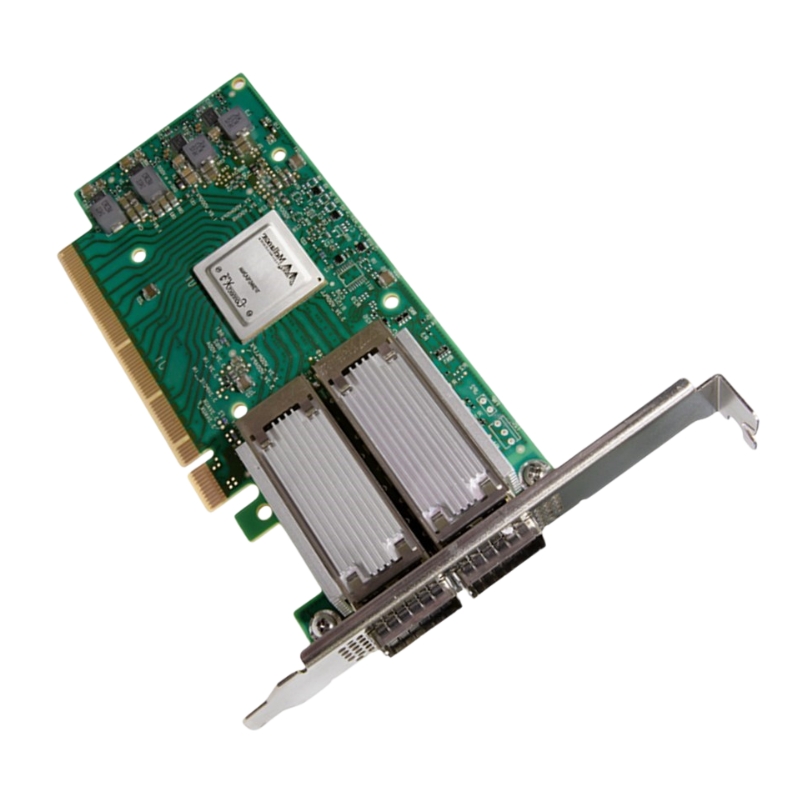
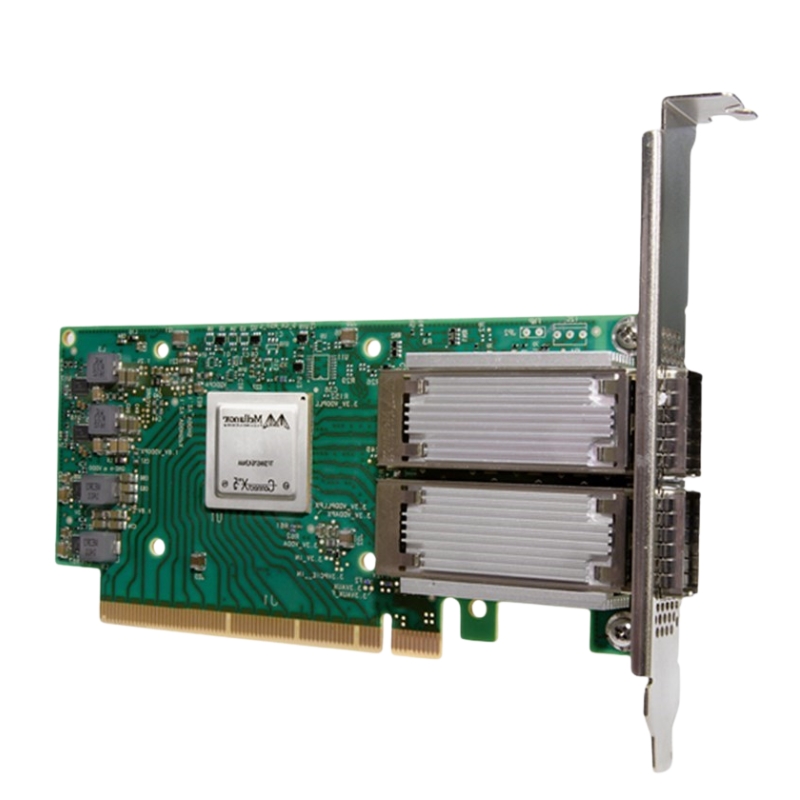
Dell 5J7H2 Mellanox MCX556A-ECAT ConnectX-5 VPI 100GBE Dual-Port QSFP28 PCIe3.0 x16 RoHS Adapter Card. Excellent Refurbished with 1-Year Replacement Warranty
The Dell Mellanox MCX556A-ECAT 100GbE Dual-Port Adapter Card 5J7H2 is a high-performance plug-in solution designed to deliver ultra-fast connectivity, supporting both Ethernet and InfiniBand protocols for enterprise-grade networking.
The Dell 5J7H2 Mellanox MCX556A-ECAT ConnectX-5 VPI 100GBE Dual-Port QSFP28 PCIe 3.0 x16 Adapter Card belongs to the enterprise-class high-speed network interface card category designed for modern data centers, cloud platforms, high-performance computing environments, and software-defined infrastructure. This category focuses on ultra-low latency, massive throughput, and protocol flexibility to support demanding workloads such as virtualization, container orchestration, distributed storage, artificial intelligence training, and real-time analytics. Within this category, ConnectX-series adapters are widely recognized for balancing raw performance with advanced offload capabilities that reduce CPU utilization while increasing overall system efficiency.
As data center architectures continue to evolve toward east-west traffic dominance, network adapters in this segment must handle sustained high bandwidth with predictable latency characteristics. The Dell 5J7H2 MCX556A-ECAT adapter addresses these requirements by delivering dual-port 100GbE connectivity through QSFP28 interfaces while supporting both Ethernet and InfiniBand protocols using Mellanox VPI technology. This positions the card as a versatile solution across multiple subcategories, including Ethernet networking, InfiniBand fabrics, and converged infrastructure deployments.
The ConnectX-5 VPI architecture represents a mature and highly optimized design focused on throughput efficiency, latency reduction, and intelligent offloading. At its core, the adapter integrates a powerful network processing engine capable of handling packet processing, flow steering, and transport acceleration directly on the card. This architectural approach shifts workload from the host CPU to the network adapter, improving application responsiveness and freeing compute resources for business-critical tasks.
The VPI, or Virtual Protocol Interconnect, capability allows the adapter to operate seamlessly in either Ethernet or InfiniBand modes. This dual-protocol flexibility is essential for enterprises that operate hybrid environments or plan phased migrations between networking standards. The Dell 5J7H2 MCX556A-ECAT enables administrators to standardize on a single hardware platform while retaining the freedom to adapt network fabrics as organizational needs evolve.
Dual-port 100GbE QSFP28 connectivity places this adapter firmly within the top tier of high-speed networking solutions. Each port is capable of delivering up to 100 gigabits per second, allowing aggregate throughput of up to 200 gigabits per second when both ports are active. This level of bandwidth supports dense virtualization clusters, high-throughput storage networks, and data-intensive compute nodes without introducing network bottlenecks.
QSFP28 optical and copper transceiver compatibility enhances deployment flexibility across various cabling infrastructures. Whether used in top-of-rack switching scenarios or direct-attached configurations, the adapter ensures consistent signal integrity and reliable performance. The dual-port design also enables network redundancy and link aggregation strategies, which are essential for maintaining high availability in mission-critical environments.
The PCI Express 3.0 x16 host interface provides ample bandwidth to sustain full line-rate performance across both 100GbE ports. By leveraging the wide PCIe lane configuration, the adapter minimizes contention between inbound and outbound traffic, ensuring stable throughput under heavy load. This is particularly important for workloads involving simultaneous data ingestion and distribution, such as distributed databases and real-time analytics pipelines.
Compatibility with PCIe 3.0 slots ensures broad server support across multiple Dell PowerEdge platforms and other enterprise servers. While newer PCIe generations exist, PCIe 3.0 x16 remains a widely deployed and highly reliable interface, making the Dell 5J7H2 MCX556A-ECAT suitable for both current and legacy data center refresh cycles.
Network adapters in this category are defined not only by raw bandwidth but also by their ability to accelerate networking tasks through hardware offloading. The ConnectX-5 VPI adapter incorporates extensive offload engines that handle transport protocols, packet classification, and flow management directly on the card. This results in lower CPU overhead, reduced context switching, and more predictable application performance.
Offload capabilities are especially valuable in virtualized and containerized environments where network processing overhead can significantly impact density and scalability. By offloading tasks such as checksum calculations, segmentation, and flow steering, the adapter allows hypervisors and container runtimes to operate more efficiently while maintaining strict quality-of-service parameters.
Remote Direct Memory Access support is a defining feature of the ConnectX-5 family. RDMA enables direct memory-to-memory data transfers between systems without involving the host CPU, drastically reducing latency and CPU utilization. This capability is critical for high-performance computing clusters, in-memory databases, and distributed storage systems where microseconds matter.
The Dell 5J7H2 MCX556A-ECAT adapter supports RDMA over Converged Ethernet as well as native InfiniBand RDMA, allowing organizations to deploy low-latency fabrics over existing Ethernet infrastructure or dedicated InfiniBand networks. This flexibility ensures that performance-sensitive applications can achieve near-native speeds regardless of underlying transport.
Hardware-based flow steering enables the adapter to intelligently direct network traffic to specific CPU cores or queues based on predefined rules. This reduces cache thrashing and improves overall system efficiency, particularly in multi-core server architectures. Applications that rely on consistent packet ordering and low jitter benefit significantly from this capability.
By performing packet processing tasks directly on the adapter, the ConnectX-5 VPI card minimizes the need for software-based intervention. This approach enhances throughput consistency and reduces latency variance, which is essential for real-time workloads and latency-sensitive financial or scientific applications.
The Dell 5J7H2 Mellanox MCX556A-ECAT adapter is engineered to excel in virtualized and cloud-native environments. Support for advanced virtualization technologies allows multiple virtual machines or containers to share the adapter while maintaining near-native performance. This capability is fundamental for maximizing server utilization and reducing infrastructure costs.
Cloud service providers and private cloud operators require network adapters that integrate seamlessly with orchestration platforms and hypervisors. The ConnectX-5 VPI adapter supports industry-standard virtualization frameworks, ensuring compatibility with a wide range of deployment models.
Single Root I/O Virtualization allows a single physical adapter to present multiple virtual interfaces directly to guest operating systems. This bypasses the hypervisor networking stack, reducing latency and CPU overhead while improving throughput. For dense virtualization hosts, SR-IOV support is a critical feature that enables predictable network performance at scale.
The adapter’s robust SR-IOV implementation ensures secure isolation between virtual functions while maintaining centralized management capabilities. This balance between performance and control is essential for enterprise and cloud environments with strict compliance and security requirements.
Modern application architectures increasingly rely on containers and microservices, which place unique demands on network infrastructure. The ConnectX-5 VPI adapter supports technologies that integrate with container networking frameworks, enabling efficient service-to-service communication with minimal overhead.
By offloading networking tasks and supporting high packet rates, the adapter ensures that containerized applications can scale horizontally without encountering network-induced performance limitations. This makes it well suited for Kubernetes clusters, service meshes, and cloud-native platforms.
As a Dell-branded adapter, the 5J7H2 MCX556A-ECAT undergoes rigorous testing and validation within Dell server ecosystems. This ensures seamless integration with Dell PowerEdge systems, BIOS configurations, and management tools. OEM validation reduces deployment risk and simplifies lifecycle management for enterprise IT teams.
Firmware and driver alignment with Dell support channels provides added assurance for long-term maintainability. Organizations benefit from consistent update cycles and access to enterprise-grade support resources.
Security considerations are integral to modern network adapter design. The ConnectX-5 VPI adapter incorporates features that support secure boot, firmware integrity, and traffic isolation. These capabilities help protect against unauthorized access and ensure that network operations remain trustworthy.
Hardware-enforced isolation between virtual interfaces enhances multi-tenant security, making the adapter suitable for shared infrastructure environments. This level of security is essential for cloud providers and enterprises hosting sensitive workloads.
The versatility of the Dell 5J7H2 Mellanox MCX556A-ECAT adapter allows it to serve a wide range of industry-specific use cases. In financial services, ultra-low latency and deterministic performance support high-frequency trading and real-time risk analysis. In research and scientific computing, high bandwidth and RDMA acceleration enable efficient data exchange between compute nodes.
Media and entertainment workflows benefit from the adapter’s ability to move large data sets quickly and reliably, supporting video rendering, post-production, and content distribution pipelines. In enterprise IT, the adapter underpins scalable virtualization and private cloud deployments that demand both performance and flexibility.
High-performance computing clusters rely on fast interconnects to minimize communication overhead between nodes. The ConnectX-5 VPI adapter’s InfiniBand and Ethernet capabilities make it an ideal choice for tightly coupled compute workloads. Low latency and high message rates ensure efficient scaling as cluster size increases.
Artificial intelligence and machine learning training workloads generate massive data flows between GPUs, storage systems, and compute nodes. The adapter’s high throughput and RDMA support help accelerate data pipelines, reducing training times and improving resource utilization.
Modern storage architectures increasingly depend on high-speed networking to deliver consistent performance. The Dell 5J7H2 MCX556A-ECAT adapter supports storage protocols that benefit from low latency and high bandwidth, enabling faster data access and improved application responsiveness.
Data analytics platforms that process large volumes of information in real time also benefit from the adapter’s ability to handle sustained throughput without degradation. This ensures that analytics insights are delivered quickly and reliably.
Investing in high-speed network adapters is a strategic decision that impacts long-term infrastructure scalability. The ConnectX-5 VPI platform is designed to accommodate evolving networking standards and workload requirements. Dual-protocol support and extensive offload capabilities provide a foundation that can adapt to future demands without requiring frequent hardware replacements.
As organizations adopt faster storage, denser compute nodes, and more distributed application architectures, network adapters like the Dell 5J7H2 MCX556A-ECAT play a critical role in maintaining balanced system performance. The ability to scale bandwidth, reduce latency, and offload processing tasks ensures that the network remains an enabler rather than a constraint.
Operational efficiency is a key consideration in enterprise networking. By reducing CPU overhead and improving throughput efficiency, the adapter contributes to lower power consumption per workload. This efficiency translates into reduced operational costs and improved return on infrastructure investments.
Standardizing on a versatile adapter platform also simplifies inventory management and deployment planning. Organizations can deploy the same hardware across multiple use cases, reducing complexity and streamlining support processes.
Effective lifecycle management depends on a robust software ecosystem that includes drivers, firmware, and management tools. The ConnectX-5 VPI adapter benefits from Mellanox’s mature software stack, which provides consistent updates and compatibility with major operating systems and virtualization platforms.
Integration with monitoring and management frameworks allows administrators to track performance metrics, diagnose issues, and optimize configurations over time. This visibility is essential for maintaining high service levels in complex environments.
Within the broader market of high-speed network adapters, the Dell 5J7H2 Mellanox MCX556A-ECAT ConnectX-5 VPI 100GBE Dual-Port QSFP28 PCIe 3.0 x16 RoHS Adapter Card occupies a strategic position that balances performance, flexibility, and enterprise-grade reliability. Its combination of dual 100GbE ports, VPI protocol support, advanced offloads, and OEM validation makes it a compelling choice for organizations seeking to build or expand high-performance network infrastructures.
This category of adapter cards continues to be a cornerstone of modern data center design, enabling scalable, efficient, and resilient connectivity across a wide spectrum of workloads and industries.


 Contact Us
 Information
 Catalog
 Solid State Drives (SSD)
 Network Switches
 Hard Disk Drives
 HBA & Controllers
 PC & Servers
 PC & Server Memory
 CPU & Processors
 Network Routers
 Power Supplies
 Tape Drives & Libraries
 Network Devices
 Computer & Network Cables