(7% discount is applied at checkout)
Cart is empty
Your go-to destination for cutting-edge server products
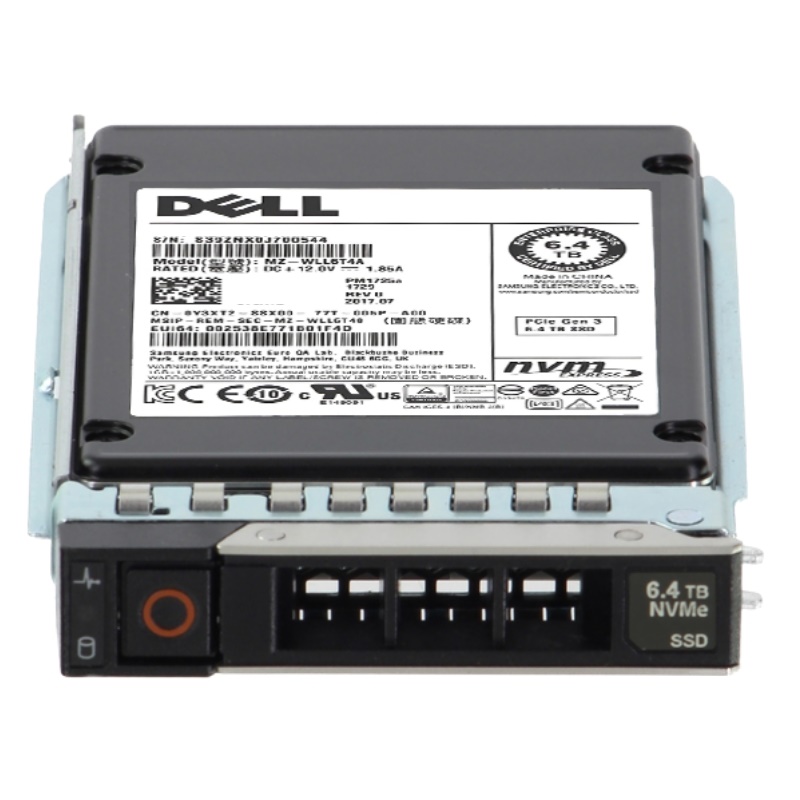


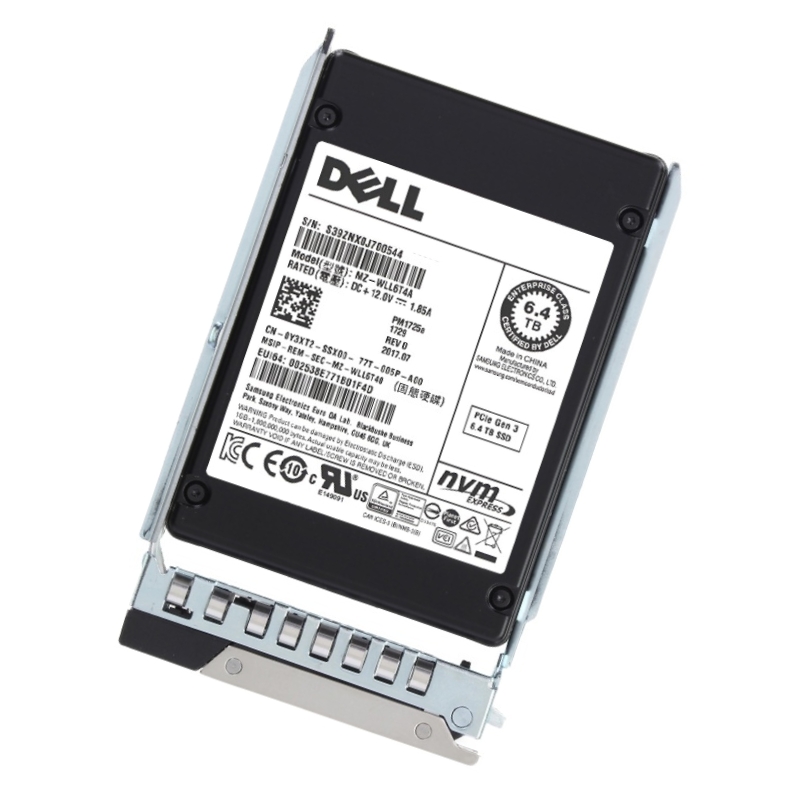
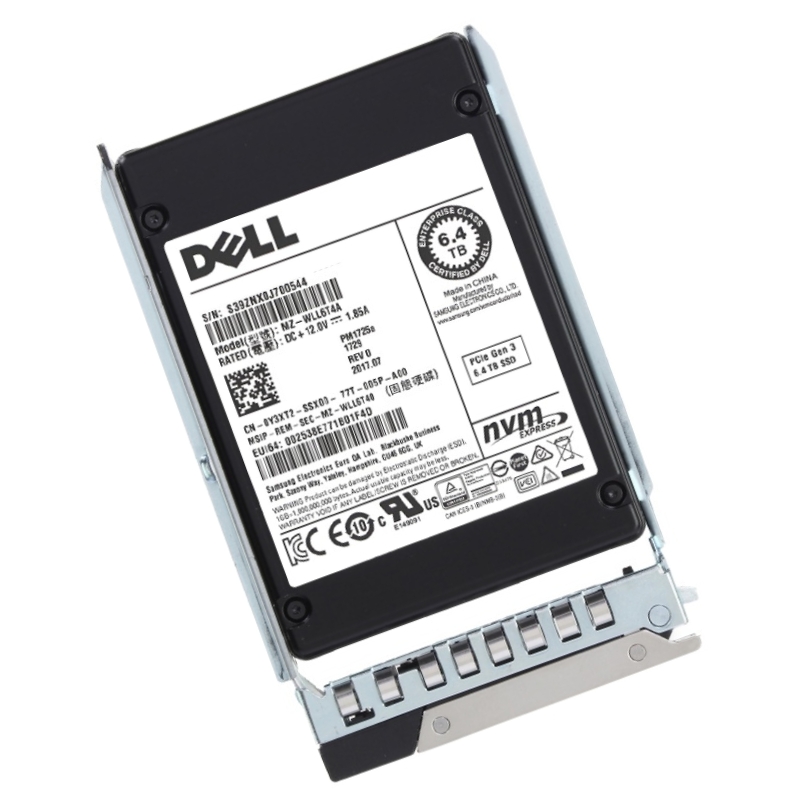
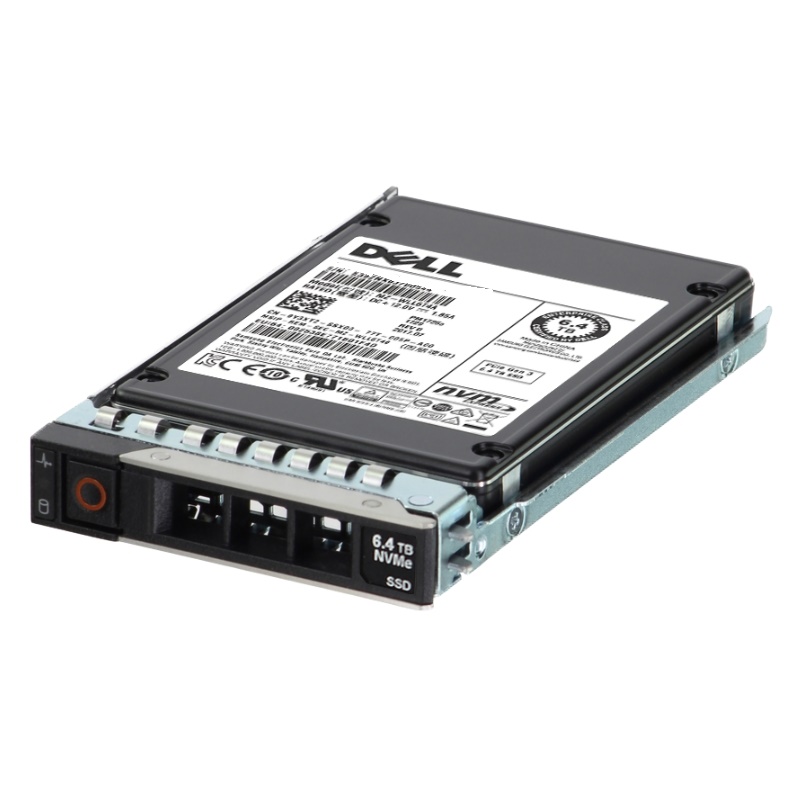
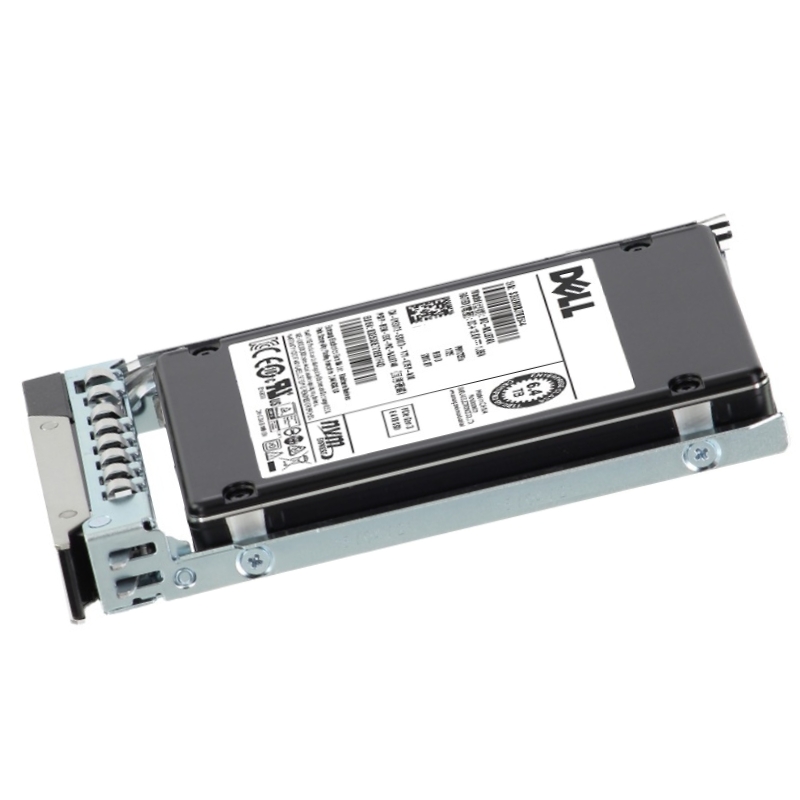
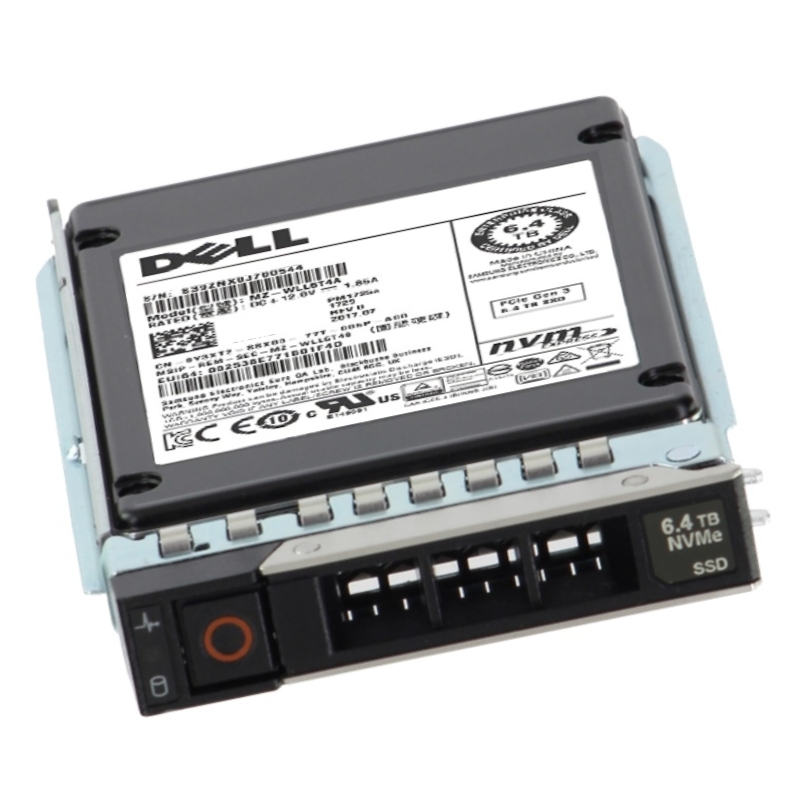
Dell 5WCR8 NVMe 6.4TB Pcie Gen4 Mixed Use 2.5in Solid State Drive. Excellent Refurbished with 1 year replacement warranty
The Dell 5WCR8 6.4TB PCIe Gen4 NVMe Mixed-Use 2.5-inch solid state drive with carrier occupies a strategic position in the enterprise storage landscape by combining high capacity, next-generation interface performance, and data-center-ready endurance characteristics. Built to deliver predictable throughput and low latency for a broad set of server workloads, this mixed-use NVMe drive is designed to integrate seamlessly into Dell PowerEdge systems and other compatible 2.5-inch NVMe bays when used with the provided carrier. Its 6.4 terabyte capacity answers the need for dense primary storage without sacrificing the responsiveness required by modern virtualized environments, high-transaction databases, caching tiers, and latency-sensitive applications. The drive’s PCIe Gen4 interface unlocks a wider data pipe compared with previous-generation NVMe devices, enabling higher sequential bandwidth and higher sustained IOPS for mixed read/write patterns typical of enterprise mixed-use workloads. In category and subcategory pages, this product represents the intersection of capacity, performance, and server compatibility, making it a versatile option for system builders, IT managers, and procurement teams focused on scaling application performance and storage density inside PowerEdge server fleets.
Performance for a PCIe Gen4 NVMe mixed-use device is defined by multiple interrelated attributes: sustained throughput for large sequential transfers, random IOPS for transaction-heavy operations, read/write latency for responsiveness, and consistent performance under mixed workloads. The 5WCR8 leverages the increased lanes and bandwidth of PCIe Gen4 to reduce transfer bottlenecks, enabling faster boot times, quicker database transactions, and reduced wait time for I/O-bound services. In practice, organizations will notice improvements in application responsiveness and overall throughput when migrating from SATA or older-generation NVMe drives to a Gen4 mixed-use SSD of this capacity. Because mixed-use SSDs are engineered to deliver balanced endurance and performance, they are particularly well suited to combined read/write environments such as virtual desktop infrastructure (VDI), online transaction processing (OLTP), high-frequency logging, and tiered storage caches. The inclusion of the carrier assures correct mechanical fit and hot-swap readiness in PowerEdge chassis that depend on carrier-mounted drives, simplifying upgrades and replacements while preserving server airflow and rack operational integrity.
The 2.5-inch form factor remains the industry standard for server-class SSDs because it optimizes rack density while preserving compatibility with drive bays and sleds used in modern servers. The Dell-supplied carrier transforms the raw NVMe module into a hot-pluggable assembly that fits directly into PowerEdge trays and sleds, ensuring tool-less installation where appropriate and maintaining the mechanical compliance required by OEM chassis. Physical considerations extend beyond simple fit: proper carrier design influences thermal characteristics, retention force, and connector alignment. A well-designed carrier also helps align drive firmware and server firmware expectations by ensuring the drive’s backplane contacts and presence detect pins register correctly with the system’s firmware and management controllers. For data centers that deploy drives at scale, these mechanical details significantly reduce service time and minimize human error during maintenance windows.
Although the drive is targeted at PowerEdge servers, compatibility is a joint function of drive firmware, server BIOS/UEFI, and chassis backplane. Dell’s enterprise drives are typically validated against a matrix of PowerEdge platforms and controller firmware revisions to ensure reliable operation, drive health reporting, and integration with management frameworks such as iDRAC and OpenManage. This validation is important because it enables features like SMART reporting, thermal throttling profiles, and drive presence indicators to work harmoniously between the server and storage hardware. When planning a deployment, IT teams should align drive firmware levels with server BIOS and RAID or HBA firmware to preserve full functionality and predictable behavior. The provided carrier eliminates common mechanical incompatibilities and facilitates the detection and reporting of the drive through the server’s management stack so administrators can monitor performance, endurance metrics, and failure indicators centrally.
Mixed-use SSDs occupy the middle ground between read-optimized (read-intensive) and write-optimized (write-intensive) drives. They are engineered to provide a blend of endurance and performance suited to environments where the ratio of reads to writes can vary substantially over time. Endurance for enterprise SSDs is planned around predictable workload modeling, and mixed-use drives are designed with overprovisioning, robust wear-leveling algorithms, and power-loss protection to ensure sustained performance throughout their service life. Lifecycle planning for datacenter storage requires understanding workload patterns, peak write rates, and overprovisioning strategies at the system level. When the 6.4TB mixed-use drive is used to host high-transaction datasets or as part of a caching tier, architects must factor in endurance headroom and monitoring so that replacement cycles are scheduled proactively rather than reactively. The predictable endurance characteristics of enterprise mixed-use NVMe devices simplify capacity and refresh planning for IT operations teams aiming to maintain consistent service levels across the infrastructure.
The 6.4TB PCIe Gen4 mixed-use NVMe drive is well suited for a broad set of enterprise scenarios. In virtualization environments where dozens or hundreds of virtual machines share a pool of storage, the drive’s balance of endurance and random I/O performance supports high consolidation ratios without exposing guests to unpredictable tail latency. Databases and data stores that perform a mixture of reads and writes, such as NoSQL caches, streaming analytics, and log aggregation layers, benefit from the drive’s mixed-use tuning. Application acceleration layers, including read/write caching and tiered storage strategies, can use such drives for hot tiers where both capacity and transactional performance matter. Backup and snapshot targets that require fast ingestion times while also providing compact storage footprints gain from the drive’s combination of density and NVMe throughput. In short, the drive is positioned for workloads that need enterprise resilience and balanced performance rather than extremes of read-only or write-heavy characteristics.
Choosing a Dell-certified mixed-use NVMe drive such as the 6.4TB 5WCR8 makes sense for organizations that require a balance of capacity, performance, and operational simplicity inside PowerEdge environments. The combination of a Gen4 interface, enterprise-focused firmware features, the mechanical compatibility afforded by the carrier, and vendor validation reduces integration cost and shortens deployment timelines. For teams prioritizing predictable performance under mixed workloads, reduced latency for application stacks, and simplified management through vendor toolchains, this class of drive offers a strong value proposition. It is particularly compelling in contexts where consolidation density, serviceability, and vendor support are as important as raw benchmark numbers.


 Contact Us
 Information
 Catalog
 Solid State Drives (SSD)
 Network Switches
 Hard Disk Drives
 HBA & Controllers
 PC & Servers
 PC & Server Memory
 CPU & Processors
 Network Routers
 Power Supplies
 Tape Drives & Libraries
 Network Devices
 Computer & Network Cables