(7% discount is applied at checkout)
Cart is empty
Your go-to destination for cutting-edge server products
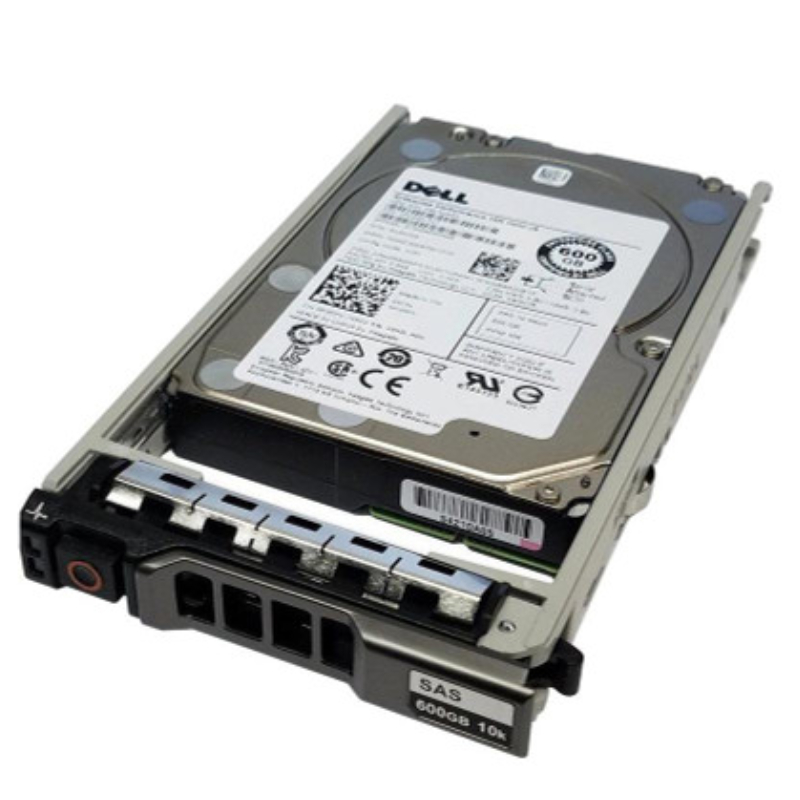


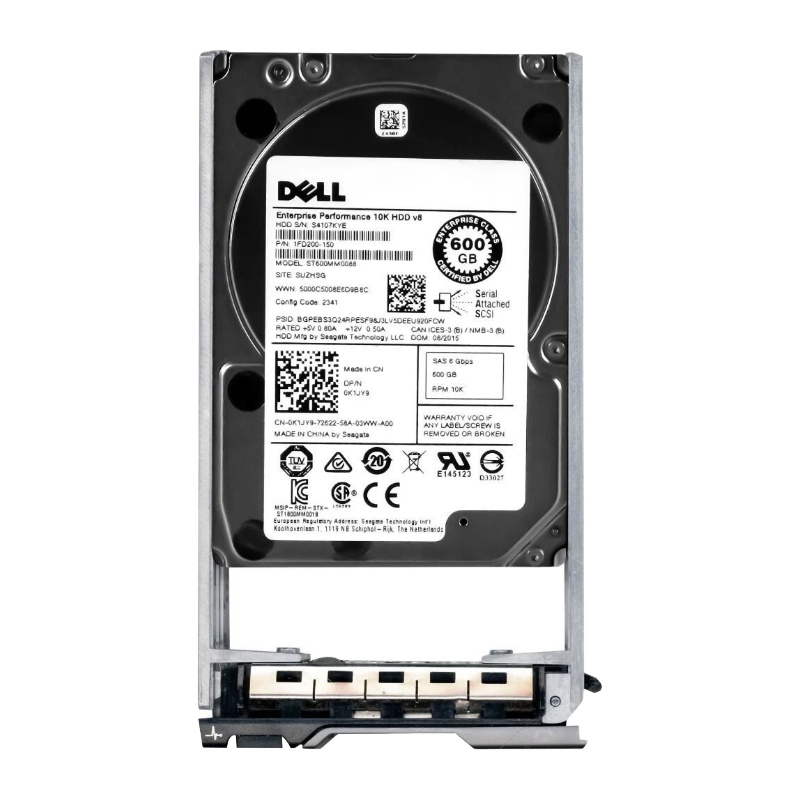
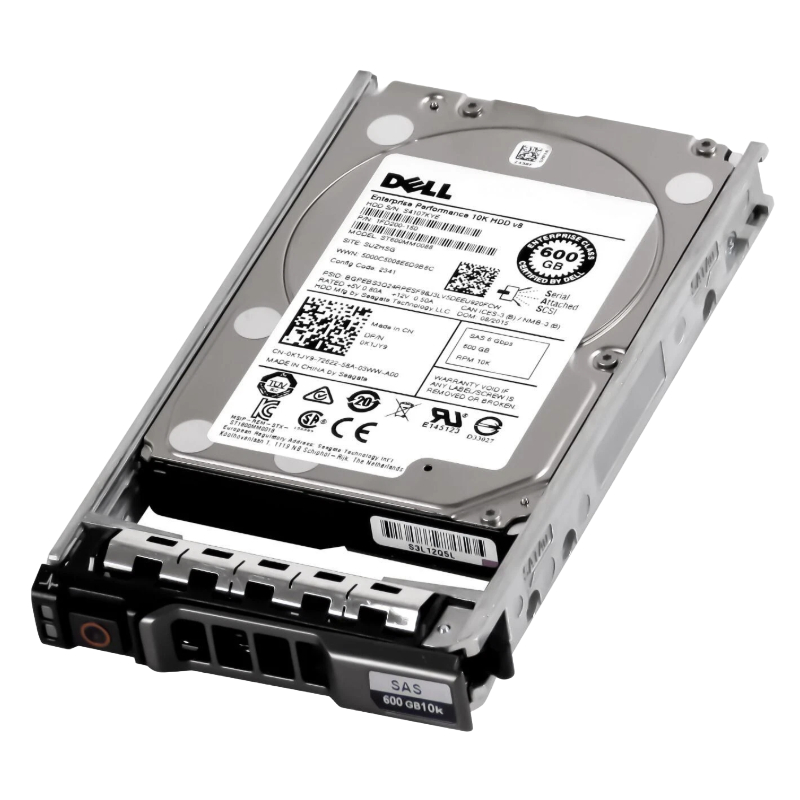
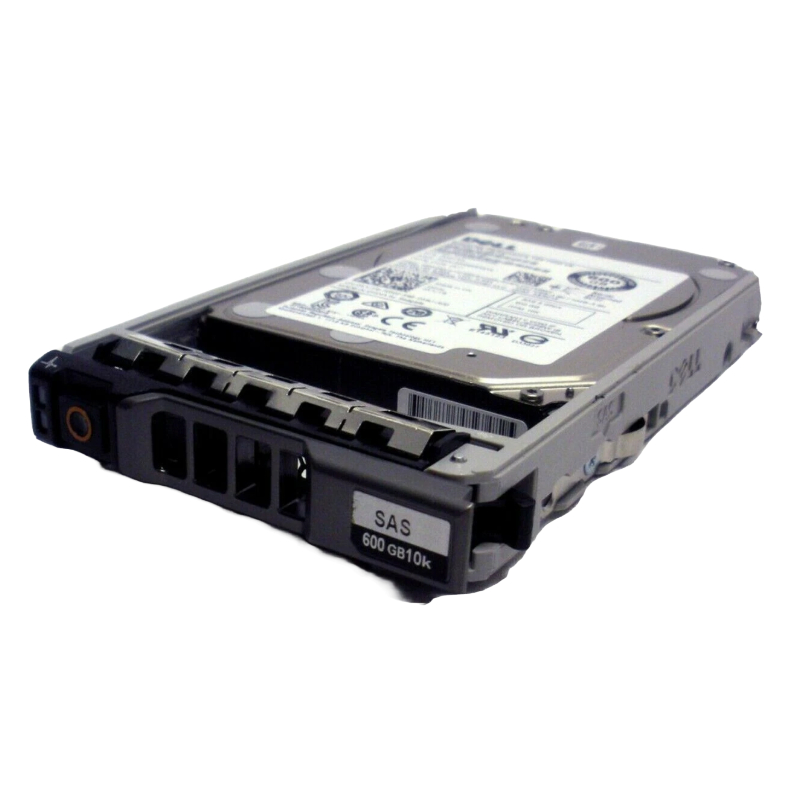
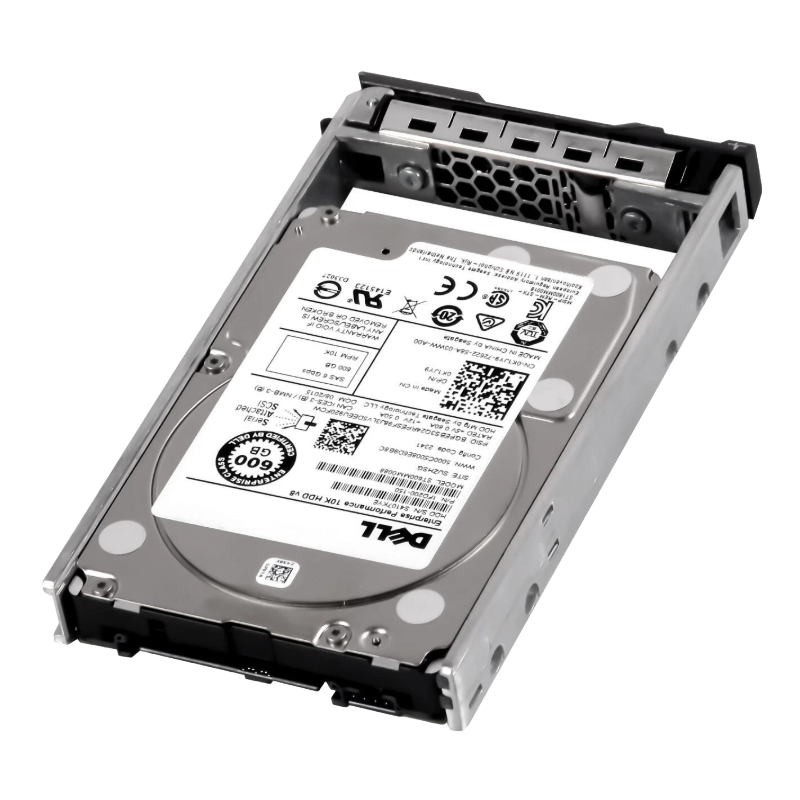
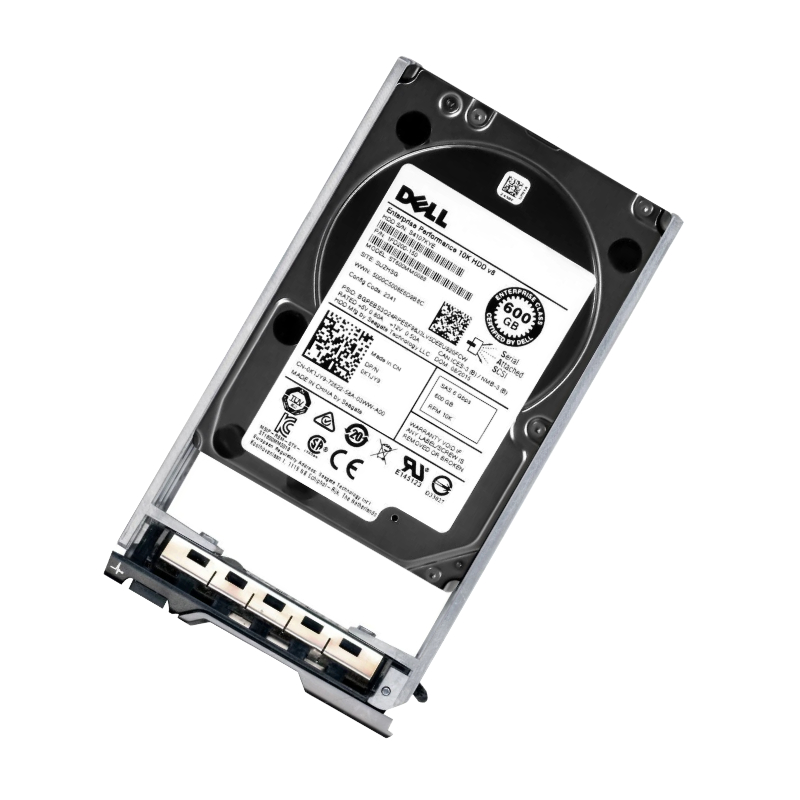
Dell K6JTH 600GB SAS-12GBPS Hot-Plug 10K RPM Hard Disk Drive with Tray for Poweredge Server. New Sealed in Box (NIB) with 1 Year Warranty
The Dell 600GB SAS-12GBPS HDD HDD is designed to be fully compatible with Dell Poweredge Servers. This compatibility ensures seamless integration and optimal performance, allowing users to make the most of their server infrastructure. By choosing a hard drive that is specifically designed for Poweredge Servers, users can eliminate compatibility issues and enjoy a hassle-free experience.
The enterprise storage segment built around 2.5-inch and 3.5-inch SAS hard drives represents a critical foundation for modern data center architectures, particularly in environments leveraging Dell PowerEdge server platforms. Within this category, the K6JTH Dell 600GB SAS-12Gbps 10K RPM HDD with tray is positioned as a high-reliability, performance-balanced storage component engineered for mission-critical workloads. SAS (Serial Attached SCSI) technology ensures robust dual-port connectivity, higher command queuing capabilities, and improved error recovery mechanisms compared to consumer-grade SATA alternatives. The inclusion of a Dell-certified tray further streamlines hot-swap deployment in compatible PowerEdge chassis, making it a seamless integration component for scalable server storage arrays.
Enterprise SAS drives like this model are widely deployed in virtualization clusters, database servers, analytics systems, and high-availability storage arrays. The architecture emphasizes sustained performance under continuous workloads, where consistent I/O throughput and minimal latency variation are more important than peak sequential speeds alone. This category of storage device is typically selected for environments requiring predictable reliability, extended operational lifecycles, and compatibility with RAID configurations at scale.
The 600GB capacity level is strategically designed for balanced enterprise deployments where performance density and cost efficiency must align. Rather than prioritizing large archival storage, this capacity class focuses on active data handling, including frequently accessed datasets, operating system volumes, and application-layer storage. In multi-drive configurations, 600GB units allow fine-grained scaling in RAID arrays without excessive storage waste, ensuring predictable expansion planning within PowerEdge infrastructures.
The SAS-12Gbps interface defines the high-speed communication pathway between the storage device and the server backplane. This bandwidth supports significantly improved data transfer rates compared to previous SAS generations, reducing bottlenecks in multi-user and multi-threaded environments. The dual-channel architecture inherent in SAS also provides redundancy at the path level, enabling failover capabilities that enhance system resilience. This makes it particularly suitable for enterprise workloads where uptime and continuous availability are essential.
Operating at 10,000 revolutions per minute, the spindle speed of this drive is engineered for a balance between latency reduction and mechanical durability. The rotational speed directly influences seek time and data access efficiency, enabling faster retrieval of frequently accessed blocks compared to lower RPM enterprise drives such as 7.2K models. While SSDs surpass mechanical drives in raw latency performance, 10K RPM SAS drives maintain relevance in cost-sensitive enterprise storage tiers where predictable mechanical performance and high endurance cycles remain essential.
The compact 2.5-inch form factor is optimized for dense server configurations within Dell PowerEdge systems. The included hot-swap tray ensures compatibility with standardized drive bays, allowing administrators to replace or install drives without powering down the system. This feature is essential in high-availability environments where downtime must be minimized or eliminated entirely. The tray also ensures proper airflow alignment and vibration stabilization, both critical for sustained enterprise-grade performance.
The K6JTH SAS drive is designed specifically for integration into Dell PowerEdge servers, which support SAS backplanes across a wide range of rack-mounted and tower configurations. Compatibility extends across multiple generations of PowerEdge systems, particularly those optimized for hot-plug SAS storage expansion. These servers leverage integrated RAID controllers and HBA modules capable of fully utilizing the 12Gbps SAS bandwidth and enterprise command sets.
Within PowerEdge environments, these drives are frequently deployed in RAID 1, RAID 5, RAID 6, and RAID 10 configurations. The compatibility ensures seamless integration with Dell OpenManage storage management tools, allowing administrators to monitor drive health, temperature, predictive failure status, and firmware updates. This tight integration reduces administrative overhead while improving infrastructure visibility.
In enterprise environments, random I/O performance is often more critical than sequential throughput. The 10K RPM spindle speed combined with SAS command queuing enables efficient handling of simultaneous read/write operations. This is particularly important for transactional databases, virtual machine disk files, and application servers where multiple users access data concurrently.
SAS architecture supports advanced command queuing mechanisms that allow the drive to process multiple I/O requests simultaneously. This improves overall throughput in multi-threaded workloads and reduces latency spikes under heavy system load. The ability to reorder commands optimally contributes to improved disk efficiency and reduced mechanical head movement.
Latency consistency is a defining feature of enterprise SAS drives. Unlike consumer-grade storage devices that may exhibit performance degradation under sustained workloads, this category maintains stable response times. This predictability is essential for virtualization hosts and database clusters where performance variability can negatively impact application behavior.
Enterprise SAS drives incorporate multiple layers of reliability engineering, including enhanced error correction algorithms, vibration tolerance mechanisms, and thermal management optimization. The K6JTH model is designed for continuous operation in 24/7 data center environments, where thermal fluctuations and mechanical stress are common operational challenges.
Unlike desktop drives, SAS enterprise drives are optimized for RAID environments. They include time-limited error recovery controls (TLER) that prevent prolonged drive-level recovery attempts, ensuring that RAID controllers can manage redundancy and rebuild processes efficiently. This significantly reduces the risk of array degradation or downtime during disk errors.
In dense server enclosures with multiple drives operating simultaneously, rotational vibration can impact performance stability. Enterprise SAS drives incorporate sensors and mechanical stabilization technologies that mitigate vibration-induced read/write errors. This ensures consistent performance even in fully populated PowerEdge chassis configurations.
The inclusion of a Dell-compatible hot-swap tray significantly enhances operational efficiency in enterprise environments. This mechanism allows system administrators to replace or upgrade drives without shutting down the server, ensuring uninterrupted service availability. The tray ensures proper alignment with SAS backplane connectors, maintaining signal integrity and physical stability.
Hot-swap capability is particularly valuable in high-availability clusters, where service continuity is critical. In RAID configurations, failed drives can be replaced dynamically, allowing automatic rebuild processes to begin immediately without affecting system uptime.
Compared to SATA drives, SAS drives offer superior reliability, dual-port connectivity, and improved command processing capabilities. While SATA drives may provide cost advantages, they lack the enterprise-level fault tolerance and scalability required for mission-critical systems. SAS drives are specifically designed for continuous workloads and multi-user environments.
Solid-state drives offer superior latency and throughput; however, SAS HDDs remain relevant in environments where cost per gigabyte, endurance under write-heavy workloads, and predictable mechanical performance are prioritized. In many enterprise architectures, SAS HDDs are deployed alongside SSD caching layers to balance performance and storage economics.
The K6JTH SAS drive is frequently used in RAID arrays to enhance redundancy, performance, and storage efficiency. RAID 1 configurations provide mirroring for critical system volumes, while RAID 5 and RAID 6 offer balanced parity-based redundancy for larger datasets. RAID 10 configurations combine performance and redundancy, making them ideal for database and virtualization workloads. The consistent performance profile of 10K RPM SAS drives ensures predictable rebuild times during RAID recovery operations. This is essential in maintaining data integrity and minimizing vulnerability windows during drive replacement events.
Virtualized environments benefit significantly from the balanced performance characteristics of SAS 10K RPM drives. Virtual machine images, snapshots, and active workloads require consistent I/O performance to avoid bottlenecks. In clustered virtualization systems, these drives provide reliable storage backends for hypervisors such as VMware ESXi and Microsoft Hyper-V.
Cloud infrastructure deployments often rely on mixed storage tiers, where SAS HDDs serve as mid-tier storage between high-speed SSDs and archival storage solutions. This tiered architecture optimizes cost while maintaining performance consistency for active workloads.
Relational database systems such as SQL-based platforms require storage solutions capable of handling high volumes of random read/write operations. The K6JTH SAS drive supports these requirements through its low-latency mechanical design and SAS command queuing capabilities. This makes it suitable for OLTP (Online Transaction Processing) systems where transaction speed and consistency are critical.
In analytics environments, these drives can support large-scale query processing where intermediate data storage is required. While not replacing SSD-based acceleration layers, SAS HDDs provide stable backend storage for large datasets.
Scalability is a key advantage of modular SAS storage systems. The 600GB capacity class allows incremental expansion without large capacity jumps, enabling precise storage planning. In large data centers, this modular approach helps optimize rack density and power consumption while maintaining performance balance. Expansion strategies often involve adding additional drive enclosures or scaling existing RAID arrays. The SAS architecture supports broad scalability through expanders and backplane integration, making it suitable for enterprise growth environments.
Designed for 24/7 operation, enterprise SAS drives are tested under continuous load conditions to ensure durability. Workload ratings are significantly higher than consumer-grade drives, allowing sustained operation under heavy I/O demands. This makes them suitable for financial systems, enterprise ERP platforms, and large-scale web service backends.
Despite being mechanical devices, 10K RPM SAS drives are engineered for optimized power consumption relative to performance output. Power management features allow idle states and reduced power draw during low activity periods, contributing to overall data center efficiency. When deployed at scale, these savings contribute to significant operational cost reductions.
Enterprise storage environments often require additional security layers at the hardware level. SAS drives support secure erase functions and may integrate with encrypted storage systems depending on server configuration. This ensures compliance with data protection standards in regulated industries.
The drive is engineered to operate within strict environmental parameters including temperature, humidity, and vibration thresholds. These tolerances ensure stable performance in controlled data center environments. Durability testing includes extended operational cycles under variable load conditions to simulate real-world enterprise usage scenarios.
In RAID configurations, workload distribution across multiple SAS drives improves performance and reduces individual drive stress. Balanced I/O distribution ensures that no single drive becomes a bottleneck, improving overall system throughput and reliability.
Firmware plays a critical role in optimizing drive performance and compatibility with RAID controllers. Updates may include improvements to error handling, performance tuning, and compatibility enhancements with newer PowerEdge server models. Proper firmware alignment ensures consistent behavior across storage arrays.
The 2.5-inch SAS form factor allows high storage density within compact server chassis. This enables data centers to maximize storage capacity per rack unit while maintaining airflow efficiency and thermal balance. Dense storage configurations are particularly beneficial in virtualization-heavy environments.
Mixed workloads involving simultaneous read/write operations, sequential data transfers, and random access patterns are efficiently handled by SAS 10K RPM architecture. This predictable performance profile is essential in enterprise systems where workload variability is high and performance consistency is required.
Within long-term IT infrastructure planning, SAS HDDs serve as a stable mid-tier storage layer. They bridge the gap between high-performance SSDs and cost-efficient archival storage, enabling balanced system design that optimizes both cost and performance across enterprise environments.


 Contact Us
 Information
 Catalog
 Solid State Drives (SSD)
 Network Switches
 Hard Disk Drives
 HBA & Controllers
 PC & Servers
 PC & Server Memory
 CPU & Processors
 Network Routers
 Power Supplies
 Tape Drives & Libraries
 Network Devices
 Computer & Network Cables