(7% discount is applied at checkout)
Cart is empty
Your go-to destination for cutting-edge server products
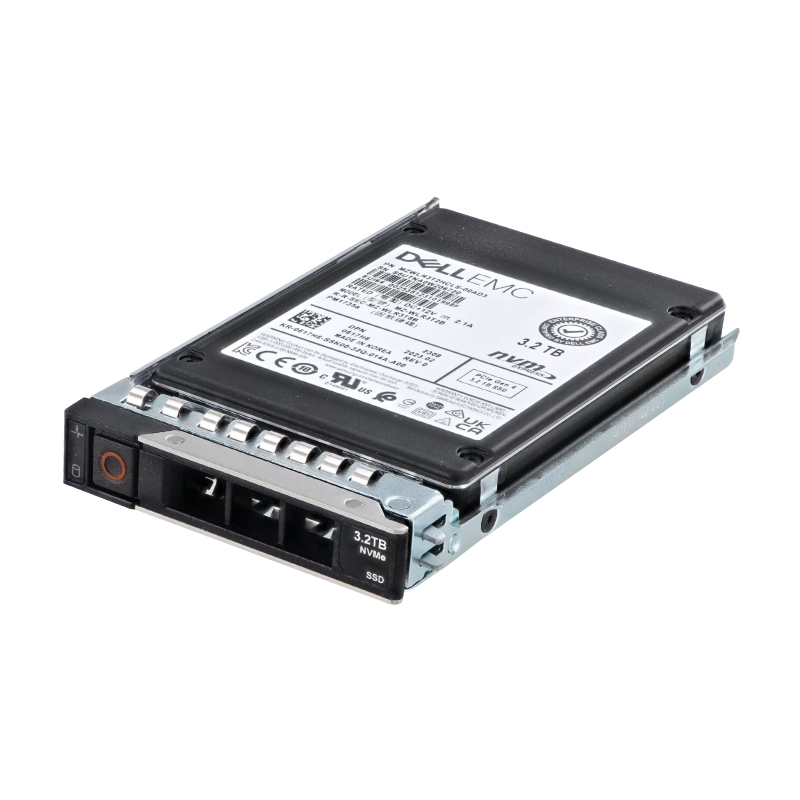


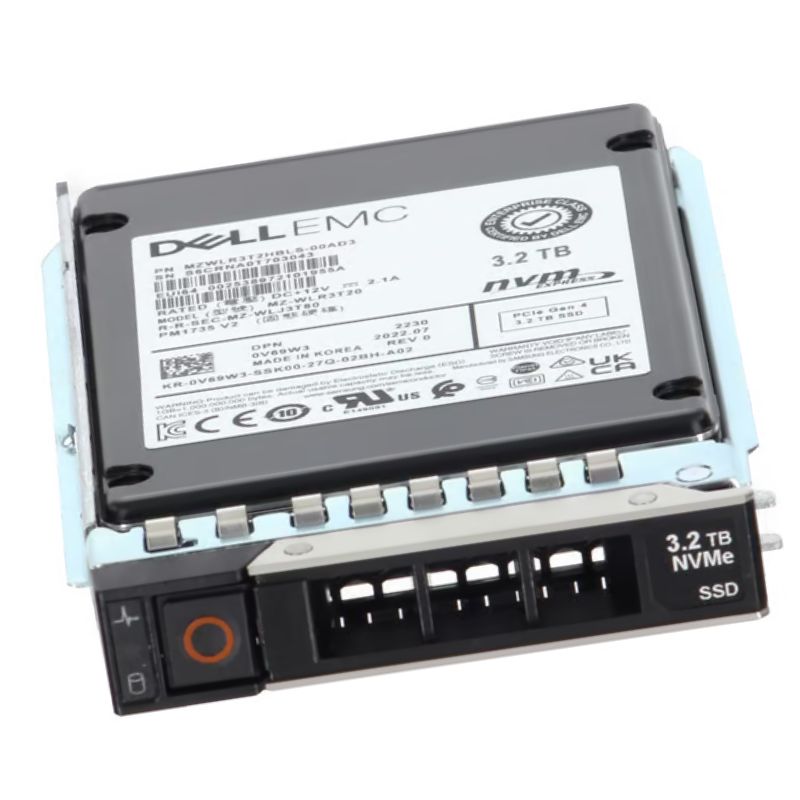
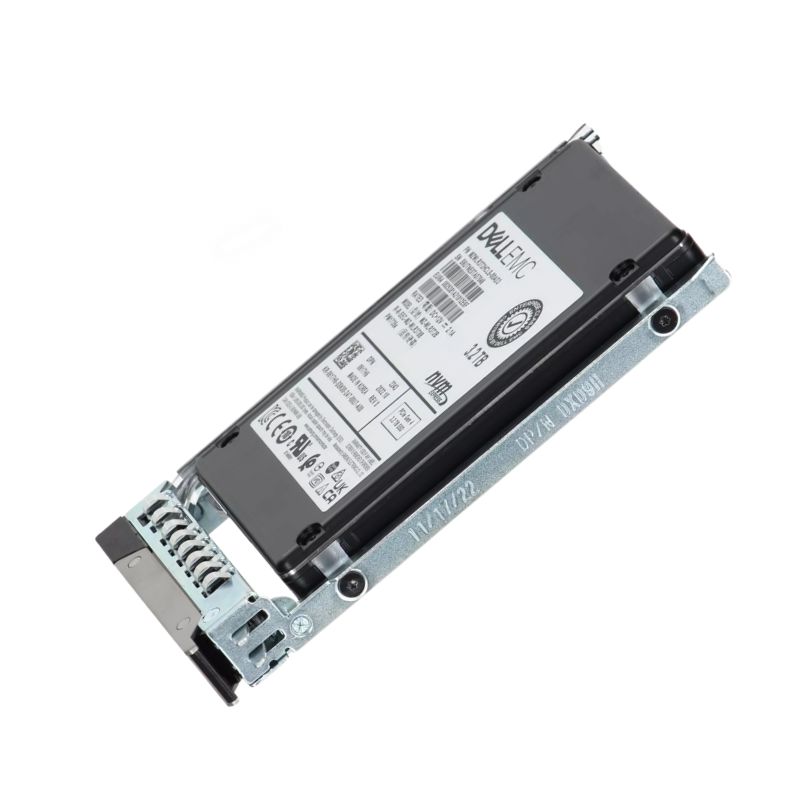
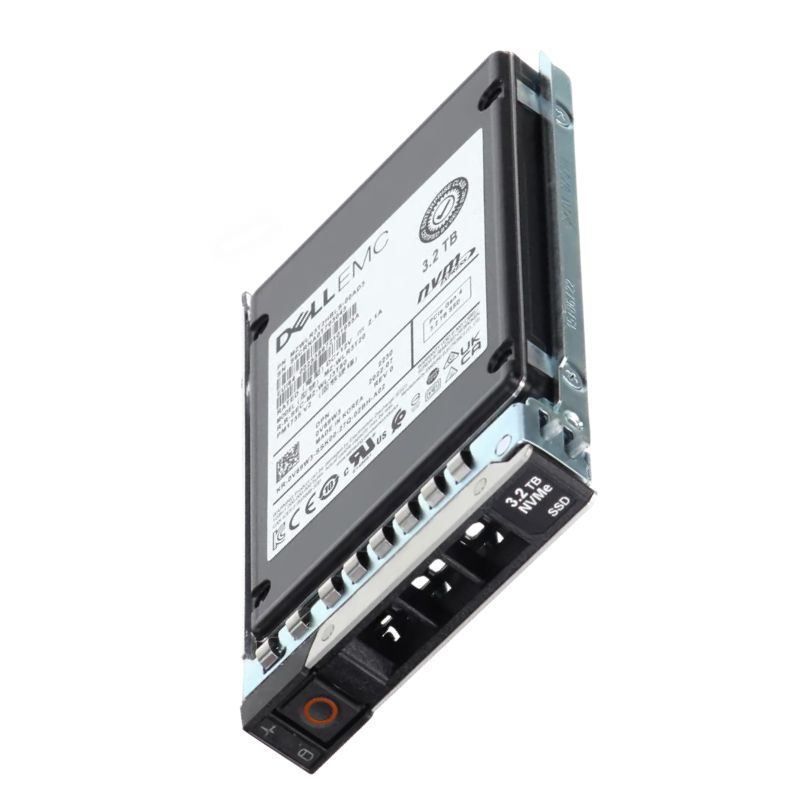
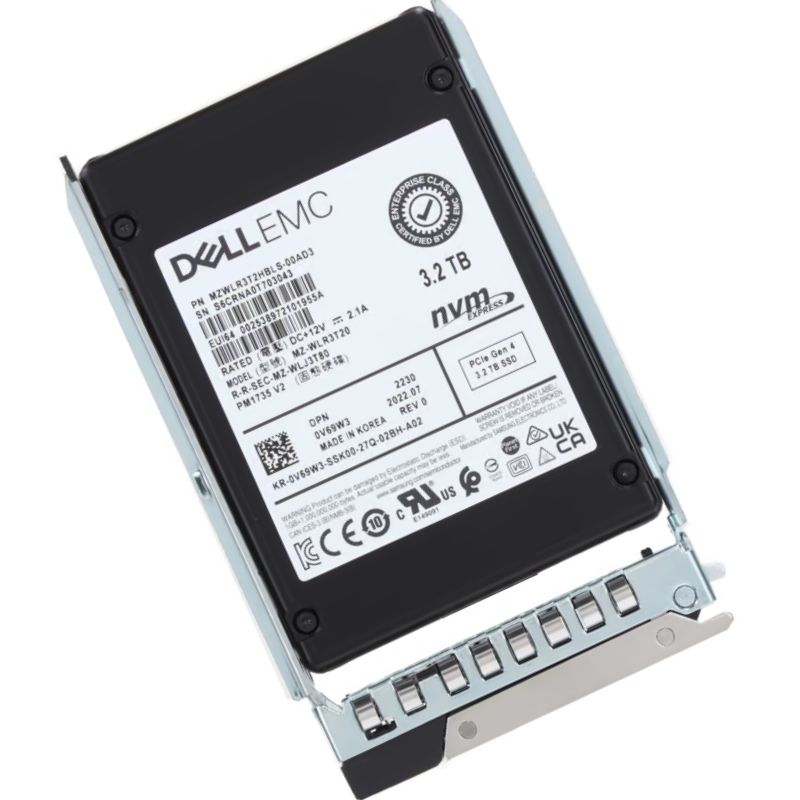
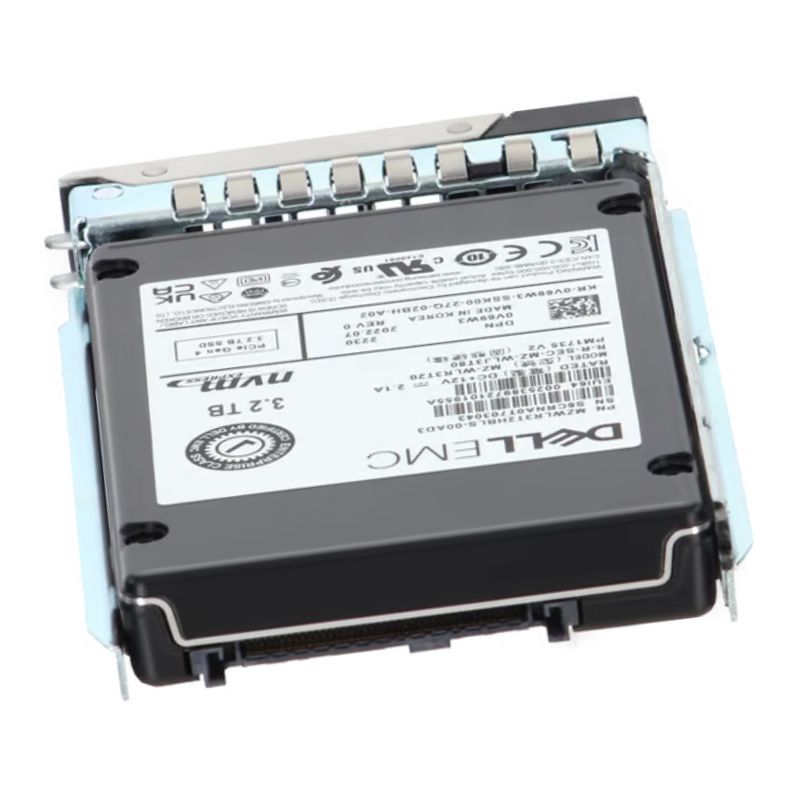
Dell 617H6 3.2TB NVMe Mixed Use PCIE Gen4 TLC 2.5 Inch SSD. Excellent Refurbished with 1 Year Replacement Warranty
The Dell 617H6 3.2TB PCI-E Gen4 NVMe Mixed Use TLC 2.5-inch U.3 Enterprise Internal Solid State Drive represents a class of storage designed for modern datacenter demands where a balance of high throughput, low latency, endurance, and cost efficiency is required.
The Dell 617H6 SSD is engineered to deliver impressive speed and endurance for demanding workloads. With a PCIe Gen4 interface, it ensures reduced latency and enhanced I/O performance, making it suitable for enterprise-grade applications.
Equipped with durable TLC NAND flash, the Dell 617H6 balances capacity and performance while maintaining endurance levels required for business-critical operations. It supports mixed workloads, ensuring seamless functionality across different environments.
The Dell 617H6 3.2TB PCI-E Gen4 NVMe Mixed Use TLC 2.5-inch U.3 Enterprise Internal Solid State Drive represents a class of storage designed for modern datacenter demands where a balance of high throughput, low latency, endurance, and cost efficiency is required. This category focuses on mixed-use NVMe drives that combine the endurance characteristics necessary for frequent read/write cycles with thermal and power optimizations tailored for 2.5-inch U.3 form factor bays. Engines of scale in virtualization, database transaction processing, hyperconverged infrastructure, and tier-1 application acceleration all benefit from the predictable performance profile and enterprise capabilities of the Dell 617H6 family. Dell 617H6 3.2TB PCI-E Gen4 NVMe Mixed Use TLC 2.5Inch U.3 Enterprise Internal Solid State Drive, and it should appear naturally across headings, subheadings, and body copy to signal relevance to search engines and buyers looking for this precise drive model or equivalent mixed-use PCIe Gen4 NVMe U.3 SSDs.
Enterprise NVMe drives like the Dell 617H6 typically pair a high-performance NVMe controller with enterprise-grade TLC NAND. The controller implements features such as advanced error correction code (ECC), power-loss protection, end-to-end data path protection, and dynamic thermal management. Firmware optimization is critical for mixed-use drives: it balances garbage collection aggressiveness, wear-leveling strategies, and overprovisioning to sustain consistent performance across long duty cycles. The NAND choice—TLC in this category—offers a compelling cost per gigabyte relative to higher endurance MLC options while still delivering sufficient write cycle life for most mixed workloads when coupled with enterprise firmware and overprovisioning strategies.
The 2.5-inch U.3 form factor provides a practical compromise between density and serviceability. U.3 supports both NVMe and SAS backplanes through multi-protocol capability on certain controllers, easing migration from legacy storage. NVMe over PCIe Gen4 lets the Dell 617H6 deliver dramatically lower latency and higher queue depth scalability than SATA or SAS counterparts. For datacenters upgrading to Gen4 platforms, these drives unlock faster boot times, reduced database query latency, and improved virtualization consolidation ratios by reducing I/O contention.
Performance expectations for the Dell 617H6 family focus on delivering high sustained reads and strong mixed random read/write IOPS while maintaining low, predictable latency under load. In real-world deployments, these drives demonstrate notable gains in application responsiveness: transactional databases complete commits faster, virtual desktop infrastructure delivers smoother user experiences during boot storms, and containerized microservices show less I/O wait. The mixed-use classification means performance remains consistent across a mixture of reads and writes rather than peaking on synthetic read-only benchmarks. Optimization for steady-state operation—an important enterprise consideration—ensures that drives recover quickly from heavy write activity and maintain QoS (quality of service) targets for latency-sensitive applications.
While sequential throughput is important for bulk transfer scenarios such as backup, replication, and large file movement, the strength of PCI-E NVMe mixed-use drives is most apparent in random I/O. Databases and virtual machines generate small random I/O patterns. The Dell 617H6 is tuned to maximize random IOPS at practical queue depths and to minimize tail latency. This makes it ideal for high-concurrency multi-tenant environments where unpredictability of access patterns would otherwise degrade user experience.
Low latency is a defining characteristic of NVMe storage and a critical differentiator for enterprise workloads. The 617H6 family focuses on both average latency and tail latency, the latter being crucial for service level agreements that penalize the worst percentiles of response time. Enterprise firmware features, including optimized garbage collection scheduling and read/write prioritization, help maintain consistent latency over long periods of heavy load, reducing the likelihood of latency spikes that can cascade into application performance issues.
Reliability is a non-negotiable feature for enterprise internal storage. The Dell 617H6 mixed-use SSDs incorporate multiple layers of protection: hardware-assisted ECC, power-loss protection capacitors or firmware-based power loss mitigation, SMART telemetry reporting, and secure encryption options such as AES-256 for data at rest. Endurance for mixed-use TLC drives is specified either as DWPD over a warranty period or TBW and is engineered to meet typical enterprise rewrite patterns without excessive cost. Overprovisioning and adaptive wear-leveling extend service life and preserve sustained performance. Comprehensive SMART attributes and vendor management tools enable administrators to monitor drive health proactively and schedule replacements before failures occur.
This category of storage is ideal for a spectrum of modern enterprise applications. Virtualized environments, especially those consolidating numerous small VMs, benefit from the strong random IOPS and low latency. Databases that require a mix of reads and writes—such as OLTP systems—will see transaction throughput improvements and reduced commit latency. High-performance file systems and metadata engines that perform many small writes gain from mixed-use endurance and predictable tail latency. Additionally, these drives are well suited for caching tiers in hybrid storage architectures, acting as a fast intermediate layer between DRAM and high-capacity HDDs. Content delivery, analytics pipelines, and software-defined storage platforms that require both performance and capacity per drive can be effectively served by the Dell 617H6 3.2TB NVMe U.3 drives.
Hyperconverged infrastructures, which tightly integrate compute and storage within the same nodes, depend on consistent local storage performance to ensure predictable cluster behavior. Mixed-use NVMe drives provide the consistent I/O characteristics that hyperconverged software requires for even distribution of workloads and correct rebalancing. In hyperscale environments where density and cost efficiency are paramount, 3.2TB per U.3 drive offers a favorable balance: meaningful capacity per slot while leveraging the performance benefits of NVMe Gen4.
While not a replacement for archival media, mixed-use NVMe drives are often used to accelerate backup targets, snapshot repositories, and replication staging areas. Fast sequential read/write performance speeds up snapshot creation and replication, while low latency shortens backup windows and recovery point objectives. Administrators should architect snapshot cadence and retention policies to avoid writing hot-path workloads to the same drives continuously; instead, use dedicated flash tiers for short-term snapshot acceleration combined with lower-cost object or tape storage for long-term retention.
Successful deployment of Dell 617H6 drives requires attention to platform compatibility. PCIe Gen4 host controllers and firmware provide the full performance potential; however, these drives remain backward compatible with Gen3 systems albeit with reduced throughput. System BIOS, RAID controller or NVMe driver support, and server backplane firmware should be validated with vendor compatibility lists. Because U.3 connectors sometimes sit on multi-protocol backplanes used for NVMe and SAS drives, confirming that the server firmware correctly enumerates U.3 NVMe devices is prudent before large-scale rollouts. Dell’s support documentation and server compatibility matrices are valuable resources during procurement and deployment planning.
Firmware management is a critical maintenance activity for enterprise NVMe drives. Vendors periodically release firmware updates to improve performance, resolve edge-case bugs, and strengthen security features. Implementing a controlled firmware update policy—testing on non-production systems first and using vendor-provided tools for staged rollouts—reduces risk. Metadata and SMART logs should be routinely exported for analysis to detect early signs of wear or anomalies that firmware releases may address.


 Contact Us
 Information
 Catalog
 Solid State Drives (SSD)
 Network Switches
 Hard Disk Drives
 HBA & Controllers
 PC & Servers
 PC & Server Memory
 CPU & Processors
 Network Routers
 Power Supplies
 Tape Drives & Libraries
 Network Devices
 Computer & Network Cables