(7% discount is applied at checkout)
Cart is empty
Your go-to destination for cutting-edge server products
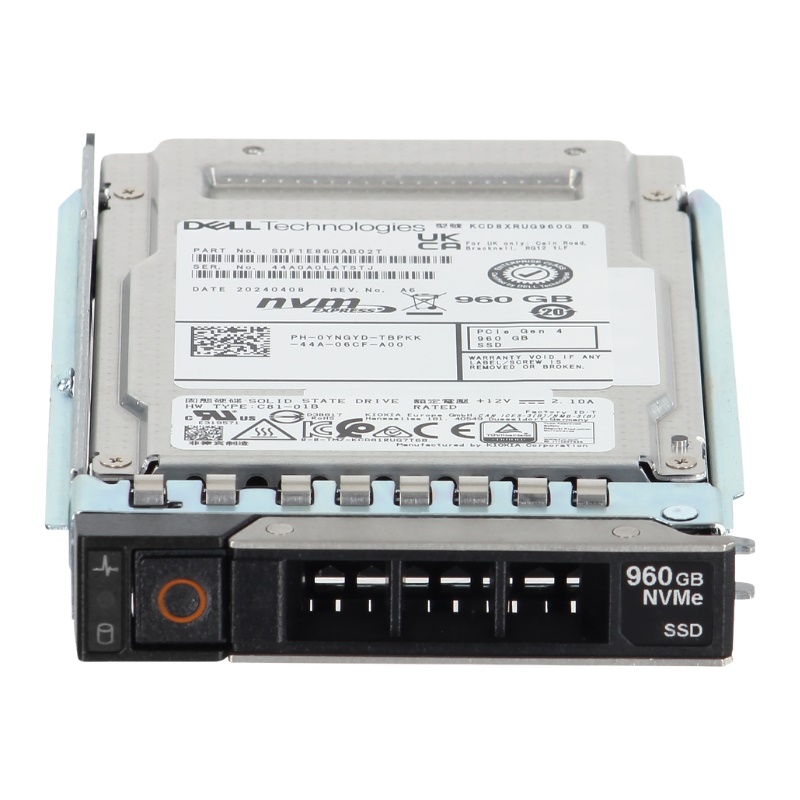


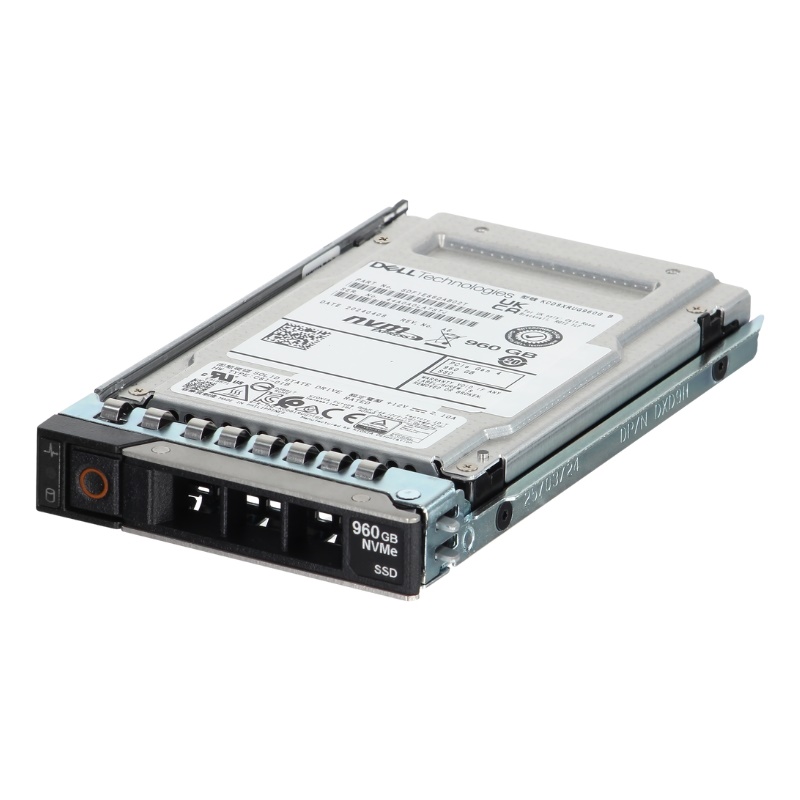
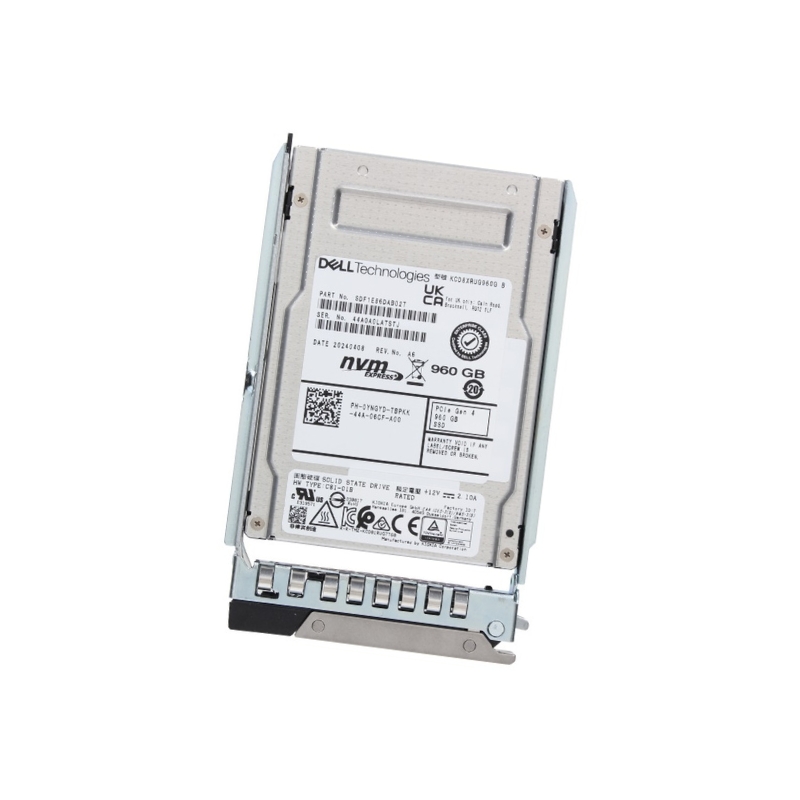
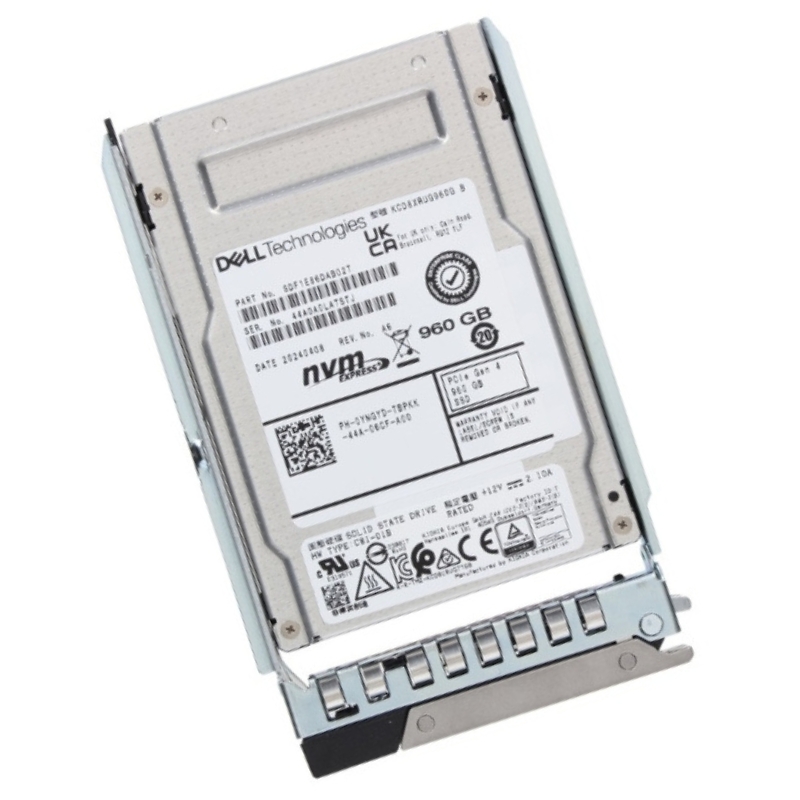
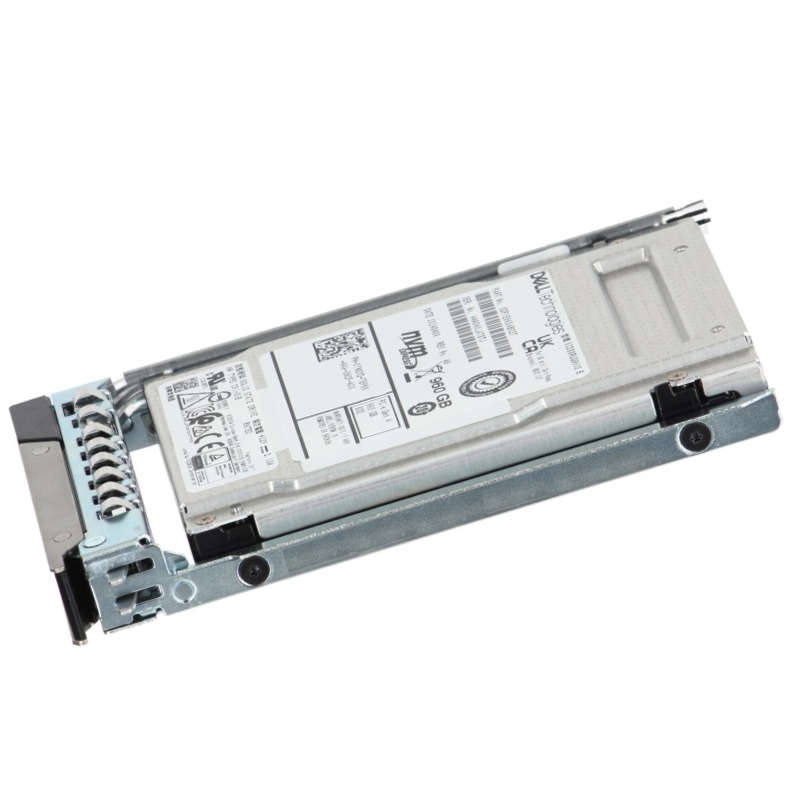
Dell 678HC Nvme 960GB Pcie Data Center Read Intensive U2 2.5in Solid State Drive Server. New Sealed in Box (NIB) with 1 year Replacement Warranty
The Dell 678HC 960GB PCI-E Gen4 NVMe Data Center Read Intensive U.2 2.5-inch Solid State Drive with carrier is engineered to deliver a balance of high throughput, low latency and enterprise reliability for modern data centers. Designed for read-heavy workloads—such as content delivery, boot and system volumes, caching tiers, metadata stores and large-scale virtualization—the Dell 678HC provides a purpose-built NVMe solution that leverages PCIe Gen4 bandwidth while maintaining the hot-swap, tray/carrier compatibility required by PowerEdge 14G, 15G and 16G server families. This category of drives emphasizes predictable read performance, energy-efficient operation and seamless integration into Dell PowerEdge ecosystems, making it a reliable choice for storage architects seeking NVMe performance in a U.2 form factor that fits existing U.2 bays and trays.
At the heart of the Dell 678HC product family is the NVMe protocol paired with PCIe Gen4 lanes, which together unlock materially higher I/O bandwidth and lower queuing latency compared with previous SATA or SAS-based SSDs. PCIe Gen4 doubles the per-lane bandwidth relative to Gen3, allowing NVMe devices to utilize more parallelism inside controllers and NAND to deliver higher sequential and random read throughput. For read-intensive workloads, this manifests as faster application response, shorter boot times for virtual machines, and reduced latency for metadata and index services that are sensitive to I/O tail latencies. The U.2 2.5-inch packaging used in the Dell 678HC keeps the form factor compact while enabling enterprise airflow designs and carrier-based insertion that PowerEdge servers expect.
The Dell 678HC series employs controllers and firmware tuned for read centricity: internal command scheduling favors read path priority to ensure consistent low latency under mixed loads, while error correction, wear leveling and garbage collection routines are tuned to maximize usable life for read-dominated applications. The drive typically uses high-density 3D NAND configured to deliver high logical capacity in a small profile while balancing cost per gigabyte. Firmware features often include adaptive read caching, improved read disturb management, and advanced ECC to maintain data integrity at high data densities.
Read-optimized NVMe drives like the Dell 678HC shine when subjected to high queue depths and parallel I/O streams. Because NVMe allows multiple hardware submission and completion queues, these drives minimize software overhead and fully exploit multi-core hosts. For administrators, the benefit is sustained high IOPS for read operations and predictable 99th-percentile latency — an essential metric when planning SLAs for customer-facing applications. The combination of Gen4 lanes and NVMe protocol reduces CPU time spent in I/O handling, which also improves overall server efficiency.
Compatibility is a primary selling point for the Dell 678HC: it is specifically offered with a carrier designed to fit the hot-swap U.2 bays on Dell PowerEdge 14G, 15G and 16G servers. The carrier ensures correct mechanical fit, proper insertion depth, and secure latching, while enabling the server's backplane to present the NVMe device to the host as expected. For organizations with mixed server fleets or phased upgrade plans, this drive provides a drop-in NVMe upgrade path without requiring significant chassis changes.
Enterprises deploying Dell 678HC drives benefit from integration with Dell’s system management stack. iDRAC and OpenManage provide visibility into drive health, SMART attributes, firmware revision control and predictive failure analysis. These management tools make it easier to automate firmware updates, schedule maintenance windows, and integrate storage telemetry into broader monitoring frameworks. The result is reduced administrative overhead and the ability to proactively replace drives before they cause service interruption.
Maintaining firmware currency is crucial in enterprise NVMe deployments. Dell-certified firmware images for the 678HC improve interoperability with PowerEdge server BIOS and RAID/boot controllers, and they may include patches that enhance thermal management or correct edge-case behaviors. Administrators should adopt a controlled firmware update policy—validating updates in test environments and using Dell's tools to stage releases—to ensure continuous compatibility across 14G, 15G and 16G platforms.
The Dell 678HC is tailored for a set of read-intensive data center use cases where read throughput and low latency provide the most value. Typical deployments include accelerated file-service front ends, read cache layers in hybrid storage architectures, CDN edge nodes, virtualization boot/clone stores, and analytics index stores. In a tiered storage architecture, the 678HC can be the fast read tier that backs frequently accessed data, allowing backend bulk storage to be handled by higher-capacity but slower media.
In hybrid storage arrays, read-intensive NVMe drives are often deployed as the performance tier that accelerates hot data. When used as cache devices, the Dell 678HC delivers rapid hits to cached content and shortens application latency by handling the lion’s share of read requests. Because the drive is optimized for read durability patterns, it minimizes unnecessary write amplification from cache churn and helps maintain consistent performance under sustained workload bursts.
Cloud and virtualization platforms benefit from NVMe-based read acceleration because rapid provisioning, cloning and boot storms generate intense read bursts. The Dell 678HC supports multi-VM densities by providing low-latency reads to virtual disk images and container layers. This translates to improved VM boot times, faster container image pulls when cached, and generally higher consolidation ratios on PowerEdge hosts.
Although categorized as "read intensive", the Dell 678HC incorporates enterprise-grade reliability features. Drives in this category use robust error correction, power-loss protection strategies and stable firmware to protect data during unexpected events. Read-intensive drives intentionally trade some write endurance for cost efficiency; however, for workloads that skew heavily toward reads, this tradeoff results in an excellent price-performance ratio and long operational life when deployed properly.
Enterprise NVMe SSDs often include transient power loss protection mechanisms and internal capacitive backup to flush in-flight metadata to nonvolatile storage. While the exact implementation varies by model and firmware, the Dell 678HC family is designed with enterprise expectations in mind: graceful handling of sudden power events, rigorous metadata protection, and background processes that maintain internal consistency so the host can recover cleanly after restart.
SMART attributes and telemetry exported by NVMe devices are vital for ongoing reliability. Dell’s management stack reads drive health metrics to identify trends in media wear, error rates, and operating temperature. Predictive analytics combine this telemetry with historical patterns to flag drives that may require proactive replacement. This reduces unplanned downtime and supports rolling maintenance strategies without disruption to data services.


 Contact Us
 Information
 Catalog
 Solid State Drives (SSD)
 Network Switches
 Hard Disk Drives
 HBA & Controllers
 PC & Servers
 PC & Server Memory
 CPU & Processors
 Network Routers
 Power Supplies
 Tape Drives & Libraries
 Network Devices
 Computer & Network Cables