(7% discount is applied at checkout)
Cart is empty
Your go-to destination for cutting-edge server products
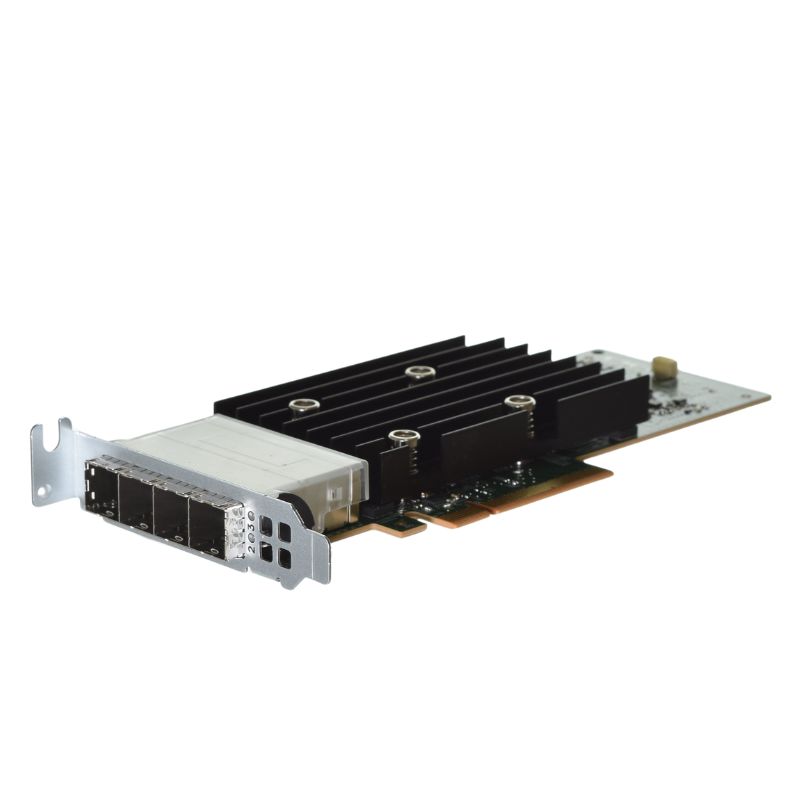


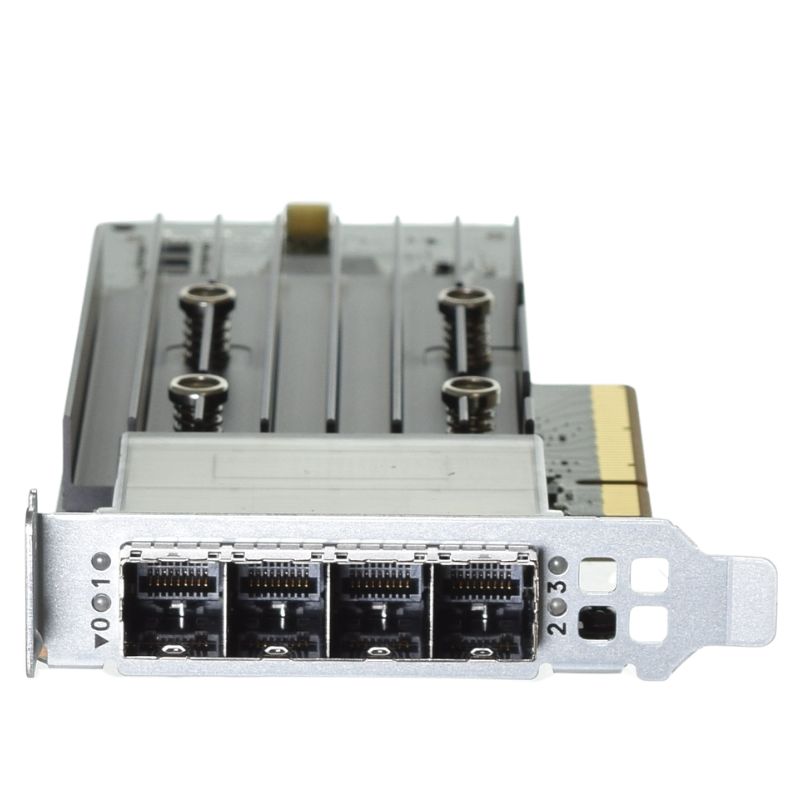
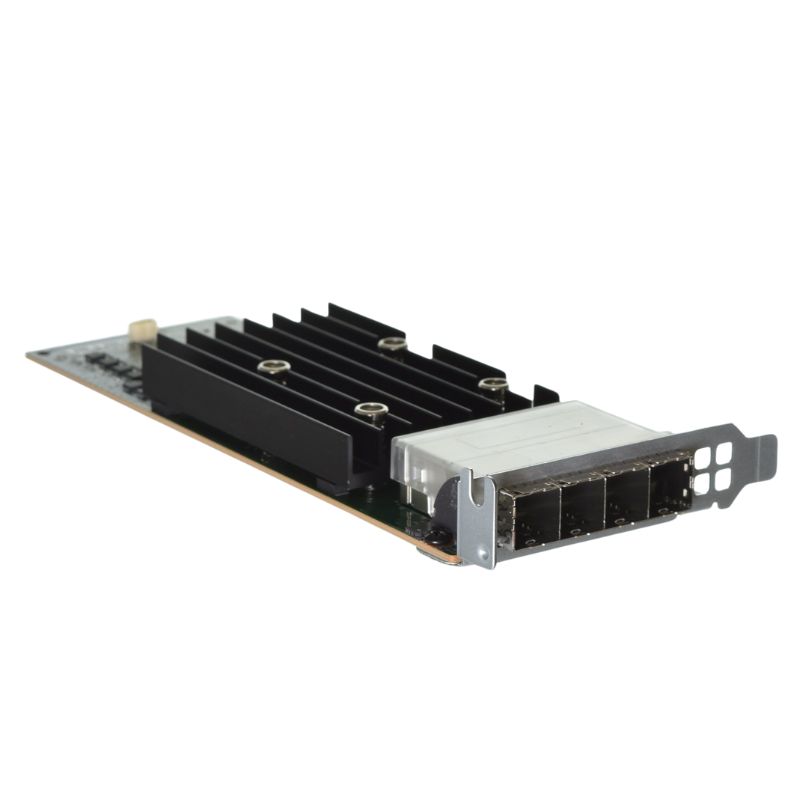
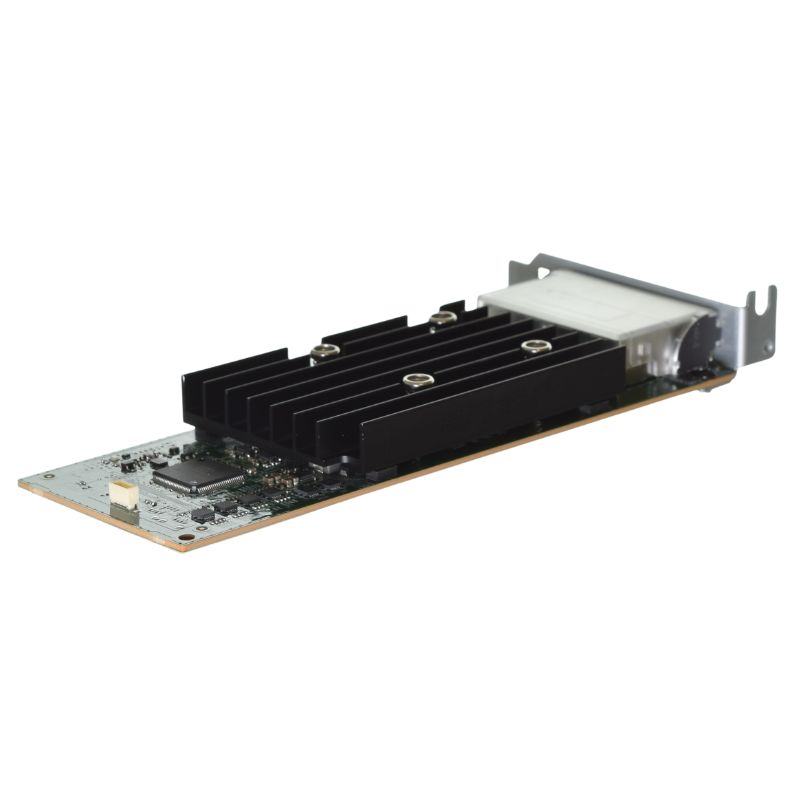
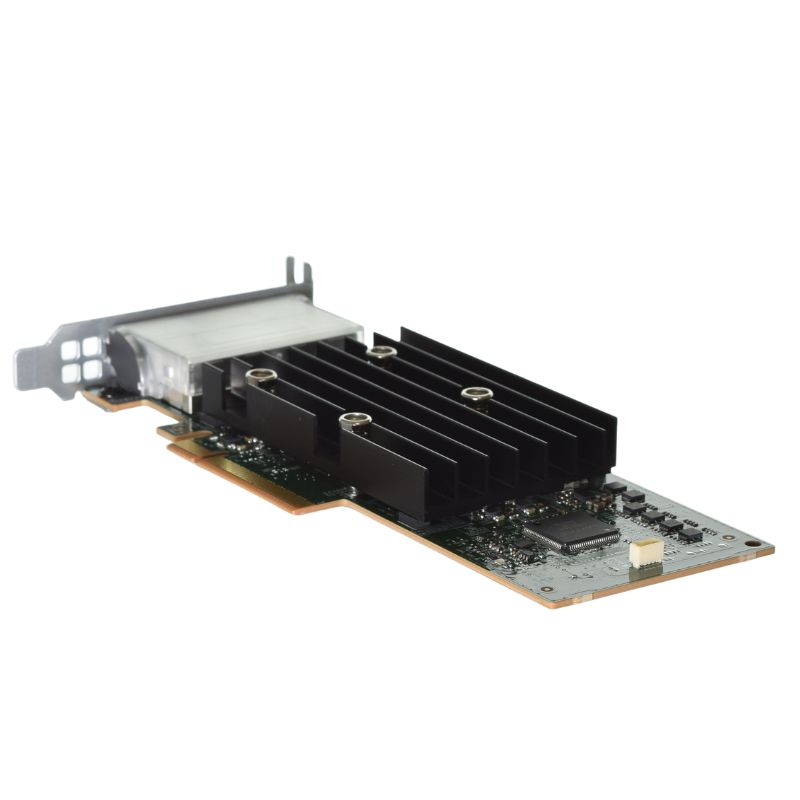
Dell 6CDMK HBA355e 12GBPS Quad Ports External Host Bus Adapter Controller Low Profile. New (System) Pull with 1 year replacement warranty
The Dell 6CDMK HBA355e is a high-performance SAS host bus adapter engineered for demanding external storage environments. Built for reliability and throughput, this low-profile controller delivers 12 Gbps SAS connectivity across four external quad ports — ideal for data centers, backup appliances, and SAN expansions requiring fast, deterministic pass-through I/O.
The Dell 6CDMK HBA355e is a high-performance SAS host bus adapter designed for enterprise storage environments that demand reliable external connectivity, low-profile form factors, and predictable throughput. This category centers on quad-port external SAS controllers operating at 12Gbps per lane, engineered to bridge servers and external storage arrays with minimal latency and maximum compatibility. The HBA355e family emphasizes robust data integrity, broad device interoperability, and enterprise-grade firmware support, making it ideal for database servers, virtualization hosts, backup and archival systems, and high-availability cluster nodes. Pages within this category should spotlight technical specifications, compatibility matrices, installation and cabling guidance, performance characteristics, and procurement considerations that matter to infrastructure architects, system administrators, and procurement teams.
At the core of the HBA355e category are controllers that support the 12Gbps SAS standard, delivering sustained bandwidth suitable for modern SSDs and high-speed HDD enclosures. These controllers implement four external ports, typically using SFF-8644 or similar connectors, enabling multiple SAS expanders or direct-attached JBOD enclosures to be connected through a single adapter. The controller leverages an industry-standard PCIe interface in a low-profile form factor, offering backward compatibility with PCIe 3.0 and PCIe 4.0 slots depending on server platform, while conserving rack unit space in dense server configurations. Enterprise features commonly highlighted include support for wide port and multipath topologies, hardware-based CRC and end-to-end data protection mechanisms, advanced power management, and firmware-level diagnostics for link health and error reporting.
The quad external ports operate at 12Gbps per SAS lane, enabling aggregate throughput that scales with the number of connected paths and attached devices. Real-world throughput depends on the type of drives in the external enclosures, cabling quality, and host workload characteristics. For mixed-read/write database workloads or high-concurrency virtual machine hosts, the 12Gbps backbone reduces I/O queuing and improves random I/O response times compared to older 6Gbps adapters. Channel negotiation and SAS topology management are handled by the controller firmware, ensuring that link speeds fall back gracefully to 6Gbps or 3Gbps when connecting to legacy devices, preserving interoperability while signaling to administrators when performance may be constrained by downstream components.
Low-profile designs are a signature of controllers in this category, allowing deployment in 1U and 2U servers where space is at a premium. The slim bracket minimizes airflow obstruction, and the PCB layout is optimized for thermal dissipation. When integrating into dense compute clusters, consideration should be given to server chassis airflow, adjacent expansion cards, and ambient datacenter temperature to avoid thermal throttling. Many vendors supply thermal guidelines and recommended fan curves that align with the adapter’s thermal envelope. Administrators should consult server vendor interoperability guides to confirm retention clip compatibility and bracket orientation before large-scale rollouts.
Compatibility is a crucial factor for storage controllers, and the Dell 6CDMK HBA355e category emphasizes validated support for Dell PowerEdge servers and external storage arrays, as well as broader compatibility with common enterprise SAS enclosures. Detailed compatibility matrices typically list supported server models, supported chassis backplanes, and firmware package versions certified for use in production. Interoperability extends to multipath software stacks such as Microsoft MPIO, Linux DM-Multipath, and VMware Native Multipathing, with vendor-provided drivers and multipathing plug-ins ensuring consistent failover behavior and predictable path selection policies. In heterogeneous environments, administrators should verify firmware and driver pairings to avoid intermittent disconnects or performance regressions caused by mismatched SAS expander firmware or outdated storage enclosure microcode.
A robust driver ecosystem is essential for enterprise adoption. Controllers in this category generally provide drivers for modern Linux distributions including RHEL, CentOS, Ubuntu, and SUSE, for Microsoft Windows Server versions commonly used in datacenters, and for VMware ESXi hypervisors. Driver releases often include release notes that enumerate supported kernel versions, known issues, and recommended BIOS/UEFI settings. For organizations with strict patch windows, it is best practice to test new driver and firmware combinations in a staging environment before deploying to production. Where available, vendor-provided management utilities can expose firmware update tools and link diagnostics for remote troubleshooting, simplifying lifecycle management at scale.
Multipath software coordinates multiple physical routes to the same logical storage devices, enabling failover and load distribution. The HBA355e category aligns with multipath solutions by exposing unique path identifiers and supporting path-specific IO queuing. Best practices include configuring path failure detection sensitivity, defining path weighting policies, and monitoring path metrics to detect degrading links before they cause application-visible outages. In high-availability clusters, administrators often pair HBA path monitoring with storage array-level redundancy to provide seamless continuity. Documenting path mapping and conducting failover drills ensures that cross-team incident responses remain swift and coordinated during an actual failure.
Performance profiles for 12Gbps SAS controllers are influenced by workload type, storage media, and system-level bottlenecks. Sequential workloads tend to saturate link bandwidth quickly, while random I/O workloads benefit from the increased per-lane speed that reduces average latency. When benchmarking, it is important to capture both IOPS and latency distributions across varying queue depths to understand real-world behavior. Benchmarks should be reproducible and run across multiple iterations; meaningful results should report median and tail latencies rather than relying solely on peak throughput numbers. Additionally, comparing raw adapter performance against software-defined storage stacks or RAID controllers highlights trade-offs between raw throughput and features such as caching or integrated RAID offload.
Optimizing performance involves tuning both the host and the storage array. On the host side, interrupt moderation and queue depth settings can be adjusted via the driver or operating system block layer to match workload characteristics. Aligning filesystem block sizes, enabling or disabling write caching depending on data durability requirements, and configuring NUMA-affinity for CPU and memory can reduce cross-node latency penalties in multi-socket servers. On the storage side, ensuring that enclosures use enterprise-grade SAS expanders and that drives are configured for appropriate RAID levels will help balance redundancy and performance. Monitoring tools that expose queue depths, link error counters, and I/O latency histograms are invaluable for identifying hotspots and validating tuning changes.
Reliability is paramount in enterprise storage, and the HBA355e category incorporates features to minimize data corruption and downtime. Hardware-level CRC checks, SAS protocol protections, and link-level error recovery mechanisms reduce silent data corruption risk. Many controllers in this class also provide firmware-level logging, S.M.A.R.T. passthrough for connected drives, and diagnostic counters for tracking link health. For environments with strict data retention and recovery SLAs, pairing the adapter with storage arrays that offer synchronous replication, snapshots, and robust RAID protection ensures that the entire data stack meets organizational requirements. In regulated industries, administrators should document compliance mappings for data-at-rest and data-in-transit protections enabled by the storage network topology.
Enterprise-grade firmware support is a strong differentiator for adoption. Vendors typically maintain firmware release cadences that address security vulnerabilities, interoperability updates, and performance improvements. Firmware management is a lifecycle activity that requires scheduling, testing, and rollback plans. Many organizations adopt centralized firmware orchestration tools that inventory adapter firmware versions, automate updates, and validate post-update health checks. Understanding vendor support policies, including EOL timelines and extended support options, helps procurement and operations teams plan long-term hardware refresh cycles and avoid unsupported configurations that could complicate incident remediation.
When procuring controllers in this category, buyers should prioritize compatibility with existing server and enclosure hardware, review vendor support policies, and evaluate total cost of ownership beyond the adapter price. Considerations include the number of ports required for redundancy, expected workload types, and the potential need for additional HBAs to provide path diversity. Procurement should also factor in cable and enclosure costs, spare parts for high-availability designs, and any required driver or firmware support agreements. For cloud or co-located environments that mix hardware generations, confirm cross-generation compatibility to avoid surprises during deployment. Requesting interoperability test reports and vendor-validated configuration references can significantly reduce deployment risk.
Comparing the Dell 6CDMK HBA355e to alternative adapter classes involves weighing features such as the presence or absence of RAID offload, the number of external ports, and vendor ecosystem support. Some administrators may consider integrated RAID controllers when they require hardware-managed redundancy and caching. Others prefer HBAs for raw passthrough and the flexibility of offloading RAID responsibilities to the storage array. When comparing models, consider whether single or multi-function cards better suit the deployment: HBAs focus on connectivity and pass-through capability, while RAID controllers add data protection features at the expense of potential vendor lock-in. Cross-vendor compatibility and long-term roadmaps should inform strategic decisions, particularly in multi-vendor datacenters.


 Contact Us
 Information
 Catalog
 Solid State Drives (SSD)
 Network Switches
 Hard Disk Drives
 HBA & Controllers
 PC & Servers
 PC & Server Memory
 CPU & Processors
 Network Routers
 Power Supplies
 Tape Drives & Libraries
 Network Devices
 Computer & Network Cables