(7% discount is applied at checkout)
Cart is empty
Your go-to destination for cutting-edge server products
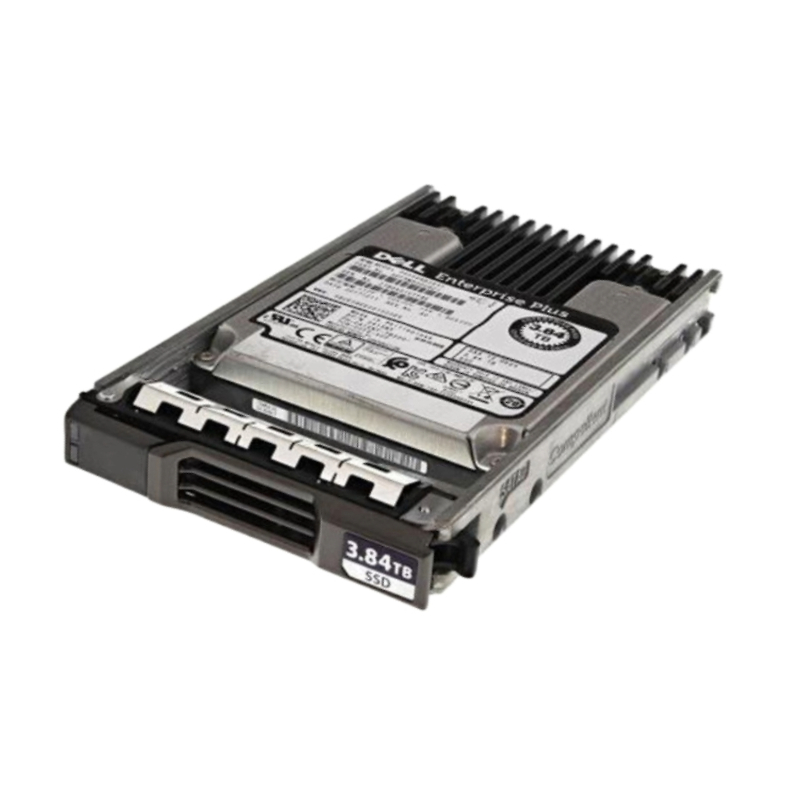


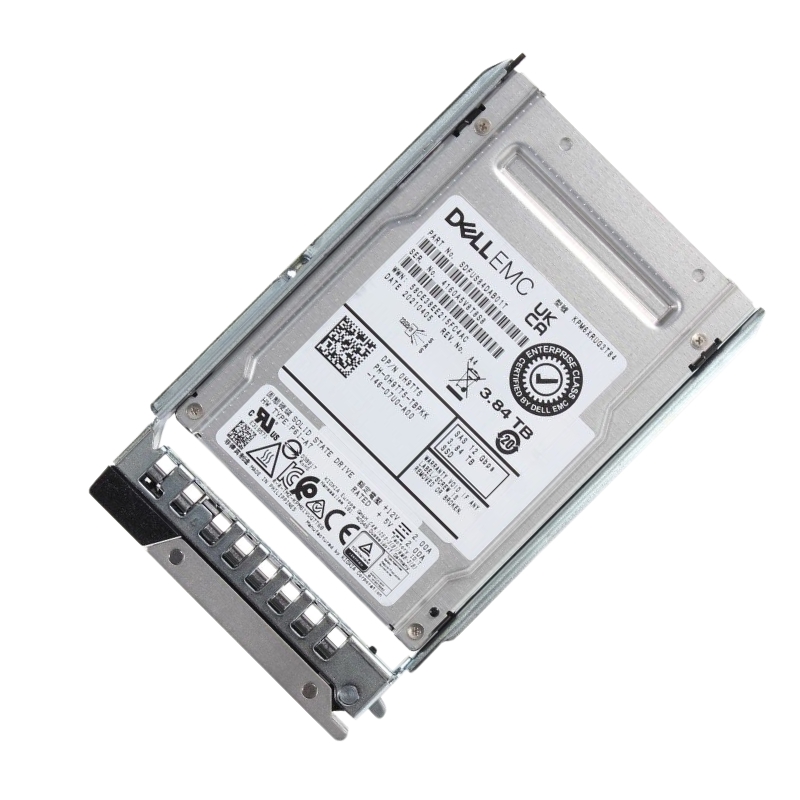
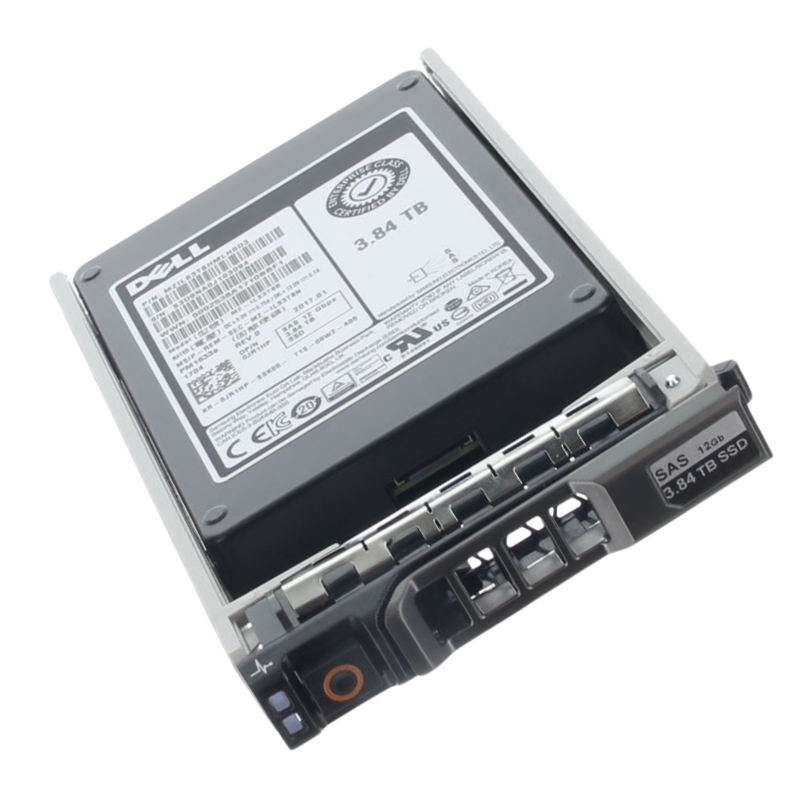
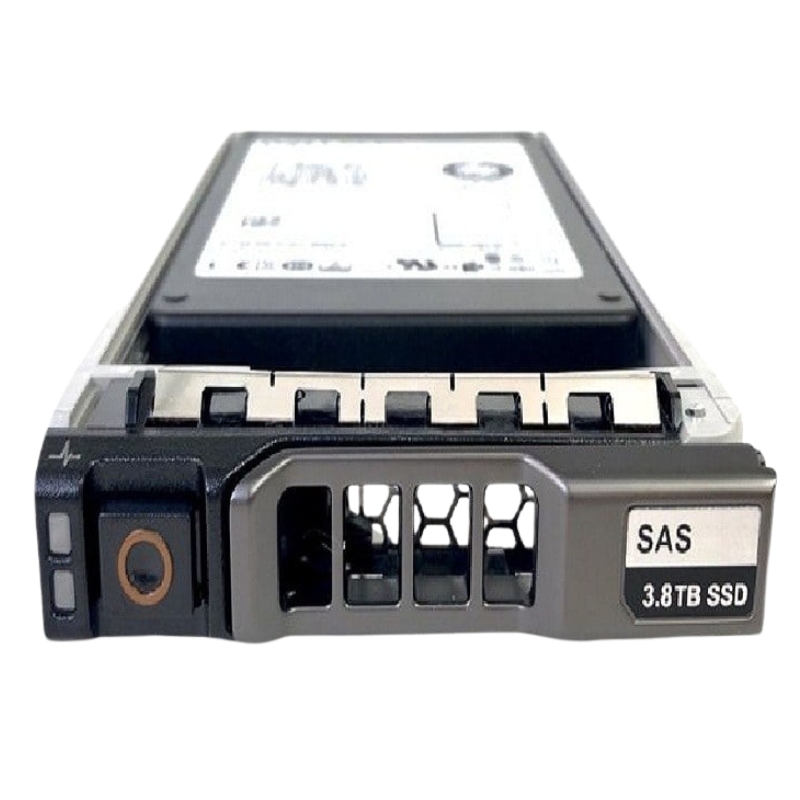
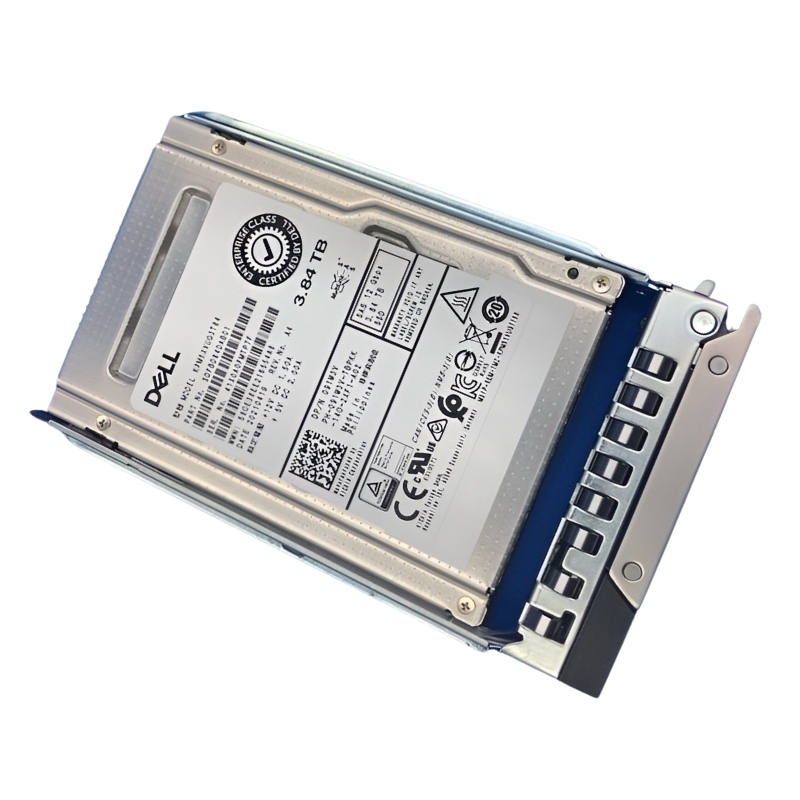
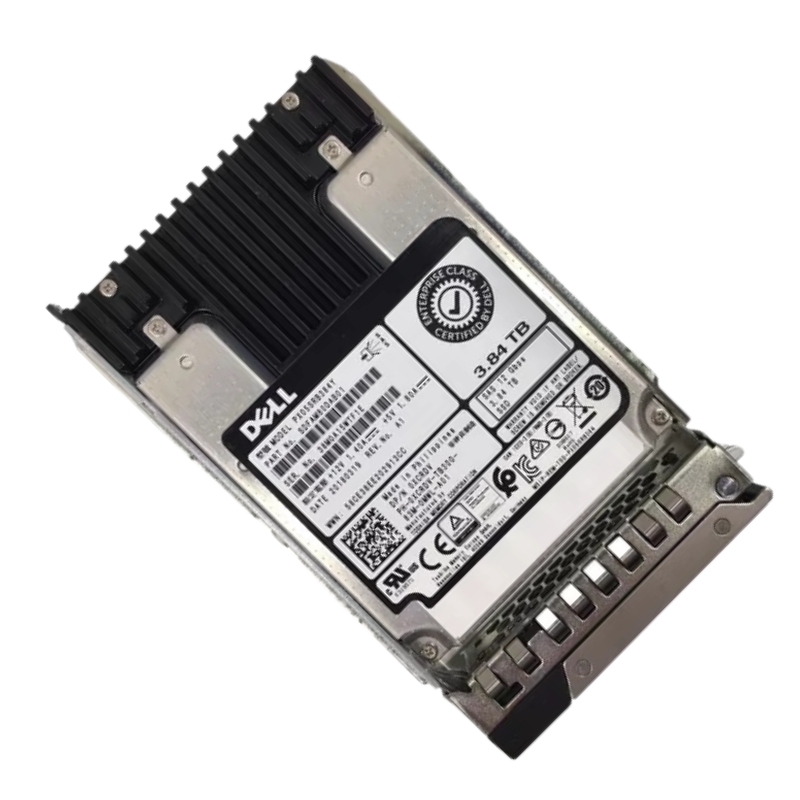
Dell 6H4JM 3.84TB SAS 12GBPS TLC Read Intensive SSD. New Sealed in Box (NIB) with 1 year Replacement Warranty
The Dell 6H4JM is a high-performance, read-intensive Solid State Drive (SSD) designed for enterprise-grade 14th generation PowerEdge servers. Engineered to maximize speed, endurance, and reliability, this 2.5-inch hot-plug SSD provides efficient storage solutions for demanding workloads.
Designed for enterprise workloads, the Dell 6H4JM delivers consistent read speeds and superior durability. Its V-NAND TLC architecture supports intensive read operations while maintaining low latency and high throughput.
The Dell 6H4JM provides flexible deployment options with its seamless connectivity and hot-plug support:
This SSD is designed to work flawlessly with a wide range of Dell PowerEdge and PowerVault servers, ensuring maximum compatibility and performance:
The Dell 6H4JM 3.84TB SAS 12Gbps Read-Intensive TLC 2.5-inch hot-plug certified solid state drive (SSD) is specifically engineered for enterprise storage tiers where read performance, predictable latency, and high capacity per drive matter. Certified for Dell PowerEdge 14G servers, this drive suits database front ends, virtualization boot volumes, content delivery, and read-heavy analytics workloads. The drive’s read-optimized TLC NAND, SAS 12Gbps interface, and enterprise firmware deliver a balanced combination of density and cost efficiency for data centers that need moderate endurance but uncompromising read consistency.
At the core of the 6H4JM SSD is a 3.84 terabyte capacity in a 2.5-inch 15mm (or standard 2.5" enterprise) form factor designed to fit hot-plug trays used by Dell PowerEdge 14G servers. The SAS 12Gbps interface provides dual-port capability and enterprise-grade signalling for high availability and multipath I/O. Read-intensive TLC NAND optimizes cost per gigabyte while delivering strong sequential throughput and consistent random read IOPS. Enterprise firmware features such as power loss protection, background media management, and telemetry support improve reliability in multi-drive arrays and SAN/NAS environments.
The SAS 12Gbps (also referenced as 12Gb/s SAS) interconnect gives this SSD the ability to leverage full duplex, dual-port communication typical of backplane and HBA topologies in rack servers. Dual-port SAS enables redundant paths for host controllers, and when used with multipath software, it contributes to uninterrupted access in failover scenarios. For administrators integrating this drive into RAID controllers or HBA/RAID combos in PowerEdge 14G chassis, the SAS interface ensures compatibility, higher throughput than legacy 6Gb/s parts, and enterprise management features such as SMART reporting and domain validation.
The 6H4JM is optimized for read-dominated I/O patterns. Typical real-world behaviour includes high sequential read bandwidth for large dataset delivery and strong random read IOPS for virtual desktop infrastructure (VDI) boot storms or OLTP query loads. While TLC NAND offers lower write endurance than SLC or some MLC alternatives, enterprise-grade controller algorithms and overprovisioning maintain stable write performance under steady state and prevent premature write cliff behaviour. Performance consistency — with minimized latency spikes — is a central design priority, making this SSD suitable for latency-sensitive services where predictable access times matter more than maximum sustained write throughput.
Although labeled "read-intensive," the drive includes several enterprise features that bolster reliability. Power loss protection circuitry helps flush in-flight writes to non-volatile elements during unexpected power events, reducing the risk of data corruption. Background media health operations, such as wear leveling, NAND error correction, and spare block management, are handled automatically by the drive firmware to extend usable life. Endurance specifications (expressed in drive writes per day, or DWPD) for read-intensive TLC typically fall in a range that supports mixed workloads where writes are moderate; administrators should compare the published TBW/DWPD figures to their workload profiles to verify suitability.
Enterprise SSDs like the 6H4JM usually ship with robust MTBF ratings and a manufacturer warranty that covers either a fixed number of years or a TBW threshold, whichever comes first. For production deployments, reviewing Dell’s warranty terms, the SSD’s MTBF, and RMA procedures is essential. Dell-certified drives often integrate with Dell EMC support pipelines, enabling streamlined diagnostics and replacement through the server vendor’s service contracts. This simplifies lifecycle management when the SSD is field-qualified for a particular PowerEdge generation such as 14G.
Certification for PowerEdge 14G servers indicates the drive has passed compatibility, interoperability, and thermal verification tests for that server generation. Administrators gain assurance that firmware and mechanical interfaces work properly with Dell backplanes, drive trays, and RAID controllers commonly used in 14G models. Certified drives typically appear in Dell’s support matrices, enabling firmware bundles to be applied through iDRAC or Lifecycle Controller and reducing the risk of support friction. When deploying the 6H4JM, confirm firmware baseline recommendations from Dell for the target 14G model and controller combination to achieve best results.
The SSD is supplied with a Dell-compatible hot-plug tray, ensuring the unit fits seamlessly into typical 2.5" bays used across the PowerEdge 14G portfolio. Hot-plug capability enables online replacement, expansion, and troubleshooting without shutting down the server — an essential enterprise feature for maintaining service continuity. The tray’s latch, eject mechanism, and connector alignment are tailored to the PowerEdge rail system; using the certified tray preserves airflow dynamics and prevents mechanical issues often seen with non-OEM caddies.
For storage architects and system administrators, the Dell 6H4JM excels when deployed as part of tiered storage architectures. In hybrid arrays where capacity is needed for largely read workloads, these SSDs can be used as read accelerators ahead of high-capacity HDD tiers, or as the primary tier for caching and hot datasets. Common use cases include virtualization boot volumes, database read replicas, content caching, metadata stores, and web server clusters. Because the drive is read-intensive by design, it’s prudent to avoid write-heavy roles such as large scale logging ingestion or heavy transactional write stores unless workload analysis shows write rates within the drive’s endurance envelope.
When integrating these SSDs into RAID arrays, consider RAID levels that balance capacity, performance and redundancy. RAID 10 often provides the best performance and redundancy compromise for mixed read/write operations, while RAID 6 may be chosen for higher capacity efficiency with added resiliency. Because SSD failure modes differ from spinning disks, incorporate SMART monitoring and predictive failure analytics. Use controller features such as drive patrol, drive rebuild prioritization, and SSD-aware background rebuild policies to reduce wear during rebuild events and avoid unnecessary write amplification.
Firmware plays an outsized role in enterprise SSD behaviour. Dell-certified firmware releases for the 6H4JM ensure predictable interaction with PowerEdge server components and the system management stack. Administrators should follow Dell’s published firmware bundles and update processes through iDRAC or Lifecycle Controller to maintain compatibility, security, and performance. Firmware updates can include enhancements to error handling, telemetry, and endurance algorithms, so staying current—while following change management—keeps the infrastructure healthy. When planning firmware updates, stage changes in non-production hosts or use vendor guidance for rolling updates to reduce risk.
Effective SSD operations require active monitoring of SMART attributes, media health metrics, and endurance counters. The 6H4JM exposes standard SMART fields as well as vendor-specific telemetry that can be collected by server management tools or third-party monitoring solutions. Tracking parameters such as available spare, media wear percentage, uncorrectable error counts, and temperature helps predict aging drives and schedule replacements before failures occur. Dell’s integrated management tools typically aggregate drive metrics into single pane dashboards, enabling easier capacity and health planning across large fleets.
High-density SSD deployments change the server’s thermal profile. While SSDs produce less heat per gigabyte compared to spinning disks in many scenarios, the high device count and continuous throughput can lead to elevated inlet temperatures if airflow is restricted. Rack and chassis level planning should ensure proper front-to-back airflow, unobstructed drive bays, and adherence to Dell’s thermal guidelines for 14G systems. Drive trays and backplane designs in certified hardware are optimized for cooling; mixing non-certified trays or obstructing airflow can cause thermal throttling, which impacts IOPS and latency.
The SAS SSD’s power profile includes active and idle states; many enterprise controllers support power management features that lower consumption during idle periods without sacrificing availability. Understanding how these drives behave under your typical workload helps model rack power and cooling requirements. In large deployments, the cumulative power draw of many SSDs adds to Chassis and PDU planning — account for worst-case active power when designing capacity for redundancy and peak performance windows.
Security is an enterprise priority. The 6H4JM typically supports features such as secure erase, crypto-erase, and AES encryption at the drive level when enabled by firmware and key management solutions. When decommissioning drives, organizations should follow FIPS-validated erase procedures or vendor-recommended crypto-erase to meet regulatory requirements for data sanitization. Hardware encryption, when available, reduces performance overhead compared to software encryption and simplifies compliance, though administrators must manage keys securely to avoid accidental data loss.
At drive retirement, follow a documented chain of custody and data sanitization policy. Many enterprises retain drives for physical destruction or certified erasure depending on regulatory needs. Because SSDs store data differently than HDDs, overwrite methods familiar with spinning disks are not always sufficient; using vendor-provided sanitization tools or verified crypto-erase workflows is recommended to ensure compliance with data protection standards such as GDPR or industry-specific guidelines.
When selecting drives, compare performance metrics (IOPS, latency, bandwidth), endurance ratings (DWPD, TBW), interface (SAS vs NVMe), form factor, and vendor support. The 6H4JM’s SAS 12Gbps interface will typically show lower raw throughput than PCIe NVMe alternatives but offers dual-port redundancy and broad compatibility with legacy enterprise storage controllers. Read-intensive TLC SSDs often present a compelling price-per-GB advantage over higher endurance MLC parts and are frequently the right economical choice for read-dominant workloads. Enterprises that prioritize the lowest latency for random mixed workloads or flash-native storage arrays may consider NVMe instead; those that value broad HBA compatibility and Dell certification will favor a SAS certified option like the 6H4JM.
When planning an upgrade from older SAS 6Gb/s drives or SATA SSDs, expect improved throughput and responsiveness with SAS 12Gbps while maintaining compatibility with existing management and RAID toolchains. For migrations to NVMe, changes in cabling, controllers, and host drivers are required; however, NVMe can materially increase IOPS and lower latency for demanding applications. A balanced migration strategy often employs SAS SSDs for mid-tier acceleration while NVMe is adopted for the most latency-sensitive workloads.


 Contact Us
 Information
 Catalog
 Solid State Drives (SSD)
 Network Switches
 Hard Disk Drives
 HBA & Controllers
 PC & Servers
 PC & Server Memory
 CPU & Processors
 Network Routers
 Power Supplies
 Tape Drives & Libraries
 Network Devices
 Computer & Network Cables