(7% discount is applied at checkout)
Cart is empty
Your go-to destination for cutting-edge server products
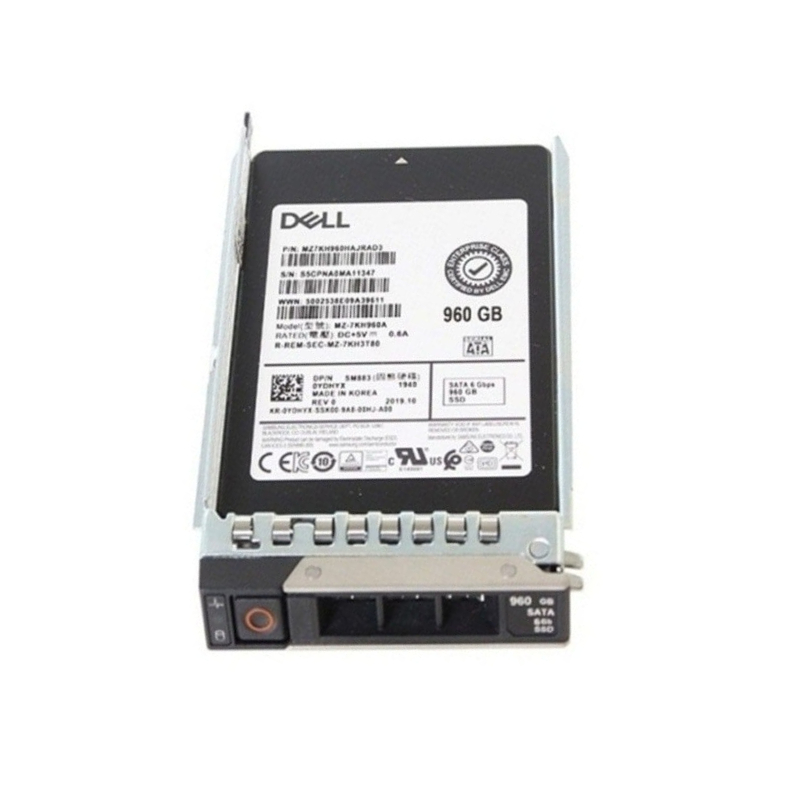


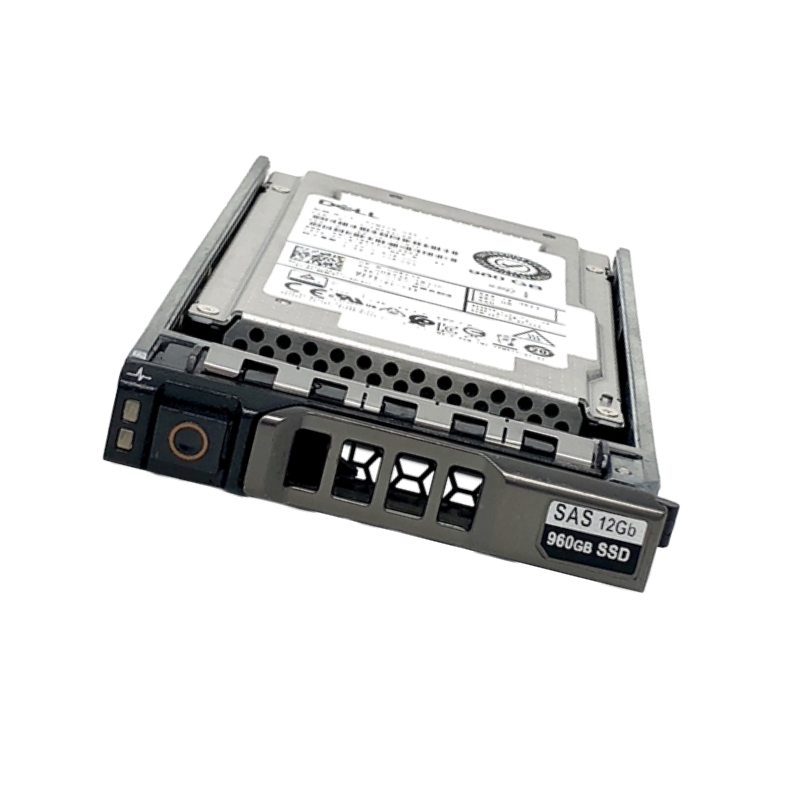
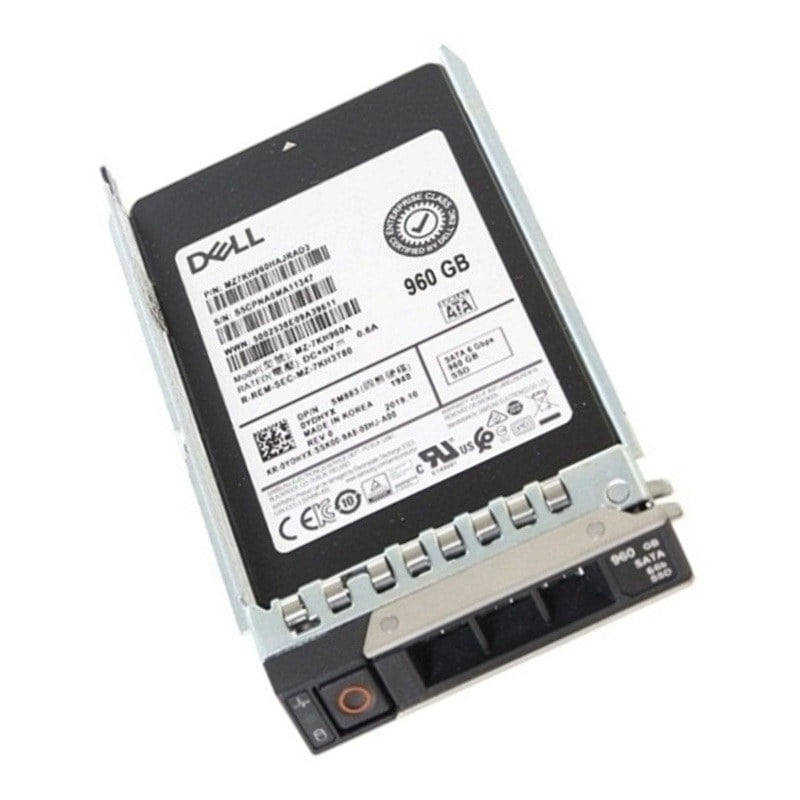
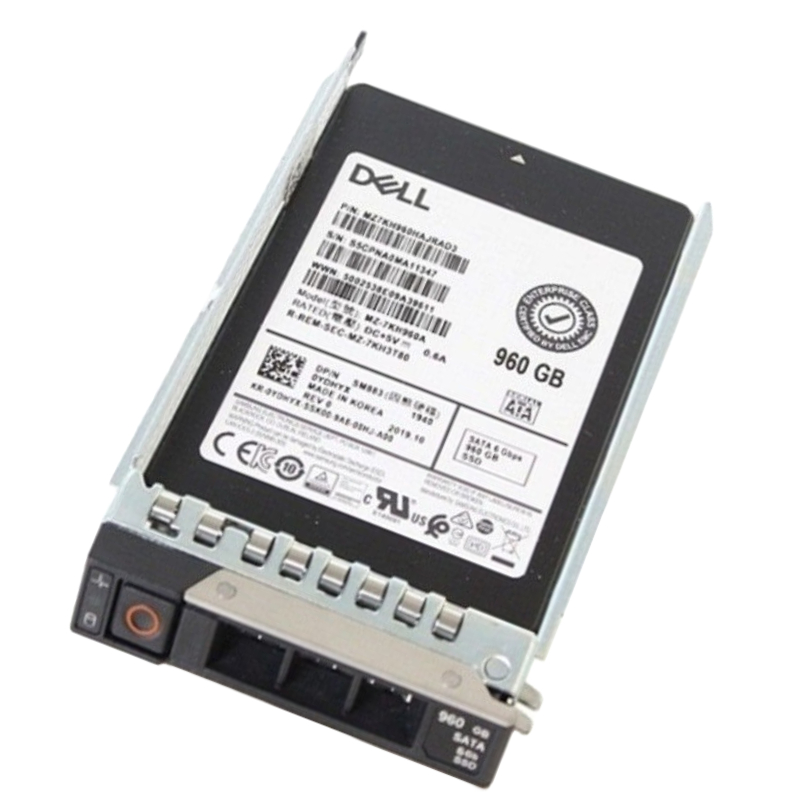
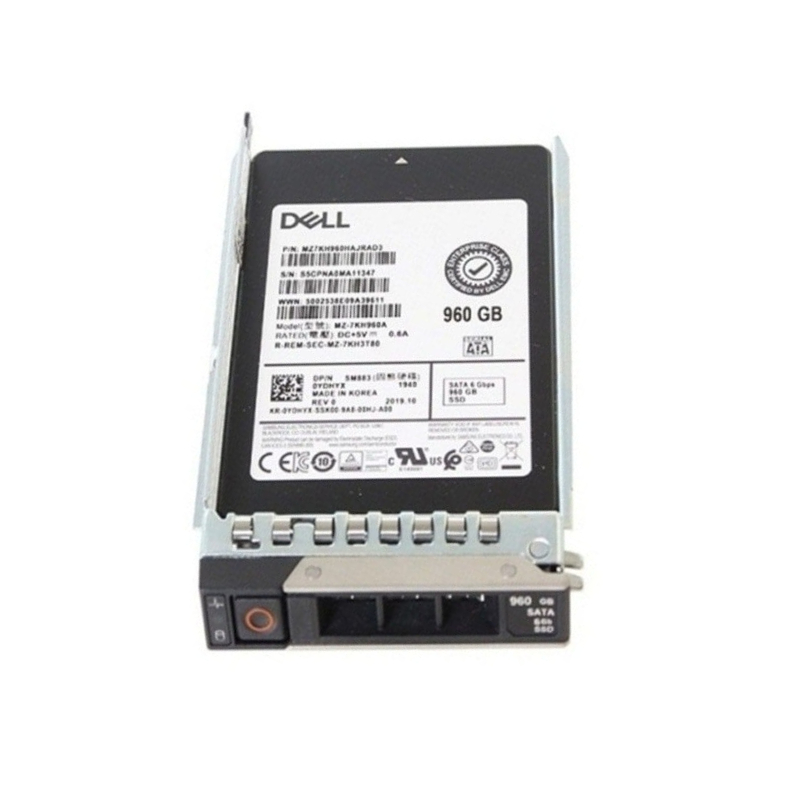
Dell 6KCYT 960GB SATA 6GBPS Mixed Use Tlc SSD. New Sealed in Box (NIB) with 1 Year Warranty
| SKU/MPN | Warranty | Price | Condition | You save |
|---|---|---|---|---|
| 6KCYT | 1 Year Warranty | $330.00 | Excellent Refurbished | You save: $115.50 (26%) |
| 6KCYT | 1 Year Warranty | $831.00 | New Sealed in Box (NIB) | You save: $290.85 (26%) |
The Dell 6KCYT 960GB Mixed Use 3DWPD TLC SATA 6Gbps 2.5-inch hot-plug solid state drive is designed and validated for modern PowerEdge server environments, specifically targeted at Dell PowerEdge 14G, 15G and 16G platforms. This category of drives sits at the intersection of enterprise reliability and cost-effective performance, offering a balanced endurance rating of 3 Drive Writes Per Day (3DWPD) that makes it ideal for workloads that mix read-heavy activity with frequent writes. As a Mixed Use class SSD using Triple-Level Cell (TLC) NAND, it delivers higher storage density and competitive cost per gigabyte while maintaining durability and consistent I/O performance for database caching, virtual machine storage, hyperconverged infrastructures, and general-purpose tiered storage pools.
The 960GB nominal capacity of the Dell 6KCYT drive provides a practical middle-ground between entry-level capacities and higher endurance write-intensive drives. The 2.5-inch small form factor (SFF) ensures compatibility with dense server chassis where drive bay real estate and airflow optimization matter. Being a hot-plug drive, it supports live maintenance and hot-swap replacement in service environments without taking hosts offline, reducing planned downtime and enabling rapid field serviceability. The SATA 6Gbps interface ensures wide compatibility and simple integration with legacy SATA controller backplanes commonly found in PowerEdge platforms, while still providing ample bandwidth for many mid-tier enterprise workloads.
Performance for Mixed Use SSDs is tuned to provide a dependable blend of consistent random I/O and respectable sequential throughput. The Dell 6KCYT 960GB model is engineered to deliver low-latency access for transactional workloads and predictable sustained performance under mixed read/write patterns. Random read and write latency advantages inherent to NAND-based flash translate to faster virtual machine boot storms, quicker database query responses, and improved user experience for multi-tenant server environments. With firmware optimized for enterprise queuing and background garbage collection, this drive reduces performance jitter and maintains higher usable performance over long durations compared with consumer-class SSDs.
Although exact benchmark numbers will vary based on system configuration, queue depth, and controller, Mixed Use SSDs like the Dell 6KCYT are typically calibrated to sustain high random read IOPS while delivering solid random write performance that aligns with the 3DWPD endurance class. Low and consistent latency under mixed workloads is a critical benefit, and the firmware implementations focus on minimizing tail latency to ensure smooth, predictable behavior under load, which is especially important for latency-sensitive virtualization and database services.
Sequential throughput remains important for large file transfers and sequential streaming workloads. The SATA 6Gbps interface defines the theoretical maximum bandwidth, and the drive's internal controller and TLC NAND stack are tuned to make efficient use of the available channel. For backup staging, large VM image moves, or media delivery, sequential read and write rates offer a strong value proposition in this capacity and endurance class.
Endurance is a central dimension when selecting SSDs for enterprise use. The specified 3DWPD endurance rating means that the drive is guaranteed to tolerate writing three times its capacity every day over the warranted lifespan without exceeding design wear limits. For a 960GB drive, this equates to a meaningful total bytes written guarantee that supports mixed read/write server workloads, caching layers, and moderate logging services. The Mixed Use class is positioned between Read Intensive and Write Intensive drives, making it a cost-efficient choice for environments where write amplification is moderate but not extreme.
To preserve long-term reliability, the drive employs sophisticated wear-leveling algorithms and background garbage collection, which help distribute program/erase cycles evenly across the NAND array. Over-provisioning reserved by the manufacturer contributes to sustained performance and endurance by providing spare blocks that replace worn-out cells and reduce write amplification. These mechanisms happen transparently to the user and are crucial for maintaining drive health in continuous server operation.
Enterprise SSD controllers include advanced error correction code (ECC) and bad block management to detect and correct bit errors and to retire questionable blocks before data integrity risks arise. The Dell 6KCYT series integrates these protections as part of its firmware architecture, ensuring that single-bit errors are corrected, multi-bit events are managed appropriately, and uncorrectable events are minimized through mapping and redundancy. For mission-critical deployments, pairing SSD-level protections with higher-layer replication and backup strategies is recommended to achieve comprehensive data resilience.
Compatibility and certification for Dell PowerEdge 14G, 15G and 16G servers are key selling points for this category. These drives are tested to work with Dell's chassis backplanes, RAID controllers, and system firmware stacks, which simplifies procurement and reduces integration risk. Certified compatibility means the drive will appear in Dell management interfaces, such as iDRAC and OpenManage, enabling drive visibility, health telemetry, and firmware updates through familiar Dell tooling. Administrators benefit from predictable behavior when replacing or scaling storage arrays in standardized Dell server fleets.
Firmware validation between drive OEMs and Dell ensures that features like automated rebuilds, SMART attribute reporting, and device identification behave correctly under the server’s management stack. Firmware updates addressing performance optimizations, interoperability fixes, or security enhancements are distributed through Dell channels, and administrators should track available updates to maintain optimal operation. Integration testing also covers hot-swap behavior, LED and enclosure management, and compatibility with RAID logical drive constructs used in enterprise storage arrays.
Enterprise SSDs often incorporate security features that help organizations meet regulatory and internal data protection requirements. While some drives in this family may offer self-encrypting drive (SED) options, administrators should confirm whether the specific Dell 6KCYT 960GB SKU includes hardware encryption or supports TCG Opal standards. When available, hardware-based AES encryption provides full-disk encryption with minimal performance overhead, simplifying secure decommissioning and safeguarding data-at-rest. Support for secure erase and crypto-erase operations enables organizations to render drives cryptographically irrecoverable before retirement or reallocation.
SMART telemetry and vendor-specific health attributes provide system administrators with early warnings of wear, reallocated sectors, and other health metrics. When used alongside Dell system management tools, SMART data enables proactive drive replacement policies and helps avoid unscheduled failures by flagging drives approaching their endurance limits. Effective monitoring is essential in large-scale deployments to maintain predictable availability and to plan refresh cycles.
The Mixed Use nature of the 3DWPD 960GB drive makes it especially suitable for a wide variety of enterprise workloads. Virtual desktop infrastructure (VDI) deployments often generate a mix of random reads and writes, boot storms, and short-lived spikes in I/O; Mixed Use SSDs absorb these patterns while offering cost advantages over write-heavy alternatives. In virtualization hosts, a 960GB SSD can host multiple VMs with significant IOPS requirements, improving VM responsiveness and densifying compute clusters.
Transaction-oriented databases benefit from the low latency of SSDs and the balanced endurance of Mixed Use drives when the write rate is moderate. Logging services and index stores that require fast ingestion with occasional bursts of writes are well matched to the 3DWPD specification. For caching tiers—where frequently accessed hot data is stored on SSDs to accelerate backend storage—the 960GB size enables substantial cache pools, increasing hit ratios and reducing load on slower persistent storage.
In hyperconverged infrastructures where compute and storage coexist on the same nodes, the Dell 6KCYT 960GB drive provides a balance between density, endurance, and cost that helps optimize node-level storage budgets. Hybrid storage architectures that combine flash caching with high-capacity HDD tiers benefit from mixed use SSDs as the flash layer, enabling responsive front-end I/O while offloading colder data to economical disk arrays.
When deploying Dell 6KCYT 960GB drives at scale, administrators should plan for firmware management, monitoring, and inventory controls. Establishing a lifecycle policy that considers drive write workload, SMART telemetry thresholds, and warranty coverage helps ensure drives are replaced before they become a risk to service availability. RAID level selection and RAID rebuild strategies significantly influence endurance; choosing RAID levels and hot spare strategies aligned with workload patterns will optimize both performance and drive longevity.
Pairing Mixed Use SSDs with RAID configurations suited to the workload is essential. For read-heavy workloads, RAID 5 may provide efficient capacity utilization, but write amplification during parity updates will increase wear. For mixed workloads, RAID 10 offers superior write performance and predictable rebuild times at the cost of lower usable capacity. Understanding the interaction between RAID parity writes and SSD write amplification will help administrators choose the appropriate configuration and provisioning for their environment.
Where possible, allocate additional over-provisioning in drive firmware or system-level LUN allocation strategies to reduce write amplification. Some storage controllers allow QoS policies to prioritize latency-sensitive workloads and throttle noisy neighbors. Employing QoS in virtualized clusters prevents single tenants from consuming disproportionate I/O resources on shared flash pools, maintaining predictable performance for critical applications.


 Contact Us
 Information
 Catalog
 Solid State Drives (SSD)
 Network Switches
 Hard Disk Drives
 HBA & Controllers
 PC & Servers
 PC & Server Memory
 CPU & Processors
 Network Routers
 Power Supplies
 Tape Drives & Libraries
 Network Devices
 Computer & Network Cables