(7% discount is applied at checkout)
Cart is empty
Your go-to destination for cutting-edge server products
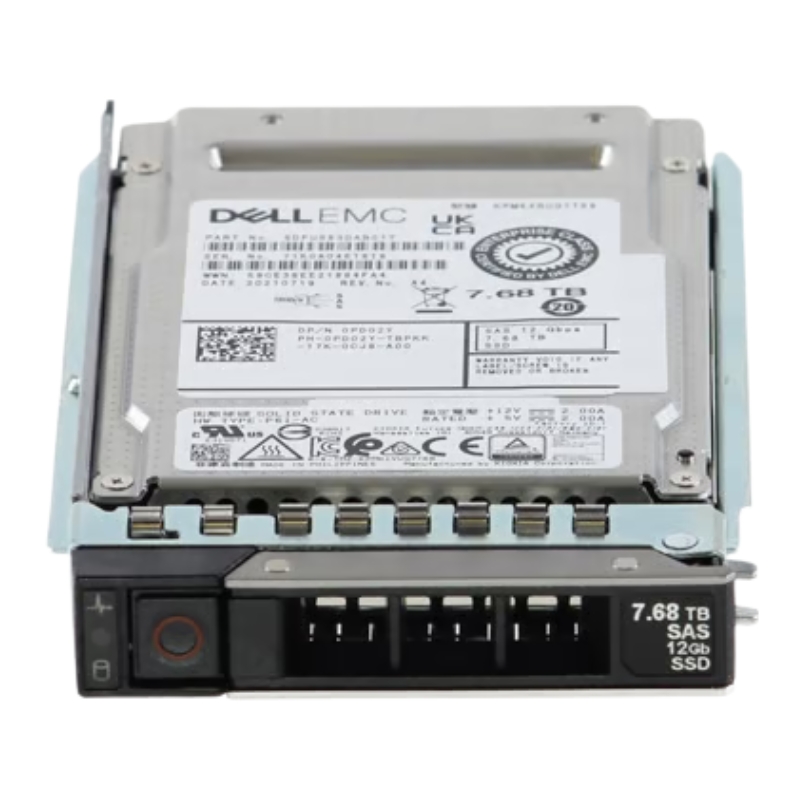


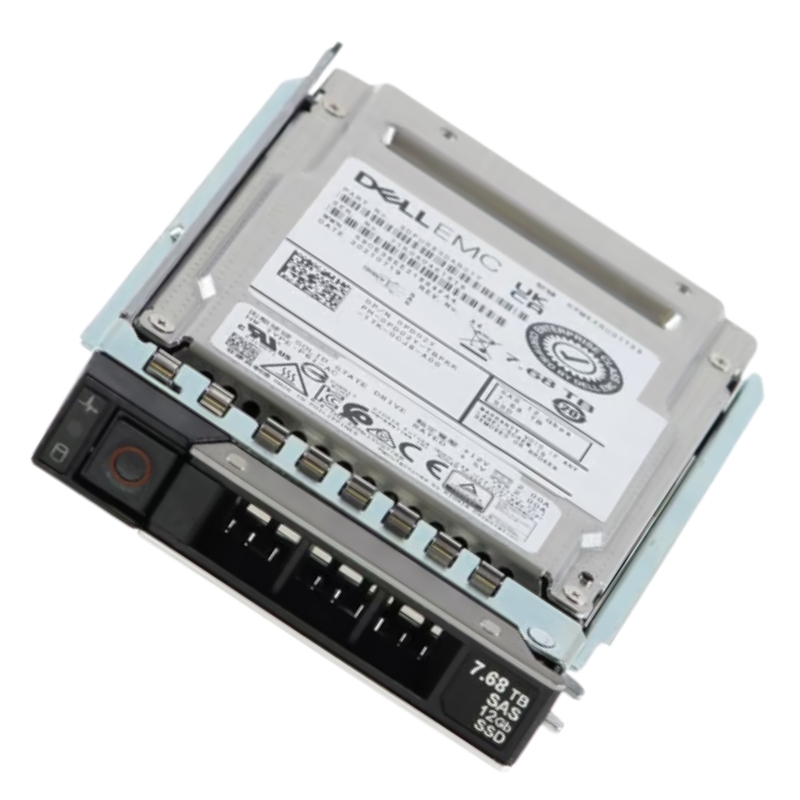
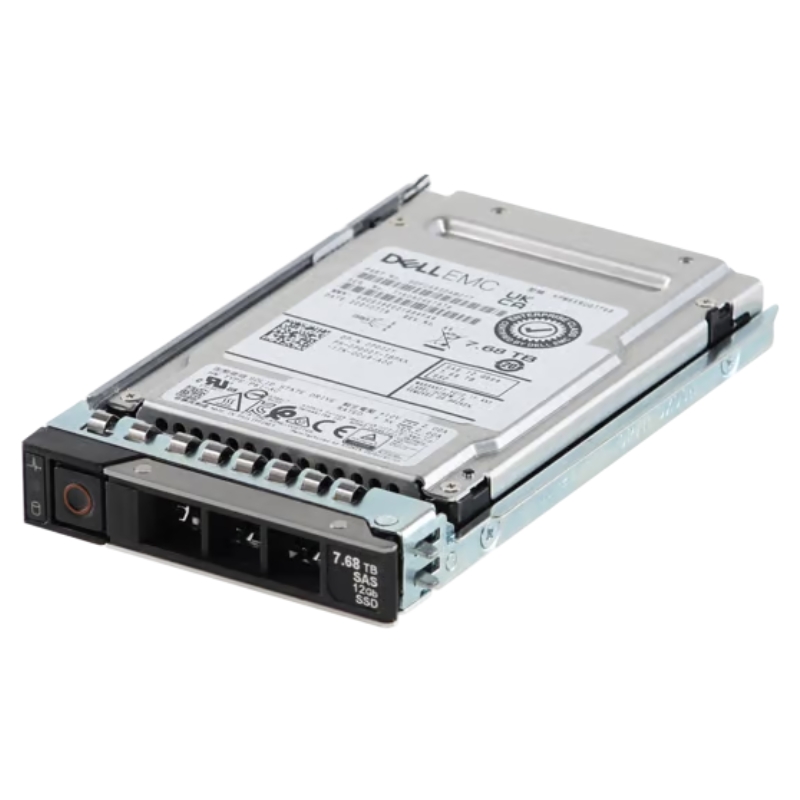
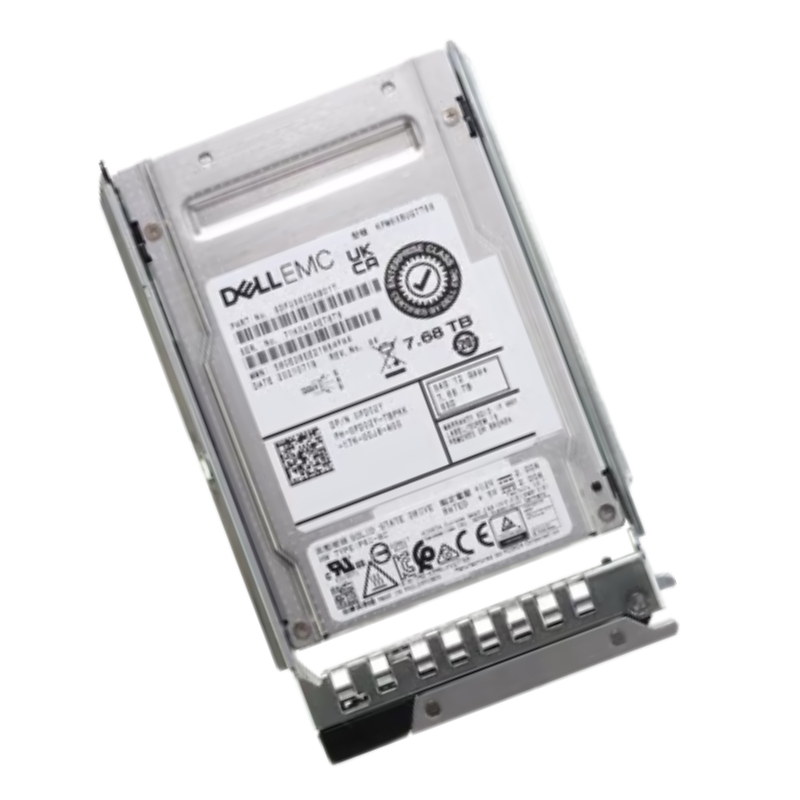
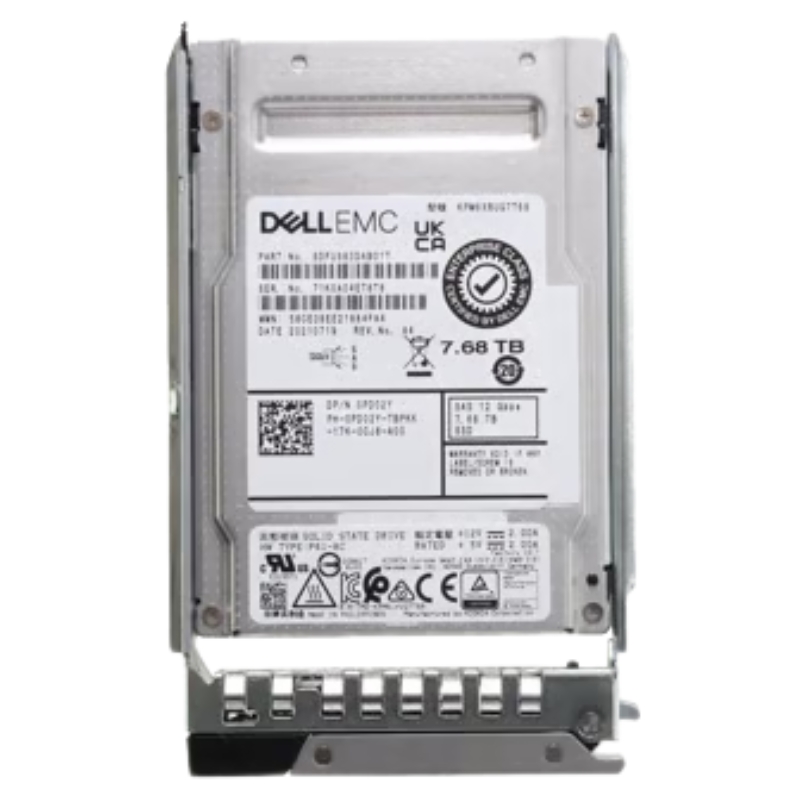
Dell 4RNJR 7.68TB SAS-12GBPS Read Intensive TLC SSD. New Sealed in Box (NIB) with 1 year Warranty
Enhance your enterprise storage with the DELL 7.68TB SAS 12Gbps Read-Intensive 3D TLC SSD. Designed for PowerEdge servers, this hot-plug solid state drive delivers exceptional reliability, high-speed data transfer, and optimized endurance for demanding workloads.
The Dell 4RNJR 7.68TB SAS-12GBPS Read Intensive TLC SSD represents a cutting-edge storage solution tailored for enterprise-level applications that demand high read performance, reliability, and efficiency. Designed with the latest SAS 12Gbps interface, this SSD ensures rapid data access and consistent performance for mission-critical workloads.
Built with Triple-Level Cell (TLC) NAND technology, the Dell 4RNJR SSD delivers a cost-effective balance between capacity, endurance, and speed. Its 7.68TB storage capacity is ideal for large databases, analytics, virtualization, and other read-intensive applications, providing businesses with a scalable and high-performance storage option.
The 7.68TB capacity of the Dell 4RNJR SSD makes it an excellent choice for organizations that need to manage vast amounts of data efficiently. This high-capacity SSD reduces the need for multiple drives, simplifying storage management and reducing rack space usage in data centers.
With the SAS-12Gbps interface, the Dell 4RNJR SSD supports ultra-fast data transfer speeds, ensuring minimal latency and improved system performance. This interface is optimized for enterprise servers and storage arrays, making it compatible with Dell PowerEdge servers and other SAS-enabled storage environments.
The SSD uses TLC NAND, which stores three bits per cell, offering high density at a lower cost per gigabyte. Optimized for read-intensive operations, this technology is ideal for workloads such as online transaction processing (OLTP), web servers, and big data analytics, where read operations dominate the storage activity.
Dell has engineered the 4RNJR SSD to withstand rigorous enterprise workloads. With features like end-to-end data protection, error correction, and power-loss protection, this SSD ensures data integrity and reliability. Its high endurance rating supports long-term deployment in demanding environments.
The Dell 4RNJR SSD delivers exceptional sequential read speeds up to 2,100 MB/s, which significantly improves data retrieval times for large datasets. Although write speeds are lower in read-intensive drives, the optimized read performance ensures consistent access for critical applications.
Designed for enterprise workloads, the 4RNJR SSD supports high Input/Output Operations Per Second (IOPS) for random read operations, which is crucial for database servers, virtual machines, and large-scale web applications. This performance ensures minimal latency even under heavy workloads.
The drive excels in random read workloads, achieving thousands of IOPS, making it ideal for applications where frequent data access occurs in non-sequential patterns. Random read efficiency reduces bottlenecks and enhances overall system responsiveness.
Low latency is a critical factor for enterprise applications, and the Dell 4RNJR SSD is engineered to minimize delays during data retrieval. This ensures faster response times for mission-critical operations and enhances end-user experience in data-driven applications.
The Dell 4RNJR SSD is fully compatible with Dell PowerEdge servers and can be integrated into various server models for both boot and data-intensive applications. Its SAS interface ensures compatibility with most enterprise storage controllers, reducing deployment complexity.
This SSD is suitable for high-performance storage arrays, supporting RAID configurations for redundancy and reliability. In virtualized environments, it enhances VM density and ensures rapid access to virtual disks, optimizing resource utilization and improving application performance.
By consolidating multiple drives into a single high-capacity SSD, organizations can optimize rack space, reduce cooling requirements, and decrease power consumption. The Dell 4RNJR SSD contributes to an efficient and sustainable data center strategy.
With high read speeds and robust IOPS performance, the Dell 4RNJR SSD is ideal for database workloads, including relational databases like SQL Server, Oracle, and PostgreSQL. It enables faster query responses and reduces overall transaction latency.
Organizations managing large-scale analytics platforms can leverage the Dell 4RNJR SSD to handle massive datasets efficiently. Its read-intensive optimization ensures quick data retrieval for analytics and reporting, supporting faster decision-making processes.
For virtualized environments, the SSD enhances virtual machine performance by reducing boot times and improving read operations. This allows IT teams to maintain high VM density without compromising on performance or reliability.
Web servers benefit from the high read speeds of the Dell 4RNJR SSD, ensuring that web applications and content delivery networks respond quickly to user requests. This improves user experience and enhances overall site performance.
The Dell 4RNJR SSD includes end-to-end data protection, ensuring that data remains consistent from the host interface to the NAND storage cells. This feature prevents data corruption during transfer and is crucial for maintaining enterprise data integrity.
Unexpected power outages can result in data loss. This SSD incorporates power-loss protection mechanisms that safeguard in-flight data, ensuring that critical information is preserved even during sudden disruptions.
Error Correction Codes (ECC) are used to detect and correct data errors, providing an additional layer of reliability. This feature minimizes the risk of data corruption and enhances long-term SSD endurance.
While Multi-Level Cell (MLC) SSDs offer higher endurance, the TLC-based Dell 4RNJR SSD provides a more cost-effective solution for read-heavy workloads. Organizations can achieve high performance without the premium cost associated with MLC SSDs.
SAS SSDs, like the Dell 4RNJR, deliver superior performance, reliability, and enterprise-grade features compared to SATA SSDs. The 12Gbps SAS interface ensures higher throughput and better compatibility with enterprise storage arrays.
By leveraging high-capacity TLC SSDs with SAS interfaces, businesses can consolidate storage, improve performance, and reduce overall TCO (Total Cost of Ownership) compared to traditional HDD-based solutions.
The Dell 4RNJR SSD consumes significantly less power than equivalent HDD solutions, contributing to energy savings in large data centers. Lower energy consumption also results in less heat generation, reducing cooling costs.
By optimizing storage density and power efficiency, this SSD supports sustainability initiatives, helping enterprises reduce their carbon footprint while maintaining high-performance storage capabilities.
High-capacity SSDs reduce the number of drives needed per rack, optimizing space and allowing IT teams to scale storage without expanding physical infrastructure. This efficiency is critical in modern data centers with limited space.
Lower energy consumption translates to lower heat output, reducing the need for extensive cooling systems and improving overall data center energy efficiency.


 Contact Us
 Information
 Catalog
 Solid State Drives (SSD)
 Network Switches
 Hard Disk Drives
 HBA & Controllers
 PC & Servers
 PC & Server Memory
 CPU & Processors
 Network Routers
 Power Supplies
 Tape Drives & Libraries
 Network Devices
 Computer & Network Cables