(7% discount is applied at checkout)
Cart is empty
Your go-to destination for cutting-edge server products
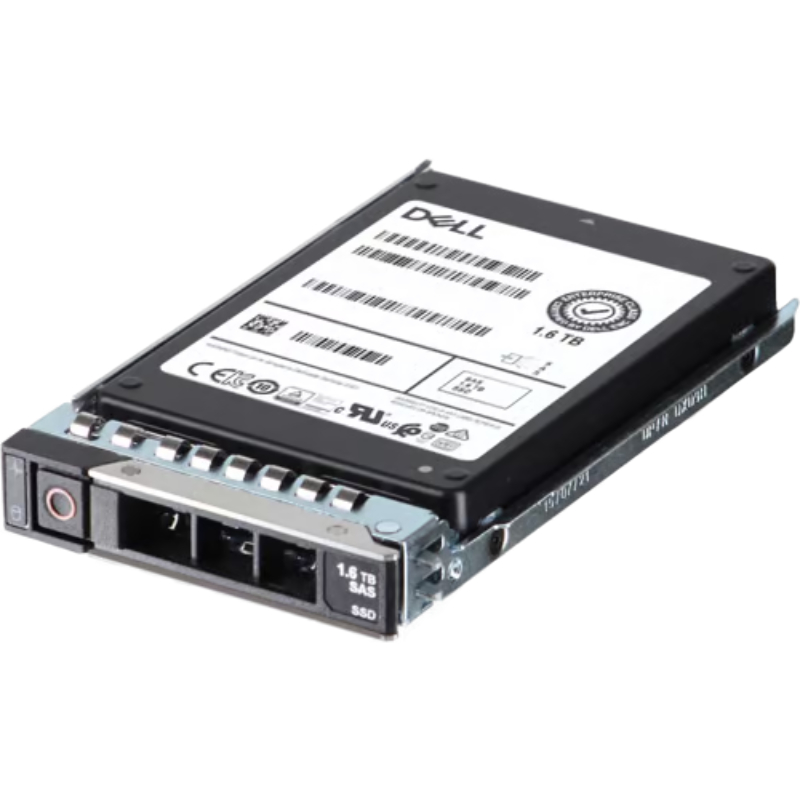


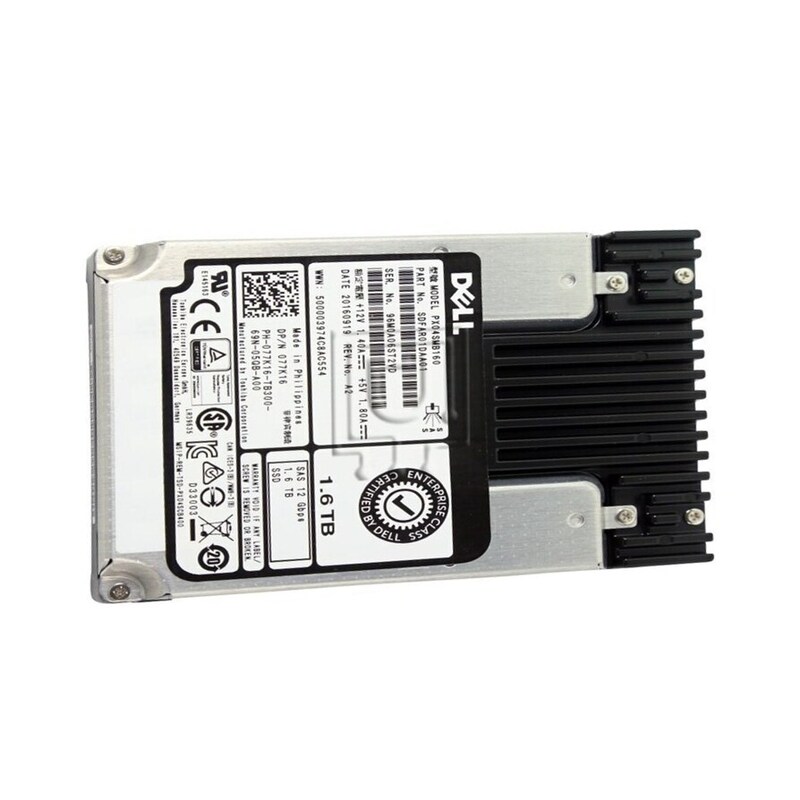
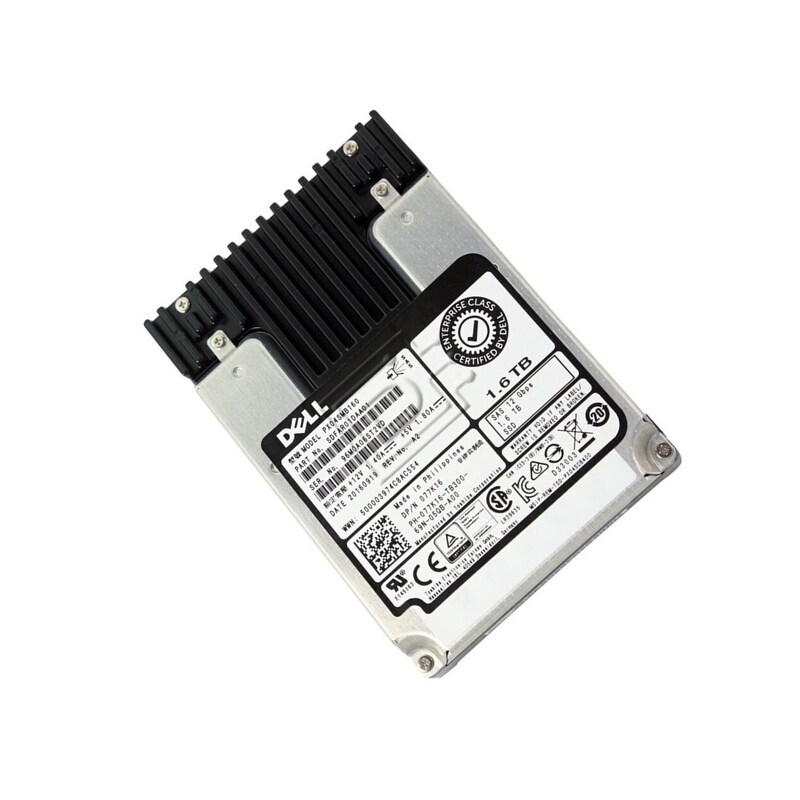
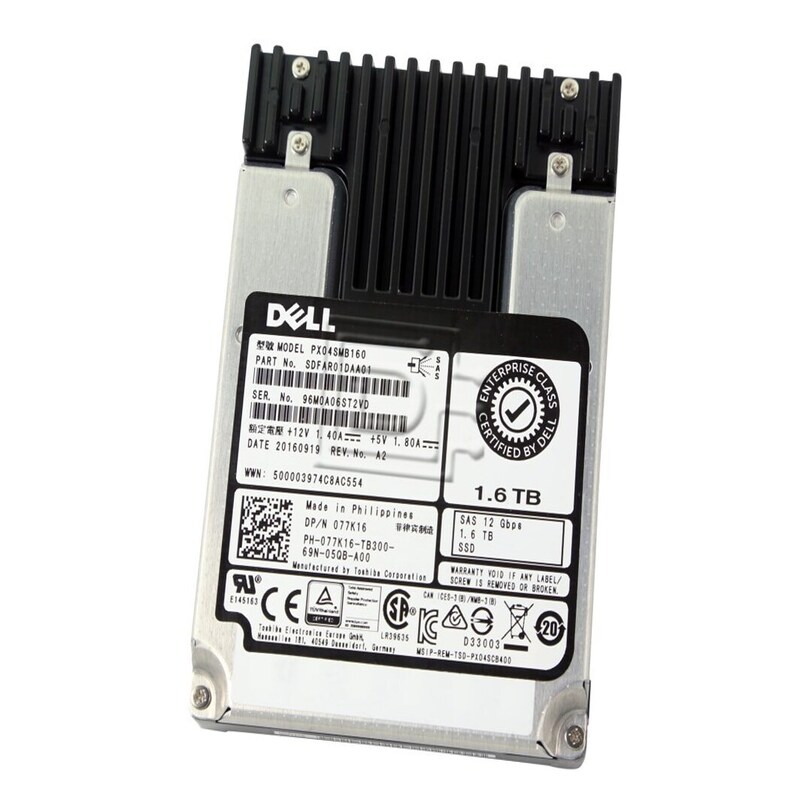
Dell 77K16 1.6TB SAS 12GBPS MLC Mixed Use Hot Plug SSD. Excellent Refurbished with 1 year replacement warranty
| SKU/MPN | Warranty | Price | Condition | You save |
|---|---|---|---|---|
| 77K16 | 1 Year Warranty | $1,463.00 | New Sealed in Box (NIB) | You save: $512.05 (26%) |
| 77K16 | 1 Year Warranty | $408.00 | Excellent Refurbished | You save: $142.80 (26%) |
Key specifications at a glance
These core attributes make the 77K16 an ideal candidate when you need higher capacity per slot than high-end write-optimized devices but still want enterprise reliability and SAS manageability.
The Dell 77K16 is an enterprise-class 2.5-inch SAS solid-state drive engineered for mixed-use workloads where a balance of capacity, endurance and predictable latency is required. With a 1.6TB usable capacity in a Small Form Factor (SFF) 2.5" package and a 12 Gb/s SAS interface, the 77K16 fits into modern PowerEdge server platforms and storage arrays that require hot-swap serviceability and enterprise firmware features. The drive targets database systems, virtualization hosts, mail and collaboration servers, and any mixed transactional/throughput workload in data centers where reliability and consistent I/O are priorities rather than pure maximum IOPS bursts.
“Mixed-use” refers to a product class designed to handle a balanced mix of read and write operations over its lifetime — more durable than consumer SSDs and more cost-effective than the highest-end write-intensive enterprise flash. MLC (Multi-Level Cell) NAND stores two bits per cell, which yields higher density and lower cost per GB than SLC, while delivering strong performance and endurance when paired with enterprise controllers, firmware and over-provisioning. The SAS 12 Gb/s interface provides an enterprise-grade physical and protocol layer with features such as dual-porting (on some controller configurations), robust error handling, and greater interoperability with server RAID/HBA controllers used in data centers.
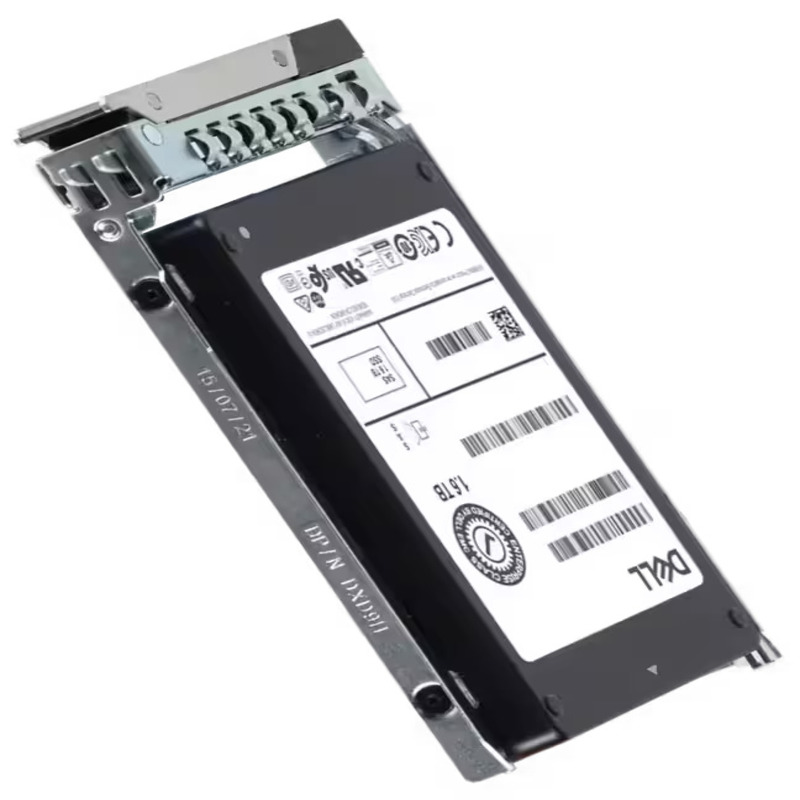
The 77K16 is a 2.5-inch Small Form Factor (SFF) SSD designed for hot-swap bays. Drives sold as server-qualified often ship in Dell trays (for example Dell G176J or similar caddies) and are intended to be inserted and removed from storage backplanes without powering down the host. That hot-plug capability improves serviceability in enterprise environments and reduces downtime for maintenance or upgrades.
SAS (Serial Attached SCSI) at 12 Gb/s remains a standard in enterprise servers for SAS backplanes and JBOD enclosures where guaranteed bandwidth, command queuing and advanced error recovery are required. The 77K16 leverages the SAS protocol to deliver consistent throughput and predictable latency under multi-threaded workloads commonly seen in virtualization and database environments. SAS also integrates cleanly with server RAID controllers and enterprise HBAs, making the 77K16 a drop-in option for many PowerEdge systems.
While exact IOPS and MB/s numbers depend on firmware revision, host controller and workload mix, mixed-use MLC SAS drives like the 77K16 are tuned to deliver strong sustained throughput, low latency for random reads, and predictable behavior under mixed read/write patterns. They are not marketed as the absolute top IOPS devices (which are often write-optimized NVMe or SLC/3D-TLC enterprise products) but they provide a compelling cost/performance ratio when you need both capacity and endurance across thousands of VMs or transactional databases.
The 77K16 uses enterprise-grade MLC NAND with enterprise firmware that typically includes features such as advanced wear leveling, background garbage collection, power-loss protection (implementation varies by model and seller), and SMART/telemetry reporting compatible with server management tools. These firmware features are essential for maintaining data integrity and predictable performance in production environments. Always confirm the presence of power-loss protection and firmware revision with the vendor if these features are critical for your deployment.
Many vendors list the 77K16 as compatible with current and previous generations of Dell PowerEdge servers, including models that support 2.5-inch SAS drives in front bays (for example PowerEdge R-series and select storage chassis). Because this part is a Dell-branded or Dell-qualified enterprise drive, it will often work seamlessly with Dell firmware and server management utilities, and it may be sold with or without a Dell drive tray depending on the seller. If you plan to mix OEM and third-party drives in RAID arrays, test firmware interoperability and RAID controller compatibility before large-scale deployment.
Enterprise storage architects commonly deploy storage in tiers to optimize cost and performance. The 77K16 sits comfortably in a mid-performance tier: higher-performing than SATA SSDs and cost-per-GB friendlier than ultra high-end write-optimized NVMe/flash modules. Typical use cases include:
Primary VM datastores for consolidated virtualization clusters where sustained mixed I/O is common.
Database log and index files that demand low latency and consistent response times.
Application servers and middleware that require larger capacity per drive while keeping enterprise reliability.
Read-heavy analytics slices combined with moderate background writes (analytics cache, OLAP slices).
Architecturally, use the 77K16 where you need to maximize storage density per drive slot while preserving SAS manageability and enterprise durability. Combining these drives with a tiered caching layer (e.g., NVMe cache or DRAM cache on RAID controllers) can give the best of both worlds: very low latency for hot data and cost-effective capacity for warm datasets.
Before inserting any enterprise drive into production, align the drive firmware with your server and RAID/controller firmware. Check Dell’s support matrices and the vendor listing for recommended firmware versions. Where possible, update RAID controller drivers and adopt vendor-certified firmware bundles to reduce the risk of incompatibilities — this is especially relevant when mixing OEM drives and third-party components.
Choose RAID levels that match your priorities: RAID 10 for low latency and redundancy at the cost of usable capacity, RAID 6 or erasure coding for high capacity efficiency with fault tolerance, or RAID 5 for mixed workloads where controller and drive write performance are balanced. Keep in mind that rebuild times on high-capacity drives can be lengthy; using drives optimized for enterprise rebuilds (and making sure your RAID controller supports background optimization and throttling) is essential to minimize risk during rebuilds.
Use SMART telemetry and server management tools to monitor wear, spare capacity, reallocated sectors, and temperature. Enterprise SSDs like the 77K16 expose detailed SMART attributes and often integrate with Dell OpenManage or similar monitoring platforms for automated alerts. Proactive monitoring and capacity planning prevent unexpected failures and help schedule non-disruptive replacements.
Because the 77K16 is designed for rack and chassis environments, pay attention to ambient cooling and backplane airflow. Enterprise SSDs dissipate less heat than high-performance HDDs under some patterns, but densely populated trays and high sustained throughput workloads raise drive temperatures — design your server chassis cooling accordingly. Confirm that your target chassis and backplane explicitly support SAS 12 Gb/s 2.5-inch devices and verify the caddy type if you require Dell OEM trays.
Enterprise SAS SSDs sometimes offer hardware encryption and management functions (e.g., TCG Opal or controller-level encryption). Dell-branded drives may have specific firmware or compatibility with enterprise key management systems; however, not every MU/MLC model is shipped with encryption enabled. If data-at-rest encryption or secure erase features are mandatory, confirm these capabilities with the seller and ask for relevant documentation so they can be validated in your security policy.
NVMe devices (PCIe) typically offer lower latency and higher IOPS than SAS SSDs due to the more efficient NVMe command set and direct CPU-PCIe lanes. If raw transactional performance and lower latency are the single highest priority — e.g., high-frequency trading, in-memory databases — NVMe may be preferable. The Dell 77K16 trades some of that peak performance for wider compatibility, easier integration into existing SAS backplanes, simpler hot-swap management, and often a lower cost per GB for 2.5" enterprise deployments.
SATA SSDs are generally less expensive but offer fewer enterprise features than SAS (such as fewer advanced management and error-recovery features). Where SAS backplanes and enterprise HBAs are standard, the 77K16 provides better integration and typically superior reliability under enterprise multi-threaded workloads. In SAN or converged infrastructures where SAS is the native interface, using a SAS MU drive often simplifies management and yields a more predictable experience.
Write-optimized enterprise SSDs (often SLC-like or higher endurance TLC variants) provide higher DWPD (Drive Writes Per Day) for extremely write-intensive workloads. If your workload is heavy sequential or random writes with minimal read/write balance (e.g., logging ingest at very high scale, some video edit workflows), a write-optimized device may be the better fit despite higher cost per GB. The 77K16’s mixed-use profile is ideal when balance and cost efficiency matter more than maximum write endurance.


 Contact Us
 Information
 Catalog
 Solid State Drives (SSD)
 Network Switches
 Hard Disk Drives
 HBA & Controllers
 PC & Servers
 PC & Server Memory
 CPU & Processors
 Network Routers
 Power Supplies
 Tape Drives & Libraries
 Network Devices
 Computer & Network Cables