(7% discount is applied at checkout)
Cart is empty
Your go-to destination for cutting-edge server products


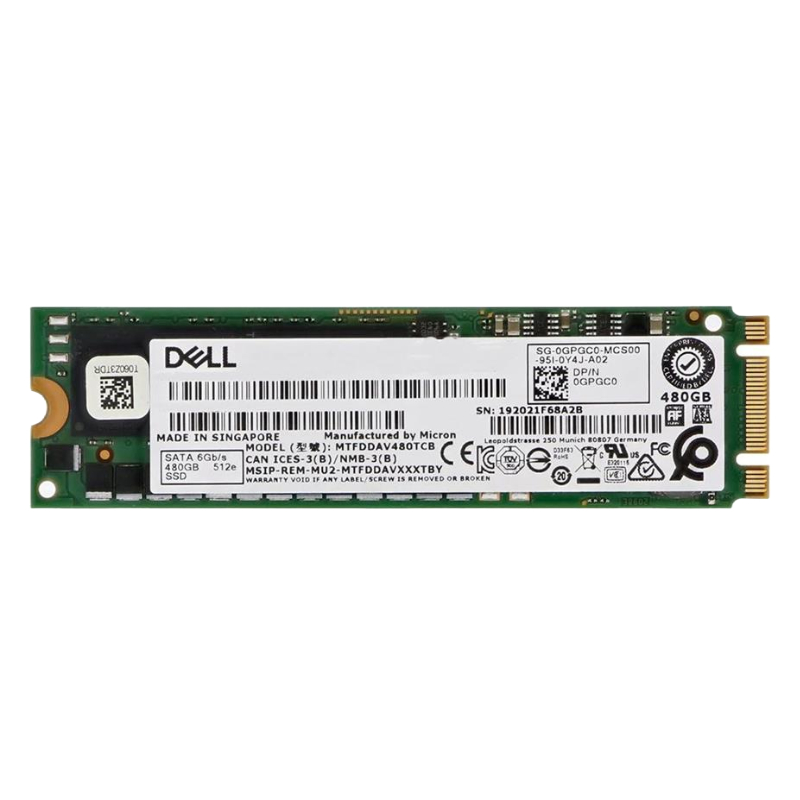
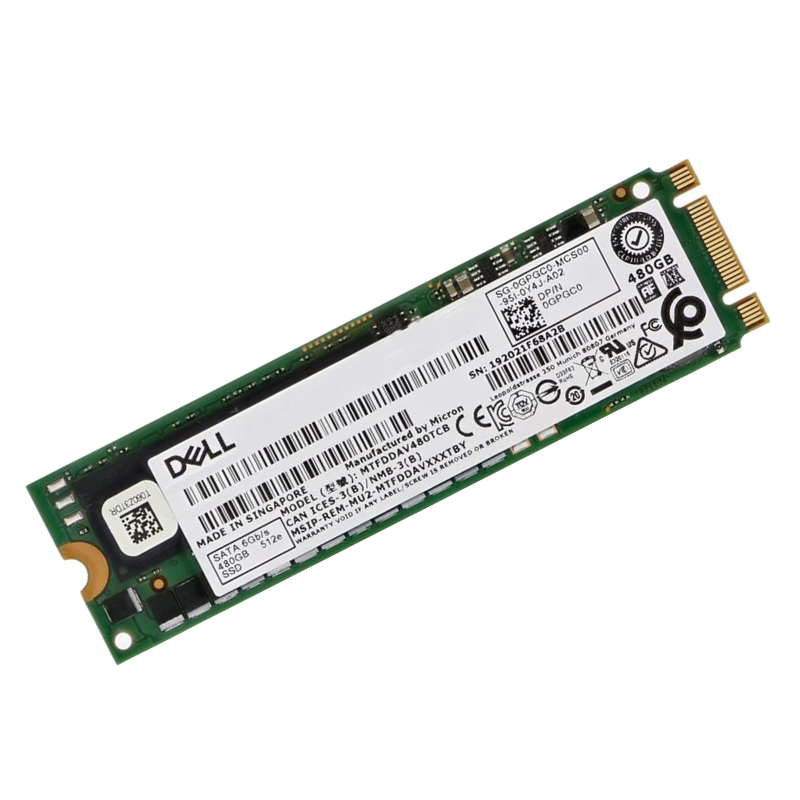
Dell 7FXC3 480GB SATA-6GBPS M.2-2280 for Boss Card 64-Layer TLC Read-Intensive 3D-Nand Enterprise Class Server Solid State Drive. Excellent Refurbished with 1 year replacement warranty
The Dell 7FXC3 480GB SATA-6GBPS M.2-2280 for BOSS Card slot occupies a specific and important niche in the enterprise storage landscape, meeting the needs of boot, caching, and read-intensive application workloads in modern servers. This solid state drive is presented as an M.2-2280 form factor device with a SATA 6.0 Gbps interface designed to be installed on Dell’s Boot Optimized Storage Solution (BOSS) card or compatible M.2 slots for enterprise-class systems. The product’s identity is strengthened by its use of 64-layer TLC 3D NAND, a technology that balances cost, capacity, and endurance with predictable performance characteristics tailored to read-dominant scenarios common in virtualization, database indexing, content delivery, and web services. When customers navigate category pages for enterprise server SSDs, the Dell 7FXC3 480GB SKU acts as a clear option for organizations seeking a compact, low-power, and serviceable drive that integrates seamlessly with existing server boot and mirrored storage architectures.
Within the enterprise SSD category, drives like the Dell 7FXC3 480GB occupy the read-intensive tier, distinct from mixed-use and write-intensive enterprise SSDs. Read-intensive SSDs are engineered to optimize sustained read throughput, predictable latency, and power-efficient operation while providing sufficient write endurance for boot, caching, and historically lighter write workloads. The M.2-2280 form factor makes these drives exceptionally space-efficient, enabling high-density server designs and streamlined serviceability on BOSS cards. For procurement and systems architects, this category represents a cost-effective strategy to improve server boot times, lower mechanical failure risk compared to spinning media, and enable RAID-like mirror boot configurations that simplify OS deployment and recovery workflows.
The M.2-2280 designation defines the physical footprint and connector type: 22 millimeters wide by 80 millimeters long, a footprint favored in server motherboards and add-in BOSS cards where density and airflow considerations are critical. The SATA 6Gbps interface is employed on this model to offer a well-understood and broadly compatible protocol for legacy and contemporary server ecosystems. While NVMe and PCIe devices push higher raw bandwidth, SATA remains relevant for boot and mirrored root-volume deployments where guaranteed compatibility, predictable performance, and lower platform integration complexity are valued. The combination of M.2-2280 and SATA 6Gbps ensures the drive can be deployed without altering fundamental server storage stack designs, reducing deployment friction and simplifying firmware and driver management for administrators who prioritize stability and standardization.
At the heart of the drive’s storage medium is 64-layer triple-level cell (TLC) 3D NAND. Layered 3D NAND stacks enable higher capacity and lower cost per gigabyte compared with planar NAND while delivering improved endurance characteristics due to architectural advancements. TLC stores three bits per cell, which increases density and reduces price, and when combined with 64-layer stacking and enterprise-grade controller and firmware design, it becomes suitable for read-intensive enterprise workloads. Manufacturers tune the error-correction algorithms, over-provisioning, and wear-leveling strategies to offset the inherent trade-offs of TLC, resulting in a product that meets enterprise expectations for reliability and predictable behavior across its warranted life.
This drive’s engineering considers full-stack compatibility with Dell server platforms and BOSS card configurations. System integrators and IT operations teams benefit from drives that support mirrored boot arrangements, enabling RAID-like resilience for operating system volumes. The SATA interface and M.2 form factor make the drive broadly compatible with controllers and adapters commonly deployed in enterprise racks; however, integration guidance and compatibility matrices should be reviewed to confirm firmware and BIOS support on specific server models. Proper platform validation assures that features like SMART reporting, firmware update mechanisms, and RAID configurations operate as intended, minimizing surprises during commissioning and field servicing.
The primary performance focus for read-intensive SSDs like the Dell 7FXC3 480GB is predictable and sustained read throughput under typical enterprise workloads. Sequential read performance accelerates boot times, speeds up OS image streaming, and reduces application latency for read-heavy database queries and file access patterns. Designers optimize caching algorithms and internal data path width to prioritize low-latency read operations and maintain responsiveness even when multiple virtual machines or containers are vying for resources on the same host. While absolute maximum throughput figures vary by testing methodology and firmware revisions, the observable impact is consistent: substantially faster boot and access times versus spinning disks, with far lower variance during peak read periods.
Read latency is a critical metric for customer experience and application responsiveness. Because this drive is tuned for read-dominant workloads, its random read IOPS at low queue depths and the latency tail distribution are engineered to keep access times consistent. This is particularly important for service loads such as web server content retrieval, read-heavy database indexes, caching layers, and virtualized desktop infrastructure where thousands of small read requests can determine perceived performance. The drive’s strong suit is handling these read patterns efficiently and with predictable latency under sustained operations.
Read-optimized enterprise drives are not designed primarily for heavy sustained write workloads, and while they support everyday writes required by boot processes, configuration changes, patching, and logging, administrators should expect different behavior when subjected to prolonged write-intensive activities. Firmware manages write amplification and wear-leveling to preserve drive longevity, but for write-heavy databases, logging systems, or big-data ingestion pipelines, mixed-use or write-optimized SSDs are better suited. When using read-intensive drives for boot or cache on a BOSS card, it is important to segregate write-heavy workloads to other storage tiers to maximize overall system efficiency and prolong device endurance.
Endurance for a 64-layer TLC-based enterprise drive is addressed through a combination of over-provisioning, effective wear-leveling algorithms, and intelligent firmware. While TLC cells have lower program/erase cycles compared to MLC or SLC, careful engineering and conservative endurance ratings for read-intensive SKUs ensure a stable service life when deployed in intended roles. Enterprise customers planning capacity and lifecycle replacement cycles can expect drives in this category to provide consistent performance for boot and read-heavy cache duties across multiple years of service, subject to workload characteristics and environmental conditions. Monitoring SMART attributes and employing scheduled refresh cycles keeps server fleets resilient and predictable.
Deploying the Dell 7FXC3 480GB drive as a boot device yields immediate improvements in server provisioning speed and reliability. Faster server boot times accelerate maintenance operations, reduce downtime during orchestrated reboots, and improve the responsiveness of services after power or host-level events. OS volumes benefit from consistent read performance, which translates to reduced boot bottlenecks in virtual machine hosts and hyperconverged infrastructures. For organizations that run large fleets of servers, the cumulative operational gains from optimized boot devices can be significant in both time savings and reduced incident exposure.
Read-intensive SSDs excel as local caches for frequently accessed data sets. They provide a cost-effective tier for accelerating read operations while delegating hot-write or archival storage to other tiers such as NVMe arrays or high-capacity HDD arrays. In web-serving, content distribution, and database index scenarios, the SSD’s low-latency reads reduce query response times and improve user experience. Integrating these drives into caching layers or local read-only datasets helps balance overall storage architecture costs while delivering targeted performance improvements where they matter most.
In virtualized environments, boot storms and metadata-intensive operations can cause significant contention on shared storage. Local M.2 SATA drives on BOSS cards mitigate such contention by providing each host with a dependable source for OS volumes and local caching. This approach improves consolidation ratios and increases the effective density of virtual machine deployments without incurring the overhead of external storage latency. For hypervisor-level operations and management services, the predictable behavior of read-optimized M.2 drives contributes to smoother operations and more consistent performance under variable workloads.
NVMe PCIe drives provide substantially higher bandwidth and lower latency than SATA devices, which makes them the go-to choice for write-intensive databases, analytics workloads, and latency-sensitive applications. However, NVMe adoption requires compatible motherboard and firmware support, and it often incurs higher costs and power usage. The Dell 7FXC3 480GB SATA M.2 SKU is positioned as a pragmatic alternative where broad compatibility, lower cost, and predictable read performance take precedence. For boot volumes, mirrored OS configurations, or read cache tiers, a SATA M.2 drive can deliver the needed functionality at a more favorable price-performance ratio.
Compared with 2.5-inch SATA SSDs, M.2-2280 drives offer a smaller footprint and easier integration onto BOSS cards and motherboards, enabling denser configurations without sacrificing capacity. When contrasted with traditional hard disk drives, the benefits are stark: SSDs radically improve boot speeds, reduce mechanical failure rates, and lower operational power consumption. For organizations replacing spinning media or augmenting existing arrays with local SSDs, the shift yields tangible improvements in reliability, manageability, and performance predictability for read-centric operations.


 Contact Us
 Information
 Catalog
 Solid State Drives (SSD)
 Network Switches
 Hard Disk Drives
 HBA & Controllers
 PC & Servers
 PC & Server Memory
 CPU & Processors
 Network Routers
 Power Supplies
 Tape Drives & Libraries
 Network Devices
 Computer & Network Cables