
(7% discount is applied at checkout)
Cart is empty
Your go-to destination for cutting-edge server products
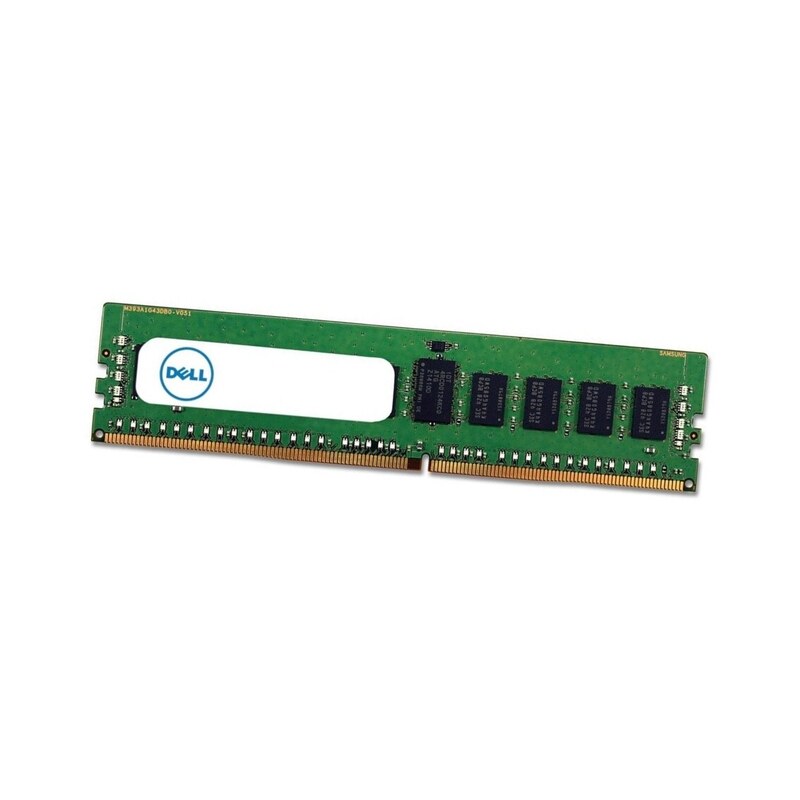
Dell 7H45N 128GB 2666mhz PC4-21300 CL19 ECC Registered DDR4 SDRAM 288-Pin RAM. New (System) Pull with 1 year replacement warranty - Samsung Version
The Dell 7H45N 128GB PC4-21300 DDR4-2666MHz 8Rx4 ECC Memory module is engineered for enterprise-grade performance, ensuring reliability and speed for demanding workloads.
Enterprise servers rely on advanced memory technologies to sustain high computational workloads. Within data center infrastructures, DDR4 modules such as the Dell 7H45N 128GB PC4-21300 DDR4-2666MHz 8Rx4 ECC Memory operate at the heart of performance optimization. This type of memory is engineered to deliver stable throughput, predictable latency patterns, and enhanced data integrity across multitiered application environments. The DDR4 standard introduced higher bandwidth thresholds and reduced power consumption, enabling servers to handle virtualization clusters, database engines, AI inference tasks, and distributed workloads with more efficiency than previous generations. As organizations continue to scale operations, the demand for reliable and expandable memory categories becomes increasingly important.
Professional-grade DDR4 memory modules are distinguished by specific architectural advancements designed for robust operational efficiency. The 128GB density of the Dell 7H45N module supports extensive memory layering strategies, commonly employed in enterprise-grade servers, allowing for better handling of memory-hungry applications. The PC4-21300 bandwidth rating aligns with a data rate of 2666 MT/s, facilitating predictable cycle-to-cycle performance, which is essential in tasks involving heavy I/O processing or parallel computational threads. These modules support multi-channel memory configurations where servers can aggregate memory pathways to unlock higher throughput ceilings, minimizing bottlenecks during peak processing periods.
Error-Correcting Code technology plays a crucial role within the class of memory utilized in mission-critical server environments. ECC modules like the Dell 7H45N 128GB DDR4-2666MHz memory are engineered to detect and correct common data errors that may arise during system operations. The integrity of data stored and processed in system memory becomes essential for workloads involving complex transactional systems, healthcare analytics, financial modelling, autonomous simulations, and scientific computing tasks. ECC further helps prevent system crashes and computational inconsistencies, thus extending the operational life cycle of server platforms and minimizing unscheduled downtime. Within large-scale deployments, this capability ensures that even multi-node clusters maintain consistent stability.
The 8Rx4 rank structure reflects a specialized memory design intended for servers requiring extremely high-density modules. Multi-rank modules facilitate improved memory distribution, allowing processors to access data across separate memory ranks to optimize performance under heavy workloads. The 8Rx4 configuration used in the Dell 7H45N memory module achieves density without compromising the structural integrity of data pathways. Servers configured with multiple high-rank DIMMs benefit from improved task handling during operations involving large-scale virtualization, real-time analytics pipelines, and simultaneous multi-user demands. While this design requires compatible server architectures capable of supporting high ranks, the resulting increase in total memory capacity offers significant operational advantages within enterprise storage, compute, and virtualization ecosystems.
High-rank memory modules necessitate motherboards that support advanced electrical mapping and enhanced signal routing. The DDR4 interface integrates refined timing controls that ensure data is transmitted with precise synchronization between the memory controller and the module. When deploying 8Rx4 memory like the Dell 7H45N 128GB DIMM, administrators must ensure that the server’s CPU and chipset are certified for high-density, high-rank modules. This ensures optimal memory cycling, prevents timing conflicts, and sustains system stability under computational pressure. Many modern Dell PowerEdge servers and similar enterprise platforms include BIOS-level memory controls that automatically adapt to high-rank DIMMs, further improving integration efficiency.
Workloads involving advanced virtualization technologies, hyperconverged infrastructure software stacks, multi-tenant cloud computing environments, and memory-heavy in-memory databases significantly benefit from high-rank memory modules. The increased density allows administrators to consolidate more virtual machines per server and improve overall resource allocation. Applications built on in-memory frameworks such as SAP HANA, Redis, or Apache Ignite rely heavily on memory bandwidth and capacity to store data models in real time. High-rank modules enable these platforms to run expansive data grids with minimal latency disruptions. Additionally, AI model hosting and training operations that depend on large parameter sets can run more efficiently with expanded memory pools.
DDR4-2666MHz memory operates at a data rate aligned with PC4-21300 throughput specifications. This performance class introduces efficient clock cycling that allows data packets to be processed at higher speeds compared to previous DDR generations. For enterprise tasks that rely on structured memory access patterns, the DDR4-2666 bandwidth offers an optimal balance between stability and performance. While faster DDR types like DDR4-2933 and DDR4-3200 exist, the 2666MHz tier remains a widely adopted standard in many server environments due to its compatibility and power efficiency. The Dell 7H45N memory module leverages this frequency to deliver consistent data flows during high-demand operations.
Latency in server memory dictates the responsiveness of applications that depend on repetitive data access cycles. DDR4-2666MHz modules maintain balanced CAS latency ratings that minimize the time required for processors to read or write memory cells. This balance ensures that complex enterprise software, such as virtualization hypervisors, ERP systems, and real-time processing engines, experience fewer computational stalls. The Dell 7H45N module’s latency characteristics are engineered to align with high-capacity architectures, guaranteeing the efficiency of large-scale deployments. Over time, optimal latency patterns contribute to smoother multi-threading and reduced bottlenecks during database indexing, log ingestion, and multi-session application hosting.
Thermal control is critical for high-capacity server memory due to continuous heavy data processing. The DDR4 standard introduced reduced voltage requirements that enhance energy efficiency while sustaining strong bandwidth output. The Dell 7H45N module is engineered to operate within controlled thermal envelopes that prevent overheating during sustained workloads. Many enterprise server chassis include memory cooling zones and dynamic fan controls that adapt airflow based on temperature readings. Efficient thermal behavior also extends module longevity and maintains structural integrity under intense data cycling operations. Lower voltage consumption contributes to reduced operational costs, making DDR4-2666 memory highly desirable in long-term data center environments.
High-capacity memory modules such as the Dell 7H45N 128GB DDR4-2666MHz ECC DIMM are essential in enterprise data centers that require scalable compute resources. Modern organizations rely on memory-intensive platforms to facilitate high availability, rapid data access, and predictable computational behavior. When servers are equipped with multiple 128GB DIMMs, they achieve memory pools suitable for vast virtualization clusters, distributed processing frameworks, and multi-layered analytics engines. These capacities are increasingly important across fields such as cloud service provision, biomedical research, large-scale simulations, artificial intelligence, and blockchain processing.
Virtualized environments depend on large memory pools to accommodate numerous virtual machines and containerized applications. High-density modules enable cloud orchestrators to designate appropriate memory allocations without experiencing resource limitations. Platforms such as VMware ESXi, Microsoft Hyper-V, and Proxmox benefit from the ability to run more workloads simultaneously with reduced host contention. Containers and microservices deployed using Kubernetes or Docker Swarm also achieve more seamless scaling through the additional memory resources. With 128GB DIMMs, an administrator can design robust node configurations suitable for hybrid cloud, on-premise clusters, and multi-datacenter workloads requiring high redundancy.
Artificial intelligence frameworks, particularly in training and inference, require memory to host large models, datasets, feature vectors, and intermediate results. High-density memory modules support expansive neural models that include millions or billions of parameters. During training cycles, memory enables faster batch loading, more efficient tensor handling, and reduced data swapping. For inference tasks, especially in real-time processing systems, larger memory allocations prevent delays caused by model retrieval or intermediate caching. The Dell 7H45N DIMM contributes to the smooth execution of AI workflows across industries such as autonomous driving research, natural language processing, robotics automation, and industrial analytics ecosystems.
Databases running on platforms like Oracle, Microsoft SQL Server, MySQL, or PostgreSQL respond more efficiently when hosted on servers with expanded memory pools. High-capacity modules reduce the number of disk operations required for query execution by storing more indexes, temporary tables, and frequently accessed data in RAM. In-memory systems, such as SAP HANA or Memcached, rely almost entirely on large memory capacities to achieve real-time responsiveness. The Dell 7H45N module helps organizations deploy database clusters with sufficient headroom for future growth, while also promoting consistent performance during peak transaction hours.
The Dell 7H45N 128GB DDR4 module is engineered for compatibility with a broad range of Dell PowerEdge servers that support high-density memory configurations. Compatibility also extends to other server platforms that accept DDR4-2666MHz 8Rx4 ECC RDIMMs, provided the system firmware supports large-rank DIMMs. System administrators must review server documentation to confirm rank limitations, channel configurations, and maximum supported capacities. Many enterprise servers incorporate memory mapping enhancements that enable proper integration of 128GB modules, ensuring optimal distribution across memory channels and maintaining stable throughput.
Server firmware controls how memory modules interact with CPUs, affecting timing margins, voltage distribution, and error detection procedures. When deploying high-density modules such as the Dell 7H45N, updating the server BIOS ensures the system recognizes the module’s capacity and rank composition. Firmware updates often include microcode enhancements that improve high-capacity DIMM compatibility and fix issues involving timing mismatches or initialization errors. Proper firmware alignment contributes to stable system booting, predictable workload handling, and consistent error correction behavior across operational cycles.
Many enterprise CPUs include multi-channel memory controllers capable of handling dual-channel, quad-channel, or hex-channel configurations. When populating multiple Dell 7H45N memory modules, administrators must ensure balanced installation to maintain channel symmetry. Balanced configurations enhance data distribution and reduce latency by ensuring simultaneous access paths. These principles apply to both traditional rack servers and blade servers, enabling infrastructure teams to design optimized memory layouts for targeted workloads. Balanced memory channels are especially beneficial in environments where uniform performance levels must be enforced across clustered nodes.
The physical layout of high-capacity memory modules incorporates advanced PCB layering techniques to accommodate large memory banks while maintaining signal integrity. The Dell 7H45N DIMM features a robust construction standard that ensures durability during continuous operation. The module’s circuitry includes reinforced contact designs, multi-layer routing pathways, and precise component placements that support signal clarity. The ECC logic is integrated with the memory controller interface to reduce error propagation. Quality assurance testing ensures that the module performs consistently in environments where heat, vibration, and power fluctuations can occur.
Multi-rank memory modules demand rigorous electrical discipline to prevent timing drift and data corruption. Manufacturers employ optimized impedance control, advanced shielding, and strategically placed components to maintain signal clarity. These engineering techniques are particularly important in 8Rx4 modules due to the high number of memory banks. The Dell 7H45N module incorporates precise electrical design strategies that ensure stable operation across extended workloads, especially when installed in servers with full memory configurations. This engineering foundation helps preserve data consistency and enhances real-time processing reliability.
Installing high-density ECC memory yields substantial performance and operational advantages. Workloads become more predictable, queues process more efficiently, and system responsiveness improves under heavy application demands. With 128GB modules, organizations eliminate the limitations associated with smaller capacities and open pathways for advanced data operations. Enhanced reliability metrics ensure that hardware failures and memory-based errors remain minimal, supporting overall infrastructure health.
Investing in high-capacity memory such as the Dell 7H45N 128GB module future-proofs server environments by preparing them for upcoming software requirements. Enterprise applications evolve rapidly, often demanding increased memory for new features, expanded user bases, and more complex computational processes. With large DIMMs installed, organizations can scale workloads without needing immediate hardware replacement. This strategic approach reduces long-term operational expenses and enhances infrastructure flexibility, particularly in modular compute environments.
Resource schedulers within hypervisors or container orchestrators allocate memory dynamically based on demand patterns. With larger physical memory spaces available, scheduling algorithms operate with increased precision, reducing swap operations and memory overcommitment. This behavior improves application performance consistency and minimizes latency spikes during scaling events. The Dell 7H45N module provides the foundation needed for efficient resource orchestration in consolidated server environments.
Modern enterprise environments rely on specialized workloads that require extensive real-time memory availability. High-density DIMMs support a variety of scenarios involving large datasets, predictive algorithms, high-resolution rendering engines, and multi-branch computational processes. By implementing 128GB modules across server nodes, organizations achieve significant resource improvements that translate into faster data handling, dependable multithreaded performance, and greater operational resilience during peak processing periods.
Data ingestion pipelines process continuously expanding volumes of structured, unstructured, and semi-structured data. High-capacity memory accelerates data staging, transformation, indexing, and caching. Systems used for ETL operations, streaming analytics, or machine log aggregation greatly benefit from optimized memory layouts. The Dell 7H45N module ensures smooth transitions between different phases of the data lifecycle, supporting consistent processing speeds even during simultaneous multi-source ingestion events.
Industries relying on visualization tools, digital twin simulations, and computational modeling require extensive memory capacity to render accurate and detailed outputs. The 128GB density supports professional software used for architectural design, scientific modeling, medical imaging, and real-time simulation. The module enables precise data representation without delays caused by insufficient memory headroom. Its ECC capabilities further ensure that scientific calculations and simulation results remain accurate across extended runtime sessions.


 Contact Us
 Information
 Catalog
 Solid State Drives (SSD)
 Network Switches
 Hard Disk Drives
 HBA & Controllers
 PC & Servers
 PC & Server Memory
 CPU & Processors
 Network Routers
 Power Supplies
 Tape Drives & Libraries
 Network Devices
 Computer & Network Cables