(7% discount is applied at checkout)
Cart is empty
Your go-to destination for cutting-edge server products


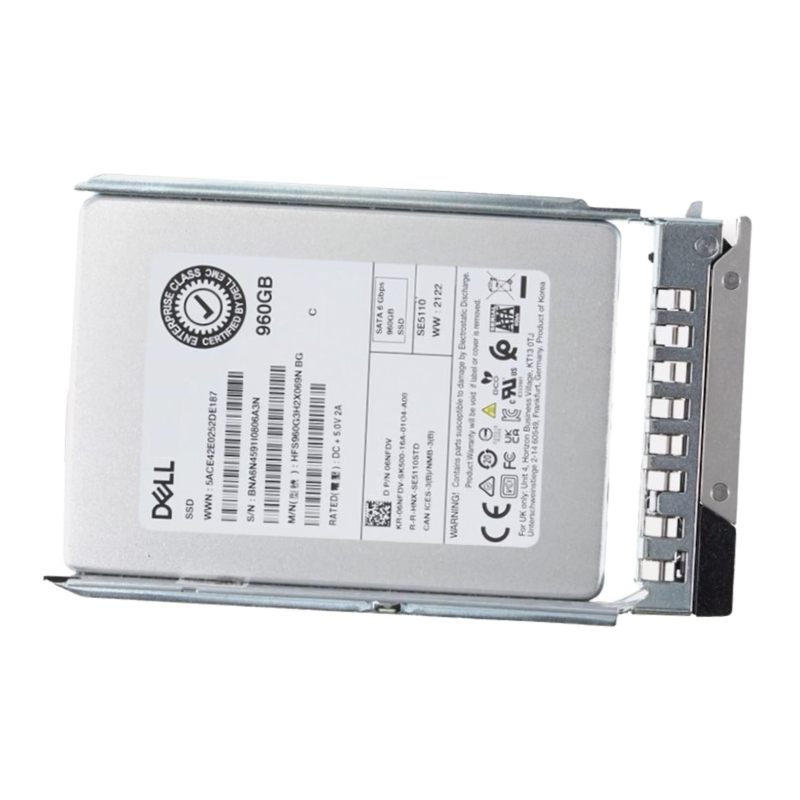
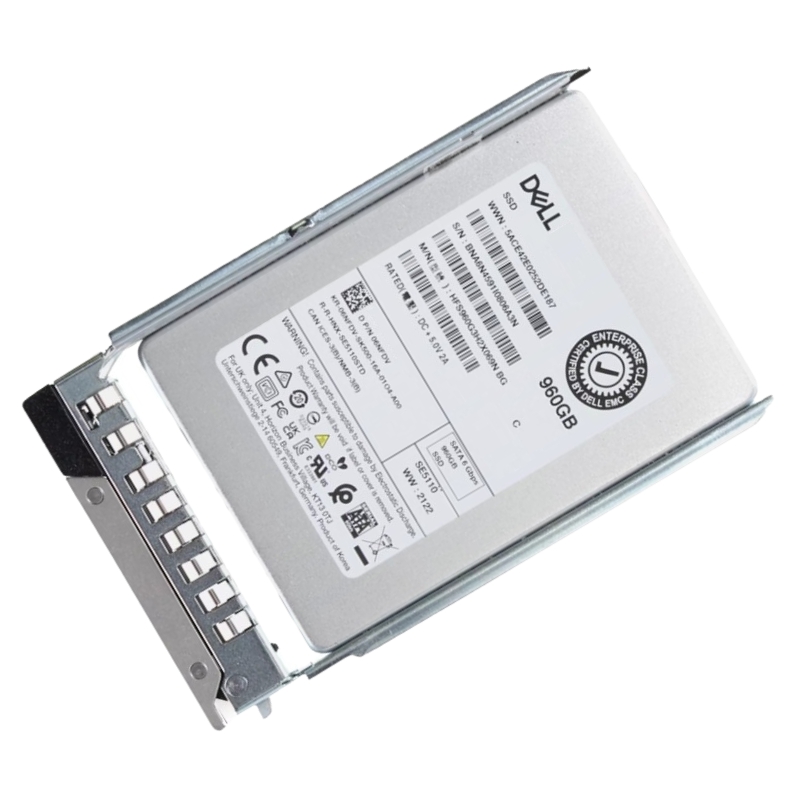
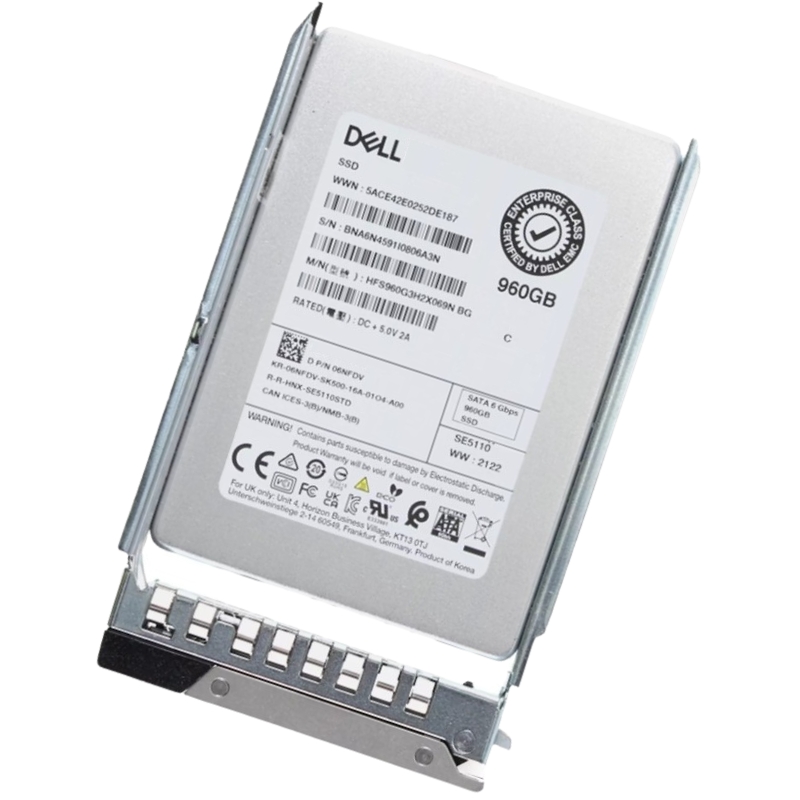
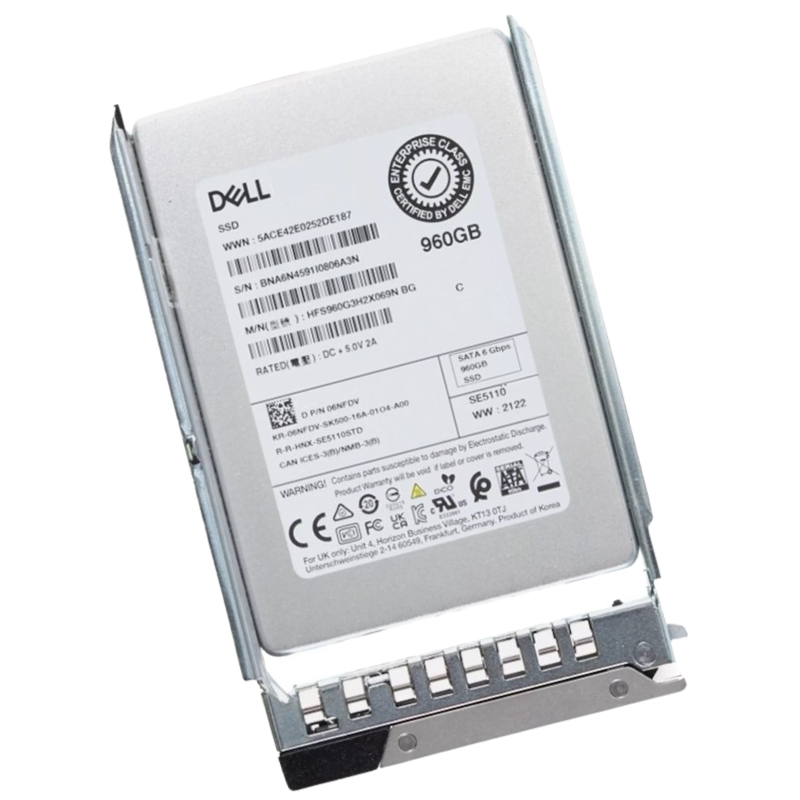
Dell 7PX4W 960GB SATA-6GBPS Read-Intensive TLC SFF Hot-Swap for Server Solid State Drive. New Sealed in Box (NIB) with 1-Year Replacement Warranty
At the center of this category is the Dell 7PX4W 960GB SATA-6GBPS Read-Intensive TLC SFF Hot-Swap for Server Solid State Drive, a product class defined by a 2.5-inch small form factor design, a SATA 6.0 Gbps interface, and NAND technology tuned for read-dominant workloads. The category emphasizes consistent read throughput, low latency under sustained read activity, and enterprise-grade mechanical and electrical design intended for hot-swap server bays. These drives are most commonly deployed as primary boot volumes in rack and tower servers, read caches in hybrid storage arrays, content delivery nodes in web and media farms, and in virtualized environments where read operations significantly outnumber writes. While the SSDs in this class share many common attributes, individual implementations differ in firmware optimization, power management, and support services; the Dell 7PX4W model is recognized for its enterprise alignment and full compatibility with Dell PowerEdge chassis and controller ecosystems.
The small form factor (SFF) 2.5-inch profile is a defining physical trait of drives in this category. This compact footprint enables dense server configurations and simplifies hot-swap tray design in modern rack servers. The SFF design translates into lower idle power consumption compared with 3.5-inch mechanical drives and allows system architects to increase storage density per chassis. Hot-swap mechanics, standard backplane connections, and common tray mounting patterns ensure the Dell 7PX4W 960GB SATA-6GBPS Read-Intensive TLC SFF Hot-Swap for Server Solid State Drive drops into typical enterprise drive sleds without modification, enabling rapid replacement and minimal downtime during maintenance windows. Administrators should check chassis compatibility tables and backplane support lists for specific server models to confirm that drive trays and carrier pins align correctly with the host system’s sled architecture.
Interface-level behavior is central to how drives in this category perform in real deployments. The SATA 6Gbps interface used by the Dell 7PX4W 960GB SATA-6GBPS Read-Intensive TLC SFF Hot-Swap for Server Solid State Drive provides a reliable, widely supported protocol that prioritizes compatibility across generations of server motherboards and RAID controllers. For read-intensive workloads, the SATA interface offers sufficient throughput for many enterprise applications, delivering strong sequential read rates and competitive random read IOPS when paired with modern server CPUs and optimized storage stacks. While NVMe drives can outpace SATA in raw IO and parallelism, SATA-based read-intensive SSDs remain attractive for cost-sensitive deployments that need predictable read performance, straightforward controller support, and mature firmware stacks.
In real-world deployments, a read-optimized TLC SSD like the Dell 7PX4W 960GB SATA-6GBPS Read-Intensive TLC SFF Hot-Swap for Server Solid State Drive demonstrates elevated sequential read throughput and low average read latencies under sustained loads. Random read operations often benefit from internal parallelism and SLC caching layers where firmware uses faster areas of the NAND to accelerate incoming requests. Because the category is engineered for read-heavy traffic, sustained random writes are not the primary design target; write amplification controls and conservative write throttling protect NAND health at the expense of peak write performance. This predictable trade-off makes the drives ideal for read caching, large-scale web serving, software distribution, and read-mostly database index storage.
IOPS behavior scales with controller efficiency, host bus adapter characteristics, and queue depth tuning. In enterprise server contexts, stacking several Dell 7PX4W 960GB SATA-6GBPS Read-Intensive TLC SFF Hot-Swap for Server Solid State Drive units within RAID or software-defined pools can dramatically increase aggregate read IOPS while maintaining low per-drive latency. Administrators should align queue depth and interrupt handling policies on the host operating system to prevent bottlenecks at the AHCI layer. Understanding how the drive responds to mixed read/write patterns is crucial: while read IOPS remain strong, random write bursts will initiate background garbage collection which can temporarily increase latency. Modern firmware strategies and host-side IO scheduling can mitigate these effects when properly configured.
TLC (triple-level cell) NAND in a read-intensive configuration is a pragmatic balance between capacity and cost, enabling 960GB density in a single 2.5-inch package while keeping a competitive price per gigabyte. For the Dell 7PX4W 960GB SATA-6GBPS Read-Intensive TLC SFF Hot-Swap for Server Solid State Drive, firmware plays an outsized role: wear leveling algorithms, error correction code (ECC) strength, and internal overprovisioning strategies determine long-term performance consistency. Firmware in this category is typically tuned to prioritize read latency, sustain higher read throughput, and reduce the visible impact of garbage collection during heavy read loads. The drives often implement dynamic SLC caching to accelerate small, short-lived writes and to reduce write amplification by temporarily treating portions of TLC as faster single-level cell space.
Several application patterns consistently benefit from a read-focused SSD category. Content delivery networks and media streaming nodes rely on low-latency reads to serve large numbers of static files quickly. Virtual desktop infrastructure images that are read by many virtual machines simultaneously fit well on read-optimized SSDs since OS boot and application load operations are predominantly read-centric. Search index storage and analytics reference datasets that are queried far more than updated are ideal candidates, as are database read replicas where the replication protocol ensures writes occur downstream from the replica. In cloud and colocation environments where predictable read performance is a service-level objective, deploying Dell 7PX4W 960GB SATA-6GBPS Read-Intensive TLC SFF Hot-Swap for Server Solid State Drive units allows architects to size I/O profiles accurately and provide consistent user experiences.
Architectures that combine HDDs for capacity and read-intensive SSDs for hot data deliver strong cost-efficiency. Tiering engines can promote frequently-accessed objects onto the SSD tier, where the Dell 7PX4W 960GB SATA-6GBPS Read-Intensive TLC SFF Hot-Swap for Server Solid State Drive provides low-latency access, while colder objects remain on high-capacity HDD arrays. Software-defined storage platforms enable automated demotion and promotion of data based on access patterns and can optimize the size of the SSD tier to minimize total system cost while meeting latency targets. In these deployments, the SSDs act as the performance layer, serving thousands of reads per second for active datasets while HDDs handle deep storage and archival workloads.
The category’s value increases when drives are monitored and orchestrated through centralized platforms. Integration with server management suites, configuration management tools, and storage orchestration frameworks automates firmware updates, tracks health metrics, and alerts administrators to anomalies. Exposing the Dell 7PX4W 960GB SATA-6GBPS Read-Intensive TLC SFF Hot-Swap for Server Solid State Drive telemetry to existing dashboards reduces mean time to detection for emerging issues and facilitates capacity planning. Automation scripts that cross-reference SMART indicators with inventory systems enable proactive replacement workflows without manual intervention.


 Contact Us
 Information
 Catalog
 Solid State Drives (SSD)
 Network Switches
 Hard Disk Drives
 HBA & Controllers
 PC & Servers
 PC & Server Memory
 CPU & Processors
 Network Routers
 Power Supplies
 Tape Drives & Libraries
 Network Devices
 Computer & Network Cables