(7% discount is applied at checkout)
Cart is empty
Your go-to destination for cutting-edge server products
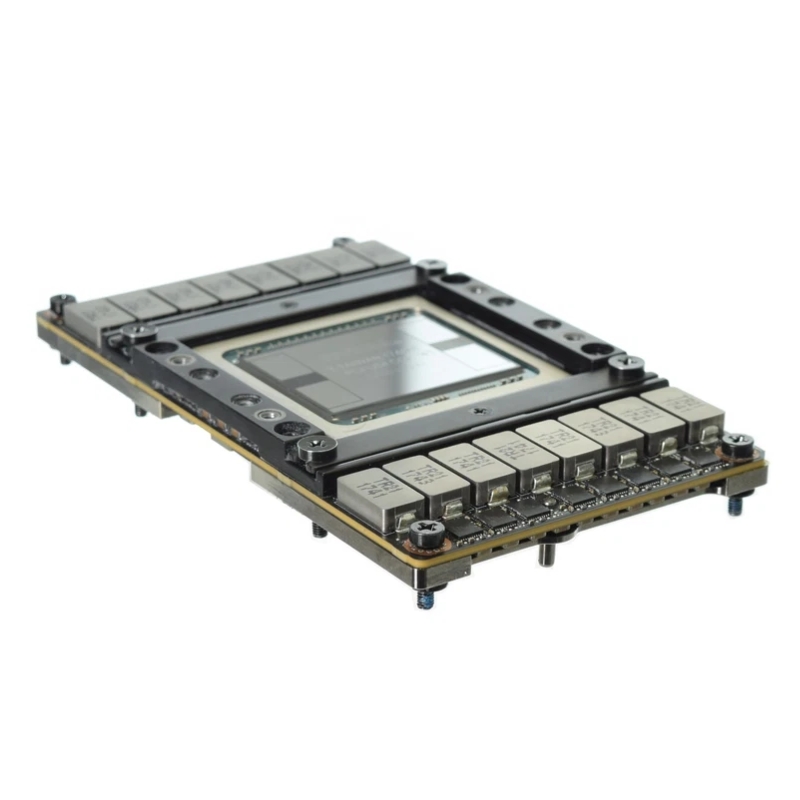


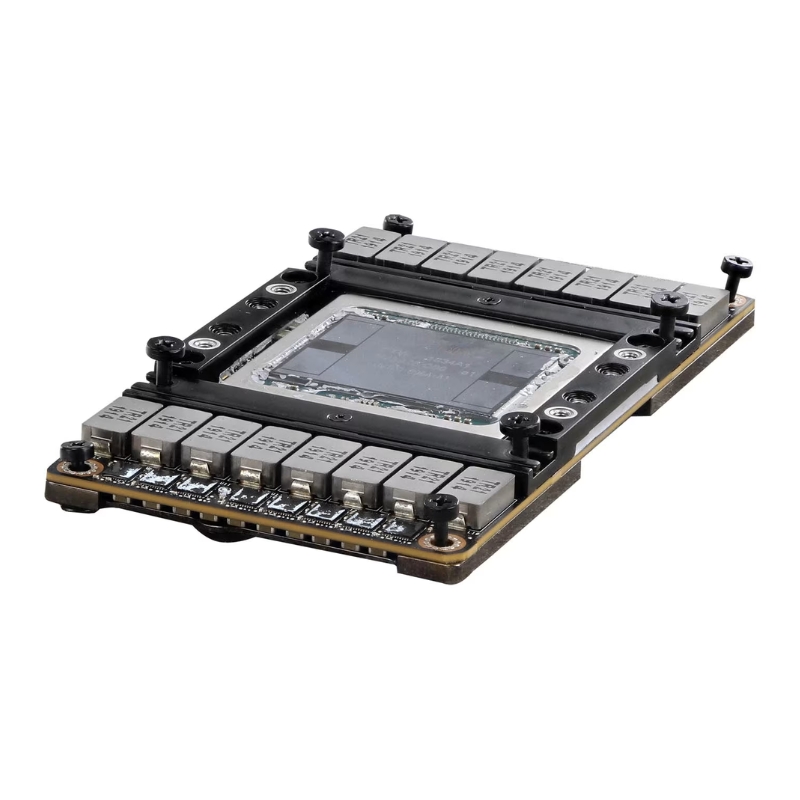
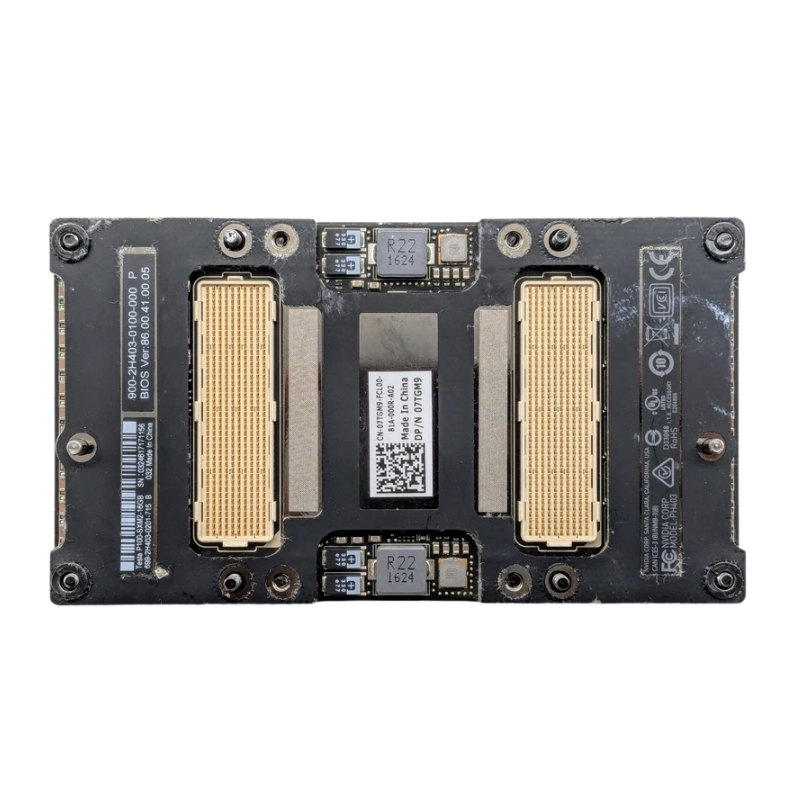
Dell 7TGM9 Nvidia 16GB HBM2 4096-Bit Tesla P100 Pascal SXM2 NVLink Graphics Card. Excellent Refurbished with 1 year replacement warranty
The Dell 7TGM9 Nvidia Tesla P100 is a high-performance data center GPU engineered for scientific computing, AI, and high-performance computing (HPC) workloads. Built on the NVIDIA Pascal architecture, this accelerator delivers massive parallel processing power, superior memory bandwidth, and excellent energy efficiency for demanding enterprise environments.
The Dell 7TGM9 NVIDIA 16GB HBM2 4096-Bit Tesla P100 Pascal SXM2 NVLink Graphics Card is a high-performance accelerator built to deliver extreme computational efficiency for artificial intelligence (AI), high-performance computing (HPC), and deep learning workloads. Featuring NVIDIA’s Pascal architecture, the Tesla P100 GPU combines revolutionary technologies like NVLink, high-bandwidth HBM2 memory, and GPU Boost to enable unparalleled acceleration across scientific research, data analytics, machine learning, and cloud computing applications. With 16GB of HBM2 memory and a 4096-bit interface, this card provides superior memory bandwidth, making it one of the most powerful compute accelerators in its class for enterprise and data center environments.
The Tesla P100 GPU is based on NVIDIA’s Pascal architecture, which was designed to overcome the challenges of traditional computing and deliver massive leaps in performance, energy efficiency, and scalability. Built on a 16nm FinFET process, Pascal GPUs integrate over 15 billion transistors, providing an impressive balance between power and performance. The architecture introduces key innovations like NVLink interconnect, unified memory, and advanced mixed-precision compute capabilities, enabling the Dell 7TGM9 to handle the most complex AI and scientific workloads efficiently.
Pascal architecture significantly enhances floating-point computational power. With up to 5.3 teraflops of double-precision (FP64) and 10.6 teraflops of single-precision (FP32) performance, the Dell 7TGM9 Tesla P100 GPU delivers exceptional throughput for numerical simulations, deep learning, and big data analysis. These capabilities make it ideal for workloads in physics simulations, seismic processing, and molecular dynamics, where precision and speed are essential.
The Pascal architecture also introduces mixed-precision computing, allowing developers to combine single- and half-precision (FP16) operations for greater speed and energy efficiency. This feature is particularly beneficial in deep learning, where reduced-precision operations can accelerate training times without sacrificing accuracy. The Dell 7TGM9 GPU leverages this capability to improve neural network training and inference efficiency across frameworks like TensorFlow, PyTorch, and Caffe.
The Dell 7TGM9 features 16GB of second-generation High Bandwidth Memory (HBM2), a major advancement over traditional GDDR memory. This memory is vertically stacked and connected to the GPU via an ultra-wide 4096-bit bus, providing up to 720 GB/s of memory bandwidth. This massive bandwidth eliminates data bottlenecks, ensuring smooth performance for large datasets and high-resolution simulations.
HBM2’s proximity to the GPU die minimizes latency and maximizes data throughput, allowing seamless handling of large AI models, 3D renderings, and scientific datasets. For machine learning training and inference workloads, this results in faster convergence and improved efficiency. The 16GB capacity provides sufficient space for complex neural networks and massive matrices, enabling researchers and engineers to execute deep learning frameworks without frequent data transfers between the CPU and GPU.
Compared to traditional GDDR5 memory, HBM2 operates at lower voltage levels while delivering more than twice the bandwidth per watt. This efficiency allows the Dell 7TGM9 Tesla P100 GPU to deliver maximum performance without excessive power consumption, making it ideal for large-scale deployments where energy savings and thermal efficiency are critical.
One of the standout features of the Dell 7TGM9 NVIDIA Tesla P100 is NVLink — NVIDIA’s high-speed, bidirectional interconnect technology. NVLink replaces the traditional PCIe connection for GPU-to-GPU and GPU-to-CPU communication, offering up to 5 to 12 times the bandwidth of PCIe Gen3. This allows multiple Tesla P100 GPUs to work seamlessly in parallel, exchanging data at speeds up to 160 GB/s.
NVLink enables faster multi-GPU scaling, allowing AI models and HPC simulations to be distributed across several GPUs without performance bottlenecks. This makes the Dell 7TGM9 ideal for AI supercomputers, scientific clusters, and cloud computing nodes where parallelization is essential. With NVLink, GPUs can share large datasets efficiently, reducing memory duplication and increasing computational throughput.
NVLink also supports a unified memory model, which allows CPUs and GPUs to access data directly without redundant copies. This simplifies programming and data management while improving performance across complex workloads such as data analytics, graph processing, and neural network training.
In HPC environments, the Dell 7TGM9 Tesla P100 provides exceptional double-precision compute power, enabling faster scientific simulations and complex mathematical modeling. Industries such as aerospace, oil and gas, pharmaceuticals, and finance utilize this GPU for tasks like molecular dynamics, seismic analysis, and financial risk modeling.
Modern enterprises rely on large-scale data analytics for decision-making. The Tesla P100 accelerates these workloads by leveraging GPU parallelism to process massive data volumes at unprecedented speeds. Tools such as RAPIDS, NVIDIA’s open-source data science framework, are fully compatible with the P100, allowing Python-based analytics workflows to benefit from GPU acceleration without code rewrites.
The Tesla P100 offers up to 10.6 TFLOPS of single-precision and 5.3 TFLOPS of double-precision performance. This balance allows it to handle both AI and HPC workloads effectively, providing a strong foundation for scientific computing and enterprise inference tasks. These capabilities ensure consistent performance across a variety of numerical workloads, from deep learning to complex simulations.
NVIDIA’s GPU Boost dynamically adjusts clock speeds based on power and thermal headroom, ensuring optimal performance under varying workloads. The Dell 7TGM9 GPU utilizes this feature to maintain sustained computational speeds during intensive operations, achieving superior efficiency without thermal throttling.
The SXM2 form factor used by the Dell 7TGM9 GPU is specifically designed for high-density servers. It provides excellent thermal management and power delivery, ensuring consistent performance across multi-GPU configurations. The GPU’s efficient cooling system keeps temperatures stable even under continuous, heavy workloads, reducing downtime and improving reliability.
Pascal GPUs are known for their exceptional energy efficiency. Compared to previous Maxwell-based GPUs, the Tesla P100 delivers significantly higher performance per watt, making it an environmentally friendly solution for large-scale computing clusters. This allows enterprises to deploy more GPUs per rack without exceeding power or cooling limits.
The NVLink interconnect enables the Dell 7TGM9 Tesla P100 GPUs to operate in multi-GPU configurations seamlessly. Systems equipped with multiple GPUs can scale performance linearly, ideal for deep learning clusters or HPC servers requiring parallel processing. This scalability makes it possible to handle petabyte-scale datasets and large model training sessions efficiently.
Data centers and cloud providers can integrate multiple P100 GPUs in NVLink-enabled servers to deliver scalable, GPU-accelerated instances. The technology ensures high throughput between GPUs, reducing latency and improving overall system efficiency. The GPU’s compatibility with major cloud infrastructures enables flexible deployment for organizations using hybrid or fully cloud-based systems.
The Tesla P100 GPU is fully compatible with NVIDIA’s CUDA parallel computing platform, enabling developers to write programs that take full advantage of GPU acceleration. CUDA simplifies parallel programming, allowing applications to execute complex operations across thousands of threads simultaneously. This makes the GPU highly effective for scientific research, AI development, and real-time simulation.
The Dell 7TGM9 GPU supports popular AI and deep learning frameworks, including TensorFlow, PyTorch, MXNet, and Caffe. With NVIDIA cuDNN and TensorRT optimizations, it delivers efficient performance across training and inference workloads. Developers can also access pre-optimized containers through NVIDIA GPU Cloud (NGC), ensuring easy deployment and reproducibility of results.
In addition to CUDA, the GPU supports OpenCL and OpenACC programming models, ensuring compatibility with HPC environments and scientific applications written in Fortran or C. This flexibility allows researchers and engineers to port existing codebases to GPUs with minimal modification, unlocking massive acceleration benefits without extensive redevelopment.
The Dell 7TGM9 Tesla P100 includes ECC (Error-Correcting Code) protection in its HBM2 memory. ECC automatically detects and corrects memory errors, preventing data corruption and ensuring computational accuracy. This feature is vital in scientific and financial simulations where precision cannot be compromised.
Designed for continuous data center operation, the GPU features enterprise-grade components that support 24/7 workloads. It maintains consistent performance under sustained load, ensuring reliability for mission-critical applications like AI inference, weather modeling, and data analytics.
The Dell 7TGM9 NVIDIA Tesla P100 is designed for use in NVLink-enabled server platforms such as Dell PowerEdge systems. It supports Linux and Windows operating systems, with full compatibility for NVIDIA’s software stack. Integration with enterprise management tools like NVIDIA-SMI and DCGM enables monitoring of GPU utilization, temperature, and performance metrics across large clusters.
Researchers in computational chemistry, physics, and bioinformatics rely on the Tesla P100 for accelerating simulations and experiments. Its ability to handle floating-point intensive workloads allows scientists to achieve faster results and perform larger-scale studies with reduced computational time.
Financial institutions use GPU acceleration for real-time risk modeling, portfolio optimization, and quantitative analysis. The Tesla P100’s double-precision performance ensures accurate and rapid calculations, helping analysts simulate market scenarios and derive insights in seconds.
The GPU accelerates seismic data analysis, reservoir modeling, and exploration simulations. By enabling parallel computation of large datasets, it significantly reduces processing times, helping energy companies make faster exploration and drilling decisions.
In healthcare, the Tesla P100 accelerates genomic sequencing and medical imaging workloads. It enables real-time diagnosis, molecular modeling, and personalized medicine through rapid analysis of large biological datasets.
The Dell 7TGM9 GPU forms the backbone of modern AI supercomputers that require high inter-GPU bandwidth. Systems like NVIDIA DGX platforms use multiple Tesla P100 GPUs connected via NVLink, achieving near-linear scaling for deep learning training and inference workloads.
Developers have access to a wide array of NVIDIA tools to optimize performance on the Tesla P100. These include Nsight Systems for performance analysis, CUDA Profiler for kernel optimization, and TensorRT for deep learning inference acceleration. Together, they ensure developers can achieve peak efficiency and speed from their GPU resources.
The Tesla P100 supports containerized workloads through NVIDIA Container Toolkit and Docker integration. This simplifies deployment and scaling of AI models and HPC applications across multiple environments, from local servers to cloud infrastructures.


 Contact Us
 Information
 Catalog
 Solid State Drives (SSD)
 Network Switches
 Hard Disk Drives
 HBA & Controllers
 PC & Servers
 PC & Server Memory
 CPU & Processors
 Network Routers
 Power Supplies
 Tape Drives & Libraries
 Network Devices
 Computer & Network Cables