(7% discount is applied at checkout)
Cart is empty
Your go-to destination for cutting-edge server products
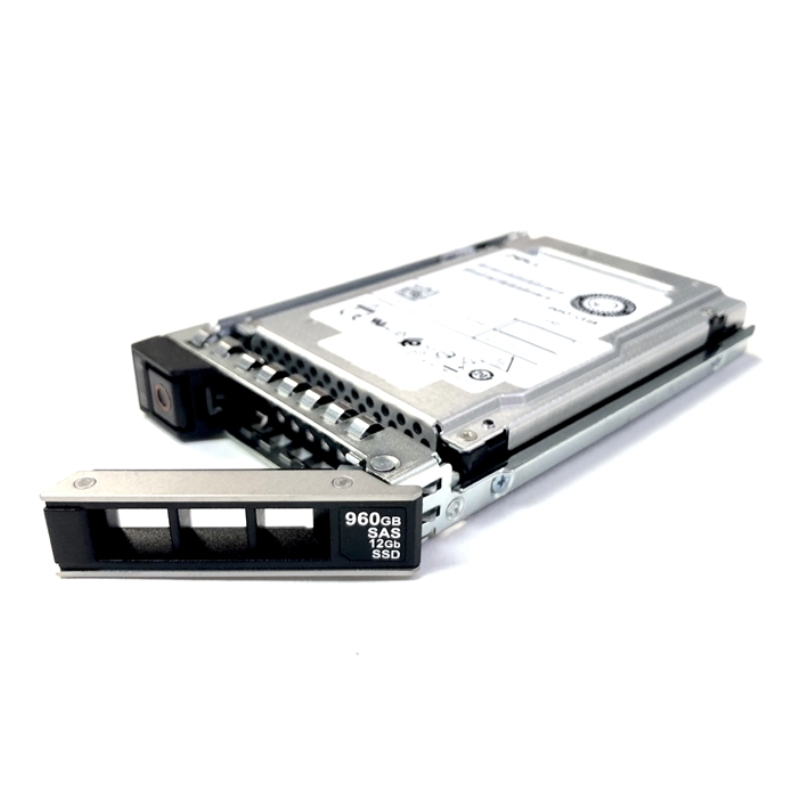


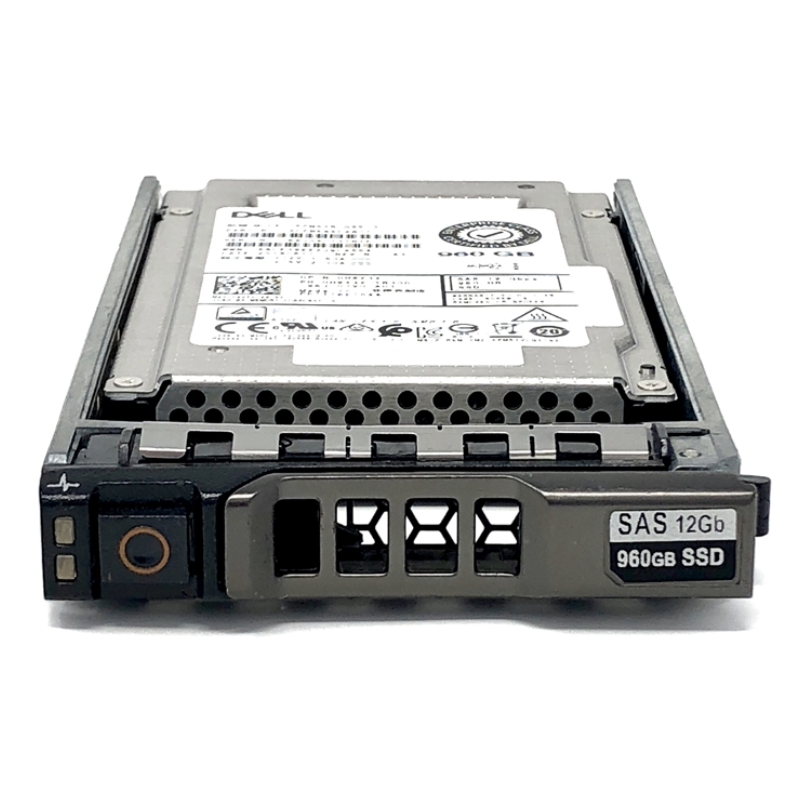
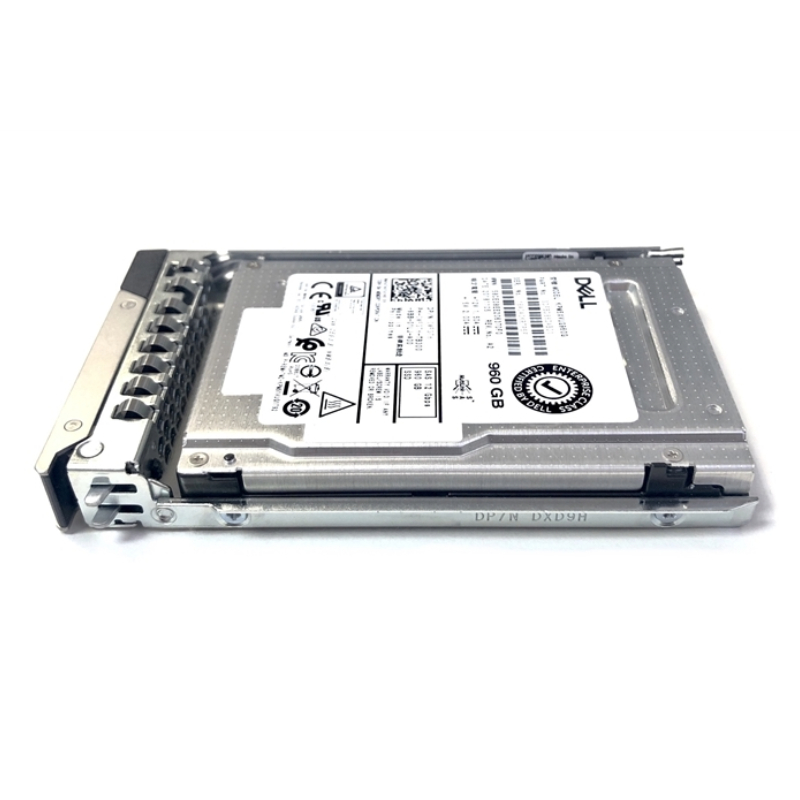
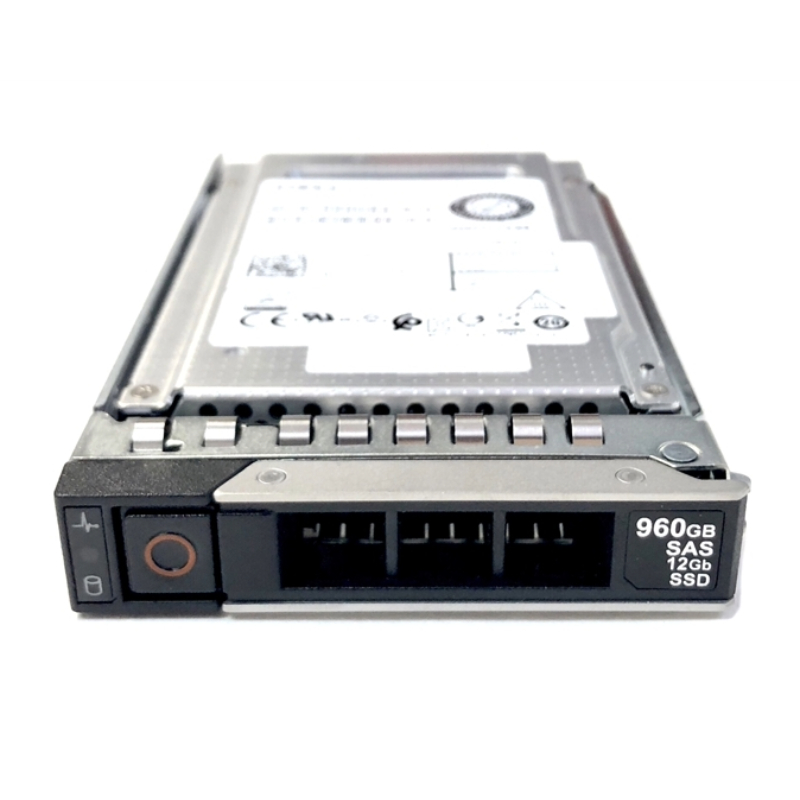
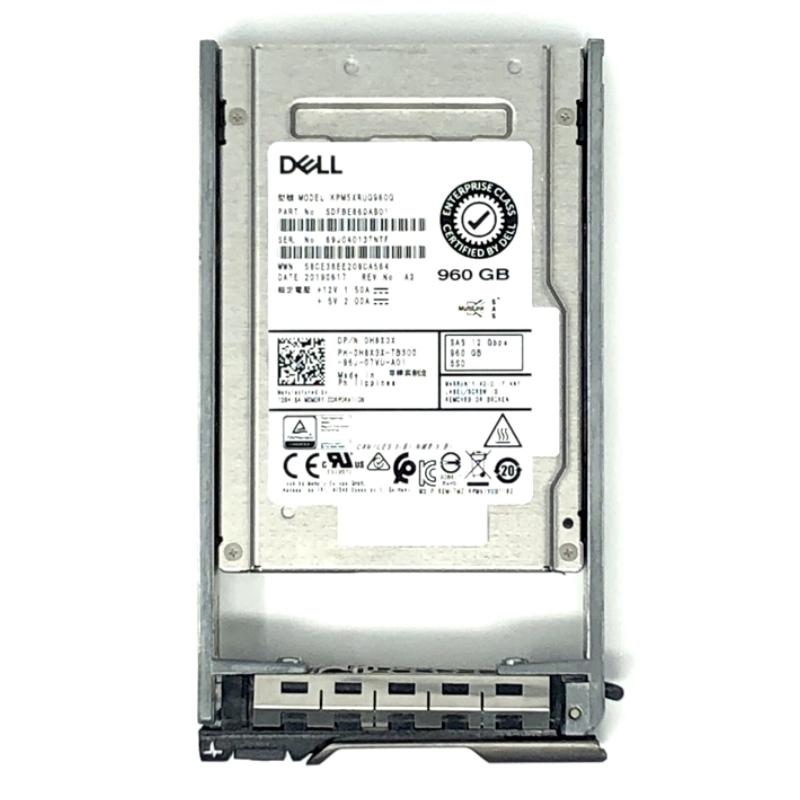
Dell 7W70Y 960GB Mixed-Use MLC SAS-12GBPS SFF Hot-Plug Solid State Drive for Server. Excellent Refurbished with 1 year replacement warranty
The Dell 7W70Y 960GB Mixed-Use MLC SAS-12GBPS SFF Hot-Plug Solid State Drive represents a focused enterprise-class solution engineered for demanding server and storage environments where balanced performance, endurance, and compatibility are essential. Built on multi-level cell (MLC) NAND optimized for mixed workloads, this 960GB capacity SFF (Small Form Factor) drive targets customers who require consistent I/O throughput, predictable latency, and the robustness of SAS at 12Gbps. Positioned for usage in database systems, virtualization hosts, hyperconverged infrastructures, and mixed-read/write application stacks, this category combines Dell original equipment manufacturer (OEM) integration with SAS protocol reliability to deliver a versatile server SSD option.
Performance for the Dell 7W70Y centers on its mixed-use MLC design, which balances write endurance and read amplification to suit enterprise mixed workloads. The SAS-12Gbps interface provides a stable, low-latency channel that excels in multi-queue server environments and RAID arrays. This drive is intended to deliver high sustained throughput for sequential and random operations while maintaining high IOPS under concurrent access. Unlike consumer SATA drives, the SAS interface ensures better queuing, higher link-level robustness, and enterprise-level error handling—making it ideal where predictable response times and sustained performance are business-critical.
In mixed-use scenarios, the 960GB Dell 7W70Y typically manifests consistent random read and write IOPS suitable for virtual machine density and transactional databases. Latency remains low at the host-controller level due to SAS command queuing and hardware-level error correction. The design optimizes read-heavy bursts and sustained mixed writes, reducing tail latencies that can degrade user experience in multi-tenant server farms. For capacity planning, administrators should estimate performance headroom considering the drive’s endurance rating and expected write amplification in their particular workload mix.
Sequential throughput benefits from the SAS 12Gbps bandwidth, particularly in large-block transfer operations such as backups, snapshots, and large-file copies. The SFF form factor and enterprise-grade controller combine to deliver throughput that scales well in aggregated arrays and storage enclosures. Enterprises relying on continuous replication or heavy sequential I/O will find the drive’s steady-state throughput conducive to predictable backup windows and efficient data migrations.
Endurance for the Dell 7W70Y derives from its MLC NAND configuration tuned for mixed workloads, which typically yields higher program/erase cycle tolerance than consumer-grade TLC parts. Enterprise-class firmware governs wear leveling and over-provisioning to extend usable lifespan while maintaining consistent performance. End-to-end data protection mechanisms, including power-loss protection strategies and advanced ECC, protect against silent data corruption and partial writes. For critical deployments, monitoring SMART attributes and drive-specific telemetry is recommended to anticipate wear thresholds and schedule proactive replacements before service-impacting failures occur.
Robust write-path protection ensures that on unexpected power events, in-flight data is safely handled to prevent file system corruption. Error correction code (ECC) corrects bit errors encountered during NAND reads, while enterprise-grade firmware proactively manages block retirement and remapping. This class of drive commonly supports features that safeguard logical-to-physical mapping integrity, thereby reducing the risk of data loss in dense server racks where power anomalies or surprises can otherwise be disruptive.
Designed as an OEM-compatible Dell server drive, the 7W70Y fits into a wide range of Dell PowerEdge systems and SAS backplanes that support SFF 2.5-inch hot-plug devices. OEM integration offers benefits such as firmware compatibility with Dell system management tools, predictable behavior in firmware updates, and validated usage scenarios when combined with Dell RAID controllers and HBA cards operating at 12Gbps. Systems administrators deploying mixed vendor environments should verify firmware compatibility and driver support, particularly when using third-party controllers or enclosures outside Dell’s validated ecosystem.
Although the SAS-12Gbps specification ensures broad compatibility, differences can arise between RAID controller firmware versions, HBA drivers, and enclosure backplane implementations. Enterprise planners should corroborate compatibility matrices and, where possible, perform a controlled pilot to measure performance in their specific RAID level and controller combination. Some configurations will benefit from controller-level caching and battery or capacitor-backed write cache to further improve write performance while preserving data integrity.
The SFF 2.5-inch form factor of the Dell 7W70Y provides a compact footprint suited for high-density server chassis where drive count per chassis directly impacts virtual machine density or storage tiering strategies. Hot-plug capability facilitates in-service replacement and simplifies maintenance workflows by enabling technicians to swap drives without server downtime. The combination of compact physical design and enterprise SAS interface makes these drives a practical choice for modern data centers optimizing for space, power, and serviceability.
Power efficiency is a notable advantage of enterprise SSDs compared to mechanical disks. The drive’s thermal profile is designed to remain stable under continuous server-class workloads; however, rack-level airflow and chassis cooling design are critical to sustaining peak performance and longevity. System architects should ensure that drive bays within dense chassis receive adequate airflow and that ambient temperature ranges fall within vendor-recommended limits to avoid thermal throttling that could reduce throughput and affect MTBF metrics.
The Dell 7W70Y 960GB Mixed-Use MLC SAS SSD suits a broad spectrum of server storage needs. Virtualized application hosts requiring high IOPS and low latency for multiple VMs, online transaction processing databases, mixed analytic workloads, and tiered storage layers within hyperconverged infrastructure are natural fits. In tiered storage designs, these drives often serve as the primary performance tier ahead of high-capacity archival tiers. They can also be used in write-back cache arrays where endurance and predictable write performance are required to buffer bursts while maintaining data integrity.
Cloud providers and enterprise virtualization platforms can deploy these drives to improve VM density without sacrificing responsiveness. The mixed-use endurance profile helps maintain consistent service levels as virtual machines churn through varied read and write patterns. When used in conjunction with hypervisor-level caching and storage policies, the 7W70Y can materially reduce I/O wait times for multi-tenant workloads and simplify capacity planning for ephemeral versus persistent storage volumes.
High transaction rate databases benefit from the low latency and consistent IOPS provided by SAS-connected SSDs in this category. Mixed-use MLC optimizes the balance between write endurance and read performance, which is particularly important for databases that perform a combination of index reads, checkpoint writes, and analytics queries. Administrators should combine these drives with RAID configurations that meet their redundancy and performance objectives, while also implementing backup and snapshot strategies suited to low RPO and rapid recovery objectives.
Compared to SATA enterprise SSDs, a SAS-12Gbps drive like the Dell 7W70Y typically offers superior queuing, higher link-level throughput, and better compatibility with enterprise RAID controllers. Against NVMe, SAS remains attractive in environments that require proven backward compatibility, connector standards, and centralized cable or backplane management. NVMe can deliver lower latency and higher parallelism for next-generation storage architectures, but SAS continues to provide a cost-effective and robust platform for a wide array of existing server fleets where controller ecosystems and management platforms are already established.
Choosing between SAS, SATA, or NVMe requires careful consideration of application latency sensitivity, controller compatibility, and total cost of ownership. For many organizations, the Dell 7W70Y sits at the sweet spot between performance and integration simplicity. It is particularly compelling for those seeking to upgrade legacy SAS infrastructure without a full platform migration while still reaping the benefits of modern SSD performance and endurance.


 Contact Us
 Information
 Catalog
 Solid State Drives (SSD)
 Network Switches
 Hard Disk Drives
 HBA & Controllers
 PC & Servers
 PC & Server Memory
 CPU & Processors
 Network Routers
 Power Supplies
 Tape Drives & Libraries
 Network Devices
 Computer & Network Cables