(7% discount is applied at checkout)
Cart is empty
Your go-to destination for cutting-edge server products
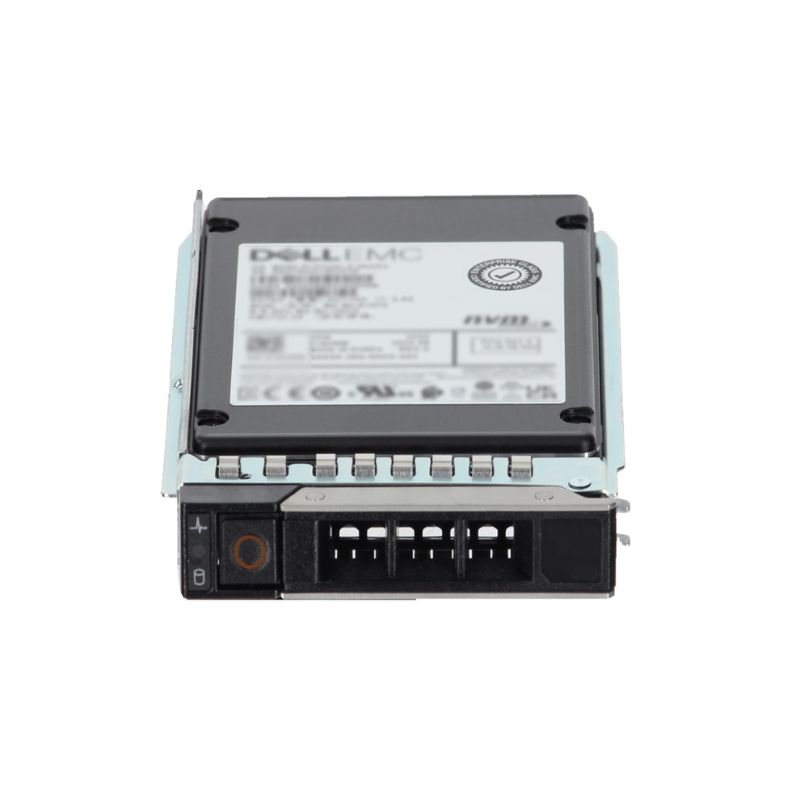


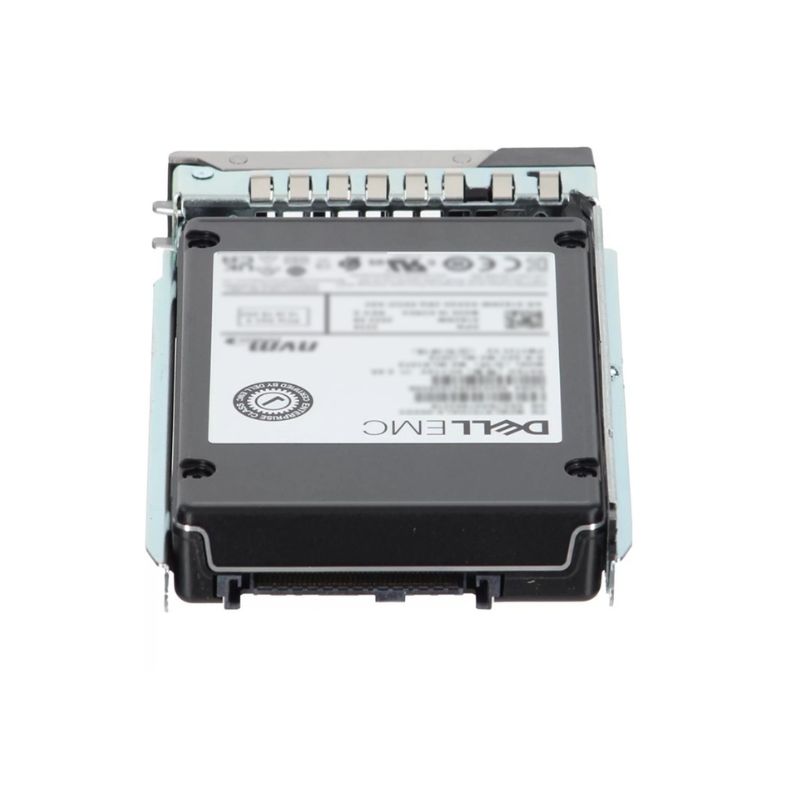
Dell 8D7R9 61.44TB QLC PCI-E 4.0 x4 NVMe U.2 SFF SSD. New Sealed in Box (NIB) with 1 years replacement warranty-Call
Overview of Dell 8D7R9 61.44TB High-Capacity NVMe SSD
The Dell 8D7R9 61.44TB NVMe SSD is engineered to meet the ever-growing data demands of modern enterprise environments. Designed specifically for Dell PowerEdge servers across multiple generations, this solid-state drive delivers an exceptional blend of massive storage density, consistent performance, and data reliability. Built on advanced QLC 3D NAND technology and leveraging the PCIe Gen4 x4 NVMe interface, it supports data-intensive workloads where capacity optimization and throughput efficiency are critical.
The Dell 8D7R9 61.44TB QLC PCIe 4.0 x4 NVMe U.2 SFF SSD represents a high-capacity enterprise storage solution designed to meet the growing demands of data-intensive environments. Built on a modern NVMe architecture, this solid-state drive leverages the PCIe 4.0 interface to deliver substantial improvements in throughput, latency reduction, and parallel data processing. The NVMe protocol allows the drive to fully exploit the capabilities of PCI Express by minimizing command overhead and enabling efficient communication between the storage device and the host system.
In enterprise data centers, where performance consistency and scalability are critical, NVMe-based SSDs such as this model provide a distinct advantage over legacy SATA or SAS storage. The Dell 8D7R9 is engineered to handle concurrent workloads with predictable performance, making it suitable for environments that require fast access to large volumes of data. Its architecture is optimized for modern server platforms that rely on high-speed interconnects and low-latency storage paths.
The PCIe 4.0 x4 interface significantly enhances data transfer capabilities by doubling the bandwidth available in previous PCIe generations. This increased bandwidth allows the Dell 8D7R9 SSD to support demanding enterprise applications, including virtualization, analytics, and large-scale content repositories. With four PCIe lanes operating at Gen 4 speeds, the drive ensures efficient handling of sequential and random workloads without becoming a bottleneck in the storage subsystem.
By utilizing PCIe 4.0, this SSD is well-suited for modern servers that are designed to support high core counts and memory-intensive workloads. The interface contributes to faster boot times, improved application responsiveness, and reduced I/O wait times across shared infrastructure.
Data-driven applications rely on rapid access to large datasets, and the Dell 8D7R9 SSD is designed to address these requirements. The combination of NVMe protocol efficiency and PCIe 4.0 bandwidth allows the drive to manage heavy read operations with consistent performance. This makes it particularly effective for data warehousing, media streaming, and archival systems where throughput and capacity are equally important.
At the core of the Dell 8D7R9 SSD is Quad-Level Cell NAND technology, which enables exceptional storage density by storing four bits of data per cell. This approach allows the drive to achieve a massive 61.44TB capacity within a compact 2.5-inch U.2 small form factor. QLC NAND is especially beneficial for enterprises seeking to consolidate storage and reduce the physical footprint of their data centers.
The high-capacity design supports organizations that manage extensive datasets, such as backups, digital archives, and cloud storage platforms. By offering such a large capacity in a single drive, the Dell 8D7R9 reduces the need for multiple lower-capacity drives, simplifying storage architecture and management.
QLC NAND technology provides a cost-effective solution for large-scale storage deployments. The Dell 8D7R9 SSD is positioned to deliver a balance between performance and affordability, making it an attractive option for enterprises looking to expand capacity without excessive investment. This cost efficiency is particularly valuable in environments where read-intensive workloads dominate and long-term data retention is required.
The ability to deploy high-capacity drives helps reduce rack space usage, power consumption, and cooling requirements, contributing to overall operational efficiency.
The drive’s QLC-based design is optimized for read-heavy workloads, where data is accessed frequently but written less often. This makes the Dell 8D7R9 well-suited for content delivery networks, search indexes, and analytical platforms that rely on fast data retrieval. The internal controller and firmware are tuned to maintain consistent read performance across the entire capacity of the drive.
The U.2 small form factor allows the Dell 8D7R9 SSD to integrate seamlessly into enterprise server and storage systems. This standardized 2.5-inch form factor supports hot-swappable installations, enabling administrators to replace or upgrade drives without interrupting system operation. The U.2 interface also supports PCIe connectivity over a robust physical connector designed for enterprise reliability.
Compatibility with a wide range of Dell PowerEdge servers and supported storage enclosures ensures flexibility in deployment. The physical design supports dense configurations, making it possible to deploy large amounts of storage within a limited chassis footprint.
Hot-swap capability is a critical feature in enterprise environments where uptime is essential. The Dell 8D7R9 SSD supports hot insertion and removal, allowing maintenance tasks to be performed without system downtime. This feature contributes to higher availability and reduced maintenance windows.
The standardized U.2 interface also simplifies inventory management and reduces the complexity associated with deploying different storage technologies across multiple platforms.
The drive is engineered to operate reliably under continuous workloads and varying thermal conditions. Its enclosure and internal components are designed to dissipate heat efficiently, ensuring stable operation even in densely populated server racks. Proper thermal management helps maintain performance consistency and extends the operational lifespan of the SSD.
Reliability is a cornerstone of enterprise storage solutions, and the Dell 8D7R9 SSD is built to meet stringent data center requirements. Advanced error correction, wear-leveling algorithms, and power-loss protection mechanisms are integrated into the drive’s design. These features work together to safeguard data integrity and ensure predictable behavior under sustained workloads.
The drive undergoes rigorous validation and testing as part of Dell’s enterprise hardware standards. This ensures compatibility, stability, and long-term reliability when deployed in supported systems.
End-to-end data protection features help prevent data corruption as information moves from the host system to the NAND flash memory. Error detection and correction mechanisms monitor data paths and correct errors before they impact application performance or data accuracy.
These safeguards are particularly important in environments that rely on large datasets and long-term data retention, where even minor corruption can have significant consequences.
Unexpected power interruptions can pose a risk to data integrity. The Dell 8D7R9 SSD incorporates power loss protection features that help preserve in-flight data during sudden outages. This capability reduces the risk of data loss and supports consistent operation in mission-critical systems.
The performance profile of the Dell 8D7R9 SSD is tailored to support modern enterprise applications that require fast data access and high throughput. Its NVMe-based design enables parallel processing of I/O commands, reducing latency and improving overall system responsiveness. This makes it suitable for applications such as virtualization platforms, containerized workloads, and distributed file systems.
By offloading storage bottlenecks, the drive allows CPUs and memory resources to be utilized more efficiently, contributing to better application scalability.
Maintaining consistent performance across a 61.44TB capacity requires sophisticated firmware and controller design. The Dell 8D7R9 SSD is engineered to deliver predictable read performance even as the drive approaches full utilization. This consistency is critical for enterprise workloads that depend on stable response times.
In virtualized infrastructures, storage performance directly impacts the density and responsiveness of virtual machines. The Dell 8D7R9 SSD supports high IOPS and low latency, enabling efficient consolidation of workloads and improved quality of service for virtualized applications.
Scalability is a key consideration for modern data centers, and the Dell 8D7R9 SSD supports scalable storage architectures by providing high capacity in a compact form factor. Organizations can expand storage capacity without significantly increasing physical infrastructure, simplifying growth planning and reducing deployment complexity.
The drive’s efficiency also contributes to lower power consumption per terabyte, supporting sustainability initiatives and reducing operational costs.
Cloud environments and software-defined storage platforms benefit from high-capacity, NVMe-based SSDs that can handle distributed workloads. The Dell 8D7R9 SSD integrates well with these architectures, providing reliable performance and capacity for object storage, backup repositories, and content distribution systems.
Long-term data retention requires storage solutions that combine durability with cost efficiency. The Dell 8D7R9 SSD addresses these needs by offering a large capacity optimized for read-intensive access patterns, making it suitable for compliance archives, historical data analysis, and digital preservation.
Designed for seamless integration with Dell enterprise servers and storage platforms, the Dell 8D7R9 SSD benefits from validated firmware, management tools, and support resources. Compatibility with Dell management software allows administrators to monitor drive health, performance metrics, and lifecycle status from a centralized interface.
This integration simplifies deployment and ongoing management, reducing the administrative burden associated with large-scale storage environments.
Dell enterprise storage products are validated through extensive testing to ensure reliability and compatibility. The Dell 8D7R9 SSD adheres to these standards, offering predictable behavior and dependable performance in supported configurations. This validation reduces deployment risks and supports mission-critical operations.


 Contact Us
 Information
 Catalog
 Solid State Drives (SSD)
 Network Switches
 Hard Disk Drives
 HBA & Controllers
 PC & Servers
 PC & Server Memory
 CPU & Processors
 Network Routers
 Power Supplies
 Tape Drives & Libraries
 Network Devices
 Computer & Network Cables