(7% discount is applied at checkout)
Cart is empty
Your go-to destination for cutting-edge server products
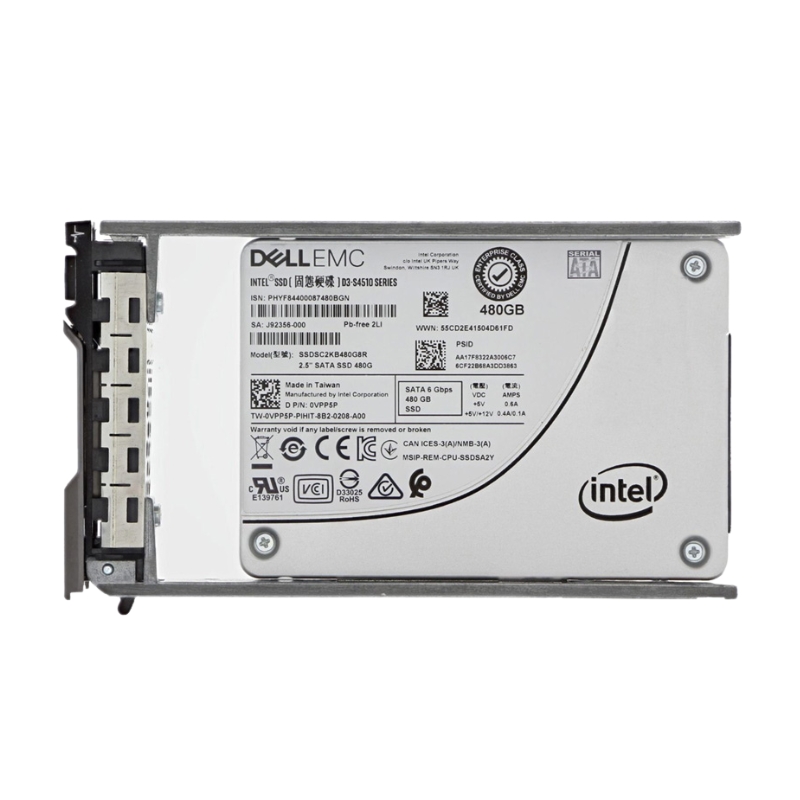


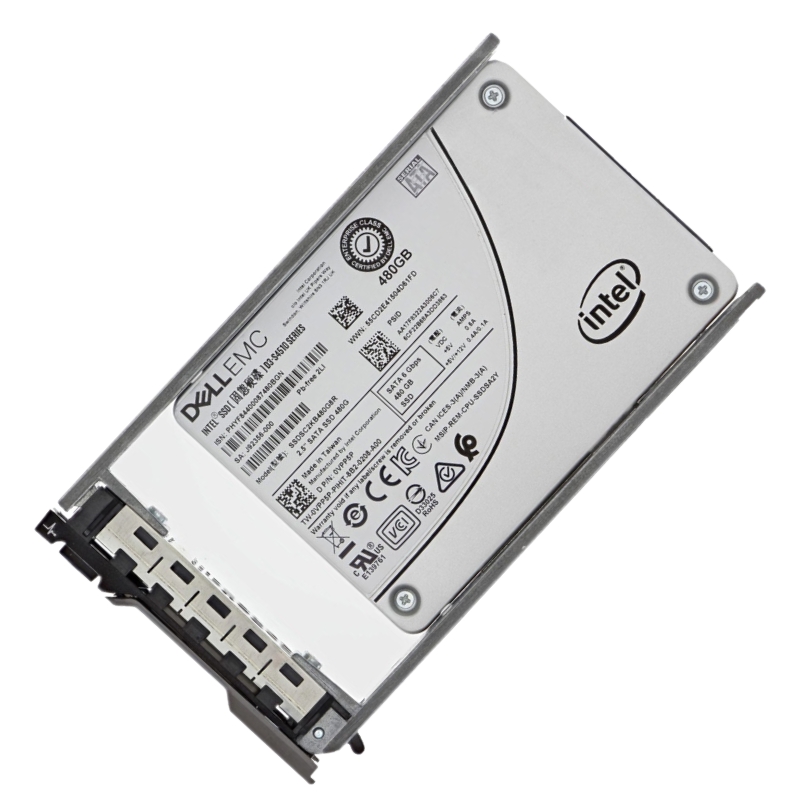
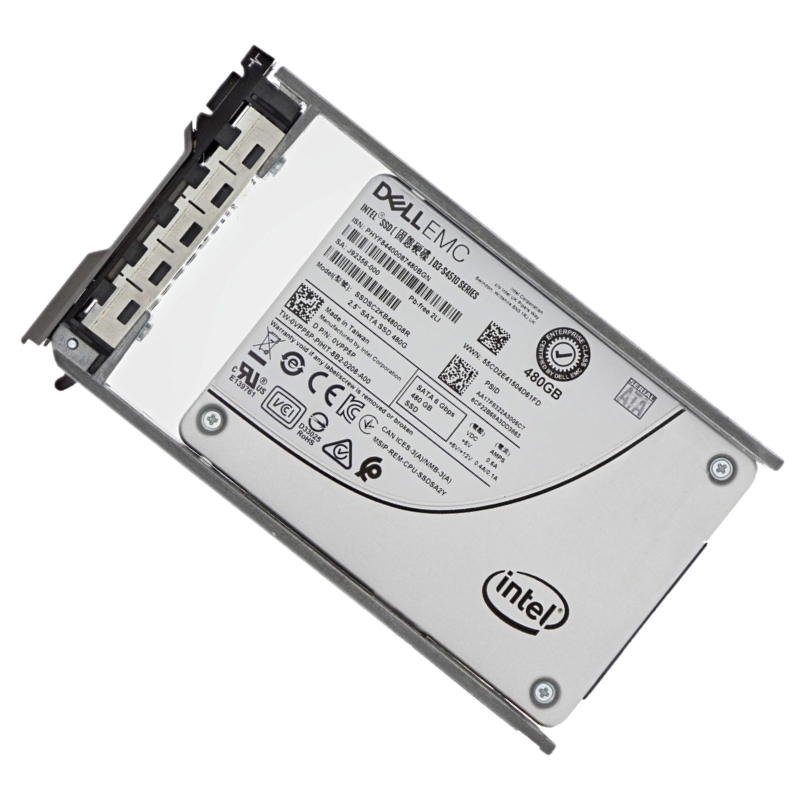
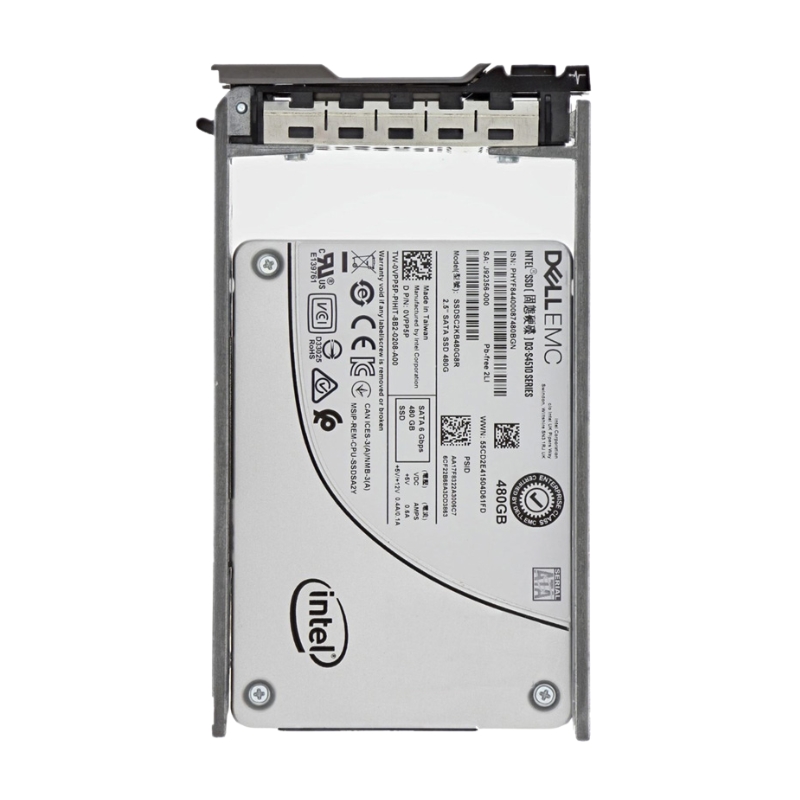
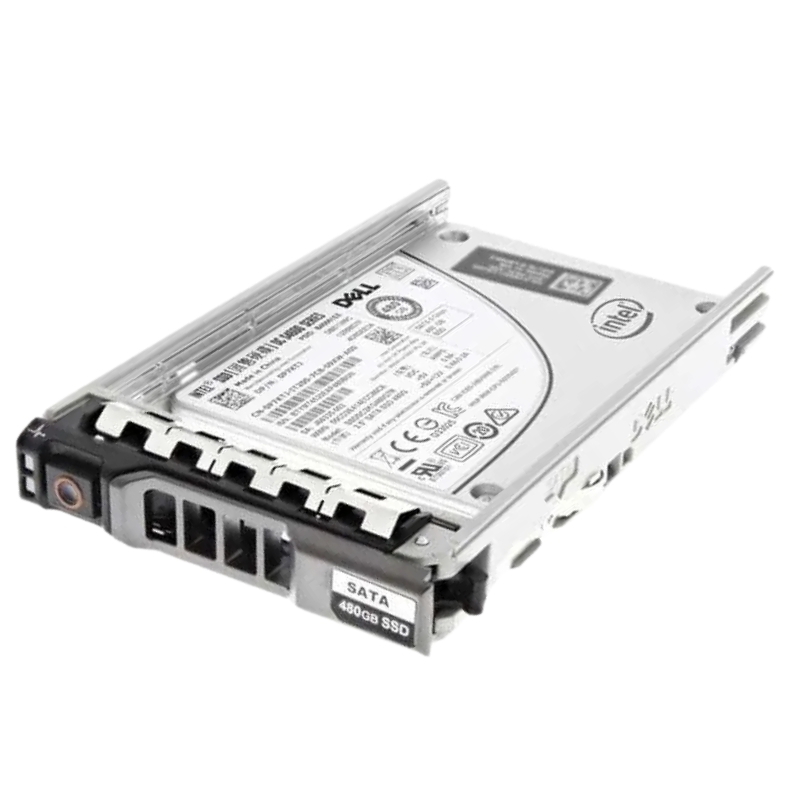
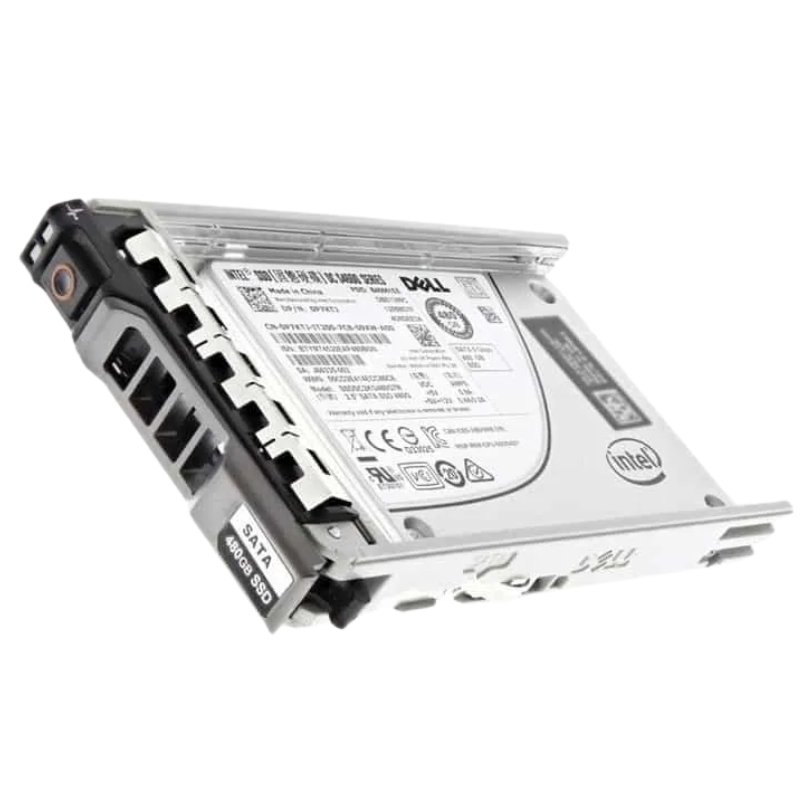
Dell 8FPJR 480GB SATA-6GBPS Read Intensive 1dwpd TLC SFF Hot Plug Solid State Drive 14G/15G/16G Poweredge Server. New Sealed in Box (NIB) with 1 year Warranty
The Dell 8FPJR 480GB SATA-6GBPS Read Intensive 1dwpd TLC SFF Hot Plug Solid State Drive for 14G/15G/16G PowerEdge servers represents a focused enterprise storage option tailored for read-heavy workloads in modern data centers. As a 480GB solid state drive (SSD) built on triple-level cell (TLC) flash and featuring a SATA 6Gb/s interface, this drive is designed to strike a balance between cost, capacity, and sustained read performance. The explicit "Read Intensive" designation and the 1dwpd (one drive write per day) endurance rating make it well-suited for applications where frequent reads dominate and writes are moderate and predictable. The small form factor (SFF) and hot-plug capability ensure that the drive integrates cleanly into dense server chassis and supports maintenance workflows that require minimal downtime.
At the heart of the Dell 8FPJR 480GB SSD are a set of technical features that determine how the device behaves in real-world deployments. The SATA-6GBPS interface provides broad compatibility with legacy and current-generation RAID controllers and backplanes used in PowerEdge servers. The TLC NAND geometry focuses on higher bit density per cell, which reduces cost per gigabyte and makes a 480GB capacity economically attractive for large pools of read-optimized storage. The 1dwpd endurance rating should be read as an operational guideline: the drive is intended for workloads where each full drive capacity is written approximately once per day over the warranty period, which matches many database and virtual desktop environments that are read-dominant. Hot-plug support enables replacement, upgrade, or expansion without powering down the server — a critical capability for minimizing planned downtime in production racks.
The Dell 8FPJR leverages the SATA 6.0 Gbps standard, ensuring interoperability with a wide range of server controllers and backplanes that support Serial ATA. The small form factor (SFF) designation indicates a 2.5-inch drive size, commonly used in blade and rack servers to maximize storage density. Because this SSD is intended for 14G, 15G, and 16G PowerEdge platforms, compatibility with the mechanical sleds, drive carrier trays, and hot-swap connectors found in those generations is a defining advantage. Administrators should verify that their server firmware and storage controller drivers are up to date to ensure optimal link negotiation, power management, and SMART reporting between chassis and drive.
This category of SSDs is optimized for read-intensive tasks. Typical workloads include read-heavy database queries, content delivery and caching, web servers, analytics where scans outnumber updates, and virtual desktop infrastructure with low per-VM write activity. The SATA-6GBPS bus provides predictable read latency and throughput in mixed I/O environments, while TLC NAND gives the capacity advantage needed for cost-sensitive deployments. While not designed as the highest-endurance media for heavy-write databases or continuous logging systems, the 1dwpd rating provides acceptable durability for many server-side applications where writes are bursty, managed, and often handled by separate write-optimized layers such as caching tiers or dedicated write SSDs.
Endurance is communicated through the 1dwpd metric, which helps architects plan refresh cycles and estimate lifespan under expected write patterns. The drive also includes SMART attributes and enterprise-grade error detection and correction mechanisms typical of server-class SSDs. These features support proactive monitoring and integration with server management stacks for early warning of potential drive wear. Additionally, hot-plug engineering and the SFF mechanical design contribute to field-replaceable reliability, allowing operations teams to swap drives rapidly during maintenance windows without interrupting application availability.
The explicit naming for 14G/15G/16G PowerEdge servers signals OEM validation for those Dell server families, which often results in firmware optimizations and predictable behavior when connected to Dell-certified RAID controllers and storage backplanes. OEM drives may carry firmware customized to work with server management suites, ensuring accurate drive reporting inside iDRAC and other monitoring utilities. For administrators building capacity or performance tiers within a single chassis or cluster, using Dell-compatible drives reduces the risk of firmware mismatch and improves the quality of support experience under warranty or service agreements.
Concrete examples that benefit from the Dell 8FPJR 480GB SSD include read-caching layers in hybrid storage arrays, boot and OS partitions for dense virtualization hosts, front-end web caches, software delivery nodes, and analytics read replicas. In scenarios where many concurrent read requests must be served with low latency and consistent throughput, these drives provide a cost-effective layer that reduces pressure on higher-tier flash or spinning media. Because the drive is hot-pluggable and fits in SFF bays, it is especially useful in tiled deployments where many identical drives are deployed for predictable capacity and operational simplicity.
When integrating Dell 8FPJR drives into server environments, it is important to adopt best practices that prolong lifespan and ensure consistent service levels. First, adopt a tiered storage architecture: use read-intensive SSDs for frequently accessed data and higher-endurance drives for write-heavy or critical logging volumes. Second, implement monitoring of SMART attributes and write amplification indicators; integrate those signals into your existing server monitoring dashboards and alerting. Third, plan RAID and redundancy strategies that reflect the drive’s endurance profile — for example, use RAID levels that prioritize read throughput and redundancy rather than write-heavy parity schemes when workload characteristics justify it. Fourth, schedule firmware updates in maintenance windows and validate compatibility on a staging cluster prior to production rollout.
Dense server installations require attention to thermal management. SFF drives packed into multi-bay trays can be subject to elevated chassis temperatures; maintaining proper airflow and ambient intake temperatures will reduce thermal-induced throttling and extend overall SSD life. SATA drives typically consume less peak power than high-performance NVMe alternatives, but administrators should still account for steady-state power draw to avoid over-subscribing chassis power budgets. In hot-plug contexts, the inrush currents during insertion are handled by chassis design, but operators should continue to follow manufacturer guidance for drive handling to avoid electrical stress or mechanical damage.
Compared with high-endurance, write-optimized SSDs, the Dell 8FPJR 480GB offers better cost efficiency for read-heavy use cases but lower write lifetime. Compared with spinning hard drives, the SSD provides substantially lower latency, higher random IOPS, and a much smaller physical footprint per usable gigabyte within the server bay. Compared with NVMe drives, SATA SSDs present a lower total cost of ownership for moderate performance requirements and provide broader backward compatibility with existing RAID controllers. In a layered architecture, these drives fit into the read-tier; they are not intended to replace high-endurance boot or write-log devices when write intensity exceeds the 1dwpd rating for extended periods.
Procurement and deployment teams should cross-check several items before ordering large quantities of the Dell 8FPJR 480GB SSDs. Confirm that the target PowerEdge server generation (14G, 15G, 16G) supports the drive in its specified bay and sled, that the server’s backplane and controller accept SATA-6Gbps devices without firmware incompatibilities, and that your OS and hypervisor versions properly report SMART attributes and handle hot-swap events. Validate warranty terms and the support process for OEM-branded drives, and ensure spare parts are available to match expected replenishment cycles. Finally, check that your asset tracking and configuration management databases are prepared to record model, serial number, and firmware revisions for lifecycle tracking.
In real-world data centers, the Dell 8FPJR 480GB SATA-6GBPS SSD will often be part of a mixed-media strategy. For example, it may hold hot content indexes or frequently accessed lookup tables in analytics clusters while a separate tier handles high-write ingestion. In VDI implementations, these drives can host boot images and common read-only files, reducing read latency for numerous concurrent desktop sessions. In content distribution, these drives excel at serving static assets at scale. Consider also using drive-level caching in combination with controller-managed caches to maximize read performance while shielding the SSD from unnecessary write amplification.


 Contact Us
 Information
 Catalog
 Solid State Drives (SSD)
 Network Switches
 Hard Disk Drives
 HBA & Controllers
 PC & Servers
 PC & Server Memory
 CPU & Processors
 Network Routers
 Power Supplies
 Tape Drives & Libraries
 Network Devices
 Computer & Network Cables