
(7% discount is applied at checkout)
Cart is empty
Your go-to destination for cutting-edge server products
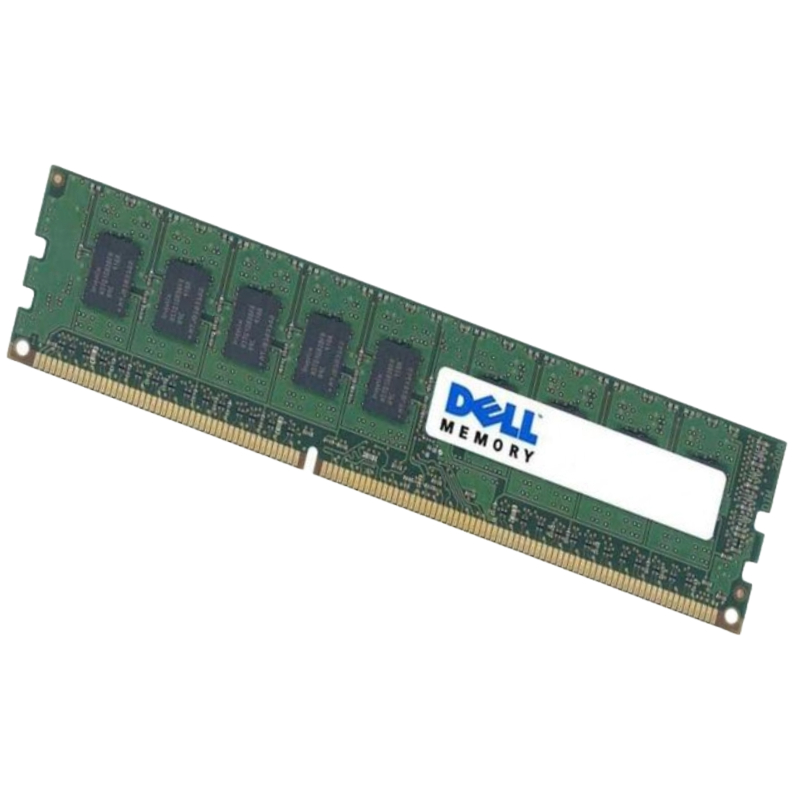
Dell AA810825 8GB 3200mhz PC4-25600 Cl24 Ecc Registered Single Rank X8 1.2v DDR4 Sdram 288-pin Rdimm Memory Module for Server. New Sealed in Box (NIB) with 1 Year Replacement Warranty
| SKU/MPN | Warranty | Price | Condition | You save |
|---|---|---|---|---|
| AA810825 | 1 Year Warranty | $330.00 | New Sealed in Box (NIB) | You save: $115.50 (26%) |
| AA810825 | 1 Year Warranty | $155.00 | New (System) Pull | You save: $54.25 (26%) |
The Dell AA810825 8GB 3200MHz PC4-25600 CL22 ECC Registered Single Rank X8 1.2V DDR4 SDRAM 288-Pin RDIMM represents a focused server memory module engineered for enterprise environments where stability, data integrity and predictable performance are non-negotiable. This category centers on ECC Registered DDR4 RDIMM modules designed to meet the demands of multi-socket servers, virtualization hosts and database servers. These modules are optimized for workloads that require error-correcting code (ECC) to detect and correct single-bit memory errors in real time, preserving system uptime and preventing silent data corruption.
The Dell AA810825 8GB 3200MHz PC4-25600 CL22 ECC Registered Single Rank X8 1.2V DDR4 SDRAM 288-Pin RDIMM memory module is engineered specifically for server-class environments where predictable performance, error resilience, and platform compatibility are required. This module is offered in the standard 288-pin DIMM form factor used across most modern rack and tower servers, and it adheres to DDR4-3200 (PC4-25600) signalling and throughput expectations. The module's ECC capability, registered (RDIMM) signalling and single-rank, x8 chip organization position it squarely as a server memory product intended to deliver stable operation under multi-DIMM population, heavy virtualization workloads, and sustained throughput tasks.
At the heart of the AA810825 is DDR4 technology running at a JEDEC-standardized 3200 MT/s data rate with a nominal supply voltage of 1.2 volts, which balances high bandwidth with energy efficiency relative to earlier DDR generations. When sizing memory subsystems for latency-sensitive applications, capacity and channel width interact with CAS timings to shape overall latency and throughput characteristics. The registered nature of the module introduces a very small additional internal cycle of buffering compared with unbuffered DIMMs, a tradeoff that is deliberate for reliability and scale in server systems.
The AA810825 presents as a 288-pin RDIMM using x8 DRAM devices organized into a single rank, and that organization influences both capacity per module and compatibility with particular motherboard memory maps. Single-rank modules place all of their DRAM chips into one addressable set, which affects how many ranks per channel the memory controller can address simultaneously and how the motherboard BIOS will populate channels for optimal interleaving.
Error-Correcting Code (ECC) memory is a cornerstone of reliability for business and mission-critical servers because it can detect and automatically correct single-bit memory errors and detect multi-bit errors, reducing the likelihood of silent data corruption that can propagate into databases, file systems, and virtual machine state. When combined with the registered buffering provided by RDIMM modules, the memory subsystem achieves a level of electrical stability that permits higher overall DIMM counts per channel and larger total system memory capacities without overwhelming the memory controller. For organizations that run persistent workloads—virtual machine pools, large in-memory databases, analytic clusters, or simulation pipelines—the combination of ECC and RDIMM buffering is an insurance policy against random bit flips and address/command signal integrity problems that can otherwise produce intermittent crashes or data integrity issues. This is precisely why server OEMs and datacenter operators specify RDIMM ECC memory like the Dell AA810825 for validated server configurations.
As server architectures grow to accommodate more virtual machines and larger in-memory datasets, the ability to populate many DIMMs across multiple channels becomes important. RDIMM modules buffer address and command signals through a register, reducing the electrical loading on the memory controller and allowing the platform to maintain correct timing when many modules are present. The Dell AA810825’s registered design therefore supports higher populated server memory footprints than equivalent unbuffered ECC parts, enabling systems to reach practical capacity configurations for virtualization density and memory-heavy applications without sacrificing operational stability. System administrators benefit from this when planning upgrades because the registered modules typically permit incremental capacity additions while preserving validated memory behavior under load.
The PC4-25600 designation means each direction of transfer handles up to 25.6 GB/s per module in peak theoretical terms when paired with a matching memory channel and processor memory controller. In practice, real application performance depends upon memory channel count, number of populated DIMMs per channel, interleaving, memory affinity of the workload, and memory controller tuning, but DDR4-3200 RDIMM like the AA810825 offers a notable step up from lower speed DDR4 modules for memory bandwidth-bound tasks. Latency, represented by CAS timing numbers such as CL22 in many available listings, contributes to single-thread responsiveness and random memory access patterns; however, for server workloads that are bandwidth-saturated (large sequential dataset traversals or in-memory databases), the higher transfer rate compensates for a modest rise in CAS cycles compared with lower frequency but tighter latency modules. The net effect is consistently higher throughput for multi-threaded and multi-process server scenarios.
One of the most important practical considerations when selecting a module such as the Dell AA810825 is platform compatibility. Server motherboards and BIOS firmware are typically validated against specific memory configurations. RDIMM modules must be supported by the server chipset and firmware; mixing registered and unbuffered DIMMs or installing RDIMMs in systems not designed for them will usually prevent the system from booting or result in degraded behavior. OEM product pages and validated parts lists should be consulted when designing memory upgrades so that memory timing, voltage, and rank population rules align with the server vendor’s recommendations. The Dell OEM listings and many authorized resellers explicitly list this AA810825 module against compatible PowerEdge classes and qualified server SKUs, making it easier for IT teams to select parts that match their platforms.
Mixing memory modules of different types, speeds or buffering schemes introduces risk. Registered modules such as AA810825 should not be mixed with unbuffered UDIMM parts because motherboards normally do not support the simultaneous use of both types. Even mixing RDIMMs from different JEDEC training margins or with different ranks can force the memory controller to downclock or apply conservative timing parameters, which may impact latency and aggregate bandwidth. For highest reliability, use matched modules from the same OEM family or validated third-party replacements that explicitly list compatibility with the server. Where a mix is unavoidable during staged rollouts, administrators should confirm the server’s POST logs and BIOS memory map to validate that all modules are recognized correctly and that ECC is enabled and functioning.
Administrators responsible for lifecycle management should log DIMM serials, firmware revisions, and installation dates so that aging modules can be tracked and preemptively replaced if predictive failure indicators arise. Tools such as server-level hardware logs, IPMI sensor outputs and vendor diagnostics can catch correctable ECC events or a rising trend of errors that may presage an impending DIMM failure, enabling scheduled maintenance rather than reactive replacements. Proper lifecycle practice reduces unexpected downtime and preserves data integrity across long operational campaigns.
Although the AA810825 fits the physical and electrical footprint common to server DIMMs, thermal management remains critical. High memory population density and sustained high throughput can raise module temperatures, and server chassis airflow must be engineered to maintain DRAM within its commercial operational temperature window. Many OEM spec sheets note operating temperature ranges and advise that DIMM spacing and airflow baffles designed into the chassis be preserved during upgrades. Enterprise memory suppliers and server OEMs recommend using system thermal telemetry to ensure that modules operate within specified limits and to avoid scenarios where thermal throttling or marginal signal integrity compromises module reliability. Maintaining conservative operating temperatures extends module lifetime and reduces the frequency of correctable and uncorrectable ECC events.
Within the broader DDR4 server memory category, buyers weigh tradeoffs between module type, capacity, speed and latency. RDIMM ECC modules like the Dell AA810825 prioritize reliability and scalability, while other families—such as unbuffered ECC UDIMMs or Load-Reduced DIMMs (LRDIMMs)—offer alternative balance points of cost, raw speed, or maximum density. For many production servers, registered ECC memory represents the best compromise: it supports higher populated DIMM counts than UDIMM, avoids some of the cost and complexity of LRDIMM, and provides ECC protection that prevents silent data corruption.
As the industry transitions to newer memory generations, DDR4 remains widely supported in many existing server fleets. Migration strategies to newer memory technologies should consider not only raw module performance but also entire platform redesigns, chipset support, and software stack readiness. In many enterprises, a mixed approach that sustains DDR4 server fleets for current workloads while incrementally adopting newer memory platforms for greenfield deployments yields the most path forward. Documenting migration timelines, warranty windows, and validated compatibility lists helps IT leadership balance operational continuity with future-proofing goals.


 Contact Us
 Information
 Catalog
 Solid State Drives (SSD)
 Network Switches
 Hard Disk Drives
 HBA & Controllers
 PC & Servers
 PC & Server Memory
 CPU & Processors
 Network Routers
 Power Supplies
 Tape Drives & Libraries
 Network Devices
 Computer & Network Cables