(7% discount is applied at checkout)
Cart is empty
Your go-to destination for cutting-edge server products
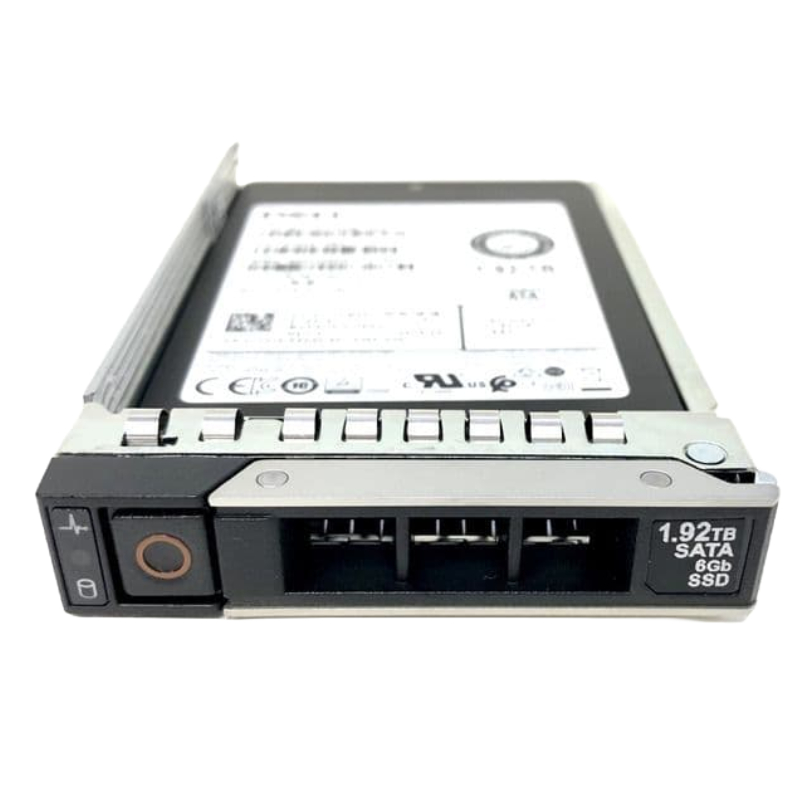


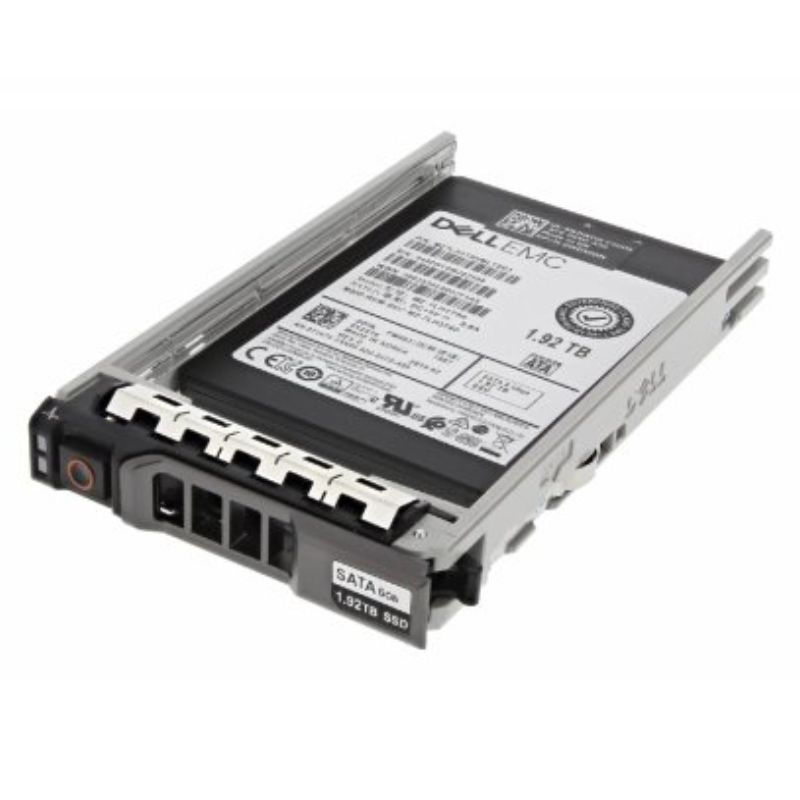
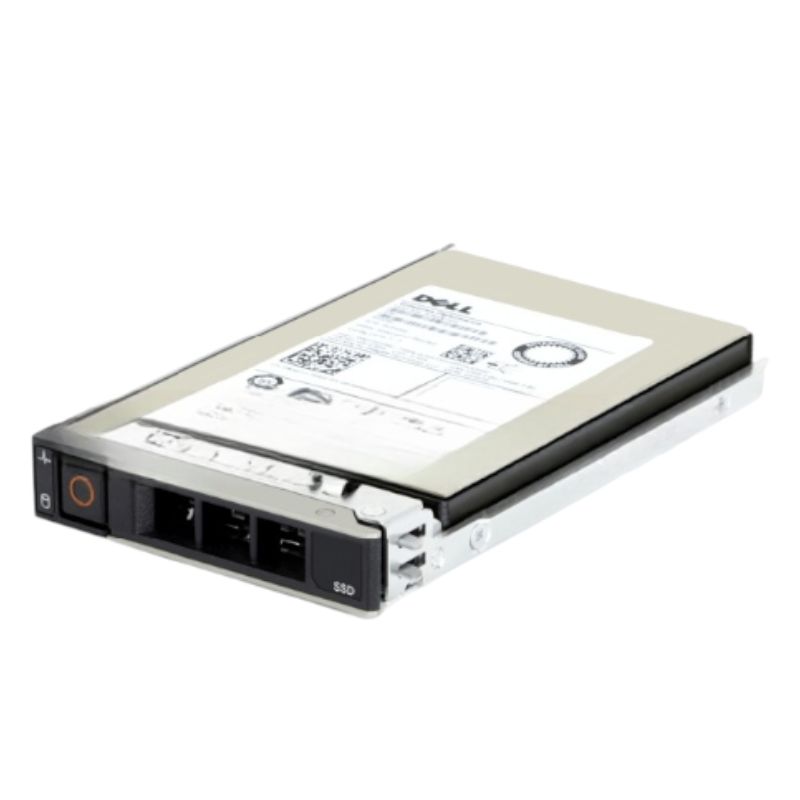
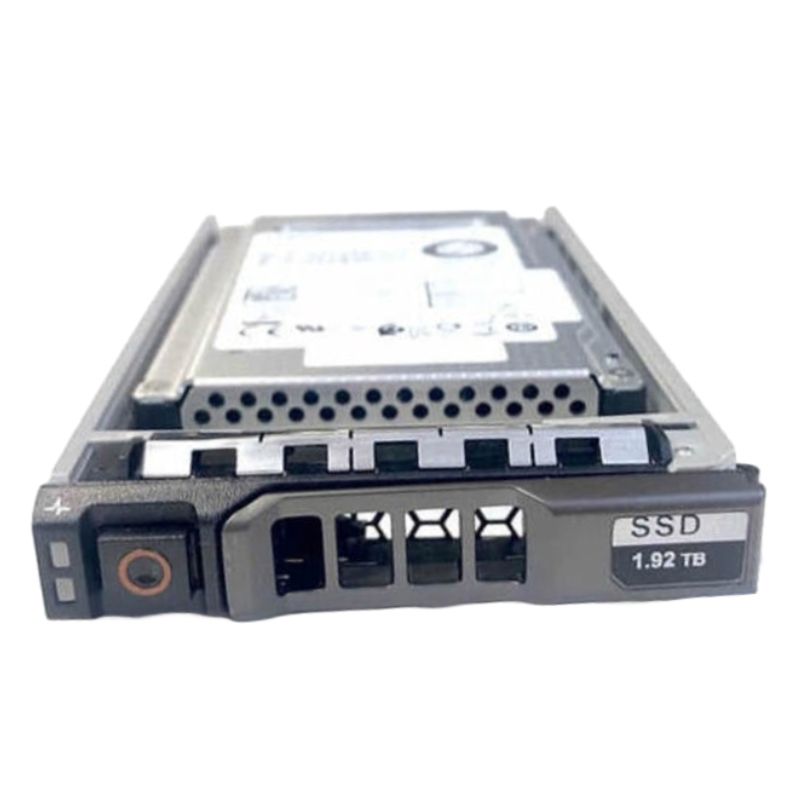
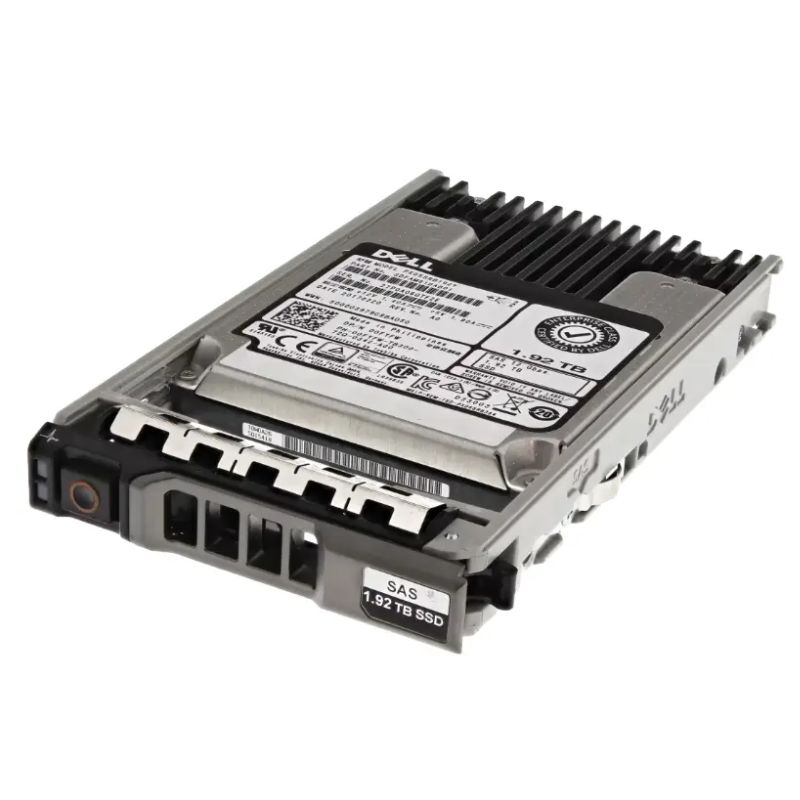
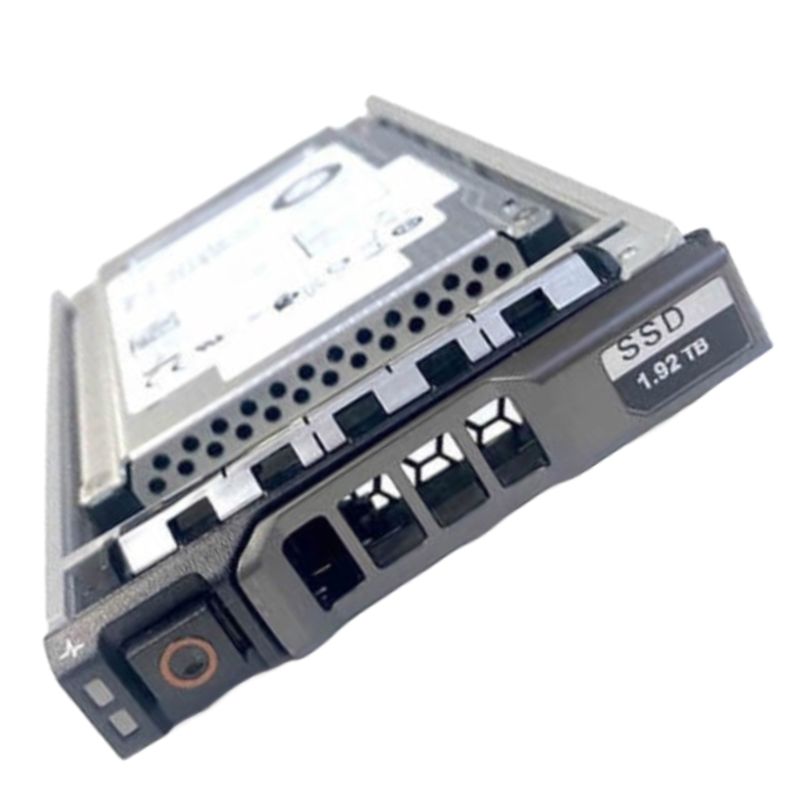
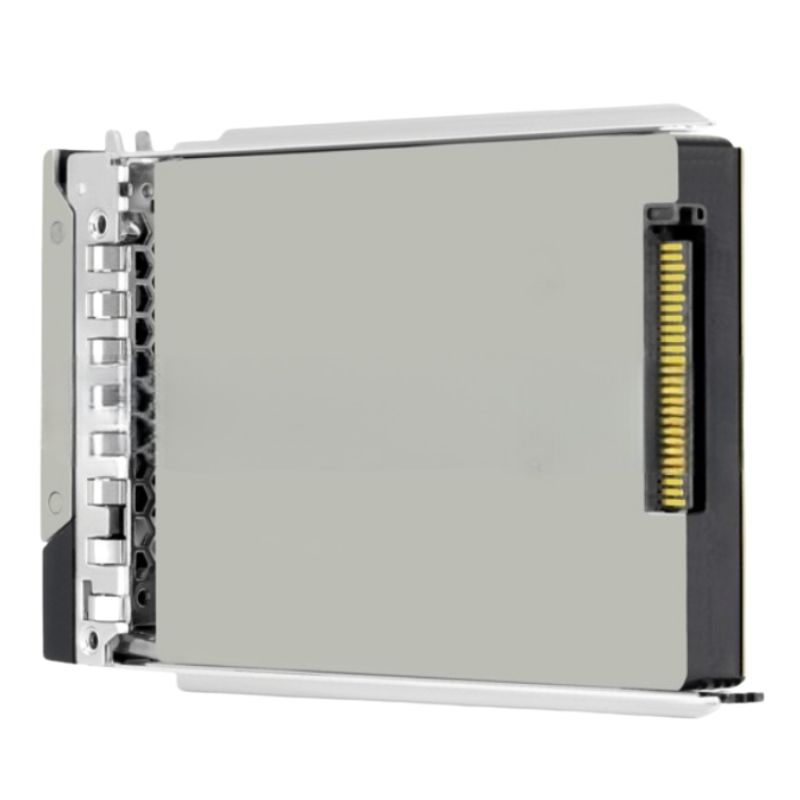
Dell 8KW1F 1.92TB Mixed-Use 3dwpd TLC SATA-6GBPS SFF Hot-Plug Certified for 14G/15G/16G Poweredge Server Solid State Drive. New Sealed in Box (NIB) 1 Year Warranty
The Dell 8KW1F 1.92TB Mixed-Use 3dwpd TLC SATA-6GBPS SFF Hot-Plug Certified for 14G/15G/16G Poweredge Server Solid State Drive sits within an enterprise-grade category of SATA-based solid state drives designed specifically for mixed-use data center workloads. This category targets system administrators, storage architects, and procurement professionals who require a balance of performance, endurance, capacity, and platform certification for Dell PowerEdge server environments. Built on triple-level cell (TLC) NAND with an emphasis on sustained write endurance measured at 3 drive writes per day (3 DWPD), the category differentiates itself from consumer and desktop SSDs by combining predictable I/O behavior and compliance testing for Blade and rack-server generations 14G, 15G, and 16G. The drives in this category are frequently offered in Small Form Factor (SFF) 2.5-inch housings with hot-plug capability for rapid serviceability, and they communicate over the SATA-6Gbps interface for broad compatibility with legacy and current server backplanes. As part of a certified product line, these SSDs carry firmware and mechanical attributes that are validated against PowerEdge server platforms to reduce integration risk and simplify deployment at scale.
At the heart of the Dell 8KW1F 1.92TB unit is TLC NAND, which stores three bits per memory cell. TLC NAND provides a cost-effective balance of capacity and endurance compared to single-level or multi-level cell variants and is well suited for mixed-use workloads that blend read-intensive and write-intensive tasks. The drive’s controller firmware implements advanced wear-leveling algorithms to distribute program/erase cycles evenly across NAND die, and it applies dynamic over-provisioning strategies to maintain consistent performance over the life of the drive. Error correction is provided by robust ECC engines tuned for enterprise-grade TLC characteristics, which helps maintain low uncorrectable bit error rates and extends usable life. The drive’s internal architecture includes a DRAM cache for mapping tables and write buffering, which improves random write latency and helps maintain steady throughput under sustained mixed workloads. Thermal throttling logic is present to avoid performance degradation and protect NAND integrity in high-temperature environments. The SATA-6Gbps physical layer ensures broad compatibility with server host controllers while delivering the lane bandwidth necessary for many enterprise SATA use cases.
This category of SSDs is engineered for mixed-use workloads where balanced random read and write performance matters. Mixed-use profiles often include virtualized server densities, medium-sized databases, e-mail and messaging servers, mixed OLTP/OLAP tasks, and caching layers in converged infrastructure. The advertised 3 DWPD endurance rating indicates the drive can sustain writes equivalent to three times its capacity every day for the warranty period without exceeding manufacturer-specified wear limits, making it suitable for environments with moderate to high write amplification. Latency characteristics are targeted to enterprise expectations: predictable low-latency reads and bounded write latencies under sustained loads. Sequential throughput is competitive for a SATA interface, while small-block random IOPS are optimized through the controller’s command queueing, internal parallelism across multiple NAND channels, and firmware-level I/O optimization. For mixed workloads that require consistent latency at scale, these drives perform well when used in RAID arrays or as part of tiered storage where SATA SSDs provide a cost-effective performance layer beneath NVMe or PCIe flash tiers.
Random I/O performance is a critical metric for mixed-use drives. The category emphasizes sustained random read IOPS and low standard deviation in latency to avoid outlier latency spikes that would affect application-level quality of service. Controller firmware in these SSDs manages garbage collection cycles intelligently, interleaving background maintenance activities so that foreground I/O is minimally impacted. The DRAM-based mapping tables and read-ahead/write-back buffers reduce read-modify-write penalties and improve small-block I/O responsiveness. Over-provisioning and wear-leveling strategies help ensure that as NAND wears, the drive continues to deliver stable random I/O, which is essential for virtualization hosts and multi-tenant systems where many virtual machines contribute to a highly distributed I/O pattern.
While SATA is not the highest-bandwidth interface available today, the 6Gbps link is adequate for bulk transfer tasks common to backup staging, media rendering, log aggregation, and initial VM boot storms. The drive’s internal parallelism, channel interleaving, and optimized firmware pipeline deliver competitive sequential read and write speeds for its class. For workloads that involve large file transfers or sequential writes, the drive can saturate the SATA link under favorable conditions and sustain throughput long enough for operational tasks such as large dataset ingestion or image deployment. When combined in arrays, these drives provide an aggregate sequential bandwidth that serves as an efficient storage tier for large-capacity, moderate-performance needs.
Endurance measured at 3 DWPD highlights the category’s focus on reliability and usable life in enterprise deployments. This metric, when combined with a manufacturer warranty and certification, allows procurement teams to assess total cost of ownership and replacement cycles with confidence. Reliability features extend beyond raw endurance: on-drive power-loss protection mechanisms guard in-flight data during unexpected power interruptions, while wear-leveling and ECC reduce the risk of data loss over time. SMART reporting and telemetry outputs expose critical health metrics, including remaining life percentage, write amplification, temperature, and error counters, which integrate with server management tools for predictive maintenance. The result is a drive category that emphasizes safe operation within the expected duty cycles of production server environments.
Power-loss protection in this category is implemented through a combination of firmware journaling and capacitive energy reservoirs that allow the drive to complete outstanding writes and metadata updates when power is removed unexpectedly. This design significantly reduces the chances of metadata corruption and incomplete I/O transactions, which is essential for enterprise databases and file systems that expect write atomicity. The trustworthiness of write completion is a major selling point for storage architects choosing SATA SSDs as a performance tier for critical workloads where data integrity must be preserved in the event of power anomalies.
One of the defining properties of this category is certification for Dell PowerEdge server generations 14G, 15G, and 16G. Certification implies that the drives have undergone compatibility and interoperability testing against backplanes, firmware stacks, and system management utilities used in those PowerEdge models. Certified drives reduce integration friction and are more likely to be supported by OEM firmware updates and remote management tooling. Small Form Factor (SFF) 2.5-inch hot-plug design ensures the drives fit into standard drive sleds and trays designed for enterprise chassis, facilitating rapid field replacement and minimal downtime. The SATA-6Gbps interface ensures compatibility across a broad spectrum of server controllers and RAID cards, including mixed backplanes found in many data centers. For systems administrators, certification minimizes uncertainty and accelerates rollouts across clusters where homogenous hardware configurations are preferred for maintenance and automation.
Hot-plug capability is central to enterprise maintenance workflows. Drives in this category are designed for tool-less removal and insertion into populated server bays without requiring system shutdown when supported by the server’s hot-swap backplane and operating system driver stack. This capability enables rapid replacement in RAID rebuild scenarios or when predictive failure alerts are raised, decreasing mean time to repair and improving overall system availability. Combined with remote management features and SMART telemetry, hot-plug serviceability enhances operational efficiency for large-scale deployments.
Thermal behavior influences both performance and long-term reliability. These drives include thermal throttling mechanisms and temperature sensors that feed back into server management utilities. In dense chassis designs, adequate airflow must be preserved to maintain optimum operating temperatures and avoid thermal throttling events where the drive reduces performance to protect NAND. For deployment best practices, system integrators should ensure that drive placement aligns with chassis cooling patterns, that firmware versions are harmonized across an array to avoid interoperability anomalies, and that RAID controllers or software-defined storage layers are configured for optimal stripe sizes and caching policies that match the drive’s mixed-use profile. Monitoring ambient bay temperatures and drive internal readings via IPMI or management consoles allows administrators to detect cooling bottlenecks early and take corrective action before degradations occur.
Firmware plays a crucial role in the drive’s behavior, including performance optimization, security patches, and bug fixes that could affect interoperability. Enterprises should track firmware versions and apply validated updates in pre-production before broad rollouts. Because these drives are certified for PowerEdge generations, firmware updates are often coordinated with Dell’s support channels and release notes to ensure compatibility with server BIOS and RAID firmware. Proper change control and rollback procedures are recommended, and firmware updates should be scheduled during maintenance windows with full backups and redundancy in place to mitigate the risk of unforeseen issues during updates.
Typical use cases include virtualization hosts supporting mixed tenant workloads, medium-sized databases requiring consistent random I/O, web server farms with mixed static and dynamic content, log aggregation nodes, and application servers where sustained mixed reads and writes are common. In backup staging scenarios, these drives act as intermediate fast storage for ingest and deduplication before transferring to longer-term object or tape storage. They are also suitable for cache layers in storage controllers, where their low latency and endurance provide a reliable front-end to archival capacity. Systems integrators frequently choose certified models to populate blade servers and dense rack chassis where interchangeability, predictability, and hot-plug maintenance are essential to service-level objectives.
When comparing this category to NVMe SSDs, the primary differentiator is interface bandwidth and latency. NVMe offers lower latency and higher parallelism; however, SATA SSDs retain advantages in cost-per-GB and compatibility with existing SATA server backplanes. Versus HDDs, the gains in latency, throughput, and power efficiency are substantial, particularly for random I/O patterns. The mixed-use SATA SSD category fits into storage hierarchies as a mid-tier that offers significant performance uplift over spinning media while avoiding the premium of enterprise NVMe in scenarios where the absolute lowest latency is not the highest priority.


 Contact Us
 Information
 Catalog
 Solid State Drives (SSD)
 Network Switches
 Hard Disk Drives
 HBA & Controllers
 PC & Servers
 PC & Server Memory
 CPU & Processors
 Network Routers
 Power Supplies
 Tape Drives & Libraries
 Network Devices
 Computer & Network Cables