(7% discount is applied at checkout)
Cart is empty
Your go-to destination for cutting-edge server products
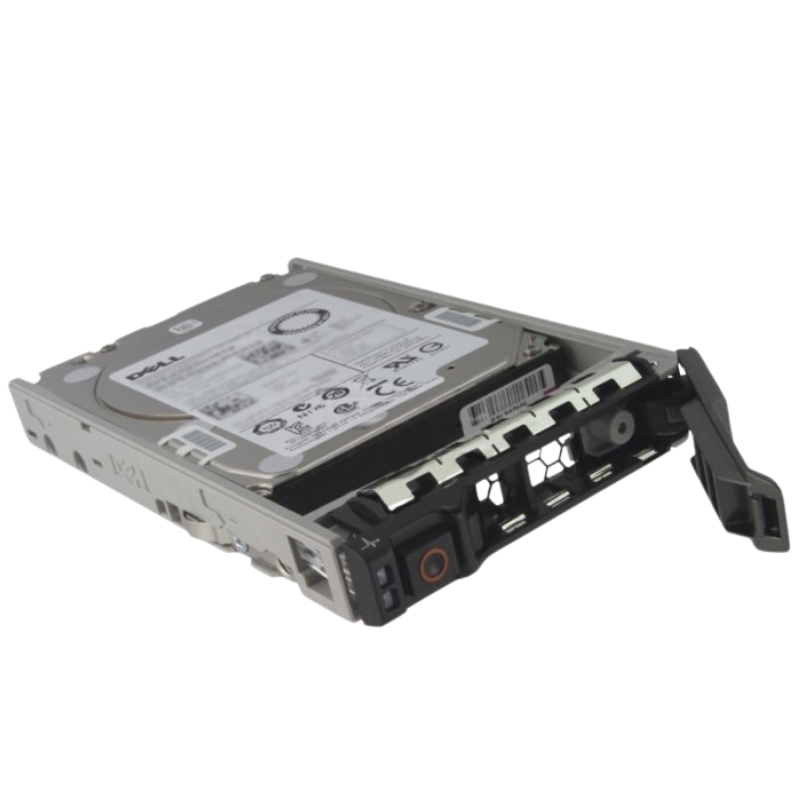


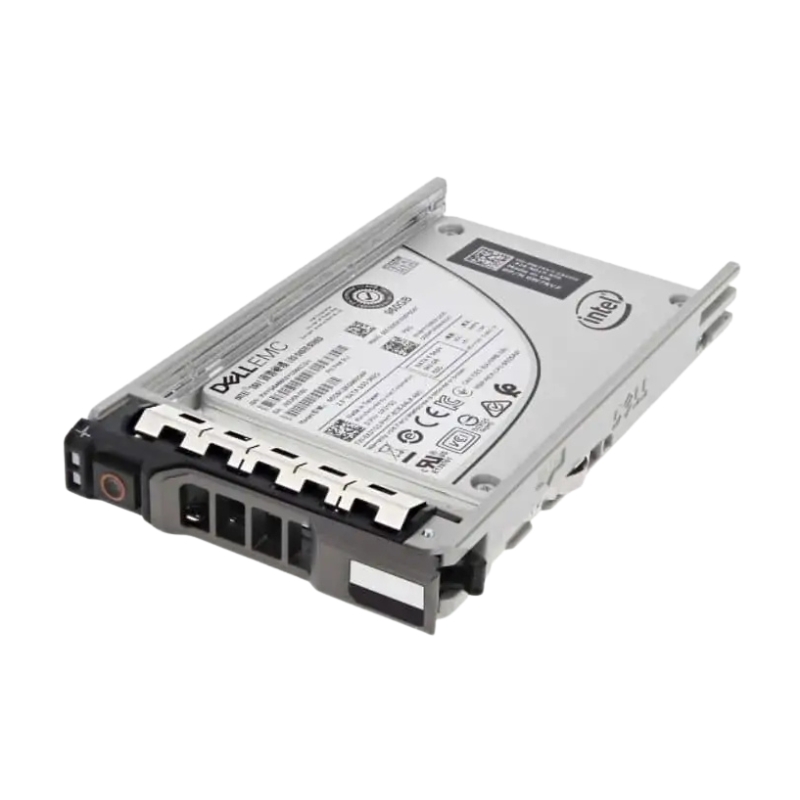
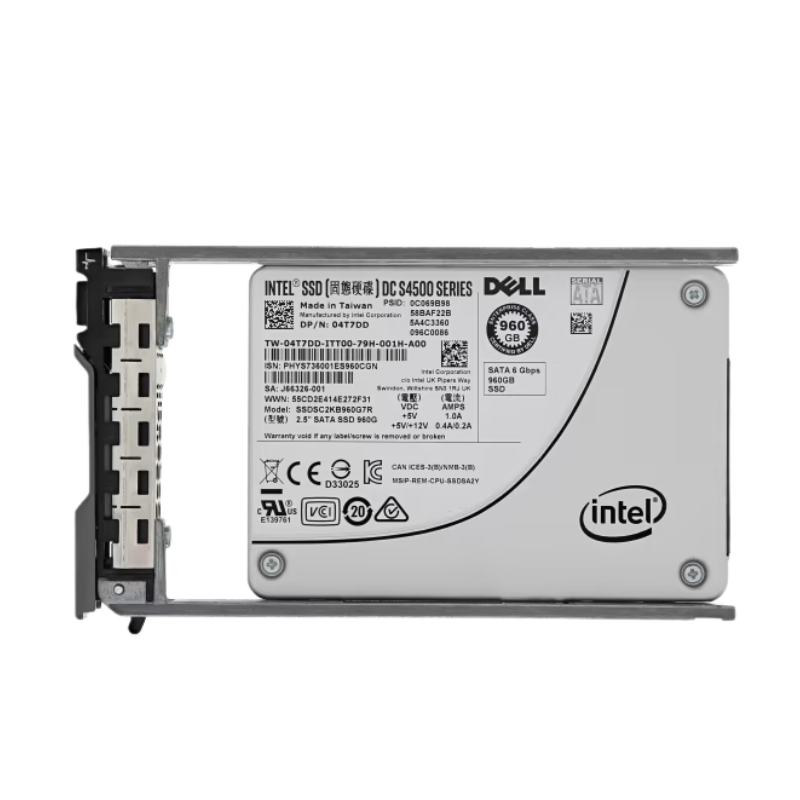
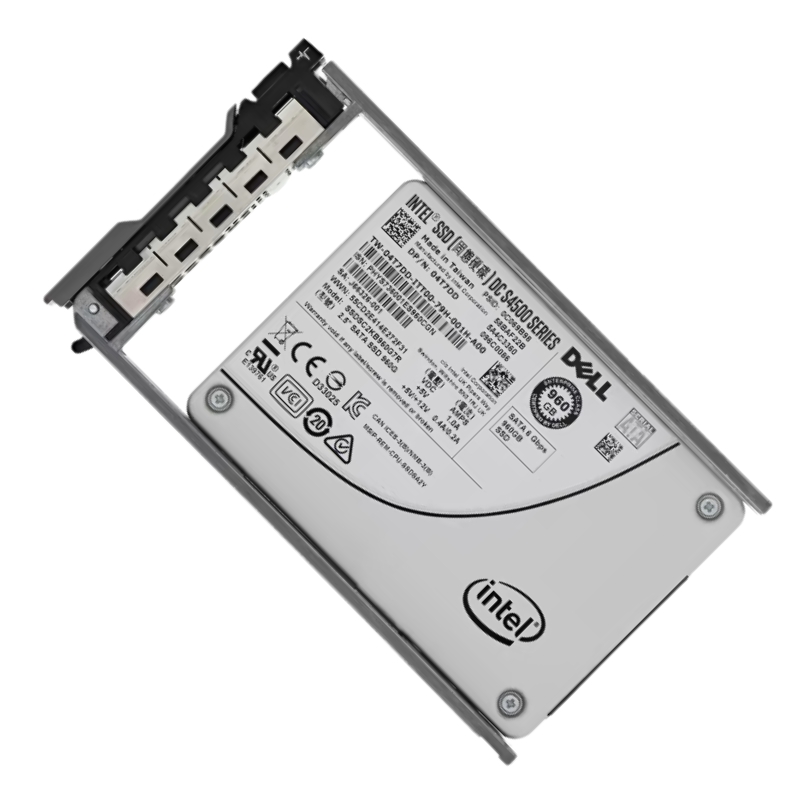
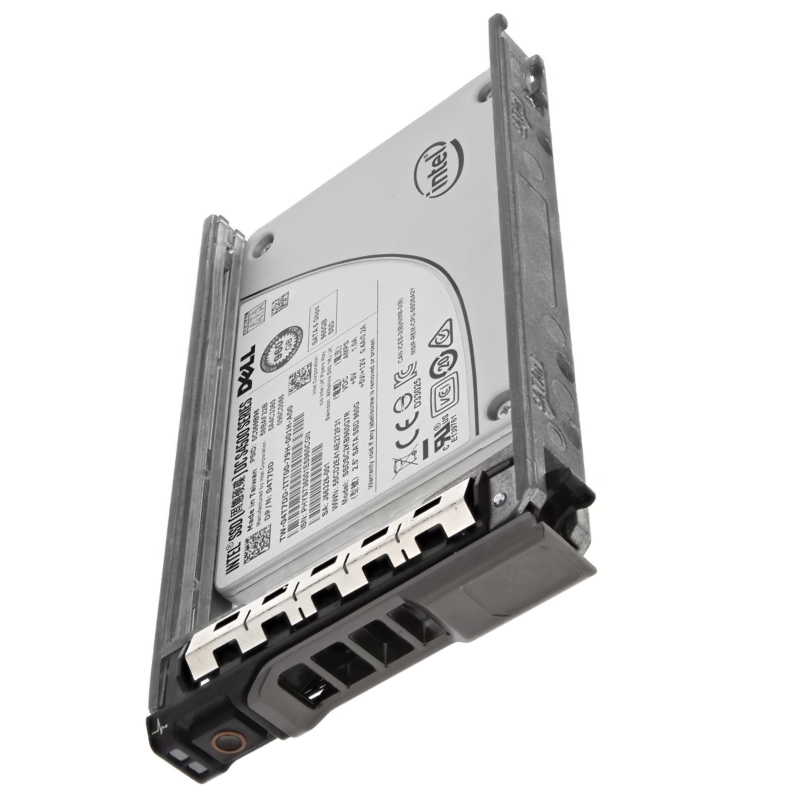
Dell 8P4D3 960GB SATA-6GBPS Read-Intensive 1dwpd TLC SFF Hot-Plug Certified with tray for 14G/15G/16G Poweredge Server SSD. New Sealed in Box (NIB) 1 Year Warranty
The Dell 8P4D3 960GB SATA-6GBPS Read-Intensive 1dwpd TLC SFF Hot-Plug Certified with tray for 14G/15G/16G PowerEdge Server SSD represents a focused, enterprise-grade storage solution engineered to deliver predictable read performance, high capacity per drive, and platform-level compatibility for Dell PowerEdge generation servers. This category centers on SSDs designed to meet the needs of read-heavy workloads, where sequential and random read throughput, low read latency, and durable firmware behavior are prioritized. The product designation highlights the most critical attributes: 960GB usable capacity, a SATA interface operating at 6.0 Gbps, read-focused endurance rated at 1 drive write per day (1dwpd), and three-bit TLC flash optimized for reliability and cost efficiency. The small form factor (SFF) and hot-plug certification with an included drive tray ensure straightforward physical integration into 14G, 15G, and 16G PowerEdge chassis, enabling rapid deployment and replacement without powering down host systems.
The SFF form factor used by the Dell 8P4D3 is purpose-built for dense server environments where rack space and drive bay density are at a premium. The drive tray that accompanies each SSD is specifically configured to fit the sled and caddy mechanisms used in PowerEdge 14th, 15th, and 16th generation servers, reducing the need for third-party adapters or retrofitting. Hot-plug capability is central to modern data center operations; it allows technicians to replace or upgrade drives without interrupting live services, thus maintaining availability and minimizing planned or unplanned downtime. Mechanical design also considers shock, vibration, and thermal tolerances typical in multi-drive enclosures, ensuring that the drive operates reliably under continuous load and varying ambient conditions.
At its core, this SSD communicates over the SATA III protocol at 6 Gbps, a widely supported interface across server platforms and RAID controllers. While NVMe and PCIe-based SSDs dominate new greenfield deployments for low-latency, high-IOPS use cases, SATA remains a cost-effective and compatible option for read-intensive workloads where peak write endurance and ultra-low latencies are not the primary constraints. SATA's ubiquity makes this Dell model an attractive drop-in replacement or capacity expansion choice for existing fleets preconfigured with SATA backplanes and legacy RAID controllers. Administrators should verify backplane compatibility, firmware versions, and controller settings to ensure the drive will be detected correctly and to enable any vendor-specific features like S.M.A.R.T. monitoring or secure erase commands.
This category emphasizes read-intensive endurance: 1dwpd indicates that the manufacturer rates the drive for workloads in which the entire drive capacity can be written once per day on average over the warranty period without exceeding design endurance thresholds. For workloads dominated by reads — such as content delivery, virtual desktop image repositories, media streaming, database read replicas, and certain analytics cache layers — a read-optimized SSD offers a cost-performance sweet spot. The TLC (triple-level cell) NAND used here stores three bits per cell, providing a higher capacity per die compared to MLC while maintaining acceptable endurance and latency characteristics for these workload types. Intelligent controller firmware and wear-leveling algorithms further extend usable lifespan by distributing writes and performing background management tasks to preserve consistent read performance.
Performance characteristics for read-intensive SATA SSDs are typically expressed in sustained sequential read throughput, random read IOPS, read latency, and steady-state performance under mixed workloads. The Dell 8P4D3 prioritizes consistent read latency and high sequential throughput for streaming large data blocks, while write performance will be adequate but not comparable to enterprise write-optimized or NVMe drives. Because the drive is optimized for reads, it is engineered to avoid large, unpredictable performance drops during background housekeeping and garbage collection operations. Administrators should consider how controller-level caching, host-side read caches, and RAID controller write-back policies interact with the drive’s behavior to achieve the best balance of throughput and data safety for their environment.
Endurance is a critical consideration for storage procurement. The 1dwpd rating offers a clearly defined expectation for endurance in read-heavy scenarios: an enterprise can plan replacement cycles, monitor wear indicators, and model lifecycle costs using that metric. The combination of enterprise-grade TLC NAND, a robust SSD controller, and firmware optimized for endurance-focused wear leveling and error correction translates to dependable operation in production. Additional reliability features often included in certified enterprise SSDs are power-loss protection mechanisms (which ensure data at rest in volatile caches is flushed to NAND during sudden power events), end-to-end data path protection, and advanced ECC (error-correcting code) capable of correcting multi-bit errors to maintain data integrity over the drive’s lifetime. Together these features reduce silent data corruption risk and support storage architectures that demand high degrees of correctness.
Operational practices around serviceability are especially important for drives in this category. Hot-swappable support and the certified tray mean that field replacements can be executed with minimal service windows. Best practices include pre-staging replacement drives with matching firmware revisions where possible, using vendor-recommended procedures for drive replacement in RAID arrays, and ensuring that backplane indicators and management consoles are used to verify drive health before and after swaps. Monitoring S.M.A.R.T. attributes and RAID controller logs can also provide early-warning signs of failing drives such as reallocated sectors, media errors, or increasing read latency. When a drive approaches its predicted end of life, a controlled replacement preserves the integrity of RAID parity calculations and avoids rebuild stress on remaining drives.
The explicit compatibility declaration for 14G, 15G, and 16G PowerEdge servers is a significant value proposition for organizations standardizing on Dell infrastructure. These server generations share common sled and backplane designs with minor variations, and a certified drive/tray combination simplifies procurement and reduces integration time. Compatibility testing performed by the vendor typically covers physical fit, thermal behavior under multi-drive loads, firmware interoperability with the server BIOS and RAID controller firmware, and management features exposed through iDRAC and OMSA utilities. The result is a predictable deployment experience for system administrators who manage large fleets of similar servers and need consistent hardware behavior across generations.
Read-intensive SSDs like this Dell model are especially well-suited to architectures emphasizing fast reads at a reasonable price point. Typical deployment patterns include layering these SSDs as read cache tiers in hybrid storage arrays, populating large read-only repositories such as image libraries or content distribution stores, or using them as database read replicas to accelerate query response times. They are also attractive for virtualized workloads where the majority of I/O is read-dominant, particularly in VDI (virtual desktop infrastructure) boot storms where many virtual machines simultaneously request the same image data. Because of their balance between capacity and read performance, they can replace or augment spinning media in many scenarios, offering lower power consumption, reduced latency, and higher sustained read throughput.
Integrating these SSDs into RAID arrays requires attention to RAID level choice and rebuild strategy. RAID 10, RAID 6, or other redundancy schemes can be used depending on the capacity-to-redundancy tradeoffs an organization prefers. SSD-specific behaviors — such as consistent steady-state performance and reduced rebuild times compared to HDDs — should be modeled. However, administrators must also consider that rebuilds on large-capacity SSDs can stress controllers and backplanes; ensuring that firmware and RAID controllers support SSD-friendly rebuild algorithms helps reduce performance impact during degraded operation. Additionally, enabling background scrubbing and proactive data integrity checks can detect latent sector errors before they cause array-level failures.
Deploying this category of SSDs effectively involves a combination of pre-deployment validation and ongoing operational discipline. Pre-deployment steps should include compatibility checks against the target PowerEdge revision, updating RAID controller firmware, and testing drives in staging systems to observe thermal and performance behavior under expected workloads. During deployment, administrators should use vendor-recommended procedures for initializing drives, creating arrays with appropriate stripe sizes for read patterns, and configuring caching layers to augment random read performance. After deployment, continuous monitoring of S.M.A.R.T. data, firmware revision drift, and RAID health logs will provide the insights needed to proactively replace drives approaching the end of their useful life and to detect anomalies before they impact service availability.
When evaluating this category against other SSD classes, several trade-offs emerge. NVMe SSDs deliver much higher IOPS and lower latency, making them suitable for transactional databases, high-frequency trading, and latency-sensitive applications. High-endurance enterprise SSDs with SLC or MLC offer superior write longevity but at a significantly higher cost per gigabyte. The Dell 8P4D3’s read-focused TLC approach positions it between these extremes, offering a blend of capacity, predictable read capability, and affordability. Migration decisions should factor in application I/O characteristics, budget constraints, and long-term scalability goals. In many fleets, a hybrid approach yields the best value by assigning the right type of storage to each workload class.


 Contact Us
 Information
 Catalog
 Solid State Drives (SSD)
 Network Switches
 Hard Disk Drives
 HBA & Controllers
 PC & Servers
 PC & Server Memory
 CPU & Processors
 Network Routers
 Power Supplies
 Tape Drives & Libraries
 Network Devices
 Computer & Network Cables