(7% discount is applied at checkout)
Cart is empty
Your go-to destination for cutting-edge server products
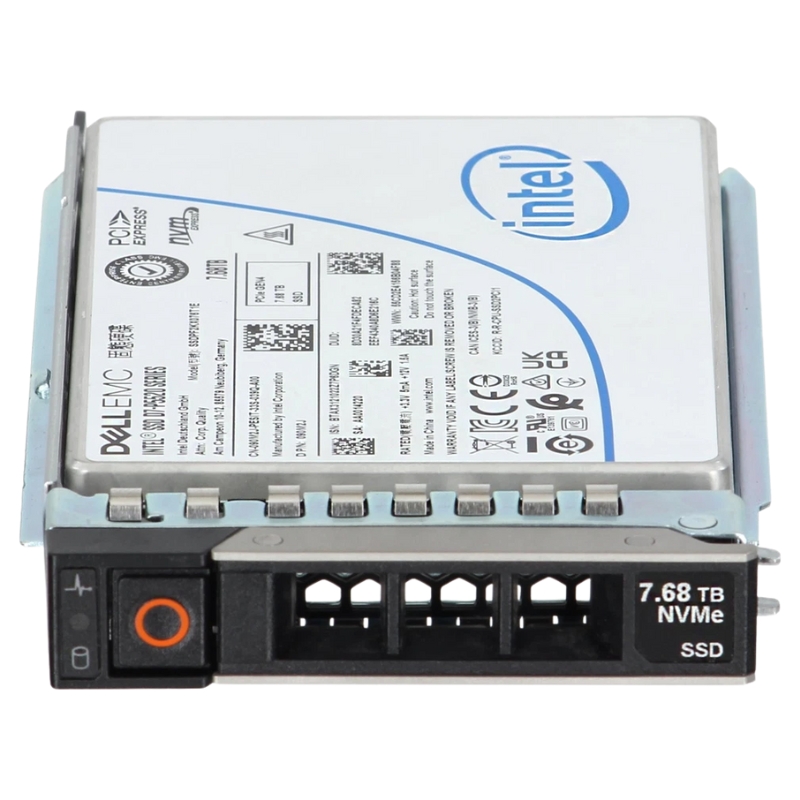


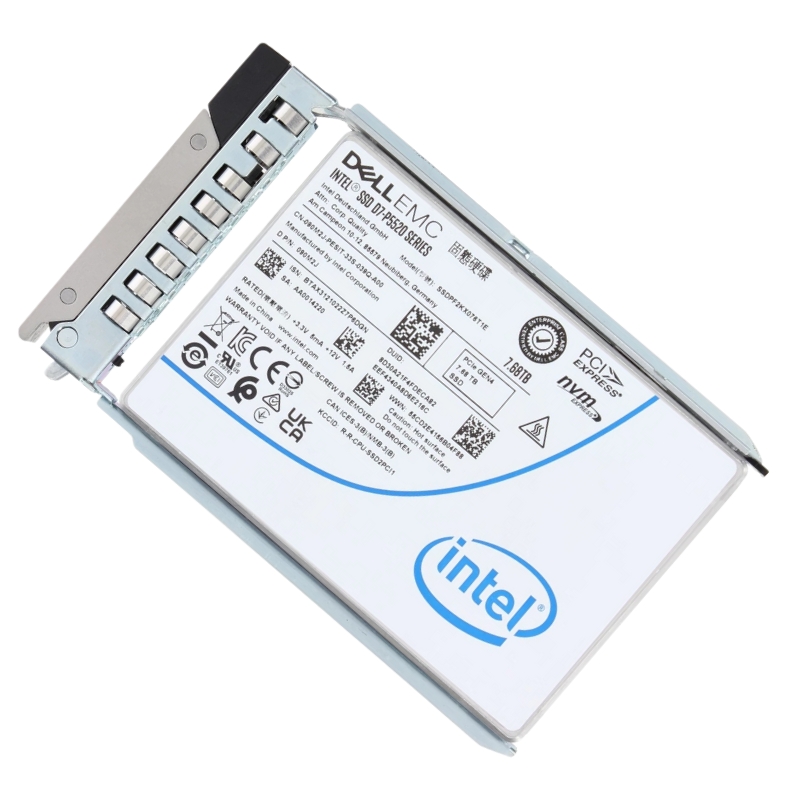
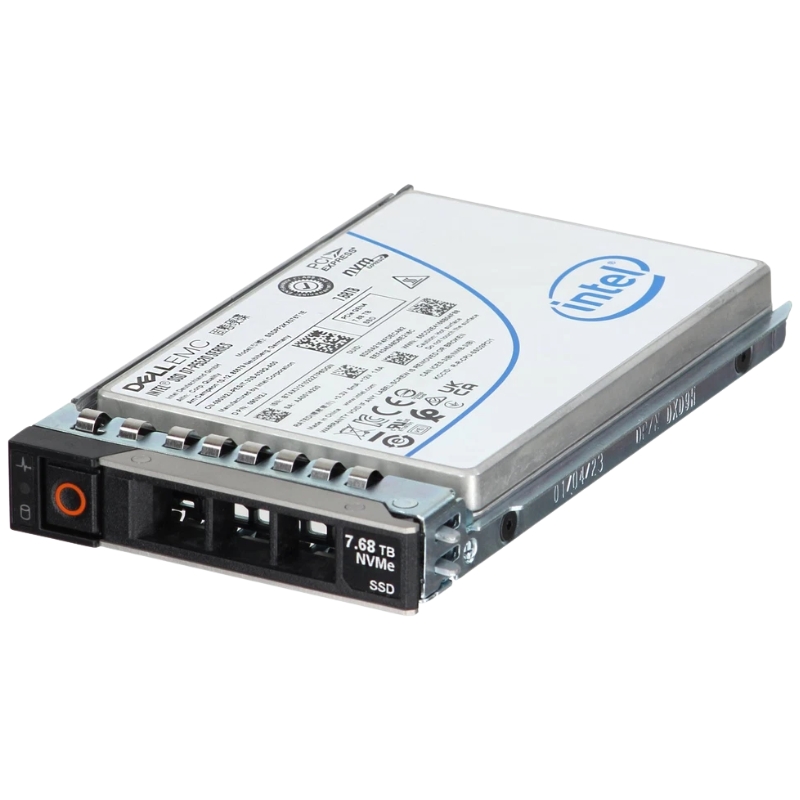
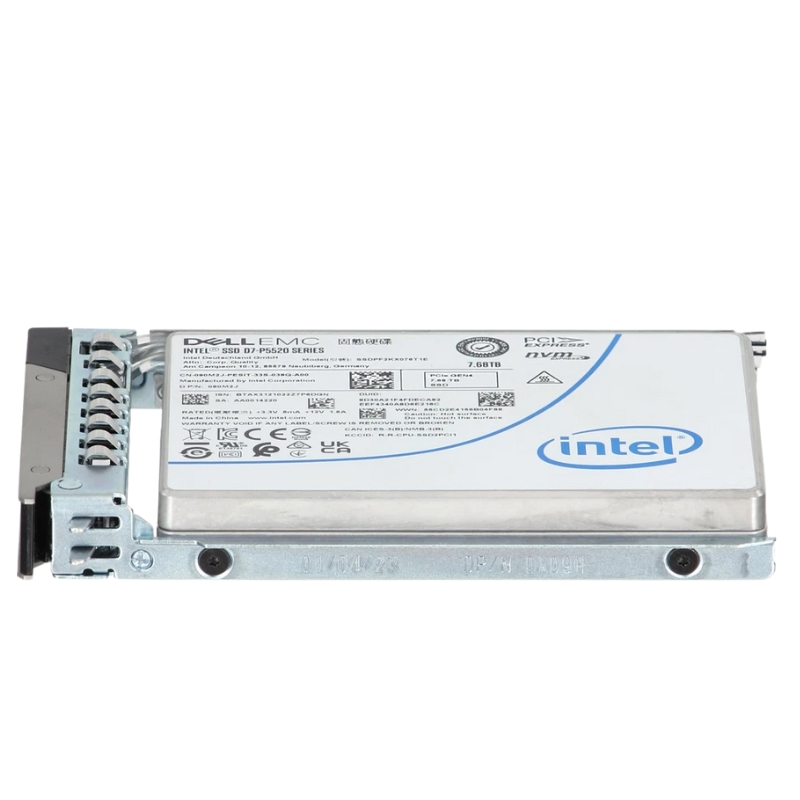
Dell 91KYJ 7.68TB PCI-Express Gen4 NVMe Read-Intensive TLC U.3 SFF with Carrier for 14G/15G/16G Poweredge Server SSD. Excellent Refurbished with 1 year replacement warranty.
This SSD is engineered for seamless integration with a wide range of Dell PowerEdge systems:
While the above list covers primary supported models, this SSD may also be compatible with other PowerEdge configurations and select MD PowerVault storage arrays. Always verify with your system documentation or Dell support for full compatibility assurance.
Choose Dell’s 91KYJ NVMe SSD
The Dell 91KYJ 7.68TB PCI-Express Gen4 NVMe Read-Intensive TLC U.3 SFF SSD with carrier is a cornerstone product in the enterprise storage category designed specifically for modern Dell PowerEdge server platforms including 14G, 15G and 16G generations. This category emphasizes high-capacity, read-optimized NVMe storage delivered in the compact U.3 small form factor (SFF). Built on PCIe Gen4 technology and utilizing triple-level cell (TLC) NAND engineered for read-intensive workloads, these SSDs balance capacity, sustained read performance, and cost efficiency for data center environments. The category includes variants of similar capacities, firmware revisions optimized for PowerEdge integration, and carriers that enable simple installation into hot-swap drive bays. It represents the intersection of enterprise reliability, compatibility with Dell’s server ecosystems, and the performance advantages that NVMe over PCIe Gen4 provides to applications such as virtualization, content delivery, database read-scaling, and analytics pipelines.
At the core of this category is the 7.68TB density point which provides a high capacity per bay ideal for dense server configurations. PCI-Express Gen4 allows doubled raw bandwidth per lane compared with Gen3, and when paired with the NVMe protocol, the result is significantly lower latency and far higher IOPS than legacy SATA or SAS SSDs. The read-intensive TLC NAND used in these drives is tuned to favor sustained read throughput and steady state performance, making it appropriate for workload patterns where read operations dominate. The U.3 SFF form factor allows backward compatibility with U.2 backplanes while supporting NVMe signaling and hot-swap functionality, and the included carrier ensures physical compatibility and vendor-aligned drive handling within Dell PowerEdge chassis. Firmware is often customized to integrate with Dell server management tools, support telemetry reporting to iDRAC and OpenManage, and to align SMART attributes and health reporting with Dell’s monitoring stack.
Typical drives in this category are engineered to deliver high sequential read throughput and strong random read IOPS at low latency. PCIe Gen4 x4 lanes provide theoretical throughput ceiling several gigabytes per second per device under ideal conditions. In real-world workloads, these SSDs show exceptional read bandwidth at large block sizes and maintain consistent service times under mixed read-heavy traffic. Because the NAND is TLC read-optimized, write performance is serviceable but not the primary focus—these drives excel when the workload characteristics include frequent reads, caching layers, content distribution, or read-replica database roles. Enterprise features such as power loss protection, end-to-end data path protection, background media management (GC and wear leveling), and robust error correction algorithms help sustain performance and data integrity over the product life cycle.
Compatibility is one of the defining strengths of the category: drives are tested and validated for integration with PowerEdge generations 14G through 16G. The mechanical carrier and firmware mappings ensure the drives are hot-swappable, recognized during system power on and supported by native RAID controllers or NVMe passthrough modes. iDRAC integration enables early detection of global wear indicators, SMART attributes, and predictive failure alerts that feed into Dell OpenManage. Administrators replacing or expanding storage in 14G/15G/16G servers benefit from consistent LED behavior, drive bay indexing, and carrier latch interoperability, decreasing replacement time and human error during servicing events. This makes the category particularly well suited for organizations standardizing on Dell hardware and seeking predictable, warranty-backed components for their server fleets.
This category targets a broad set of read-heavy enterprise workloads. High-density web applications, media streaming and content delivery networks benefit from sustained read throughput and large capacity for caching objects. Analytics engines and data warehouses using read-dominant queries benefit from low latency and high IOPS at scale. Virtual desktop infrastructure (VDI) environments can exploit the high read performance for user profile and OS boot storms, particularly when used as part of a tiered storage architecture backing frequently accessed image sets. For database environments, these drives are well suited to read-replica nodes, index servers, or reporting clusters where write load is limited or can be offloaded to write-optimized tiers. Backup and archival staging areas that require fast restore reads also achieve strong results. When integrated into storage fabrics as NVMe-over-Fabrics front-end caches, the drives can dramatically accelerate downstream object and block storage layers, delivering a measurable improvement in application responsiveness for end users.
PCIe Gen4 NVMe devices generate meaningful heat when driven to their performance envelope, and U.3 SFF modules with carriers must be considered within chassis thermal budgets. The category includes models with robust thermal throttling algorithms to protect media and controller integrity, but careful placement and airflow management in server racks yields better sustained performance. Rack policies that ensure unobstructed front-to-back airflow, adequate intake temperatures, and nurse fans configured to handle the additional heat load will extend the sustained IOPS profile and reduce the likelihood of thermal throttling events. Many Dell PowerEdge platforms report drive inlet temperatures to system management, allowing administrators to implement proactive cooling responses. For dense deployments the trade-off between more capacity per bay and ambient temperature should be modeled, particularly in dual-CPU, high-core servers that already contribute substantial thermal output.
Read-intensive TLC drives offer endurance ratings calibrated for predominant read workloads. Endurance is usually expressed as an annualized TBW (terabytes written) or a DWPD (drive writes per day) rating appropriate for read-dominant use. While TLC cells have lower program/erase endurance than enterprise SLC/MLC variants, controller intelligence, overprovisioning strategies, and global wear leveling extend usable life. Mean time between failures (MTBF) specifications for drives in this category are aligned with enterprise expectations and typically carry multi-year warranties when installed in supported Dell servers. Administrators should track actual write amplification and host write patterns to ensure that deployed drives will satisfy lifecycle expectations. Predictive monitoring, via SMART attributes and vendor telemetry, enables preemptive replacement scheduling prior to critical failures, preserving uptime and reducing unplanned maintenance windows.
While NVMe SSDs can be used standalone, they often provide the greatest value within a tiered or hybrid architecture. In two-tier setups, the 7.68TB U.3 NVMe devices serve as a hot tier for frequently accessed data while larger, cheaper SATA/SAS HDDs provide cold capacity for archival. Software-defined storage platforms and modern hyperconverged infrastructures can treat these drives as performance tiers that automatically migrate hot blocks. Hardware RAID controllers supporting NVMe are increasingly common, but software RAID and host-based erasure coding are frequently used to exploit the full potential of NVMe’s parallelism. Caching strategies that use NVMe as an accelerated read cache in front of distributed object stores deliver dramatic performance improvements for read-centric workloads while reducing load on backend media. When combined with NVMe over Fabrics, these drives can also serve as front-end cache nodes that accelerate geographically distributed services and deliver consistent low latency to end applications.


 Contact Us
 Information
 Catalog
 Solid State Drives (SSD)
 Network Switches
 Hard Disk Drives
 HBA & Controllers
 PC & Servers
 PC & Server Memory
 CPU & Processors
 Network Routers
 Power Supplies
 Tape Drives & Libraries
 Network Devices
 Computer & Network Cables