(7% discount is applied at checkout)
Cart is empty
Your go-to destination for cutting-edge server products
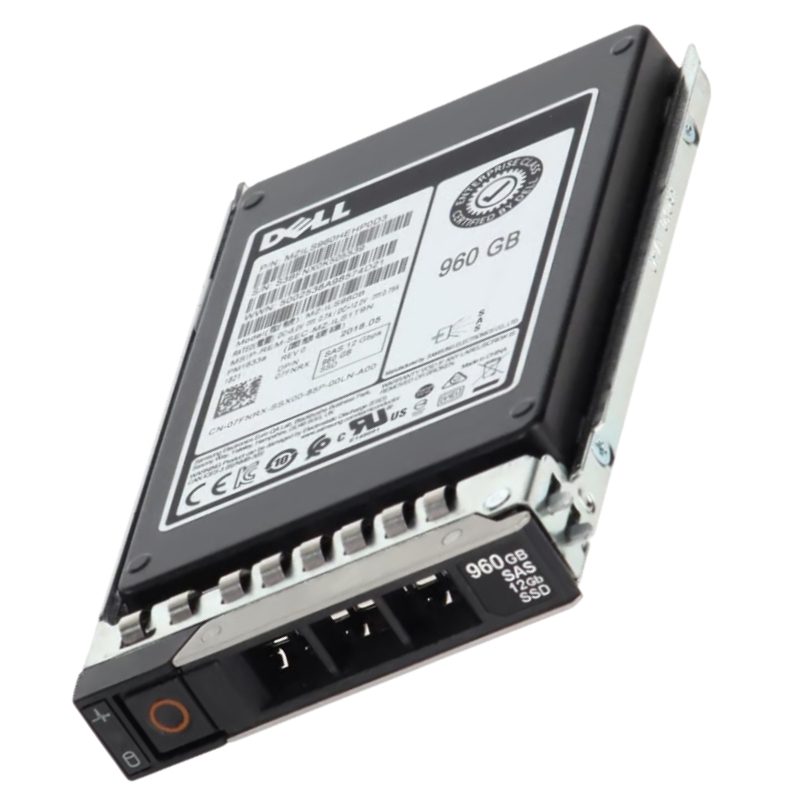


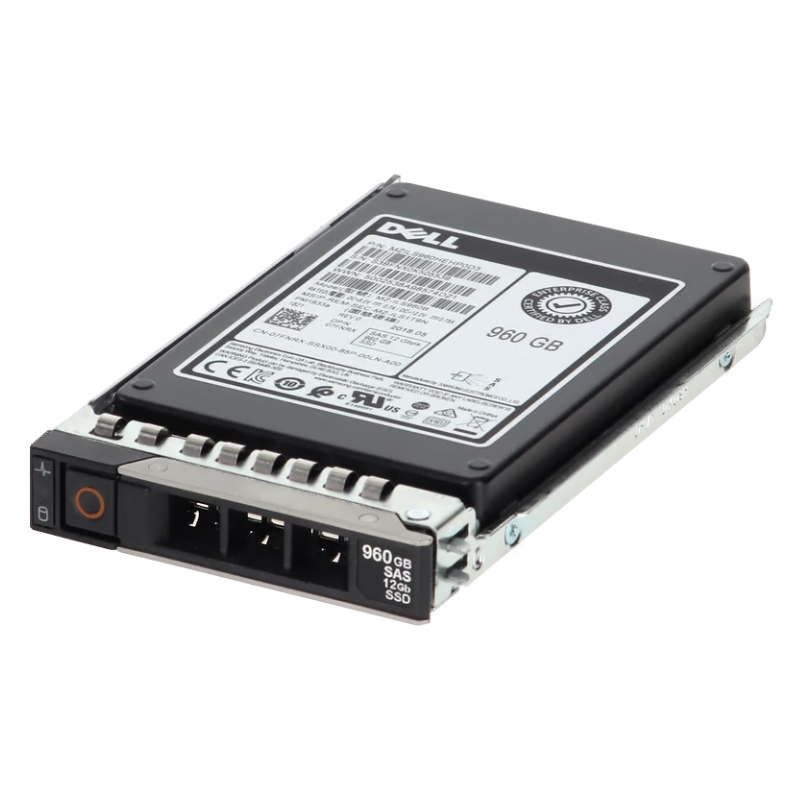
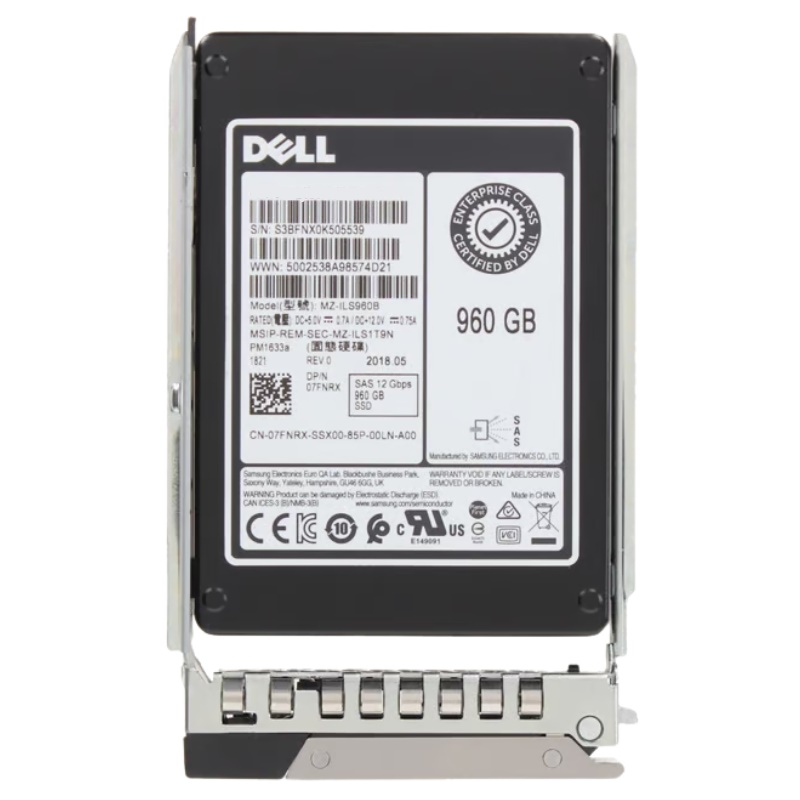
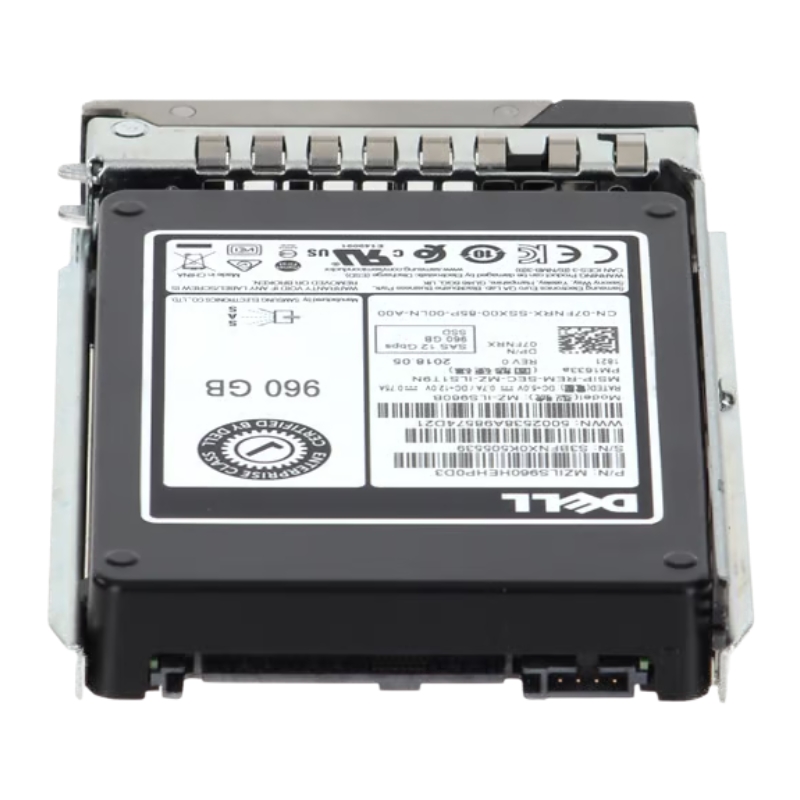
Dell 6N7KY 960GB SAS 12GBPS Read Intensive TLC Certified SSD. New Sealed in Box (NIB) with 1 year Replacement Warranty
| SKU/MPN | Warranty | Price | Condition | You save |
|---|---|---|---|---|
| 6N7KY | 1 Year Warranty | $855.00 | New Sealed in Box (NIB) | You save: $299.25 (26%) |
| 6N7KY | 1 Year Warranty | $330.00 | Excellent Refurbished | You save: $115.50 (26%) |
The Dell 6N7KY 960GB Read Intensive 1DWPD 3D TLC SAS 12Gbps 2.5-inch hot-plug solid state drive with tray is engineered to deliver consistent, cost-efficient read performance for modern datacenter workloads. As a purpose-built 960GB SAS SSD targeted at read-dominant applications, this drive combines a 2.5-inch hot-plug form factor with the robust SAS 12Gb/s interface, enterprise-focused firmware and 3D TLC NAND to provide a dependable balance of capacity, throughput and endurance. For organizations running PowerEdge 14G, 15G and 16G server platforms, the Dell 6N7KY simplifies upgrades and maintenance by fitting into Dell trays and sleds and supporting hot-swap operations, enabling higher server utilization and easier serviceability without disrupting critical services.
The product name contains several important signals that define where this SSD excels. “Read Intensive” indicates the firmware and NAND allocation are optimized for workloads where reads significantly outweigh writes—typical examples include cold storage, web hosting, content delivery, large-scale virtualization read caches and analytics where large data sets are read repeatedly. “1DWPD” (one drive-write-per-day) defines the endurance class: the drive is rated to tolerate the equivalent of writing its full capacity once per day over the warranty period. For a 960GB device that equates to roughly 960GB of writes per day, which suits most read-heavy production profiles and many mixed workloads when paired with appropriate caching strategies. Using a read-intensive SSD in place of a higher-DWPD (write-intensive) device provides a compelling price-to-performance and capacity trade-off when write volumes are predictably moderate.
The SAS 12Gb/s interface supplies enterprise-grade connectivity that supports higher throughput, full-duplex communication and robust error handling compared with consumer SATA drives. For server environments using Dell PowerEdge 14G/15G/16G chassis, a SAS 2.5-inch hot-plug SSD is often the preferred choice for balancing density and performance: the smaller 2.5" form factor enables denser storage configurations while the hot-plug tray lets administrators replace or upgrade drives without shutting down hosts. The Dell 6N7KY is designed to integrate with backplanes and RAID controllers commonly found in PowerEdge servers, enabling features such as online rebuilds, hot spare assignment and firmware update delivery through OEM management stacks.
Using 3D TLC (triple-level cell) NAND allows manufacturers to deliver higher raw capacities in a compact package while keeping costs lower than higher-end cell types. On a read-intensive enterprise drive, firmware algorithms prioritize low-latency read paths, wear-leveling efficiency and background garbage collection that limit write amplification. Enterprise firmware typically reserves a portion of flash as over-provisioning to improve endurance and sustained performance; this extra pool smooths background maintenance and ensures predictable I/O behaviour under sustained activity. For IT teams, understanding how the drive’s firmware manages wear and read/write caching is important for realistic capacity planning and to choose the correct drive class for each workload.
Endurance expressed as 1DWPD is a practical indicator for capacity planning and lifecycle management. Drives optimized for read-intensive workloads generally have a longer projected service lifetime when deployed in read-dominant roles. Mean time between failures (MTBF), write endurance, and the drive’s warranty period (as provided by Dell or the reseller) should be used together to create replacement and refresh schedules. For many datacenters, combining regular health monitoring with predictive failure analysis from S.M.A.R.T. telemetry and OEM management tools extends useful life while lowering risk of unplanned downtime.
This 960GB SAS SSD is especially well-suited to several classic datacenter roles. It is an excellent option for read-cached layers in database architectures, where frequently accessed index and lookup tables benefit from low-latency reads. Large-scale virtual desktop infrastructure (VDI) deployments where many virtual machines perform mostly read operations also map well to read-intensive SSDs, delivering snappier boot and login times at a sensible cost point. Content delivery nodes and web servers that repeatedly serve static assets will see improved response times. In analytics pipelines where large volumes of historical data are scanned, a low-latency read tier can significantly shorten query times. In hybrid storage architectures the drive can be used as a performance tier ahead of high-capacity HDDs, accelerating user experience without incurring the higher per-GB cost of write-optimized SSDs.
Read-intensive enterprise SAS SSDs are tuned to provide low-latency random reads and sustained sequential reads, with moderate random and sequential write capability due to the 1DWPD rating. In practice, this means that workloads dominated by IOPS-bound read operations will experience a significant uplift compared to HDD or SATA solutions, and many read-heavy mixed workloads will meet performance targets cost-effectively. For write-heavy database transaction logs or intensive virtual machine swap activity, IT teams should evaluate whether a higher-DWPD drive or a mixed-tier approach (e.g., write-optimized devices for logs and read-optimized devices for data) is warranted. Benchmarking in a staging environment with representative datasets is always recommended to align procurement decisions with performance objectives.
To sustain throughput under load, administrators should ensure adequate over-provisioning, align filesystem and block sizes appropriately for the application, and avoid garbled write patterns that increase write amplification. Enabling enterprise storage features such as write caching on controllers, using write-back only where battery-backed or capacitive protection exists, and avoiding unnecessary background scrubs during peak windows will improve end-user performance. Monitoring drive temperature and ensuring proper airflow are also critical: thermal throttling can reduce performance during intensive working sets so chassis cooling design and drive placement should be considered during system planning.
Enterprise drives generate telemetry via S.M.A.R.T. attributes and vendor-specific logs that let administrators track wear, power-on hours, bad block reallocation, and predictive failure indicators. Integrate these signals into central monitoring so that preemptive replacements can be scheduled before service impact. Dell’s OpenManage and iDRAC systems often surface drive health details in the server management UI and can automate alerts for threshold breaches. Regular firmware updates applied during maintenance windows keep the drive’s firmware tuned for stability and compatibility with controller ecosystems.
When used within hardware RAID arrays, SAS SSDs interact with RAID controller features like background patrol reads, consistency checks and rebuild operations. SSDs deliver faster rebuild times than HDDs which reduces the window of vulnerability after a drive failure. However, RAID-level planning should consider the rebuild load and the potential impact on co-located drives. For mixed-drive arrays, ensure the controller supports the full set of SAS features and that RAID cache policies are set in accordance with the presence of enterprise-grade power-loss protection and drive write reliability. For mission-critical data sets, complement RAID with regular backups and replication strategies rather than relying solely on RAID for data protection.
Although the Dell 6N7KY part name does not explicitly state self-encrypting drive (SED) capabilities, many enterprise-grade OEM SSDs offer options for encryption or support encryption through controller-managed solutions. If full-disk encryption is a requirement, verify whether the specific SKU includes hardware encryption, or plan for controller-level or OS-level encryption that meets organizational compliance standards. When retiring or repurposing drives, follow secure erasure procedures that meet regulatory requirements, and confirm that firmware-based secure erase operations are supported by the vendor.


 Contact Us
 Information
 Catalog
 Solid State Drives (SSD)
 Network Switches
 Hard Disk Drives
 HBA & Controllers
 PC & Servers
 PC & Server Memory
 CPU & Processors
 Network Routers
 Power Supplies
 Tape Drives & Libraries
 Network Devices
 Computer & Network Cables