(7% discount is applied at checkout)
Cart is empty
Your go-to destination for cutting-edge server products
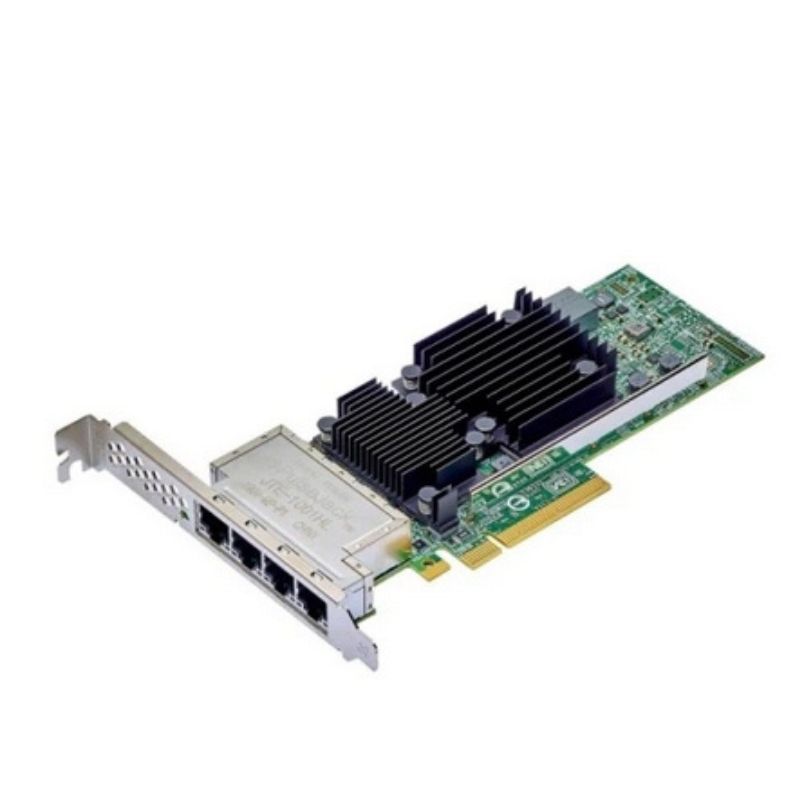


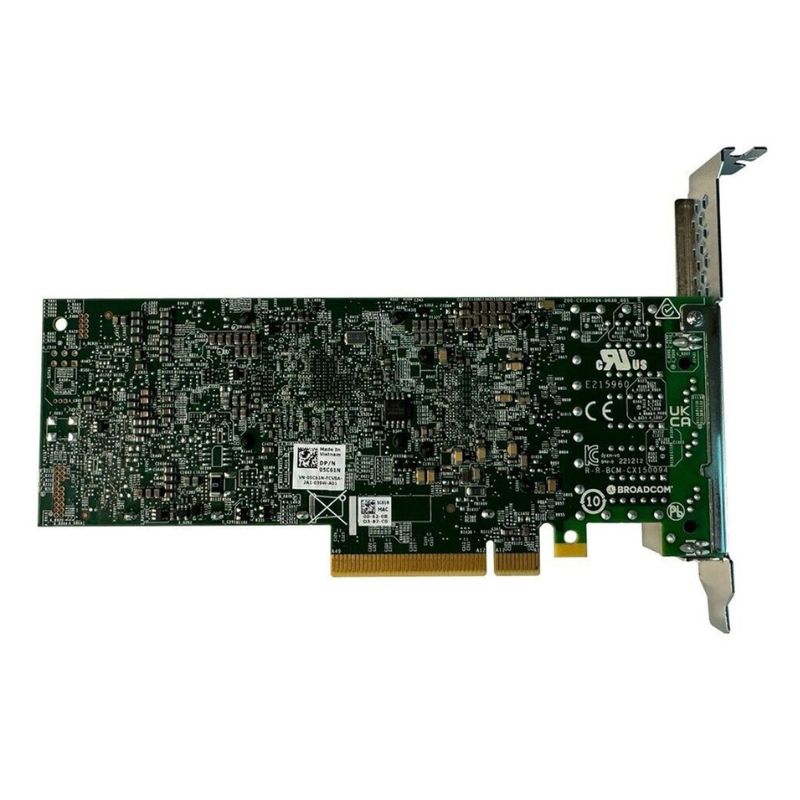
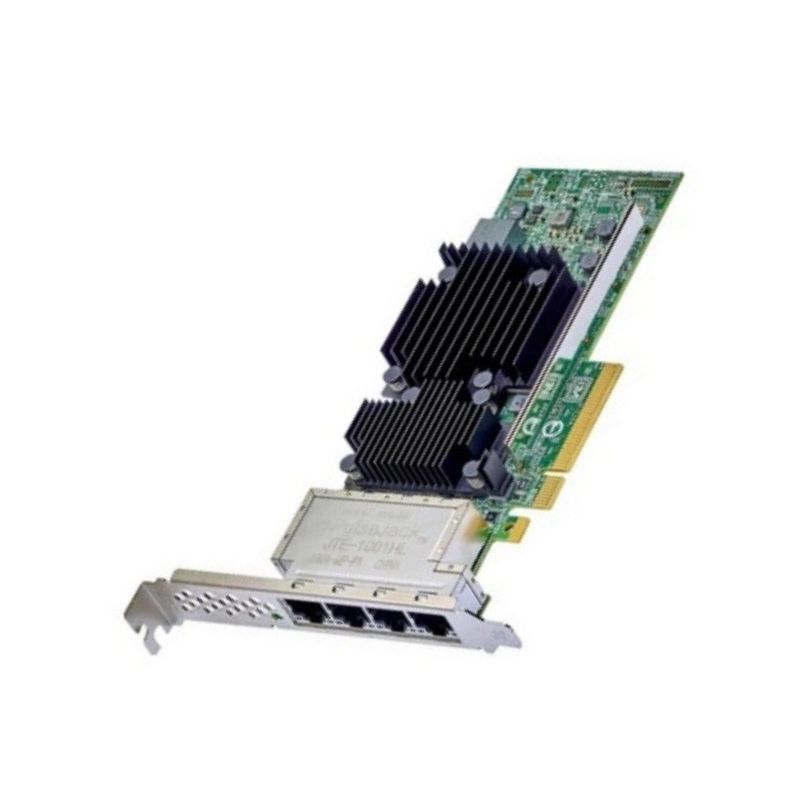
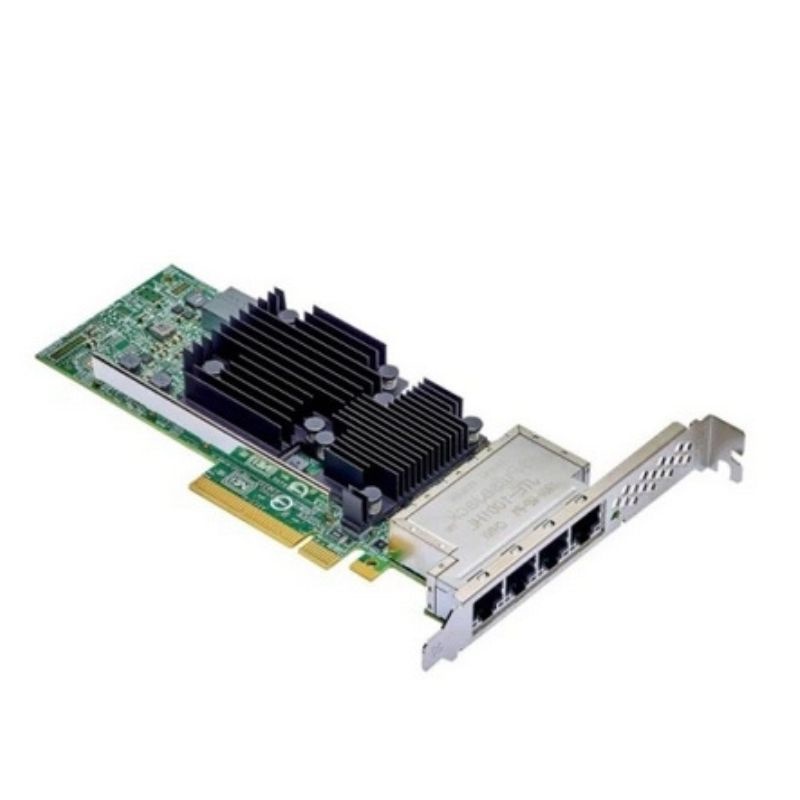
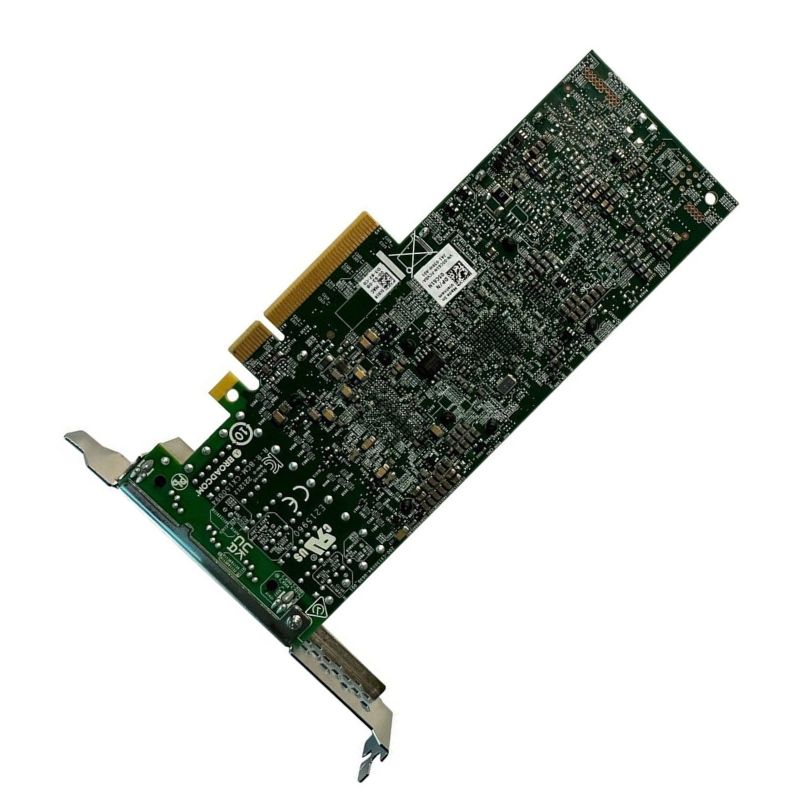
Dell 981K8 4 Ports Broadcom 57454 10GBPS Server Adapter Ethernet PCI-E NIC. Excellent Refurbished with 1 Year replacement warranty
Outline of Dell 981K8 4 Ports 10GbE Ethernet Server Adapter
The Dell 981K8 Ethernet Network Interface Card is engineered for modern data centers that demand reliable throughput, low latency, and scalable connectivity. Built around the Broadcom 57454 controller, this quad-port 10GbE Base-T PCIe adapter delivers enterprise-grade networking for virtualized, cloud, and high-traffic server environments. Its architecture is optimized to balance performance efficiency with deployment flexibility across a wide range of Dell PowerEdge servers.
The category of quad port 10 Gigabit Ethernet Base-T server adapters represents a critical segment in modern data center and enterprise networking infrastructure. Products such as the Dell 981K8 Quad Port Broadcom 57454 10GbE Base-T Server Adapter Ethernet PCIe Network Interface Card are engineered to deliver high-throughput, low-latency, and highly reliable network connectivity for demanding server workloads. This category focuses on Ethernet network interface cards that integrate multiple copper-based 10GbE ports within a single PCI Express expansion card, allowing organizations to scale bandwidth density while optimizing physical server resources.
Adapters in this category are widely deployed in virtualization clusters, hyperconverged infrastructures, private and hybrid cloud environments, database servers, and high-performance application platforms. By consolidating four independent 10GbE connections into one adapter, these network interface cards reduce the need for additional expansion slots, minimize cabling complexity, and enhance overall system efficiency. The Dell 981K8 model exemplifies how enterprise-grade hardware aligns performance, manageability, and compatibility to meet evolving network demands.
Quad port Ethernet adapters play a foundational role in contemporary server architectures where bandwidth aggregation, redundancy, and traffic segmentation are essential. Each physical port operates independently, enabling administrators to assign dedicated network paths for storage traffic, virtual machine communication, management interfaces, and backup operations. This separation improves performance predictability and strengthens security boundaries across different workloads.
In dense rack-mounted servers and blade environments, expansion slot availability is often limited. Quad port 10GbE Base-T adapters address this constraint by delivering high port density without sacrificing PCIe slots. This approach supports scalable network designs while preserving room for other critical components such as storage controllers or GPU accelerators.
The Broadcom 57454 Ethernet controller is central to this category, providing a robust hardware foundation optimized for enterprise networking. This controller integrates advanced packet processing, checksum offloading, and virtualization-aware features that reduce CPU overhead and improve application performance. By offloading network-intensive tasks from the host processor, servers can allocate more resources to business-critical workloads.
The controller architecture supports PCI Express Gen3 connectivity, ensuring sufficient bandwidth between the adapter and the server system. This high-speed interface prevents bottlenecks when multiple ports operate at full 10GbE speeds simultaneously, maintaining consistent throughput across all network connections.
Adapters in this category leverage hardware offloading technologies such as TCP segmentation offload, receive-side scaling, and checksum offload. These features significantly enhance throughput while lowering latency and reducing CPU utilization. In environments with heavy east-west traffic, such optimizations contribute to smoother virtual machine migrations, faster storage access, and improved application responsiveness.
Performance optimization is further supported by intelligent interrupt moderation and adaptive load balancing, allowing network traffic to be distributed efficiently across multiple processor cores. This ensures stable performance even under sustained high-load conditions.
Quad port 10GbE adapters are designed with virtualization in mind, supporting technologies such as SR-IOV and advanced VLAN tagging. These capabilities enable direct assignment of network resources to virtual machines, reducing latency and enhancing isolation. In cloud environments, this translates to better tenant separation and more predictable network behavior.
The ability to create multiple virtual interfaces on a single physical port simplifies network configuration in large-scale virtualized deployments. Administrators can dynamically allocate bandwidth and prioritize traffic based on workload requirements.
10 Gigabit Ethernet Base-T connectivity is a defining characteristic of this category. Unlike fiber-based solutions, Base-T adapters use standard twisted-pair copper cabling, typically Cat6 or Cat6a, making them highly accessible and cost-effective for many organizations. This compatibility allows enterprises to upgrade network speeds without replacing existing cabling infrastructure.
Copper-based 10GbE connections offer flexibility in server placement and ease of maintenance. Technicians familiar with traditional Ethernet deployments can install and manage these adapters without specialized training, reducing operational complexity.
Base-T adapters maintain backward compatibility with lower Ethernet speeds such as 1GbE and 100MbE. This flexibility enables gradual network upgrades and ensures interoperability with existing switches and network devices. Organizations can deploy quad port adapters in mixed-speed environments without disrupting established workflows.
This backward compatibility also supports transitional architectures where servers connect to both legacy and modern network segments, facilitating phased infrastructure modernization.
Advancements in controller design and power management have improved the energy efficiency of 10GbE Base-T adapters. Modern implementations dynamically adjust power consumption based on link speed and traffic load, helping to reduce operational costs in large-scale deployments.
Thermal management is equally important in dense server environments. These adapters are engineered with optimized heat dissipation to maintain reliable operation under continuous load, supporting long-term stability and hardware longevity.
Dell-branded network adapters in this category are validated for seamless integration with Dell PowerEdge servers. This validation ensures compatibility across BIOS, firmware, and operating system layers, minimizing deployment risks and simplifying lifecycle management. The Dell 981K8 adapter benefits from rigorous testing to meet enterprise reliability standards.
System compatibility extends across a wide range of Dell server generations, enabling consistent networking capabilities throughout mixed hardware environments. This uniformity simplifies maintenance and supports standardized network configurations.
This category of network interface cards supports a broad range of operating systems and hypervisors, including major Linux distributions, Windows Server editions, and popular virtualization platforms. Comprehensive driver support ensures stable performance and access to advanced networking features across diverse environments.
Hypervisor integration enables features such as network teaming, failover, and traffic shaping, which are essential for maintaining uptime and service quality in mission-critical deployments.
Quad port adapters are integral to building highly available network architectures. Multiple physical ports allow for link aggregation and redundancy configurations that protect against network failures. In the event of a cable or switch port failure, traffic can be rerouted seamlessly to maintain service continuity.
Network resilience is further enhanced through support for teaming and bonding technologies, which combine multiple ports into logical interfaces for increased throughput and fault tolerance.
Servers hosting databases, transactional systems, and real-time applications demand consistent and reliable network connectivity. Quad port 10GbE adapters provide the bandwidth and redundancy required to support these workloads without compromise.
The combination of robust hardware design and advanced controller features ensures stable operation under continuous high-throughput conditions.
This category of network adapters addresses a wide spectrum of use cases across enterprise and data center environments. In virtualization clusters, quad port adapters enable efficient communication between hosts and storage systems while supporting high virtual machine densities.
In private cloud deployments, these adapters facilitate scalable network architectures that can adapt to changing workload demands. Their flexibility and performance make them suitable for both compute-intensive and data-intensive applications.
Hyperconverged infrastructure relies on high-speed networking to integrate compute, storage, and virtualization layers. Quad port 10GbE adapters provide the necessary bandwidth and port flexibility to support converged traffic patterns.
By consolidating multiple network functions onto a single adapter, organizations can reduce hardware complexity while maintaining performance and reliability.
Database servers and storage nodes benefit from the low latency and high throughput offered by 10GbE Base-T adapters. Dedicated ports can be allocated for storage traffic, reducing contention and improving data access speeds.
This separation of traffic paths enhances performance consistency and supports scalable storage architectures.
Enterprise networking demands robust security and precise control over data flows. Quad port adapters support advanced security features such as VLAN tagging, access control, and network segmentation. These capabilities help protect sensitive data and enforce organizational policies.
Isolation at the network interface level reduces the attack surface and enhances compliance with regulatory requirements.
Support for extensive VLAN configurations allows administrators to segment network traffic logically, improving both security and performance. Quality of Service mechanisms prioritize critical traffic, ensuring that latency-sensitive applications receive the necessary bandwidth.
These features are essential in multi-tenant environments and complex enterprise networks.
Comprehensive monitoring and diagnostic capabilities enable proactive network management. Administrators can track link status, throughput, and error rates to identify potential issues before they impact operations.
Integrated diagnostic tools simplify troubleshooting and support efficient maintenance workflows.
Scalability is a defining attribute of this category of network interface cards. Quad port 10GbE adapters provide ample capacity to support current workloads while allowing room for future growth. As application demands increase, additional ports can be leveraged without replacing existing hardware.
This scalability supports long-term infrastructure planning and helps organizations maximize return on investment.
PCI Express Gen3 connectivity ensures that the adapter can handle aggregated traffic from all ports without performance degradation. This bandwidth headroom is essential for maintaining consistent throughput as network utilization grows.
The efficient use of PCIe lanes allows servers to balance network, storage, and compute expansion effectively.
While focused on 10GbE connectivity, adapters in this category are designed to integrate seamlessly with evolving network architectures. Their compatibility with modern switches and management frameworks ensures relevance as networking technologies continue to advance.
This alignment helps organizations build adaptable infrastructures that can respond to changing business requirements.


 Contact Us
 Information
 Catalog
 Solid State Drives (SSD)
 Network Switches
 Hard Disk Drives
 HBA & Controllers
 PC & Servers
 PC & Server Memory
 CPU & Processors
 Network Routers
 Power Supplies
 Tape Drives & Libraries
 Network Devices
 Computer & Network Cables