(7% discount is applied at checkout)
Cart is empty
Your go-to destination for cutting-edge server products
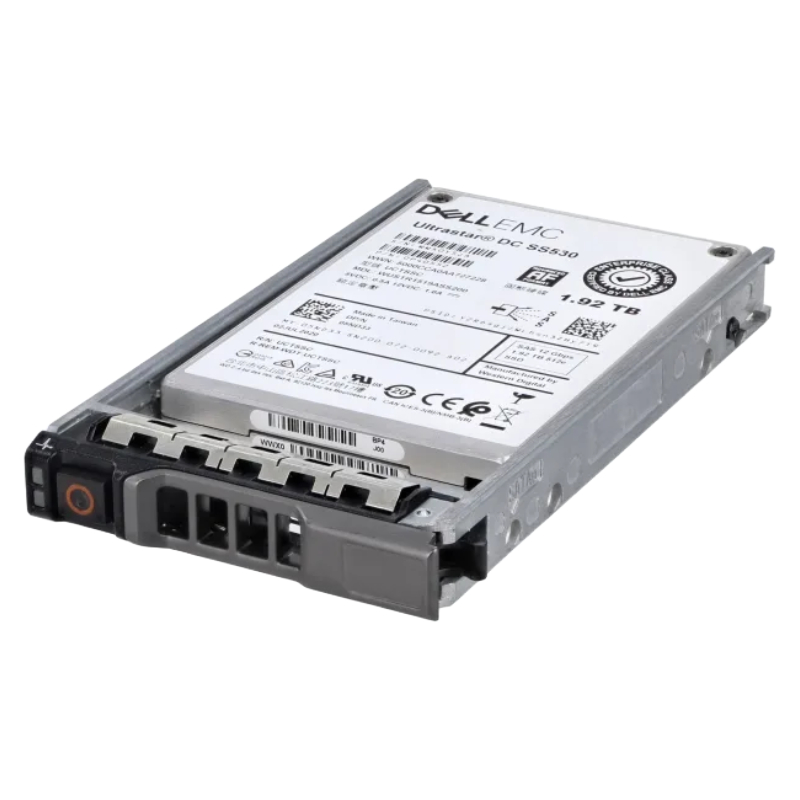


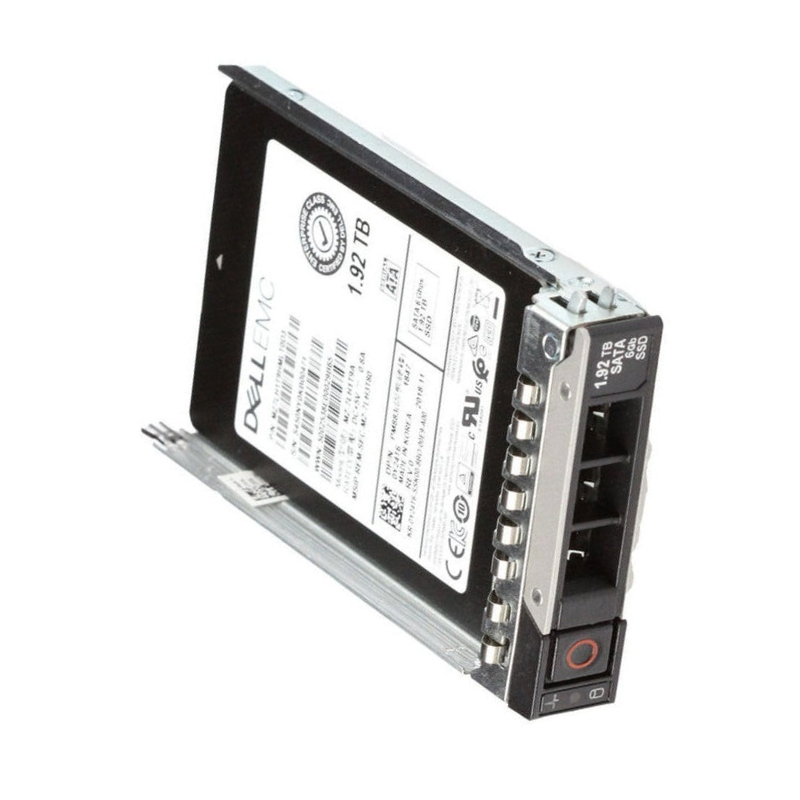
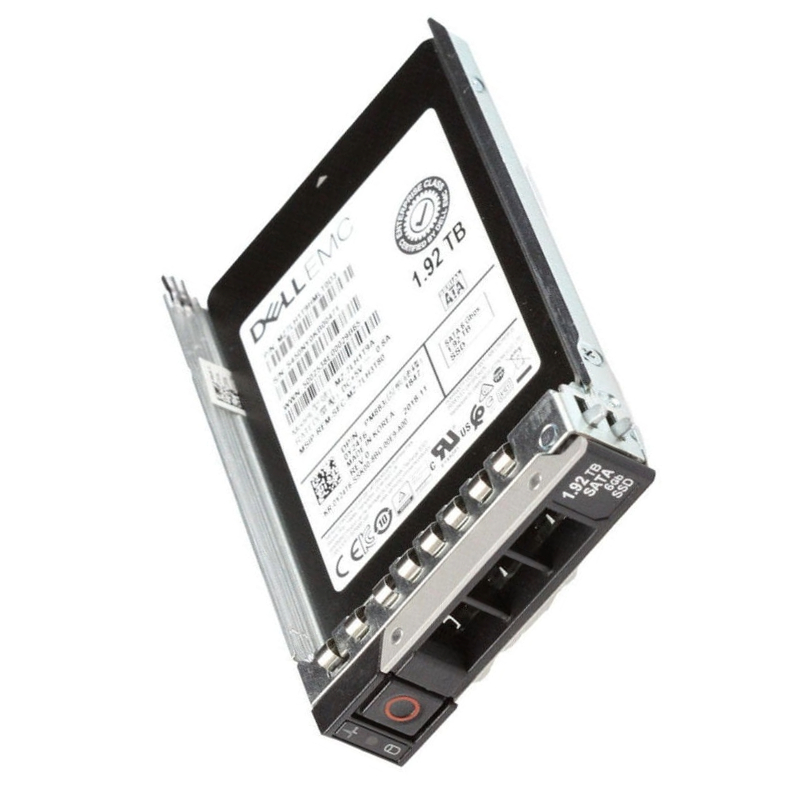
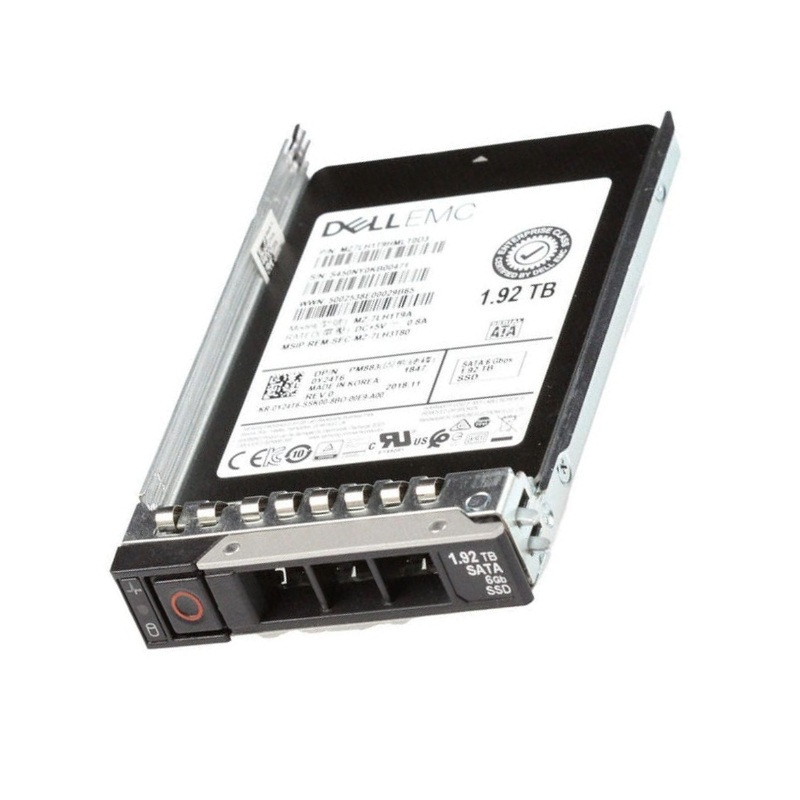
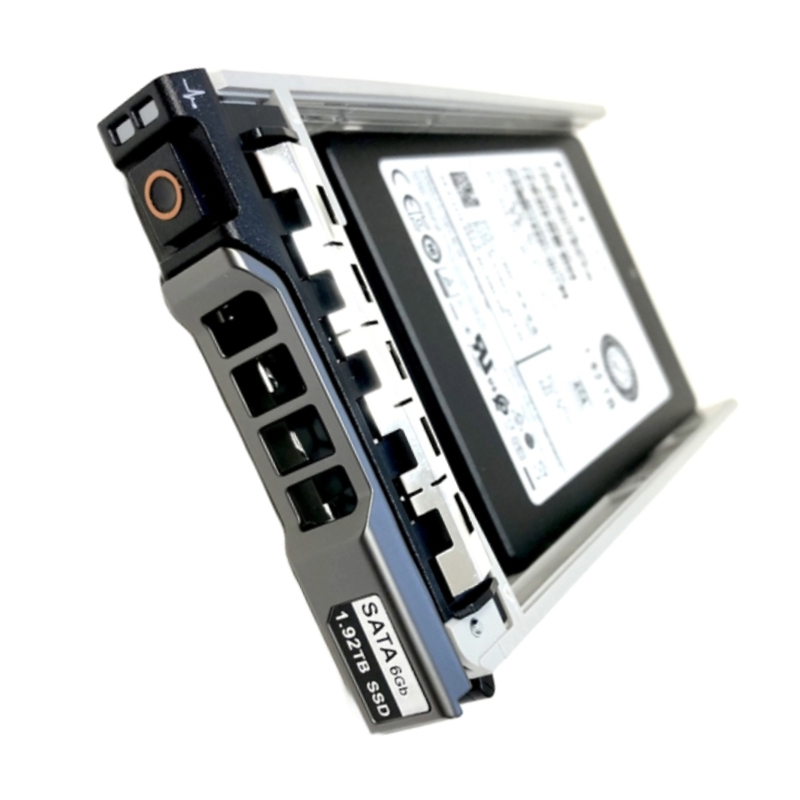
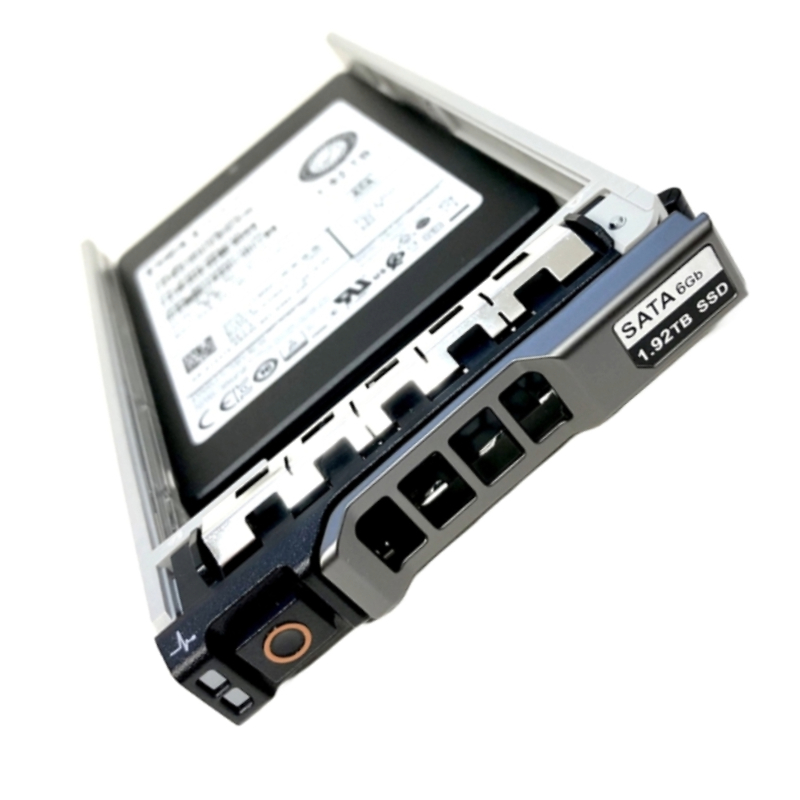
Dell 9J0YR 1.92TB SATA-6GBPS Read-Intensive TLC SFF Hot-Plug for 14G Poweredge Server Solid State Drive. New Sealed in Box (NIB) 1 Year Warranty
The Dell 9J0YR 1.92TB SATA-6Gbps Read-Intensive TLC SFF hot-plug solid state drive represents a purpose-built storage option for PowerEdge server environments where a balance of high capacity, predictable read performance, and enterprise-grade manageability is required. Engineered as a 2.5-inch small form factor (SFF) module with a standard SATA 6Gb/s interface, the 9J0YR family is commonly deployed in multi-drive arrays and mixed I/O racks that demand low latency read throughput, hot-swap convenience and compatibility with Dell PowerEdge 14G (Gen14) server platforms. The 1.92TB capacity point positions this part as a practical choice for dense read caches, large index stores, virtual desktop infrastructure (VDI) read pools, and other read-dominant workloads where reliability and consistent response time matter.
This drive is supplied in a 2.5-inch SFF chassis optimized for insertion into Dell hot-swap drive carriers and hybrid trays commonly used in PowerEdge servers. The SATA III 6Gb/s interface provides plug-and-play integration with standard server backplanes while preserving broad compatibility with legacy SATA host controllers. Because it is offered as a hot-plug module, the 9J0YR enables serviceability in production systems without requiring downtime for drive replacement or maintenance. For administrators managing Dell 14G server fleets, the 9J0YR has been validated for use in those platforms and is available with Dell factory part numbers and trays that make installation straightforward for racked systems.
With 1.92 terabytes of raw capacity, the 9J0YR sits in the mid-to-high density class for SATA server SSDs. This capacity point is ideal for read-intensive use cases such as content delivery caching, analytics indexes, metadata stores, and read-heavy virtualization templates. Drive firmware and NAND management are optimized to preserve read performance while delivering reasonable endurance for workloads where writes are comparatively light. Enterprises seeking economical terabyte-scale storage for read-dominated applications will find the 9J0YR to be a favorable balance between cost per gigabyte and serviceability in enterprise arrays.
“Read-intensive” is a classification that reflects the drive’s endurance and firmware tuning; such drives are calibrated to prioritize predictable, low-latency read operations across many concurrent threads while providing sufficient write endurance for caching and occasional writes. The 9J0YR typically implements triple-level cell (TLC) NAND with enterprise-oriented controllers and error correction to maintain consistent sustained reads. In multi-tenant server deployments, operators will notice strong random read IOPS and steady sequential read bandwidth, especially when the drives are used for frequently accessed datasets. When used as caching layers in front of larger, slower storage pools, a read-intensive SSD like the 9J0YR reduces overall latency and lowers the load on back-end arrays.
To maximize the value of the 9J0YR in production: install drives in validated Dell trays for the correct thermal and mechanical fit; pair drives with RAID controllers or software RAID stacks that recognize SSDs and implement appropriate caching tiers; monitor SMART metrics and endurance attributes to plan drive rotation; and use firmware and driver versions recommended by Dell for the 14G platform. When building read-cache layers, size the cache capacity to hold working sets and use eviction policies tuned for read-heavy behaviour. For virtualization hosts, place golden images or frequently booted templates on the 9J0YR tier to accelerate provisioning and reduce VM boot storms.
Enterprise SSDs in this class often include power loss protection, end-to-end data path protection and advanced error correction, and the Dell 9J0YR is typically provided with the firmware features required for reliable server operation. Some listings and channel vendors indicate options for self-encrypting drive (SED) variants or FIPS-capable models in related part families; organizations with strict compliance requirements should review vendor documentation to select SED/FIPS models or use drive encryption features supported by their server management stack. Drive health reporting via SMART, coupled with Dell’s native management utilities, enables automated alerting and scheduled replacement planning to keep clusters healthy and predictable.
The hot-plug capability allows system administrators to replace or swap drives while a server remains online, which is essential for high-availability environments. Combined with drive trays and chassis backplanes designed by Dell, hot-plug SSDs reduce mean time to repair and simplify field upgrades. When drives are rotated for lifecycle management, hot-swap procedures and standardized trays help technicians execute replacements with minimal risk to data integrity and service continuity. Make sure technicians follow vendor guidance for secure removal and insertion to avoid mechanical misalignment or thermal issues inside the drive bay.
In modern data centers, efficient architectures combine several tiers: ultra-fast NVMe for write-heavy and latency-critical operations, read-optimized SATA SSDs for large read cache and hot data sets, and high-capacity HDDs for archival and cold storage. The Dell 9J0YR is well suited to the middle tier where capacity, cost and read performance come together — acting as a fast layer that offloads read traffic from slower spinning disks. When designing a tiered solution, map application access patterns to the tier characteristics: use the 9J0YR for frequently accessed read sets, use NVMe for write-intensive transactional work, and reserve HDDs for capacity where performance is not critical. Properly tiered architectures reduce TCO while delivering predictable performance to customers.
Although SATA SSDs are less thermally demanding than high-end NVMe devices, they still require proper airflow in densely populated server trays. Dell trays and chassis are engineered to provide consistent thermal profiles; using non-validated trays or mixing incompatible carriers can lead to elevated drive temperatures, which may shorten retention windows and affect long-term health. When populating high-density enclosures, include thermal monitoring thresholds in your telemetry dashboards and consider airflow baffles or additional cooling if the environment exceeds recommended operating temperatures. Balancing power and performance is part of good SSD stewardship: keep track of power budget per enclosure and validate that drive power draw under sustained workloads does not exceed the server’s rated capacity.
For organizations deploying at scale, procurement decisions must balance price per gigabyte, endurance ratings, vendor support terms, and lifecycle replacement policies. Dell certified parts, like the 9J0YR, often provide predictable fitment and compatibility which reduces integration risk across a homogeneous server fleet. When purchasing multiple drives, consider buying spares that match the same manufacturing lot or firmware baseline to simplify diagnostics and replacement. Use procurement windows to negotiate replacement or cross-ship agreements that match your desired RPO/RTO objectives. Channel partners frequently list Dell part numbers and compatible tray SKUs to reduce the risk of mismatched assemblies. For long-term planning, map expected write amplification and program/erase cycles to the vendor endurance metrics and determine replacement cadence accordingly.
Virtual desktop infrastructure benefits from rapid, consistent reads during boot storms and application launches. Placing OS golden images and VM templates on read-intensive SSDs like the 9J0YR significantly reduces login times and improves end user experience across pooled desktop estates. Because reads dominate such workloads, the endurance tradeoff with TLC NAND is acceptable and economical. Administrators should size the SSD tier so that a large portion of the active working set fits within the cache layer for maximum benefit.
Web platforms, content delivery services, and API frontends that perform many small reads will see lower latency and higher throughput when popular content is stored on read-optimized SSDs. Using the 9J0YR as the front cache for frequently retrieved objects reduces load on origin stores and improves application responsiveness. Because the drive offers a balance between capacity and read performance, it is an attractive platform for edge cache nodes and internal CDN layers. Include proper cache invalidation strategies when using SSDs as caches to avoid stale content and to maintain coherence across distributed caches.
Analytics engines that require rapid random reads of large index files benefit from the 1.92TB capacity combined with high random read IOPS. Index shards and frequently scanned datasets can be placed on the SSD tier to accelerate queries and reduce the time to insight. The read-optimized characteristics make the 9J0YR a good fit for search indexes, OLAP caches and materialized view stores where read latency dominates. Plan capacity so that hot partitions remain on the SSD tier and colder partitions are relegated to cheaper, high capacity storage.


 Contact Us
 Information
 Catalog
 Solid State Drives (SSD)
 Network Switches
 Hard Disk Drives
 HBA & Controllers
 PC & Servers
 PC & Server Memory
 CPU & Processors
 Network Routers
 Power Supplies
 Tape Drives & Libraries
 Network Devices
 Computer & Network Cables