
(7% discount is applied at checkout)
Cart is empty
Your go-to destination for cutting-edge server products
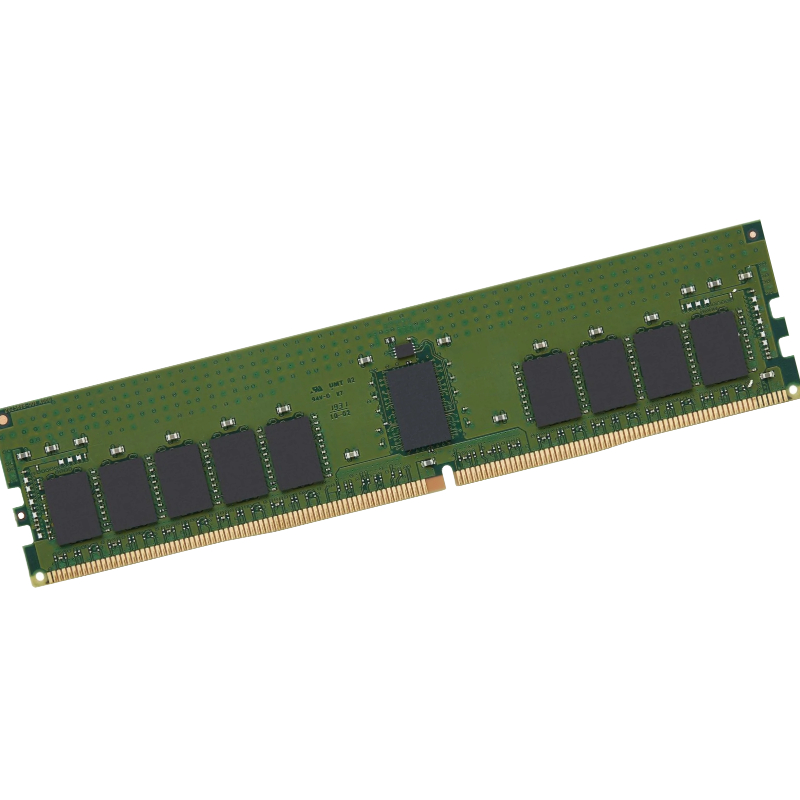
Dell 9U180 32GB 2400MHz PC4-19200 Cas-17 ECC Registered Dual Rank X4 DDR4 SDRAM 288-Pin RDIMM Memory for Server. New (System) Pull with 1 year replacement warranty - Hynix Version
The Dell 9U180 32GB DDR4 SDRAM Memory Module is designed to deliver exceptional performance and reliability. Engineered with advanced ECC technology, this 32GB memory module ensures the integrity of your data while maintaining high processing speeds. With a bus speed of 2400 MHz and dual-rank X4 configuration, it is ideal for various enterprise applications and compatible with a range of PowerEdge and Precision systems.
This Dell memory upgrade is engineered to integrate seamlessly with a wide range of PowerEdge servers and Precision workstations.
The Dell 9U180 32GB 2400MHz module is a high-stability server memory solution built to meet the performance and reliability demands of modern data centers and enterprise-class servers. Classified as PC4-19200 and operating at an effective frequency of 2400MHz, this DDR4 SDRAM RDIMM is engineered with ECC Registered functionality, CAS latency of 17, dual rank organization, and X4 chip architecture. The 288-pin RDIMM form factor conforms to standard server memory sockets and supports the low-voltage 1.2V DDR4 specification, offering improved power efficiency compared to previous generations. ECC (Error Correcting Code) combined with the registered buffer ensures predictable behavior in mission-critical workloads by detecting and correcting single-bit memory errors and by stabilizing electrical signaling across memory channels under high population counts. Dual rank modules provide a balance between density and channel loading, enabling higher capacity per socket while maintaining compatibility with many server memory controllers that are optimized for rank interleaving and multi-channel access patterns. The X4 designation of the memory chips indicates the chip data width and suggests compatibility and density characteristics useful for server vendors and system architects when planning large-scale memory configurations.
Dual rank configuration means that the module presents two separate logical ranks to the memory controller. Each rank can be addressed separately which can yield better throughput on workloads that benefit from rank interleaving. In practice, dual rank modules often allow for more effective memory parallelism on multi-socket and multi-channel server platforms, enabling improved sustained throughput for multi-threaded server applications. The X4 chip organization refers to chips with a 4-bit data width per chip. This organization influences how many chips are necessary to compose a 72-bit-wide ECC RDIMM (64 data bits plus 8 ECC bits). The combination of X4 chips with dual rank design enables high capacity while keeping per-chip density and the layout compatible with industrial server DIMM mechanical and electrical specifications.
CAS latency 17 for DDR4-2400 indicates the number of clock cycles between a READ command and when the data becomes available. Latency figures must be interpreted in conjunction with clock rate: higher frequency can partially offset a larger CAS number, and for server workloads that depend on throughput rather than single-thread latency, overall bandwidth often matters more than absolute CAS number. For I/O intensive and throughput-bound tasks such as virtualization, large in-memory caches, or parallel database queries, the net system performance gains from increased memory bandwidth at 2400MHz typically outweigh small differences in CAS latency. That said, latency-sensitive applications still benefit from carefully matched memory timings and well-tuned system firmware that optimize memory interleaving and channel utilization.
ECC Registered (RDIMM) modules differ from unbuffered UDIMM modules by including a register or buffer that sits between the memory controller and the DRAM chips. This register reduces electrical loading on the memory bus, facilitating higher density and more DIMMs per channel. For servers that require large memory footprints, RDIMMs are the preferred option because they enable stable operation with heavy memory populations. The registered buffer introduces a small increase in latency compared to unbuffered memory, but for enterprise workloads the trade-off is worthwhile for the increased stability and support for high-capacity configurations. Choosing between RDIMM and LRDIMM depends on the maximum capacity required, platform support, and budget considerations.
The 288-pin RDIMM edge connector is the industry standard for DDR4 server memory. The mechanical keying and pinout are standardized, but manufacturers and server vendors publish compatibility matrices for specific platforms. When upgrading or populating server memory, confirm that the target motherboard and BIOS/UEFI firmware version list Dell 9U180 or compatible PC4-19200 32GB RDIMM modules as supported. In practice, Dell PowerEdge and many mainstream server families from major vendors list PC4-19200 ECC Registered modules among supported parts, though firmware revisions may expand support for higher density modules over time.
Memory throughput for a single RDIMM module depends on memory frequency, channel configuration, and the memory controller's capabilities. Dual rank modules can increase effective throughput by exposing multiple ranks that the controller can interleave. In multi-socket servers, overall memory bandwidth scales with the number of memory channels per socket and the number of populated DIMMs per channel. For mixed workloads containing both compute- and memory-bound components, the end-to-end application performance also depends on CPU architecture, storage I/O characteristics, and network latency.
For virtualization platforms, consolidating more virtual machines per physical host requires increased memory capacity and predictable performance. A 32GB RDIMM provides a balance of capacity per DIMM and price-per-gigabyte, which often reduces the number of sockets that need to be occupied to reach desired capacity levels. Database servers that leverage in-memory caching, columnar compression, or buffering will see improved throughput when memory capacity and bandwidth are adequate to hold working sets. High-performance web application servers and application tiers with heavy caching benefit from expanded memory to reduce disk I/O and accelerate response times. Compute clusters running HPC tasks that require large per-node memory allocations find dual rank 32GB modules a practical way to increase per-node memory without changing motherboard platform. Additionally, backup appliances, deduplication engines, and software-defined storage controllers benefit from larger memory pools to hold indexing structures and transient datasets in RAM.
When designing virtualized hosts, map expected memory usage per VM and leave headroom for peak demand. The Dell 9U180 32GB 2400MHz RDIMM enables hosts to support more VMs or larger memory allocations per VM while retaining ECC protection that is essential for multi-tenant and mission-critical deployments. Use server vendor tools and monitoring to track memory utilization over time and plan additional capacity based on trends and headroom thresholds. For cloud and multi-tenant environments where noisy neighbors can cause resource contention, memory isolation and overcommit policies must be tuned carefully; increasing physical memory capacity reduces the need for aggressive overcommitment and improves predictability.
Compatibility is central to server memory upgrades. While the 288-pin physical specification is standard, firmware and memory controller rules vary by platform and generation. Dell publishes compatibility and support lists for its PowerEdge systems, and motherboard vendors provide memory population rules such as which slots to populate first to enable optimal multi-channel operation. Some older platforms may not support high-density dual rank modules or may require specific firmware updates to properly initialize the SPD (Serial Presence Detect) timings. Updating BIOS/UEFI firmware to the latest stable release is recommended prior to large memory upgrades. When mixing different memory modules, ensure matched speed, voltage, and timing where possible; mismatched modules may force the controller to a lower frequency or suboptimal timing, reducing performance or causing stability issues. For enterprise deployments, using matched kits or vendor-validated modules simplifies validation and support.
Server RDIMMs include SPD data that informs the system about JEDEC-defined timing profiles and manufacturer-specific programming. Unlike consumer DIMMs that sometimes rely on XMP profiles for overclocking, server memory is typically constrained to JEDEC standard speeds and conservative timing to maintain stability. In some cases, server firmware may expose settings to manually adjust memory speed and timing, but recommended practice is to rely on automatic SPD negotiation unless running controlled performance tests under engineering supervision.
ECC capability is a defining characteristic for server memory. ECC Registered RDIMMs like the Dell 9U180 provide single-bit error correction and multi-bit error detection, protecting data integrity and preventing silent data corruption. In enterprise contexts, memory errors can cause data loss or application crashes. ECC memory mitigates this risk by identifying and correcting correctable errors in real time, logging events for administrative attention, and isolating uncorrectable errors to prevent data corruption. The registered buffer additionally reduces timing uncertainties on heavily populated channels and increases signal integrity which reduces the probability of electrical errors. Combined, these features contribute to platform-level fault tolerance and enable predictable operation under sustained load.
DDR4 memory modules operate at 1.2 volts nominal, and server-grade RDIMMs, while including additional registered components, remain optimized for energy efficiency. Power and thermal output scale with operating frequency and density; 2400MHz is a JEDEC-supported standard that strikes an efficient balance between speed and power consumption. Ensure that server chassis airflow is properly configured and that high-density memory configurations do not exceed the thermal design parameters of the host system. In rack deployments, account for cumulative thermal load when estimating cooling needs; adding multiple high-capacity RDIMMs will raise the sustained power draw per server relative to low-capacity configurations.


 Contact Us
 Information
 Catalog
 Solid State Drives (SSD)
 Network Switches
 Hard Disk Drives
 HBA & Controllers
 PC & Servers
 PC & Server Memory
 CPU & Processors
 Network Routers
 Power Supplies
 Tape Drives & Libraries
 Network Devices
 Computer & Network Cables