
(7% discount is applied at checkout)
Cart is empty
Your go-to destination for cutting-edge server products
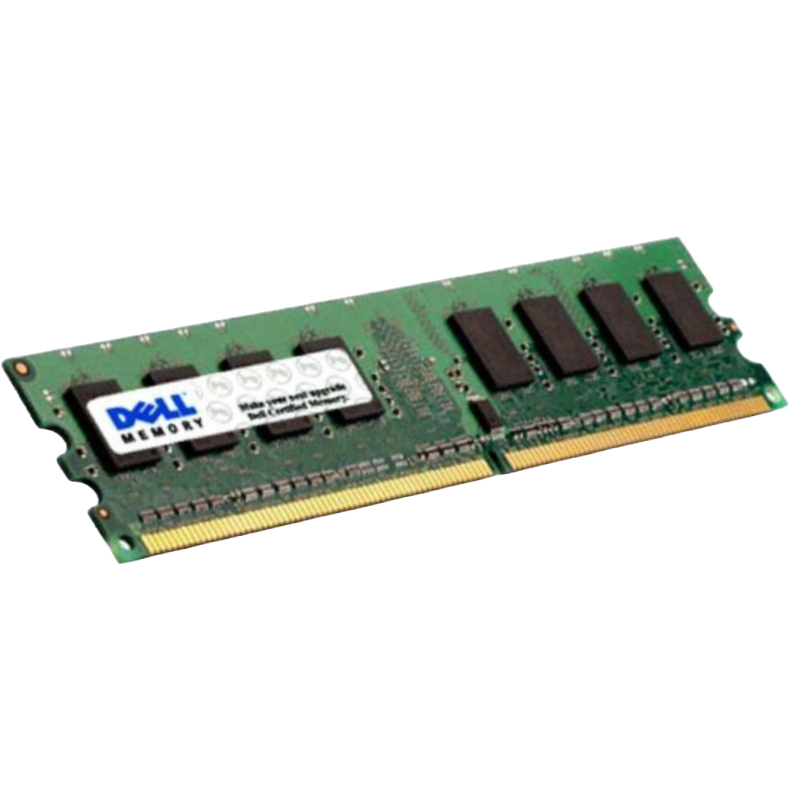
Dell A6996808 8GB PC3-10600 1333MHz DDR3 SDRAM 1.35v Dual Rank 240-Pin Registered ECC for Poweredge And Precision Systems Memory. New (System) Pull with 1 year replacement warranty
The Dell A6996808 memory module delivers reliable performance with advanced DDR3 SDRAM technology, designed for enterprise-grade servers and workstations. Built to support demanding workloads, this dual-rank registered ECC DIMM ensures stability and efficiency across compatible Dell PowerEdge and Precision systems.
Dell A6996808 memory modules are part of a proven lineage of DDR3 RDIMM components built to meet the demands of enterprise-grade PowerEdge servers and Precision workstations. This category centers on the 8GB PC3-10600 specification — a 1333MHz DDR3 SDRAM module that operates at an energy-conscious 1.35 volts and uses a dual rank architecture. As a 240-pin registered ECC module, this part is designed not only for compatibility with a wide range of Dell systems but also for the stability and error-correcting capabilities required in mission-critical environments. The combination of registered buffering, ECC functionality and a dual rank layout makes this module ideal for multi-socket servers, virtualization hosts, database servers and professional workstations that prioritize uptime and data integrity.
The Dell A6996808 conforms to the PC3-10600 JEDEC standard, delivering 1333MHz transfer rates that balance throughput and thermal efficiency. Running at 1.35 volts places it in the low-voltage DDR3 L category, which reduces power consumption and lowers heat generation compared with 1.5v counterparts. Dual rank configuration increases memory density and board-level flexibility by presenting the module as two logical banks to the memory controller, enabling higher capacity configurations without sacrificing performance. The 240-pin form factor is the standard for server and workstation DDR3 modules, ensuring physical and electrical compatibility with PowerEdge and Precision motherboards designed for registered ECC memory.
Registered ECC (RDIMM) modules like the A6996808 include a register between the memory controller and DRAM chips that helps stabilize large memory arrays and timing signals. ECC (Error Correcting Code) adds real-time detection and correction of single-bit errors and detection of multi-bit errors, which is critical for preserving data integrity during compute-heavy tasks. The combined features of registered buffering and ECC make this module a preferred choice for environments where silent data corruption cannot be tolerated, such as virtualization clusters, high-availability application servers, financial systems and scientific compute nodes. In practice, RDIMM modules reduce electrical loading on the memory bus, enabling higher memory counts per channel and more reliable operation under stress.
Intended for Dell PowerEdge servers and Precision workstations, Dell A6996808 modules are validated to work with specific motherboard BIOS versions and memory channel topologies. In many PowerEdge platforms, proper population order and rank balancing are essential to unlocking optimal bandwidth and memory interleaving. Precision workstations benefit from ECC protection and the stability RDIMM modules provide when running professional applications like CAD, simulation, or multimedia rendering. When upgrading or servicing these systems, choosing OEM-specified or qualified modules reduces compatibility risk and simplifies support processes, while also aligning with service-level expectations for performance and reliability.
Operating at 1.35 volts, this low-voltage DDR3 module reduces power draw at scale — a meaningful advantage in data centers and rack-mounted servers where dozens or hundreds of modules are deployed. Lower voltage operation correlates with reduced heat output, which lessens cooling demands and can translate into lower total cost of ownership. For dense server configurations, every watt saved per DIMM aggregates to significant energy savings over the life of the hardware. Combined with careful airflow management and chassis-level cooling, these modules contribute to a more efficient, quieter system while maintaining robust memory performance.
At 1333MHz, PC3-10600 modules offer a balanced performance profile. Single-threaded workloads that rely heavily on memory latency will see moderate gains from platform-level tuning and CPU/memory topology optimization. Multi-threaded and memory-intensive applications, such as virtualization hypervisors, in-memory databases and scientific simulations, benefit from the stability and available bandwidth when multiple modules are populated per channel. Dual rank modules present additional memory banks that can improve effective throughput under certain access patterns by enabling better utilization of available memory channels and improving interleaving behavior.
Common deployments for these 8GB RDIMMs include virtualization hosts that require predictable memory behavior under heavy consolidation, database servers that must maintain data integrity across sustained write cycles, and rendering workstations where large frame buffers and texture data demand stable, correct memory operation. They are also an economical choice for organizations extending the service life of existing PowerEdge or Precision hardware where platform compatibility dictates DDR3 RDIMM. For business continuity and compliance-sensitive applications, the ECC capability addresses concerns over silent data corruption, making these modules suitable for regulated industries and critical IT services.
When planning upgrades, consider the server or workstation memory population rules: populate in matched pairs and follow the motherboard’s channel population sequence to preserve interleaving and maximize bandwidth. Using identical modules across channels ensures uniform timing and reduces the risk of performance inconsistencies. Mixing ranks, speeds or voltages is not recommended, as the memory controller will typically default to the slowest module’s parameters and may disable certain performance features. For best results, match capacity, speed, voltage and manufacturer where possible. In systems that support dual in-line memory module mirroring or advanced ECC modes, consult Dell’s technical documentation to confirm supported configurations and firmware revisions required for full feature support.
Dell OEM memory carries the advantage of being tested to the manufacturer’s standards and certified on supported platforms, which can be crucial for customers who rely on vendor hardware support and warranties. For enterprises, sourcing qualified modules reduces troubleshooting complexity and improves mean time between failures by using components engineered for the specific thermal and electrical environments of the host systems. Spare inventory strategies frequently include OEM RDIMMs to ensure swift replacement without introducing compatibility concerns. Long-term, maintaining consistent memory module types across a deployment simplifies firmware updates and capacity planning.
Choose Dell A6996808 when compatibility with legacy DDR3 server or workstation platforms is required, and when ECC protection and registered buffering are non-negotiable. If your workloads do not require ECC or registered memory, consider alternative unbuffered modules for desktop-class systems, but for enterprise-grade demands, RDIMMs remain the prudent option.


 Contact Us
 Information
 Catalog
 Solid State Drives (SSD)
 Network Switches
 Hard Disk Drives
 HBA & Controllers
 PC & Servers
 PC & Server Memory
 CPU & Processors
 Network Routers
 Power Supplies
 Tape Drives & Libraries
 Network Devices
 Computer & Network Cables