
(7% discount is applied at checkout)
Cart is empty
Your go-to destination for cutting-edge server products
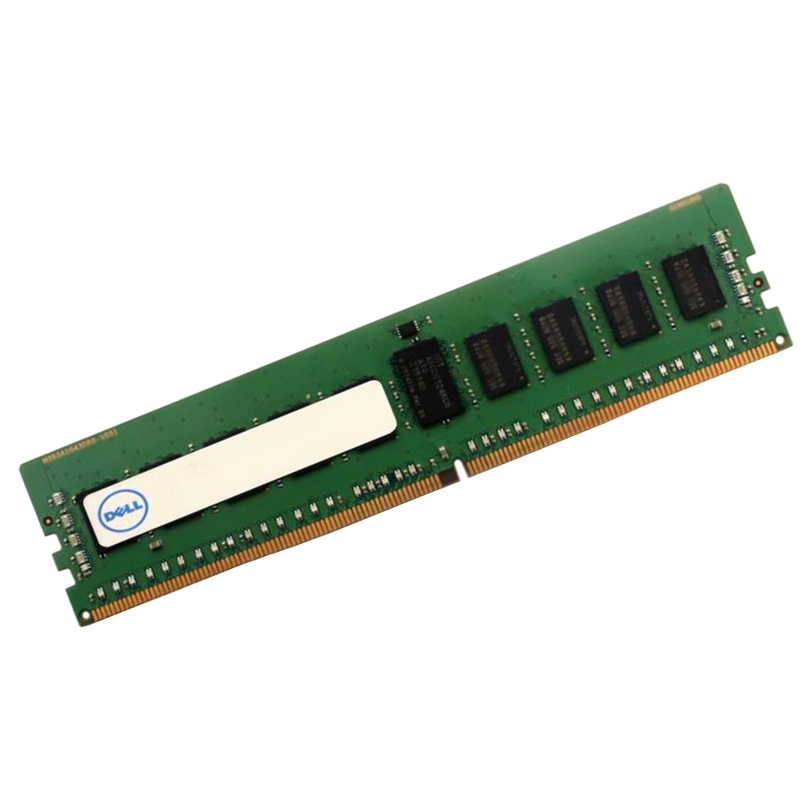
Dell A8711888 32GB 2400MHz PC4-19200 Cas-17 ECC Registered Dual Rank X4 DDR4 SDRAM 288-Pin RDIMM for Server Memory Module. New (System) Pull with 1 year replacement warranty
| SKU/MPN | Warranty | Price | Condition | You save |
|---|---|---|---|---|
| A8711888 | 1 Year Warranty | $412.00 | New (System) Pull | You save: $144.20 (26%) |
| A8711888 | 1 Year Warranty | $912.00 | New Sealed in Box (NIB) | You save: $319.20 (26%) |
The Dell A8711888 32GB 2400MHz PC4-19200 Cas-17 ECC Registered Dual Rank X4 DDR4 SDRAM 288-Pin RDIMM for Server Memory Module is positioned as a high-reliability building block for server-class platforms that prioritize stability, error correction, and predictable performance under sustained load. Its product designation communicates key attributes: a 32 gigabyte capacity per module, DDR4 signaling at 2400MT/s (commonly referred to as 2400MHz), PC4-19200 bandwidth classification, CAS latency of 17, ECC (Error Correcting Code) registered implementation, dual-rank organization with x4 datapath, and the industry-standard 288-pin RDIMM form factor tailored to enterprise server motherboards and memory channels.
The Dell A8711888 32GB 2400MHz PC4-19200 CAS-17 ECC Registered Dual Rank X4 DDR4 SDRAM 288-Pin RDIMM for Server Memory Module represents an enterprise-focused memory configuration engineered for stability, capacity, and predictable performance in rack, blade, and tower servers. The designation encapsulates the essential attributes administrators and buyers need to evaluate: 32 gigabytes of DDR4 DRAM capacity, an effective data rate of 2400 megatransfers per second aligned with the PC4-19200 bandwidth class, a CAS latency of 17 which describes column access timing behavior, ECC (Error Correcting Code) capability for single-bit error detection and correction, Registered (RDIMM) buffering for electrical stability when multiple modules are present, Dual Rank organization which influences how memory channels are accessed, x4 chip organization indicating the data width of each DRAM device, and the standardized 288-pin form factor that physically fits DDR4 server DIMM slots.
Dual rank describes the internal organization of the memory cells on the module and essentially means the module acts as two logical banks (ranks) that can be addressed independently at different times. Dual rank modules often provide higher overall DIMM capacity and can sometimes deliver improved performance in multi-channel server environments compared to single rank modules because the memory controller can interleave accesses across ranks. The x4 designation refers to how the DRAM chips present their data to the memory bus: each chip has a four-bit wide data path and multiple such chips are combined on the DIMM to service the full 64-bit channel width (or 72-bit for ECC-enabled channels). X4 chips allow for higher density and better fault isolation across chips, which pairs naturally with ECC Registered implementations where chip-level faults can be detected and isolated without compromising an entire module.
Registered DIMMs include a register between the memory controller and the DRAM chips to buffer the control and address lines, reducing electrical loading on the memory bus. This buffering stabilizes signal integrity when many DIMMs are populated across multiple channels and sockets, enabling larger memory capacity scales per system. ECC adds the ability to detect and correct single-bit errors and to detect multi-bit errors, which considerably reduces the risk of silent data corruption. Together, RDIMM and ECC form a complementary pair that is the de facto standard for server memory: RDIMMs make large-scale memory populations electrically feasible and ECC ensures the data their systems compute and store remains trustworthy over long uptimes.
Operating at 2400MT/s, this Dell module fits within the PC4-19200 performance tier, delivering a balance between raw throughput and power efficiency. CAS latency of 17 indicates the number of clock cycles between a column address strobe and the availability of the requested data. In server workloads, absolute latency numbers interact with memory throughput, access patterns, and the nature of the compute tasks. For example, memory-bound database queries, in-memory caching, and virtualization memory overheads benefit from the sustained bandwidth that 2400MT/s provides across multiple channels, while latency-sensitive applications see the interaction between CAS timings and interleaving effects. A dual-rank layout can often mitigate effective latency through rank interleaving, improving access concurrency for multi-threaded server workloads.
When planning memory capacity and throughput, system architects consider not only individual DIMM speed but how many DIMMs per channel and per socket the motherboard supports. The RDIMM architecture of this module encourages reliable operation when multiple modules are installed per channel by preserving signal integrity. Doubling or tripling module counts across channels increases aggregate bandwidth and capacity, and because of rank organization and DIMM population rules, mixing dual-rank modules with other ranks can affect achievable speeds. Optimal population often follows vendor guidelines to ensure memory channels run at the desired frequency without downclocking, particularly in mixed-rank or mixed-speed scenarios.
Compatibility with server platforms is a practical concern. This Dell RDIMM targets systems that accept DDR4 288-pin RDIMMs and support ECC Registered memory. OEM compatibility lists typically document validated like this one for specific server chassis and motherboards, ensuring that firmware, memory controllers, and BIOS-level memory training routines have been exercised with the exact module. Engineers replacing or upgrading memory should consult platform documentation for supported DIMM configurations and maximum supported frequency at various population levels. In many enterprise platforms, installing identical modules across channels and sockets simplifies memory training and avoids scenarios where the controller reduces speed to accommodate mismatched DIMMs.
While memory modules themselves are not hot-swappable in typical server designs, deploying error-correcting RDIMMs like this enables robust redundancy strategies at the system level. Paired with technologies such as memory mirroring, lockstep modes, or advanced BIOS-level error handling, ECC RDIMMs help systems continue to operate in the face of single-bit faults. For serviceability, systems often log correctable and uncorrectable memory events to facilitate proactive replacement. In high-availability environments, tracking DIMM health via monitoring utilities and leveraging predictive failure analysis ensures minimal unplanned downtime. Memory choice influences the granularity of such protective configurations; enterprise-grade RDIMMs are designed to integrate with these management features.
DDR4 RDIMMs typically run at standard voltages optimized for energy-efficient operation. At 2400MT/s, such modules balance thermal dissipation and performance. Dual-rank modules with higher chip density can exhibit increased thermal footprints compared to single-rank alternatives, which data center operators account for when planning rack airflow and cooling strategies. Proper airflow across DIMM slots and adherence to vendor-recommended spacing reduces the risk of thermal throttling or premature aging of components. Power consumption per DIMM is part of rack-level power budgeting, and higher populated systems will proportionally increase the memory subsystem's contribution to total power draw. Choosing memory modules with predictable power draw simplifies capacity planning for uninterruptible power supplies and cooling infrastructure.
The 288-pin layout is the standard physical footprint for DDR4 RDIMMs; keyed notches and retention latches ensure correct orientation and reliable electrical contact. Installation is mechanical and straightforward—align the notch with the slot, apply even pressure to seat the module, and ensure latching. System BIOS/UEFI memory training occurs at next boot, detecting the module and negotiating operational parameters. Technicians are advised to follow antistatic procedures and to populate DIMM slots following the motherboard's channel order for balanced performance. The RDIMM height and heatspreader design, if present, should remain compatible with large CPU coolers and adjacent PCIe cards in dense server configurations to avoid interference.
This RDIMM configuration is well-suited to a range of enterprise workloads that require moderate-to-high per-module capacity combined with error correction and predictable throughput. Virtualized server hosts benefit because each virtual machine requires allocated memory; deploying 32GB modules balances the need to reduce overall DIMM counts with the flexibility to scale VMs. In-memory databases and analytics platforms gain from the sustained bandwidth across channels when many such modules populate a system. File servers and application servers that prioritize data correctness over raw low-latency throughput also align well with ECC RDIMMs—where the ability to prevent silent corruption outweighs microsecond-level latency improvements offered by consumer modules.


 Contact Us
 Information
 Catalog
 Solid State Drives (SSD)
 Network Switches
 Hard Disk Drives
 HBA & Controllers
 PC & Servers
 PC & Server Memory
 CPU & Processors
 Network Routers
 Power Supplies
 Tape Drives & Libraries
 Network Devices
 Computer & Network Cables