
(7% discount is applied at checkout)
Cart is empty
Your go-to destination for cutting-edge server products
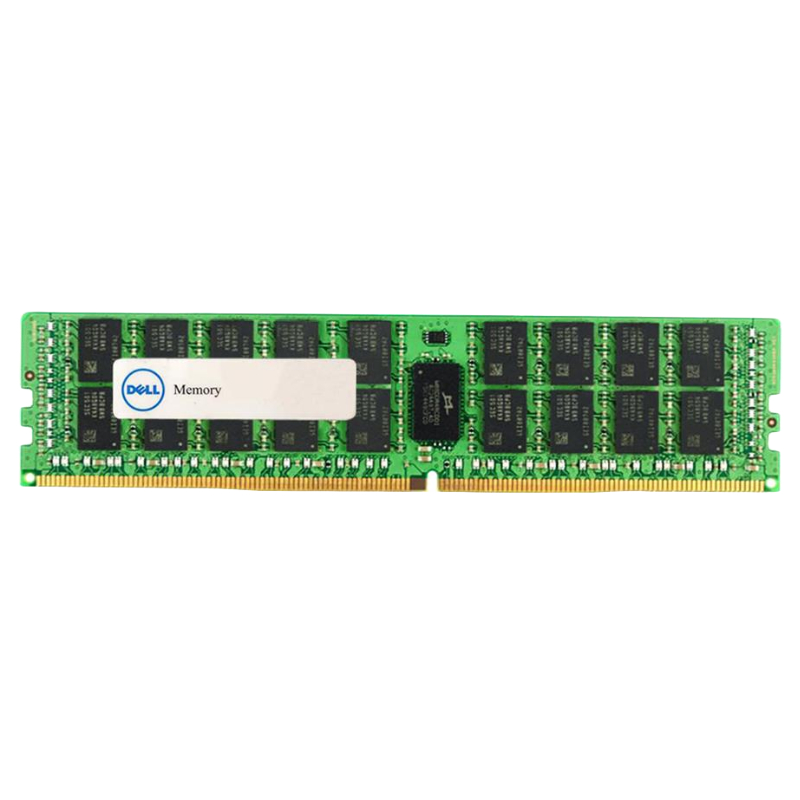
Dell A8868768 32GB 2400MHz PC4-19200 Cas-17 ECC Registered Dual Rank X4 DDR4 SDRAM 288-Pin RDIMM for Server Memory Module. New Sealed in Box (NIB) - Samsung Version
| SKU/MPN | Warranty | Price | Condition | You save |
|---|---|---|---|---|
| A8868768 | 1 Year Warranty | $912.00 | New Sealed in Box (NIB) | You save: $319.20 (26%) |
| A8868768 | 1 Year Warranty | $412.00 | New (System) Pull | You save: $144.20 (26%) |
The Dell A8868768 memory module delivers exceptional performance and reliability for enterprise-grade servers and workstations. Designed with advanced DDR4 SDRAM technology, this 32GB Registered DIMM ensures seamless multitasking and optimized data integrity.
The Dell A8868768 32GB 2400MHz PC4-19200 CAS-17 ECC Registered Dual Rank X4 DDR4 SDRAM 288-Pin RDIMM Server Memory Module represents a high-density, enterprise-grade memory solution engineered specifically for server environments where data integrity, stability, and predictable performance are essential. This category description focuses on the technical make-up, engineering benefits, and practical considerations that define this type of module: a 32GB capacity per module, DDR4 generation memory operating at an effective clock speed of 2400MHz, with PC4-19200 throughput, CAS latency 17, ECC (Error Correcting Code) support, Registered (RDIMM) buffering, Dual Rank organization, and x4 data width on 288-pin DIMM form factor.
The "32GB" identifies the module's capacity and therefore its role in memory sizing strategies — whether used to reach high memory footprints for virtualization or to populate large in-memory databases. "2400MHz" indicates the data rate; in system-level terms this translates to PC4-19200 aggregate bandwidth per module, meaning the module can theoretically move 19.2GB of data per second under ideal conditions. "CAS-17" is a latency figure: Column Address Strobe latency of 17 cycles, a measure used to compare delay characteristics between modules operating at the same frequency. "ECC Registered" denotes a dual capability: ECC's real-time single-bit error correction and multi-bit error detection to maintain data integrity, combined with registered buffering to offload electrical load from the memory controller and allow stable operation when many DIMMs are installed. "Dual Rank" communicates how memory chips are organized on the module; multiple ranks can present more addressable banks to the memory controller, sometimes improving throughput at the cost of additional electrical complexity. "x4" conveys the internal data bus width for each DRAM device on the module; x4 device configuration is common in server-grade modules because it provides a balance of density and reliability for ECC mechanisms. Finally, "288-pin RDIMM" is the physical connector standard for DDR4 registered DIMMs, ensuring the mechanical and electrical interface aligns with a broad class of server motherboards and platforms.
Performance for server memory cannot be judged by clock rate alone. The Dell A8868768 module's 2400MHz speed and CAS-17 timing combine to deliver a specific trade-off between bandwidth and latency. In synthetic benchmarks and memory-bound applications such as big data analytics, in-memory caches, and certain scientific computations, the higher data rate improves sustained throughput, while CAS-17 provides consistent access latency. Registered ECC memory such as this module typically yields slightly higher absolute latencies compared with unbuffered server memory due to the presence of the register, but the benefit is remarkable stability and signal integrity across many populated DIMM slots. When deployed in dual-channel or quad-channel memory architectures prevalent on modern server CPUs, these modules participate in interleaved memory access patterns that increase effective bandwidth and smooth out access spikes.
Error Correcting Code is a cornerstone of server memory reliability. The Dell A8868768 module's ECC capability continuously checks every memory word written and read for single-bit errors and corrects them on the fly, while detecting multi-bit errors for preventive maintenance actions. In practice, ECC greatly reduces silent data corruption, which is critical for databases, virtualization, and any application that relies on absolute data fidelity. Registered memory contributes additional reliability by stabilizing the electrical interface between the memory controller and DRAM devices; the register buffers command and address lines so that large numbers of DIMMs can be used without signal degradation. Together, ECC and registered buffering push mean time between failures (MTBF) in the positive direction and provide system administrators with operational resilience. Proper monitoring via platform management tools will surface correctable ECC events long before they accumulate into uncorrectable errors, enabling scheduled replacements without emergency downtime.
Compatibility for the Dell A8868768 revolves around server platforms that accept DDR4 288-pin RDIMMs and support ECC Registered modules. This includes a wide array of server motherboards and enterprise-class systems from multiple vendors. However, compatibility is not universal: consumer-grade motherboards and many desktop systems expect UDIMM or SODIMM form factors and will not accept RDIMM modules. Additionally, mixing RDIMMs with unbuffered or load-reduced DIMMs in the same system can create instability. Before procurement or upgrade, system administrators should consult vendor compatibility lists and BIOS release notes to confirm supported densities, ranks, and speeds. Memory population guidelines are often provided by server OEMs to achieve optimal channel balancing and performance; following those ensures the module operates at the expected clock rate and voltage while maintaining ECC and register functionality. When upgrading older systems, careful attention must be paid to the maximum supported memory speed as some platforms will downclock 2400MHz modules to the highest supported speed of the installed controller.
Rank architecture—singular versus dual versus quad rank—matters to both system capacity and performance. The Dell A8868768’s dual rank configuration shows up as two independent sets of memory banks accessible by the memory controller. In some scenarios, dual-rank modules can provide higher effective throughput than single-rank modules because the controller can interleave accesses between ranks. This can be beneficial for multi-threaded server workloads and database operations where simultaneous memory transactions are frequent. From a capacity standpoint, dual-rank modules often enable higher per-module densities without the need for exotic device packaging. On the downside, some server platforms limit the total number of ranks per channel; using dual rank modules may impact how many DIMMs can be populated per channel before hitting platform limits. The net effect is that selection should consider both maximum capacity needs and the desired channel/rank mix recommended in platform documentation.
CAS latency expressed as CL17 indicates that the memory requires 17 clock cycles to respond to a column address read command. When combined with frequency, it yields effective latency in nanoseconds; at 2400MHz, CL17 is a common industry trade-off that prioritizes bandwidth while keeping latency in acceptable ranges for server tasks. Practical effects of CAS latency changes are typically workload dependent. Latency-sensitive applications such as certain real-time analytics may benefit marginally from lower CAS numbers, while throughput-bound applications such as large in-memory caches, file system caches, or virtualization scale-out benefit more from sustained bandwidth than single access latency. Because the Dell A8868768 is an enterprise RDIMM, its design focus is stability and error correction rather than raw gaming-style latency, so CL17 is balanced to provide consistent, predictable access patterns for server payloads.
The characteristics of the Dell A8868768 make it ideally suited for virtualization hosts, database servers, memory caching layers, analytic nodes, and other infrastructure where predictable memory performance and data correctness are fundamental. Virtualized environments that host many virtual machines benefit from the 32GB density to increase consolidation ratios without compromising per-VM memory guarantees. In-memory databases and large-scale caching systems rely on steady high throughput, which 2400MHz RDIMMs can deliver when combined with multi-channel platform architectures. Scientific and engineering compute nodes that use large datasets can rely on ECC to prevent silent corruption that could invalidate experiments or simulations. Because of the Registered architecture, this module is also a strong candidate in configurations where many DIMMs are necessary to reach terabyte-level RAM capacities in a single server chassis.
Understanding how the Dell A8868768 RDIMM compares to alternatives clarifies when it is the right choice. UDIMM (unbuffered) modules are common in workstations and desktops and offer lower latency at the cost of limited maximum population and no ECC or register buffering, making them unsuitable for many servers. LRDIMM (Load-Reduced DIMM) uses an advanced buffer to further reduce electrical load on the memory controller, enabling very high-density configurations with many DIMMs per channel; LRDIMMs are ideal when pursuing maximum capacity per system but have different performance and cost trade-offs compared with RDIMMs. RDIMMs like the Dell A8868768 strike a middle ground by enabling higher memory counts and capacities with solid ECC support while maintaining a balance between cost and performance. The choice between these types depends on whether the priority is maximum capacity, absolute lowest latency, or a balanced, field-proven enterprise solution with broad compatibility.
Selecting modules such as the Dell A8868768 is not merely a component purchase but part of a long-term infrastructure strategy. Memory choices influence virtualization ratios, database design, upgrade paths, and the cost of ownership across hardware refresh cycles. A 32GB 2400MHz PC4-19200 CAS-17 ECC Registered Dual Rank X4 DDR4 SDRAM 288-Pin RDIMM provides a predictable foundation for capacity planning, enabling administrators to balance memory density against the operational requirement for ECC and registered buffering. The result is a platform that supports scalable deployments, minimizes risk of silent data corruption, and interoperates with established server ecosystems. When integrated as part of a managed, monitored environment with firmware updates and periodic validation testing, these modules contribute to stable, long-lived compute infrastructure and efficient resource utilization.


 Contact Us
 Information
 Catalog
 Solid State Drives (SSD)
 Network Switches
 Hard Disk Drives
 HBA & Controllers
 PC & Servers
 PC & Server Memory
 CPU & Processors
 Network Routers
 Power Supplies
 Tape Drives & Libraries
 Network Devices
 Computer & Network Cables