
(7% discount is applied at checkout)
Cart is empty
Your go-to destination for cutting-edge server products
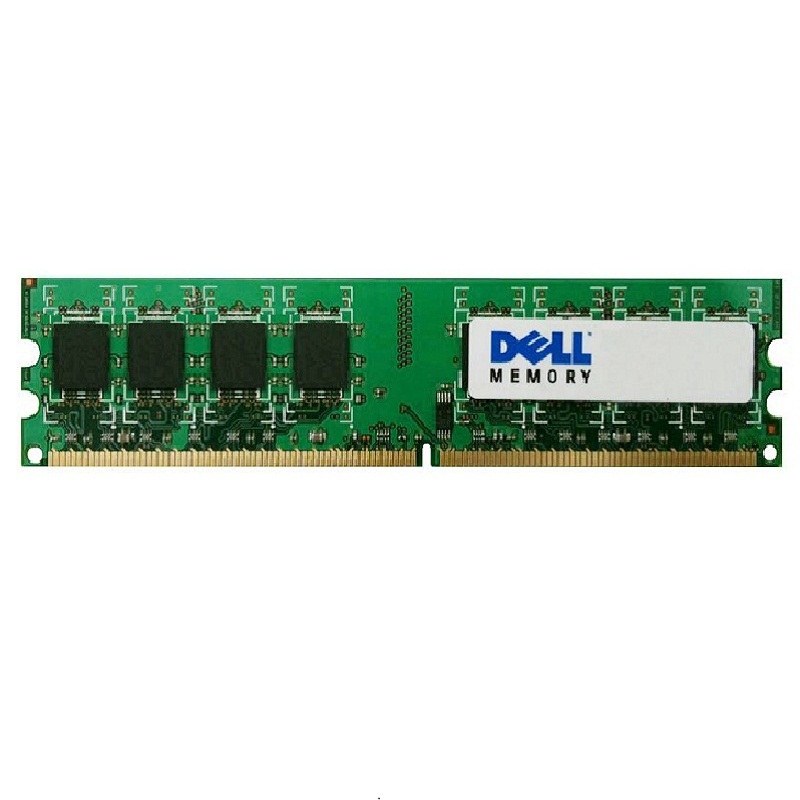
Dell A9781927 8GB 2666MHz PC4-21300 CL19 ECC Registered 1rx8 1.2v DDR4 SDRAM 288-Pin DIMM for Poweredge Server Memory Module. New Sealed in Box (NIB) with 1-Year Replacement Warranty
| SKU/MPN | Warranty | Price | Condition | You save |
|---|---|---|---|---|
| A9781927 | 1 Year Warranty | $198.00 | New Sealed in Box (NIB) | You save: $69.30 (26%) |
| A9781927 | 1 Year Warranty | $174.00 | New (System) Pull | You save: $60.90 (26%) |
The Dell A9781927 8GB 2666MHz PC4-21300 CL19 ECC Registered DDR4 SDRAM module is a specialized server memory offering designed for use in Dell PowerEdge platforms and compatible enterprise-grade systems. Engineered to deliver reliable performance under sustained multi-user and high-throughput workloads, this 288-pin DIMM combines Error-Correcting Code (ECC) with registered buffering and a precise 1.2-volt operating profile to reduce power draw while preserving data integrity.
The Dell Memory module’s 2666MHz transfer rate aligns with modern DDR4 server memory standards, and its CL19 latency specification represents a balance between timing and throughput for applications that require both predictable latency and consistent bandwidth. As a single-rank, 1rx8 configuration, the module is often selected for environments where addressability, density planning, and compatibility with server memory controllers are critical considerations. For system architects, IT professionals, and procurement teams, understanding the technical attributes and operational implications of the A9781927 helps ensure optimal memory population strategies, improved uptime, and predictable performance scaling across compute clusters.
At the heart of this category lies a collection of technical specifications that directly influence server behavior. The 8GB capacity per DIMM offers a useful unit for incremental memory upgrades and density planning. When multiple A9781927 modules are installed across channels, the total system memory scales linearly while retaining channel interleaving potential in compatible motherboards. The 2666MHz frequency designation (PC4-21300) indicates the peak theoretical bandwidth per module; when populated in multi-channel configurations, aggregate bandwidth increases proportionally, benefiting memory-bound workloads. CL19, which denotes the column address strobe (CAS) latency in clock cycles, determines the delay between a memory read command and the availability of data; while lower CAS values are preferable in latency-sensitive contexts, the module’s CL19 rating is optimized for server workloads where throughput and ECC reliability take precedence.
Error-correcting code (ECC) and registered (buffered) memory technologies are pillars of enterprise-level memory reliability. The ECC capability built into these modules detects and corrects single-bit memory errors on the fly, preventing corruption and reducing the likelihood of system crashes or silent data corruption. Registered memory introduces a register between the memory controller and the DRAM chips, which stabilizes signal integrity and allows motherboard designers to support larger memory capacities and more DIMM slots per channel. The A9781927’s ECC Registered features are particularly valuable in database servers, virtualization hosts, large-scale compute nodes, and any mission-critical environment where consistency and resilience are mandatory.
Operating at 1.2 volts, this DDR4 module reflects the industry trend toward lower-voltage memory standards that reduce total system power consumption without sacrificing performance. Lower voltage operation reduces heat generation at scale, which is crucial in data centers and tightly packed server chassis where thermal budgets directly influence cooling strategies and operational costs. While each module’s power savings may appear modest in isolation, cumulative voltage reductions across dozens or hundreds of DIMMs translate into significant savings in power and cooling over time.
The 288-pin gold-plated edge connector is the standard physical interface for DDR4 DIMMs and ensures mechanical and electrical compatibility with DDR4-capable server motherboards. Physical compatibility matters: when evaluating the A9781927 for purchase or replacement, it is essential to confirm that target PowerEdge chassis and other server systems accept 288-pin DDR4 registered modules. The module’s form factor also affects installation order, slot population rules, and airflow patterns inside server chassis. Proper physical installation, including following DIMM population guidelines provided by the server vendor, will ensure optimal multi-channel memory configuration and consistent thermal distribution across modules.
The 1rx8 designation signals that the module is single-rank with an x8 chip organization. Rank definition matters for compatibility and performance: single-rank modules typically offer certain advantages in memory controller compatibility and may allow higher maximum clocking or denser population in some configurations. The x8 data width per DRAM chip is common in server memory; it affects how data is accessed and can influence error-correcting masks and parity operations. Administrators and system builders should consider rank distribution when designing memory populations to avoid rank overpopulation on channels, which could inhibit higher frequency operation or restrict available DIMM slots in some motherboards. Careful planning based on rank ensures that systems achieve advertised frequencies like 2666MHz without compromising stability.
The A9781927 module is explicitly associated with Dell PowerEdge servers, but compatibility extends to other enterprise-class systems that support ECC Registered DDR4 memory and accept 288-pin DIMMs at 1.2 volts. Dell’s memory compatibility lists and validated configurations provide guidance on which PowerEdge models support registered ECC modules of this density and speed. It is common in server procurement to pair memory modules with specific CPU generations, as the memory controller integrated into the CPU governs supported memory types, frequencies, and rank limits. When integrating A9781927 modules into heterogeneous server fleets, validate server BIOS/firmware versions, CPU microarchitecture, and vendor memory population rules to ensure the modules operate at their intended frequency and with full ECC functionality enabled.
Memory initialization and training occur during system boot and are influenced by BIOS or UEFI firmware revisions. Advanced memory training routines calibrate signaling parameters, timing, and voltage margins to achieve stable operation at the target frequency. Upgrading server firmware is often necessary to unlock support for newer memory modules or to improve memory training robustness.
This memory category is particularly well-suited for workloads that demand predictable memory correctness and moderate-to-high bandwidth rather than ultra-low latency. Virtualized environments hosting multiple virtual machines, transactional databases where data integrity is paramount, and high-availability services that cannot tolerate silent errors are ideal candidates. The 2666MHz frequency provides ample bandwidth for many enterprise services while ECC and registered buffering ensure that rare memory errors are corrected before they impact application performance. Benchmark-driven performance tuning can reveal the benefit of adding additional modules to achieve multi-channel parallelism. In some cases, moving from lower-frequency or non-ECC modules to A9781927 registered ECC modules will deliver both improved stability and measurable uplift in sustained throughput for memory-bound applications.
Server memory frameworks typically operate best when channels are balanced; matching capacities and ranks across channels enables interleaving and maximizes memory throughput. Because the A9781927 is an 8GB module, administrators often pair identical modules across channels to maintain symmetry. When planning upgrades, consider mixing capacities only when the platform explicitly supports mixed DIMM population; otherwise, asymmetric arrangements can reduce effective channel bandwidth.
Virtualization platforms such as hypervisors host many workloads sharing physical memory resources; ECC and registered memory mitigate the risk of cross-VM corruption and increase cluster stability. Database servers that perform heavy in-memory operations or maintain large buffer pools benefit from the mix of error correction and bandwidth the A9781927 affords. High-availability clusters running resilient services demand predictable hardware behavior and thorough diagnostic telemetry; combining Dell’s server management tools with ECC memory allows operations teams to set proactive maintenance policies based on logged memory error rates. For each use case, proper memory configuration and monitoring help extract the highest value from the hardware investment.
Choosing the right memory module involves considering cost, compatibility, reliability, and expected operational profile. Compared to non-ECC or unbuffered memory, the A9781927’s ECC Registered design commands a premium but delivers substantial reductions in risk for production-critical workloads. Buyers should weigh the cost of occasional failures or data corruption against the incremental investment in ECC Registered modules. When evaluating suppliers, prioritize traceability, vendor certifications, and the ability to supply matched sets for large-scale rollouts. Decision criteria should align with organizational priorities such as uptime objectives, regulatory obligations, and total cost of ownership models that factor in power and cooling savings from lower-voltage memory technologies.


 Contact Us
 Information
 Catalog
 Solid State Drives (SSD)
 Network Switches
 Hard Disk Drives
 HBA & Controllers
 PC & Servers
 PC & Server Memory
 CPU & Processors
 Network Routers
 Power Supplies
 Tape Drives & Libraries
 Network Devices
 Computer & Network Cables