
(7% discount is applied at checkout)
Cart is empty
Your go-to destination for cutting-edge server products
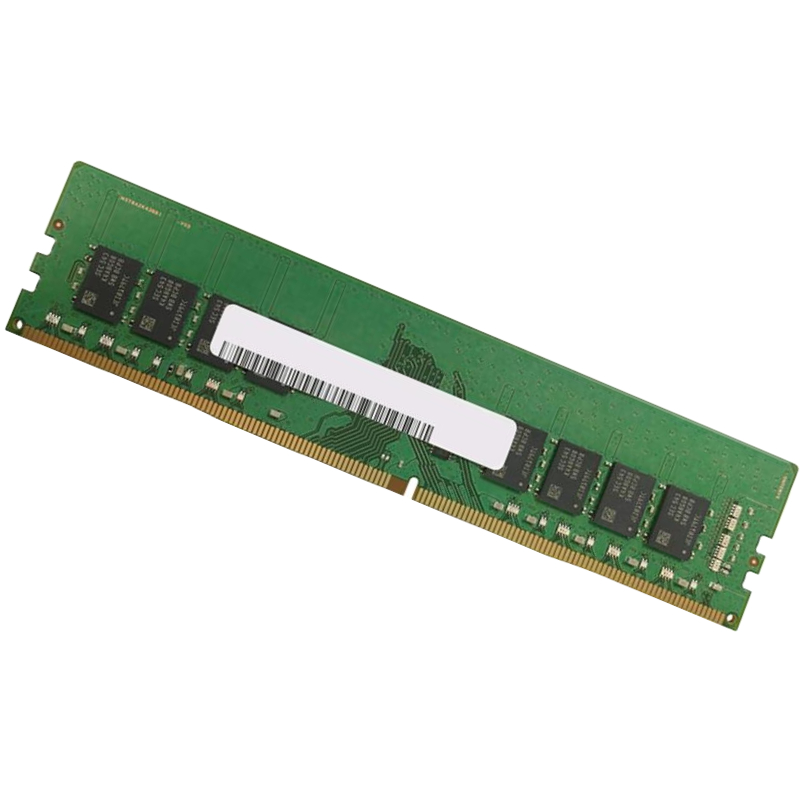
Dell AA103684 16GB PC4-21300 DDR4 2666mhz SDRAM Dual Rank Non Ecc 288-Pin Ram. New Sealed in Box (NIB) with 1 Year Replacement Warranty
Upgrade your system’s performance with the Dell AA103684 16GB DDR4 SDRAM memory module. This high-quality memory is engineered to enhance computing power, providing efficient and reliable performance for a wide range of applications. It offers seamless multitasking capabilities and rapid data access, making it an ideal choice for various Dell desktop systems.
The Dell AA103684 memory module represents a defined category of desktop memory that is engineered for compatibility with a wide range of Dell systems as well as many third-party motherboards that accept standard 288-pin UDIMM DDR4 modules. As a 16GB PC4-21300 DDR4-2666MHz module, it sits in the mainstream performance tier that balances bandwidth, latency, power efficiency and price. This category description dives into the architecture, electrical characteristics, physical interface, rank and chip organisation, performance implications, compatibility concerns and practical usage scenarios so that merchants, systems integrators and end users have a complete and how it compares to other memory choices.
The functional identity is communicated through industry standard nomenclature: PC4-21300 indicates theoretical peak transfer rate and maps to DDR4-2666 (2666MT/s). DDR4-2666 is commonly written on spec sheets and determines the JEDEC speed grade. The module is a UDIMM, short for unbuffered DIMM, designed for desktop and workstation platforms that do not require registered or buffered memory. The 288-pin physical connector matches the modern DDR4 DIMM slot. Non-ECC indicates that the module does not provide error correcting code functionality and is therefore intended for consumer and creative workstation use rather than for servers which normally require ECC memory.
Dual rank describes how the memory chips on the module are logically grouped. Two ranks allow the memory controller to address one rank while the other is refreshing. Rank behaviour impacts signal integrity, motherboard trace routing and how many modules a system can populate before running into electrical limits. X8 refers to the data width of the individual DRAM chips, meaning each chip provides an 8-bit data bus. The module-level data bus is 64 bits, and the X8 chip organisation is one of the most common commercial layouts because it offers a good balance between cost, density and yield in manufacturing.
Operating at 1.2 volts places this DDR4 module in the low-voltage class standardized for DDR4 JEDEC specifications. The 1.2V operating point delivers lower power consumption than DDR3 while enabling higher densities and faster transfer rates. For portable or thermally constrained systems this lower voltage helps reduce overall platform power draw and heat output, which can improve system stability under sustained loads. Some motherboards and BIOS/UEFI implementations offer adaptive or manual voltage adjustments for memory; however, the module is validated at the nominal 1.2V rating.
While the specification PC4-21300/DDR4-2666 defines the transfer rate, performance in latency-sensitive tasks depends on the CAS latency (CL) and the overall timing profile such as tRCD, tRP and tRAS. Dell’s AA103684 family is typically tuned to provide a conservative JEDEC timing profile to ensure broad compatibility across Dell platforms and validated third-party boards. Lower CAS latency produces better responsiveness in tasks like single-threaded applications and some gaming workloads. Conversely, higher memory bandwidth benefits multi-threaded content creation and large dataset processing.
DDR4-2666 provides a sustainable bandwidth uplift compared to DDR4-2133/2400 parts while avoiding the premium of the fastest enthusiast XMP kits. For office productivity, web browsing, video streaming, and mainstream creative work the module supplies effective headroom. The 16GB capacity is commonly the sweet spot for modern desktop uses: it supports the operating system, multiple browser tabs, background services and mainstream creative applications without resorting to swap files that throttle performance. For memory-intensive tasks such as video editing at high resolutions or large database operations, the system may benefit from dual-channel population with matched modules to maximize throughput. The dual rank design can, in many motherboards and tasks, slightly outperform a single rank module of the same capacity because of how ranks interleave access.
Most modern consumer and workstation motherboards support dual-channel memory when modules are installed in paired slots. To maximize throughput, the AA103684 should be installed as part of a matched pair with identical speed, rank and capacity where possible. While the module will operate in single-module configurations, the platform will deliver higher sustained memory bandwidth when two identical modules populate the recommended channels. Users should consult the motherboard manual for the correct slot population order to ensure dual-channel operation and to avoid channel asymmetry that can reduce performance.
For home and small office environments, the 16GB DDR4-2666 module provides a dramatic day-to-day improvement over older 8GB or lower frequency configurations. Multitasking with office suites, web browsers open with multiple tabs, cloud services, and light multimedia editing is noticeably smoother. Systems swapping to disk less often improves perceived responsiveness and reduces background latency for file operations and virtual machines. The AA103684 part is particularly compelling where reliability and OEM compatibility are desired, such as in small office workstations and desktop replacements that benefit from Dell’s validation and support footprint.
DDR4-2666 occupies a middle ground between entry level DDR4-2133/2400 and higher speed DDR4-3000+ modules. On memory bandwidth sensitive tasks, DDR4-2666 offers tangible uplift in sustained throughput, translating into meaningful improvements in multi-threaded workloads and large dataset handling. Compared to enthusiast XMP kits running at 3200MT/s or higher, DDR4-2666 usually operates with more conservative voltages and timings and will be more compatible across a wider variety of platforms without manual tuning.
Choosing 16GB as a single module or as part of a matched pair strikes a balance between future-proofing and cost. For users upgrading old machines, switching from 8GB or less to 16GB often produces the single largest jump in responsiveness. For users who run virtual machines or advanced editing projects, 16GB may serve as a baseline with the option to expand to 32GB by adding another matching module.


 Contact Us
 Information
 Catalog
 Solid State Drives (SSD)
 Network Switches
 Hard Disk Drives
 HBA & Controllers
 PC & Servers
 PC & Server Memory
 CPU & Processors
 Network Routers
 Power Supplies
 Tape Drives & Libraries
 Network Devices
 Computer & Network Cables