
(7% discount is applied at checkout)
Cart is empty
Your go-to destination for cutting-edge server products
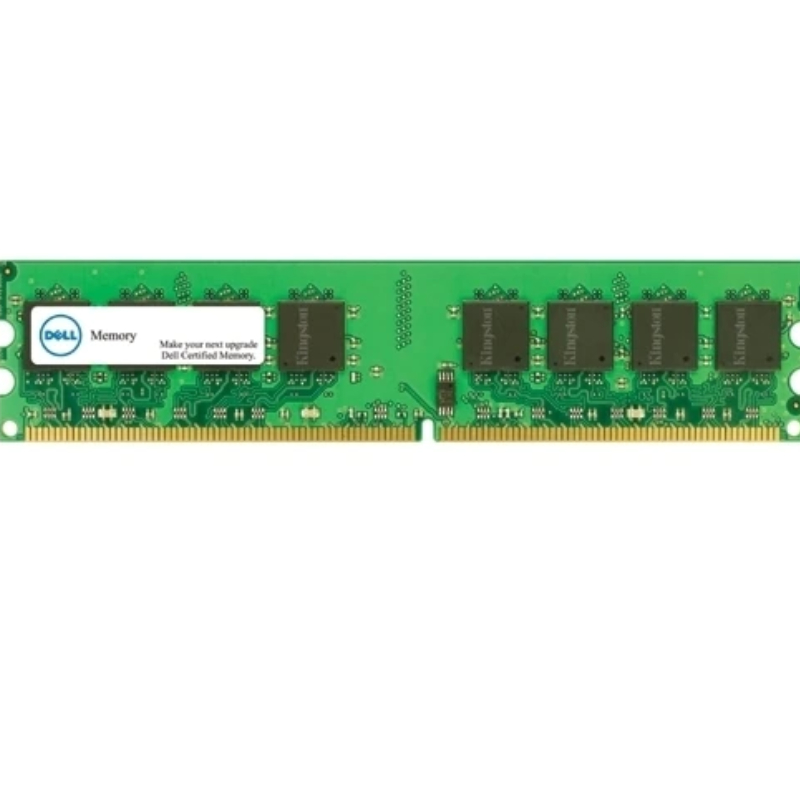
Dell AB825520 32GB PC4-25600 DDR4 3200MHz ECC UDIMM Unbuffered Memory Module. New Sealed in Box (NIB)
Experience enhanced performance and reliable memory management with the Dell AB825520 32GB DDR4 SDRAM module. Designed for high-end servers and workstations, this memory module offers exceptional speed, stability, and reliability, making it the ideal choice for demanding applications and multitasking environments.
The Dell AB825520 represents a specific category of server and workstation memory designed for optimal performance in demanding computing environments. This 32GB DDR4 module operates at 3200MHz with ECC unbuffered technology, providing both high-speed data transfer and crucial error correction for system stability. Engineered specifically for compatibility with Dell PowerEdge servers and Precision workstations, this memory module meets rigorous quality standards to ensure reliable operation in 24/7 enterprise environments.
The Dell AB825520 memory module incorporates advanced DDR4 technology with specific characteristics that distinguish it from standard desktop memory. This module features a 288-pin UDIMM form factor with ECC (Error Correcting Code) functionality, operating at 1.1V with CL22 timings. The PC4-25600 designation indicates the peak transfer rate of 25600 MB/s, while the 2Rx8 configuration refers to the dual-rank architecture with eight banks per rank, optimizing memory access patterns and performance.
The Dell AB825520 provides 32GB of memory capacity on a single module, making it an ideal solution for expanding system memory without consuming multiple DIMM slots. This high-density memory configuration allows systems to achieve substantial total memory capacity while maintaining flexibility for future upgrades. The single 32GB module design is particularly beneficial for systems with limited DIMM slots or when building high-memory configurations across multiple channels.
This product is typically available as a single module, allowing for flexible memory expansion strategies. When planning memory configurations, users should consider their system's memory architecture, including the number of available slots, memory channel configuration, and the benefits of matched pairs or sets for optimal performance in multi-channel systems.
The Dell AB825520 utilizes DDR4 SDRAM (Double Data Rate 4 Synchronous Dynamic Random Access Memory) technology, which represents the fourth generation of DDR memory. DDR4 offers significant improvements over previous generations, including higher module density, lower voltage requirements, and increased data transfer rates. The 3200MHz speed represents the data rate, meaning the module performs 3.2 billion transfers per second through the 64-bit wide data bus.
The 2Rx8 designation indicates this is a dual-rank module with x8 data width. In this configuration, the memory chips are organized into two independent sets (ranks) that share the same memory bus. Each rank contains multiple memory chips with an 8-bit data width. This organization affects how the memory controller accesses the module and can impact performance in multi-DIMM configurations. The 2Rx8 design typically provides better performance characteristics compared to single-rank modules in many server workloads.
The performance profile of the Dell AB825520 memory module is defined by several key parameters that work together to determine its operational capabilities. With a data transfer rate of 3200 million transfers per second (MT/s) and a peak bandwidth of 25.6 GB/s per module, this memory delivers substantial performance for memory-intensive applications. The CAS Latency of CL22 represents the number of clock cycles between a read command and data availability, balancing speed with stability in ECC-enabled systems.
The 3200MHz operating frequency indicates the speed at which the memory module communicates with the memory controller. This high-frequency operation enables rapid data access and transfer, which is critical for applications requiring low latency and high throughput. The actual operating speed may vary based on system capabilities and configuration, as the memory will operate at the highest speed supported by both the processor and motherboard.
The PC4-25600 classification specifies the module's peak theoretical bandwidth of 25,600 MB/s (25.6 GB/s). This bandwidth calculation derives from the module's data rate (3200 MT/s) multiplied by the data bus width (64 bits) divided by 8 (to convert bits to bytes). This substantial bandwidth ensures that the memory can keep pace with modern multi-core processors and demanding application workloads.
The CAS Latency (Column Address Strobe Latency) of CL22 indicates that there are 22 clock cycles between the memory controller requesting data and the data being available. While higher than some non-ECC memory modules, this latency is typical for ECC memory operating at 3200MHz, as error correction circuitry introduces additional timing considerations. The CL22 timing represents an optimal balance between performance and reliability for enterprise applications.
In addition to CAS Latency, the memory module operates with a set of coordinated timing parameters that govern various aspects of memory access. These include Row Address to Column Address Delay (tRCD), Row Precharge Time (tRP), and Row Active Time (tRAS). These parameters work together to ensure efficient memory operation and are typically optimized by the system BIOS for stable performance.
The Error Correcting Code (ECC) functionality represents a critical feature of the Dell AB825520 memory module, distinguishing it from standard non-ECC memory. ECC technology provides the ability to detect and correct single-bit memory errors in real-time, significantly enhancing system reliability and data integrity. This capability is essential for servers, workstations, and mission-critical systems where memory errors could lead to data corruption, system crashes, or computational errors.
The ECC implementation in this memory module can automatically detect and correct single-bit errors that occur during memory operations. This correction happens transparently without any performance penalty or system interruption. The module uses additional memory bits (typically 8 bits for every 64 bits of data) to store error correction codes that enable this functionality. When a single-bit error is detected, the memory controller uses these codes to reconstruct the correct data before it's processed by the CPU.
While the ECC technology can correct single-bit errors, it can also detect multi-bit errors within the same memory word. When such errors are detected, the system can be configured to halt operations to prevent corrupted data from propagating through the system. This capability provides an additional layer of protection against more severe memory failures that could lead to data corruption or system instability.
The unbuffered (UDIMM) design means that the memory module communicates directly with the memory controller without intermediate buffering circuitry. This architecture provides lower latency compared to registered (RDIMM) or load-reduced (LRDIMM) memory, as there are no additional clock cycles introduced by buffer chips. The direct connection makes UDIMMs particularly suitable for workstations and entry-level servers where low latency is prioritized over maximum capacity.
The physical design of the Dell AB825520 memory module follows industry standards while incorporating specific elements required for its ECC functionality and compatibility with Dell systems. The module utilizes a 288-pin design with a specific notch position that prevents installation in incompatible memory sockets. The printed circuit board (PCB) is engineered for optimal signal integrity at high speeds, with carefully routed traces and quality components throughout.
The module features the standard 288-pin layout defined by JEDEC for DDR4 UDIMMs. This pin configuration includes contacts for data, address, command, control, power, and ground signals. The physical dimensions conform to the standard DDR4 UDIMM specification, measuring approximately 133.35mm in length and 31.25mm in height, ensuring compatibility with standard DDR4 memory slots across compatible systems.
The Dell AB825520 operates at a nominal voltage of 1.1V, representing a significant reduction from the 1.5V required by DDR3 memory. This lower voltage contributes to reduced power consumption and heat generation, which is particularly important in densely configured systems and energy-efficient data centers. The module supports JEDEC-standard power management features, including various low-power states that further reduce energy consumption during periods of reduced memory activity.
This memory module incorporates several power-saving technologies defined in the DDR4 specification. These include programmable CAS write latency, data bus inversion, and temperature-controlled auto-refresh. These features help optimize power consumption based on workload demands and environmental conditions, contributing to overall system power efficiency without compromising performance.
This memory module is compatible with select Dell PowerEdge server models that support ECC UDIMMs. Compatibility depends on the specific server generation, processor type, and existing memory configuration. Supported systems typically include certain T-series, R-series, and some entry-level PowerEdge servers designed for UDIMM memory. The module is validated to operate at its rated speed in qualified systems with supported processors.
Many Dell Precision workstation models support ECC UDIMM memory, particularly those based on Intel Xeon W-series or AMD Ryzen Pro processors with ECC support. These workstations benefit from ECC memory for professional applications where data integrity is critical, such as CAD/CAM, scientific computing, financial analysis, and content creation. The module provides reliable performance for memory-intensive workstation applications.


 Contact Us
 Information
 Catalog
 Solid State Drives (SSD)
 Network Switches
 Hard Disk Drives
 HBA & Controllers
 PC & Servers
 PC & Server Memory
 CPU & Processors
 Network Routers
 Power Supplies
 Tape Drives & Libraries
 Network Devices
 Computer & Network Cables