
(7% discount is applied at checkout)
Cart is empty
Your go-to destination for cutting-edge server products
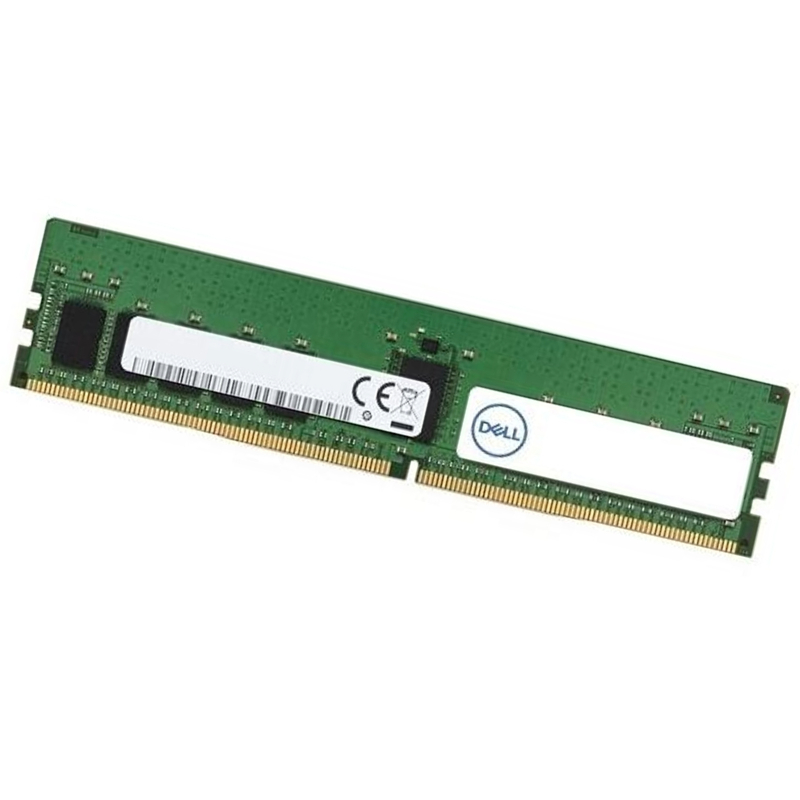
Dell AC023621 16GB DDR4 3200MT/S ECC Dual Rank 1.2V SDRAM Memory Module. New Sealed in Box (NIB)
| SKU/MPN | Warranty | Price | Condition | You save |
|---|---|---|---|---|
| AC023621 | 1 Year Warranty | $561.00 | New Sealed in Box (NIB) | You save: $196.35 (26%) |
| AC023621 | 1 Year Warranty | $561.00 | New Sealed in Box (NIB) | You save: $196.35 (26%) |
Dell AC023621 16GB DDR4 module engineered for rapid data processing, reliable memory solution tailored for enterprise-grade workloads, optimized for multitasking, virtualization, and demanding applications.
The Dell AC023621 is a specialized 16GB DDR4 memory module engineered exclusively for VxRail hyper-converged infrastructure systems. This precision-engineered component delivers the performance, reliability, and compatibility required for demanding enterprise workloads and virtualized environments.
This section details the fundamental technical specifications that define the Dell AC023621 memory module's capabilities and physical characteristics.
The module features a 16-gigabyte (GB) capacity provided by a single module. This 1x16GB configuration offers flexibility for populating system memory slots to achieve the total system memory required, whether for initial deployment or targeted expansion.
Operating at a data rate of 3200 MegaTransfers per second (MT/s), this is commonly referred to as DDR4-3200. This speed ensures high bandwidth for data-intensive applications. The module operates with a CAS Latency (CL) of 22 cycles, which is standard for server-grade memory at this speed, balancing performance with stability.
The module conforms to the 288-pin Dual In-line Memory Module (DIMM) standard. This physical design is critical for proper mechanical integration into the memory slots of VxRail servers, ensuring a secure and reliable connection.
It operates at a low voltage of 1.2 volts, which is standard for DDR4 technology. This reduced voltage, compared to previous generations, contributes to lower power consumption and reduced heat output within the densely packed VxRail appliance chassis.
The Dell AC023621 incorporates advanced memory technologies that are essential for mission-critical server environments. Understanding these features is key to appreciating its role in maintaining system integrity.
ECC is a non-negotiable feature for server and data center memory. It provides real-time data integrity by detecting and correcting single-bit memory errors. Extra bits are stored alongside the data bits, creating a code. When data is read from memory, the code is checked. If a single bit has flipped (a common type of soft error caused by cosmic rays or electrical noise), the ECC circuitry identifies the erroneous bit and corrects it instantly, preventing data corruption, application crashes, or system instability. This happens transparently without any performance penalty or operating system intervention.
By reducing the electrical load, the memory controller can support a greater number of memory modules per channel without signal degradation. This is paramount in servers like VxRail nodes, which are designed for high memory capacity. RDIMMs enable larger, more dense memory configurations while maintaining signal integrity and system stability, which is crucial for 24/7 operation.
The module is designated as Dual Rank. A "rank" is a set of DRAM chips that are accessed simultaneously by the memory controller. A dual-rank module has two of these sets. This design allows for efficient use of the memory bus; while one rank is busy processing a command, the other can be preparing for the next access. This interleaving can improve overall memory performance and efficiency compared to single-rank modules, especially in multi-core server environments where memory access is highly concurrent.
The Dell AC023621 is not a generic server memory module; it is purpose-built and rigorously validated for the VxRail appliance ecosystem.
Using this specific part number guarantees compatibility with supported VxRail models. Dell EMC engineers validate the module's firmware, timing, and electrical characteristics against the entire VxRail hardware and software stack.
This validation process ensures that the memory performs as expected under all workload conditions and does not introduce conflicts with the VxRail integrated system software, including VMware vSphere and vSAN. It eliminates the guesswork and risk associated with using non-qualified memory components.
vSAN utilizes a write buffer and read cache that reside in host memory. The low latency and high throughput of the 3200MT/s DDR4 memory accelerate I/O operations, reducing latency for storage-intensive workloads.
Advanced vSAN data services like deduplication and compression consume CPU and memory resources. The AC023621 provides the necessary headroom to enable these space-saving features without compromising VM performance.
The 16GB capacity is achieved using x8 (by 8) data width DRAM chips. This means each individual DRAM chip provides 8 bits of data. The "x8" organization is a common and robust configuration for server memory, contributing to the module's overall reliability and compatibility with server-grade memory controllers.
The module features a professional-grade printed circuit board (PCB) with optimized trace layouts to maintain signal integrity at high speeds. It includes a Presold Motherboard (PMB) which is a serial presence detect (SPD) chip that stores the module's configuration, timing, and manufacturer information, allowing the system BIOS to automatically configure it correctly upon boot.
The Dell AC023621 16GB RDIMM is deployed in various scenarios within the VxRail ecosystem, primarily focused on system configuration and maintenance.
For best performance, memory modules must be installed in a balanced way across the server's memory channels and processors. The 1x16GB density allows for flexible configurations, such as populating two or four modules per CPU to achieve 32GB or 64GB per processor while maintaining balanced dual-channel or quad-channel interleaving.
This is the most common use case for ordering this part individually. Organizations can add these modules to existing VxRail nodes to increase total available memory.
As virtual machine density increases or new, more memory-hungry applications are deployed, adding memory is often the most effective way to maintain performance. The AC023621 allows for a granular upgrade path.
VxRail procedures guide administrators to place a node in maintenance mode, potentially evacuating VMs and vSAN data, before replacing hardware components like memory. The system is designed to recognize the new, compatible module once the replacement is complete and the node is reintegrated into the cluster.
Understanding how this memory interacts with the broader server architecture is key to planning and troubleshooting.
While the module is rated for 3200 MT/s, the actual operating speed is determined by the VxRail system BIOS and the capabilities of the specific CPU generation in the node. The BIOS will select the highest supported speed common to all installed memory modules and the CPU's integrated memory controller.
VxRail appliances have precisely engineered airflow paths. The memory modules are cooled by system fans that direct air across the DIMM slots. Proper module installation ensures it resides within this airflow, preventing thermal throttling and ensuring long-term reliability.
The 1.2V operating voltage of DDR4 technology is a significant improvement over previous generations, directly reducing the power consumption of the memory subsystem. This contributes to the overall Power Usage Effectiveness (PUE) of the data center.


 Contact Us
 Information
 Catalog
 Solid State Drives (SSD)
 Network Switches
 Hard Disk Drives
 HBA & Controllers
 PC & Servers
 PC & Server Memory
 CPU & Processors
 Network Routers
 Power Supplies
 Tape Drives & Libraries
 Network Devices
 Computer & Network Cables