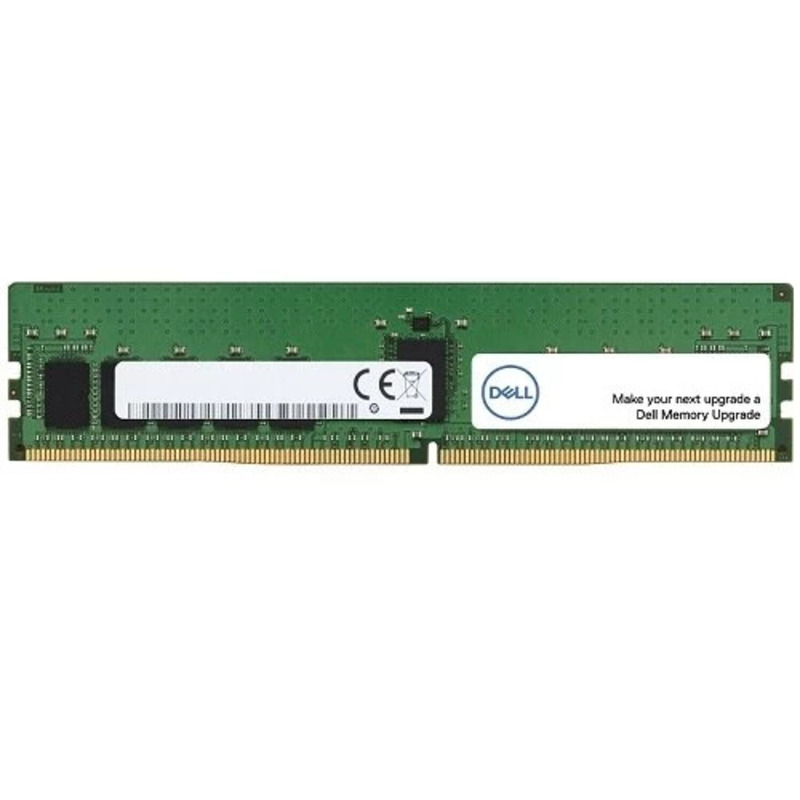
Dell AC888063 128GB DDR5 Memory
The Dell AC888063 128GB (1x128GB) DDR5 5600MT/s PC5-44800 4Rx4 ECC Registered 1.1V CL46 SDRAM module is engineered to deliver exceptional server-grade performance for modern data workloads. This advanced RDIMM solution enhances throughput, stabilizes multitasking environments, and ensures superior data accuracy through error-correcting technology. Designed for enterprise applications, virtualized infrastructures, and high-density computing systems, this memory module elevates overall system responsiveness while supporting next-generation architectures.
General Information and Core Identification
- Manufacturer: Dell
- Part Number: AC888063
- Component Type: Enterprise-Class Memory Module
- Product Category: Server DDR5 RDIMM
Technical 128GB DDR5 Memory Module
Developed with DDR5 SDRAM technology, the module utilizes higher bus efficiency, strengthened power management, and increased burst lengths that enhance server scalability and minimize resource bottlenecks. The ECC Registered design further safeguards critical workloads requiring maximum uptime.
Key Memory Specifications
- Product Name: 128GB DDR5 SDRAM Memory Module
- Total Capacity: 128GB
- Memory Technology: DDR5 SDRAM
- Module Count: 1 x 128GB
- Operational Speed: 5600MT/s
- Bandwidth Rating: DDR5-44800 / PC5-5600B-R
- Error Detection: ECC (Error Correcting Code)
- Module Design: Registered DIMM, 4Rx4, 3DS configuration
- CAS Latency: CL46
- Voltage Rating: 1.1V
Advanced Technology Features
- High-density 3DS architecture for improved stack efficiency
- 4Rx4 rank structure that enhances throughput for heavy workloads
- ECC Registered design that enables data integrity and server reliability
- Optimized for multi-core, multi-threaded applications
- Low-voltage operation reducing thermal load and power draw
Physical Characteristics and Dimensional Details
The Dell AC888063 RDIMM module maintains industry-standard 288-pin formatting, ensuring seamless compatibility with contemporary server infrastructures.
Hardware Form Factor
- Interface / Pin Count: 288-Pin RDIMM
- Build Type: Registered DIMM with ECC support
Shipping and Handling Measurements
- Shipping Height: 2.00 inches
- Shipping Depth: 7.00 inches
- Approximate Shipping Weight: 0.20 lb
Expanded Compatibility With Dell PowerEdge Servers
Engineered by Dell to support a wide selection of next-generation PowerEdge platforms, the AC888063 module is built for seamless deployment across high-performance servers. Its compatibility ensures optimal bandwidth utilization and consistent low-latency memory operations for enterprises scaling their workloads.
Compatible Dell Server Models
- PowerEdge C6620
- PowerEdge HS5610
- PowerEdge HS5620
- PowerEdge MX760c
- PowerEdge R660
- PowerEdge R760
- PowerEdge R760xa
Server Use Case Optimization
The memory module is tailored for environments requiring intensive computational resources, high-thread workloads, and persistent data accuracy. It is especially suitable for:
- Virtualization clusters and hyper-converged infrastructure
- Large-scale database management systems
- Scientific modeling, AI, and machine learning environments
- High-traffic cloud service platforms
- Enterprise-grade ERP and business intelligence systems
- Streaming analytics and real-time data interpretation
Benefits of Upgrading to 128GB DDR5 5600MT/s Registered Memory
By integrating this DDR5 RDIMM module into supported servers, organizations experience substantial improvements in performance, latency reduction, and workload consolidation. The enhanced bandwidth enables quicker workflow execution, while ECC safeguards keep mission-critical data secure from corruption.
Key Operational Advantages
- Significantly increased memory throughput for demanding workloads
- Reduced latency for faster application responsiveness
- Improved power efficiency with 1.1V DDR5 standards
- Higher reliability through ECC and Registered DIMM architecture
- Enhanced scaling potential for multi-core server processors
- Improved stability during heavy multitasking and virtualization
DDR5 vs. DDR4 Performance Enhancements
Compared to previous DDR4 generations, this memory module offers considerable advantages:
- Higher base operating frequencies
- More energy-efficient on-module voltage regulation
- Increased burst lengths and improved channel efficiency
- Greater bandwidth per DIMM for advanced computing demands
- Architectural upgrades enabling enhanced signal integrity
Data Integrity Features
- ECC technology automatically detects and corrects minor memory errors
- Reduces risk of system crashes and data corruption
- Critical for 24/7 enterprise servers requiring maximum uptime
Ideal Applications
- Enterprise servers and data center solutions
- AI and ML compute nodes
- Cloud-native application stacks
- Virtual machines requiring large RAM pools
- Content delivery workloads and caching servers
- Large-memory scientific and analytic applications
Long-Term Infrastructure Value
Deploying this high-capacity DDR5 module prepares your IT architecture for upcoming workloads that require expanded memory bandwidth and lower power consumption. Organizations benefit from stable operations, fewer performance bottlenecks, and optimized resource utilization across complex workloads.
Reliability and Performance Synergy
- High-density module supports massive multitasking loads
- Registered ECC architecture reinforces system reliability
- DDR5 advancements ensure sustained long-term performance
Advanced DDR5 Server Memory Architecture
The Dell AC888063 128GB DDR5 5600MT/s PC5-44800 RDIMM represents a new generation of enterprise memory architecture that surpasses previous DDR technologies through enhanced bandwidth, optimized reliability, and significantly lower power consumption at scale. Within data-driven environments, this category of high-density registered memory modules focuses on efficient data processing, accelerated performance cycles, and robust error detection capabilities essential for maintaining operational consistency in demanding workloads. The architecture is engineered to deliver streamlined performance across multi-threaded computing tasks, data-intensive virtualization layers, and high-throughput server ecosystems that depend on rapid access to mission-critical information. With improved signaling, advanced command structures, and enhanced buffering characteristics, this class of registered DIMMs reinforces stability and predictability across continuous runtime operations.
Enhancements Central to DDR5 Technology Evolution
DDR5 memory modules provide a significant leap in performance by doubling the burst length, increasing the number of memory banks, and enabling more simultaneous operations compared to previous generations. The category emphasizes the ability to maintain consistent throughput during heavy usage, allowing servers to effectively allocate and process larger volumes of real-time data. The Dell AC888063 module aligns with these advancements through stable, optimized memory responses that reduce latency and improve multi-core processor efficiency. This continuous development in DDR5 technology addresses bottlenecks often present in high-performance computing systems, ensuring smoother data transitions and faster computational results.
Expanded Bandwidth for Data-Dense Computing
With its 5600MT/s transfer rate, this memory category provides exceptional bandwidth capability suited for computing infrastructures that rely on rapid data flow. Increased bandwidth ensures the server can process data streams without delay, especially within multi-user environments where demands escalate. This increased performance supports cloud operations, artificial intelligence inference layers, predictive analytics engines, and virtualization platforms that must handle various workloads simultaneously. As the foundation for advanced computing architectures, these modules maintain operational precision and reduce the risk of performance degradation under sustained processing loads.
Improved Signaling and Dual-Channel DIMM Architecture
DDR5 introduces dual independent 32-bit subchannels per DIMM, reducing latency and improving access times. In this broader memory category, the improved signaling protocol allows servers to read and write more efficiently with fewer contention points, ensuring predictable performance during peak handling. This architectural enhancement enables computational nodes to function with greater consistency while reducing overhead on the memory controller. The result is a highly responsive system capable of supporting large datasets and complex workflows.
Role of ECC Registered Memory in Enterprise Reliability
The category of ECC Registered RDIMM memory places emphasis on reliability and protection from data corruption. The Dell AC888063 module, engineered with ECC functionality, strengthens server stability by detecting and correcting common types of data errors that naturally occur during high-throughput operations. This capability is vital across infrastructure-level systems where even the smallest data inconsistency can result in operational risks. ECC RDIMM memory is utilized widely in data centers, mission-critical servers, scientific computing systems, and financial modeling platforms that depend on continuous and uninterrupted performance.
Stability and Precision in Mission-Critical Workloads
ECC registered modules are designed to safeguard computational integrity by managing both single-bit and some multi-bit errors. This memory category prioritizes data stability for enterprise workloads that cannot tolerate interruptions. The integrated register located between the DRAM modules and the memory controller reduces electrical load, leading to improved signal integrity and more predictable performance across multi-DIMM configurations. Such precision ensures that organizations operating high-demand workloads maintain consistent and validated data throughput.
Impact of 4Rx4 Rank Configuration on Data Processing
The 4Rx4 rank structure enables improved performance in memory-intensive scenarios by distributing the load across multiple ranks, allowing the module to handle larger datasets more efficiently. This rank configuration plays a significant role in server-grade memory categories because it supports higher density and smoother access patterns. The balanced distribution of processing helps reduce bottlenecks and facilitates seamless performance in complex real-time applications. Multi-rank modules ensure better handling of virtualization layers, large-scale database operations, and distributed computing processes that depend on high-capacity memory modules.
Error Mitigation for Large Memory Densities
As memory density increases, the probability of bit-level errors also increases. High-capacity modules such as the Dell AC888063 take advantage of ECC to prevent data inconsistencies during peak operations. This memory category provides robust mechanisms that mitigate errors, ensuring large-scale computational frameworks continue to operate smoothly. Enhanced error detection not only improves system stability but also reduces long-term maintenance and minimizes operational interruptions.
Energy Efficiency and Reduced Operational Costs
The memory module operates at 1.1 volts, reflecting the broader category’s emphasis on energy efficiency. Lower voltage memory reduces overall power consumption, resulting in lower heat production and decreased strain on cooling systems. Energy-efficient memory components play a central role in scaling modern server infrastructures where hundreds or thousands of DIMMs may be deployed. By reducing energy usage across large environments, these modules contribute to long-term cost savings while maintaining high performance.
Thermal Optimization Across High-Density Server Racks
When servers are populated with high-capacity memory modules, thermal management becomes crucial to overall system integrity. This memory category’s lower voltage architecture supports sustainable heat distribution across dense rack environments. Improved thermal behavior allows systems to maintain consistent processing speeds even under heavy stress, reducing the likelihood of throttling and ensuring that the servers sustain their performance targets.
Scalable Power Efficiency for Expanding Data Centers
As data centers expand to meet growing computational demands, the importance of scalable power efficiency becomes more apparent. The Dell AC888063 memory module contributes to energy savings by reducing the total electrical demand per server. This category of memory solutions supports organizations that aim to minimize their environmental footprint while maximizing operational output. Efficient power usage also extends the lifespan of server components, reducing maintenance cycles and hardware replacement frequency.
Operational Benefits from Low-Voltage Memory Systems
Low-voltage memory reduces electrical stress on the server’s motherboard and memory controller. The broader category of low-voltage RDIMM memory modules enhances hardware durability, provides smoother power delivery, and mitigates risks associated with long-term continuous use. These operational advantages contribute to stable performance over time, especially in environments relying on uninterrupted computing cycles.
High-Density 128GB Memory Module Advantages
The category of 128GB DDR5 RDIMM modules caters to data-intensive environments that require expansive memory resources. High-capacity modules significantly improve computational efficiency by reducing the need for frequent memory paging and minimizing dependency on slower storage subsystems. This supports higher simultaneous workloads and ensures that servers remain responsive even during peak operations.
Optimized for Virtualization and Cloud Platforms
Virtualized environments rely heavily on large memory pools to support multiple virtual machines and containers. High-density modules from this category provide the necessary resources to ensure each virtual instance operates smoothly. By supporting greater consolidation ratios, organizations can deploy more virtual machines on a single physical server, increasing resource utilization and reducing infrastructure costs.
Performance Benefits for Database and Analytics Workloads
Database engines and analytics platforms depend on rapid memory access to perform complex calculations and data retrieval operations. High-capacity modules reduce the need for disk I/O, allowing systems to work directly with in-memory datasets. This memory category plays a crucial role in enabling real-time analytics, faster query responses, and overall better throughput for business intelligence systems.
Enhanced Capabilities for Artificial Intelligence Applications
AI workloads frequently require extensive memory to process datasets and implement inference models. The 128GB RDIMM category supports neural networks, machine learning pipelines, and other AI-driven applications by supplying the necessary capacity for parallel processing. With more data accessible in memory, AI algorithms perform more efficiently, leading to faster training cycles and fewer computational bottlenecks.
Compatibility Across Modern Server Infrastructures
DDR5 registered memory modules are engineered for compatibility with contemporary server platforms that leverage next-generation multi-core processors. The Dell AC888063 category aligns with current server architectures and makes full use of advanced memory addressing features, improved signal integrity, and enhanced power management techniques.
Integration with High-Core-Count Processors
Servers featuring dozens of CPU cores benefit from memory modules that can support multiple threads simultaneously. The high-channel architecture of DDR5 ensures smoother communication between memory and processors. This category of server memory enables scalable performance improvements across multi-core and multi-threaded operations.
Support for Advanced BIOS and Hardware-Level Features
Modern server motherboards include improved BIOS settings that optimize memory performance. This memory category benefits from advanced tuning options, refined power control structures, and enhanced error handling features that allow administrators to configure systems for maximum efficiency. Modules from this category operate seamlessly within environments that utilize updated firmware and security features.
Long-Term Platform Flexibility and Upgrade Potential
The transition to DDR5 provides a long-term foundation for future upgrades. Memory from this category ensures that organizations adopting this generation can continue to scale their systems without facing immediate obsolescence. Future hardware releases will continue to support DDR5, ensuring extended compatibility and stability.
Contribution to Modern Data Center Performance
High-performance memory modules such as the Dell AC888063 contribute significantly to overall server responsiveness. The category emphasizes faster data cycles, improved memory bandwidth, and consistent performance scalability that powers modern data centers. This memory generation helps organizations deliver higher service levels, accelerate response times, and support real-time processing models.
Improving Multi-User Responsiveness
Multi-user environments place intense demands on system memory. This category of high-density modules ensures that servers can handle concurrent requests without performance dips. Organizations operating shared platforms, cloud services, or hosted applications rely on such memory modules to maintain responsive user experiences.
Streamlined Workflow Management Across Applications
Enterprise systems often run multiple high-demand applications simultaneously. High-capacity DDR5 RDIMM categories help maintain stability across these workflows by providing ample resources for each application to work independently without interfering with others. This reduces contention and promotes consistent workload balance.
Supporting Continuous Uptime and Fault Tolerance
Fault tolerance is crucial for enterprise infrastructures. ECC RDIMM memory categories help ensure systems remain operational even under heavy stress or when minor errors occur. This creates an environment where servers can run continuously, meeting uptime requirements and delivering dependable performance around the clock.
Scalability and Future-Proofing for Enterprise Systems
The category of registered DDR5 memory modules focuses heavily on scalability. As business requirements evolve, servers must adapt to larger data loads and increasingly complex processing demands. High-density memory solutions such as the Dell AC888063 provide a scalable foundation that supports ongoing growth.
Infrastructure-Level Expansion Potential
Data centers can expand their memory footprint without compromising system performance. This category supports large-scale deployments and gives organizations flexibility to increase memory capacity as required. Enhanced scalability ensures systems maintain operational efficiency even as workloads intensify.
Adaptability for Hybrid and Multi-Cloud Ecosystems
Hybrid and multi-cloud environments benefit from memory modules that support fluid scalability and consistent performance. The memory category enables smooth data transitions across cloud workflows and ensures servers remain capable of handling dynamic workloads that shift between on-premises and cloud frameworks.
Support for Next-Generation Software and Operating Systems
As new enterprise applications and operating systems emerge, memory requirements increase. DDR5 RDIMM categories deliver the headroom necessary for future software developments, ensuring that systems remain compatible and performant in the years ahead.
Enterprise-Grade Security and Data Integrity Enhancements
Security is an essential priority for organizations handling sensitive information. Memory modules in this category are engineered to support secure data handling and reduce risks associated with memory-based attacks. ECC functionality, advanced register controls, and improved design architecture contribute to a more secure computing environment.Supporting Secure Virtualized Environments
Virtualized infrastructures require consistent and secure memory behavior. This memory category ensures isolated environments maintain data integrity and prevents memory interference between virtual machines. Improved isolation leads to more stable and secure virtualization deployments.
Hardware-Level Data Protection Improvements
Advanced memory modules incorporate refined signaling mechanisms that mitigate risks associated with electrical interference or transient faults. This ensures long-term data protection and reinforces overall system reliability.
Performance Optimization in High-Demand Industries
High-performance DDR5 RDIMM modules support a wide range of industries that rely on constant access to large volumes of information. Organizations within healthcare, finance, research, engineering, and digital production benefit from memory modules that maintain speed and precision at scale.Improved Memory Channel Utilization and Efficiency
DDR5 memory enhances channel-level performance, reducing latency and increasing throughput across multi-channel configurations. This memory category optimizes the flow of information between processors and memory banks.Optimized Access Patterns for Large Data Blocks
When handling extensive datasets, efficient memory access patterns become crucial. This memory category supports balanced access across multiple channels, ensuring consistent throughput.
Reduced Latency in High-Thread-Count Systems
Servers with high-thread-count processors experience improved responsiveness when paired with high-performance memory modules from this category. Lower latency ensures applications respond quickly and operate efficiently.


 Contact Us
 Information
 Catalog
 Solid State Drives (SSD)
 Network Switches
 Hard Disk Drives
 HBA & Controllers
 PC & Servers
 PC & Server Memory
 CPU & Processors
 Network Routers
 Power Supplies
 Tape Drives & Libraries
 Network Devices
 Computer & Network Cables