(7% discount is applied at checkout)
Cart is empty
Your go-to destination for cutting-edge server products
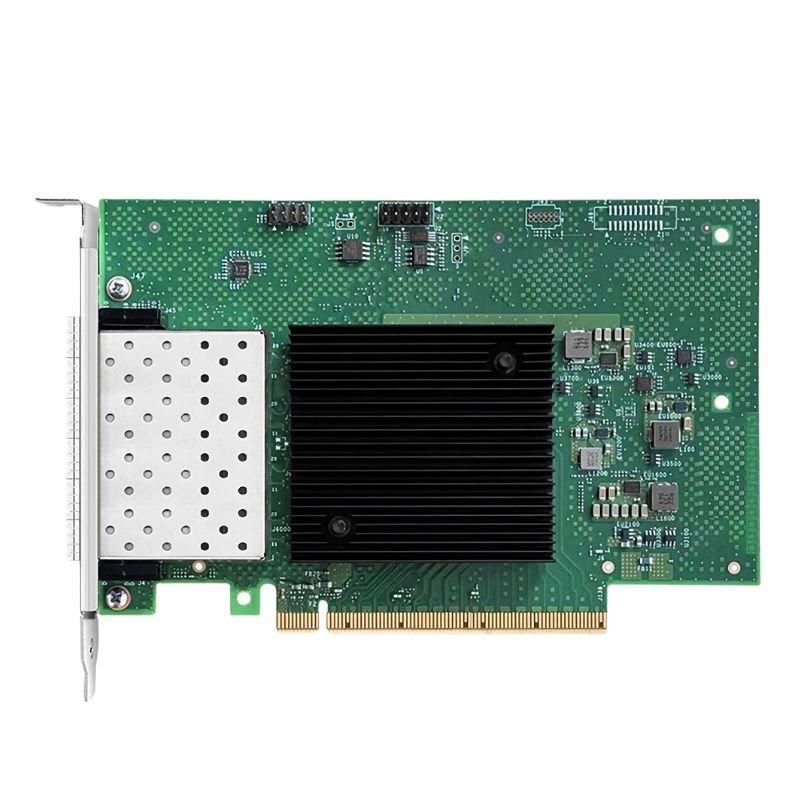


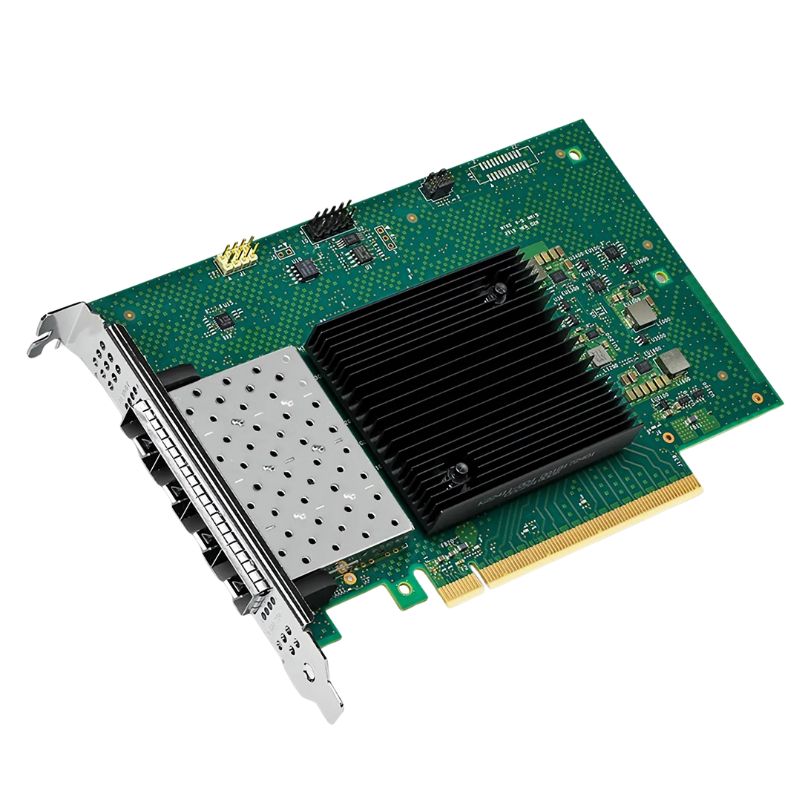
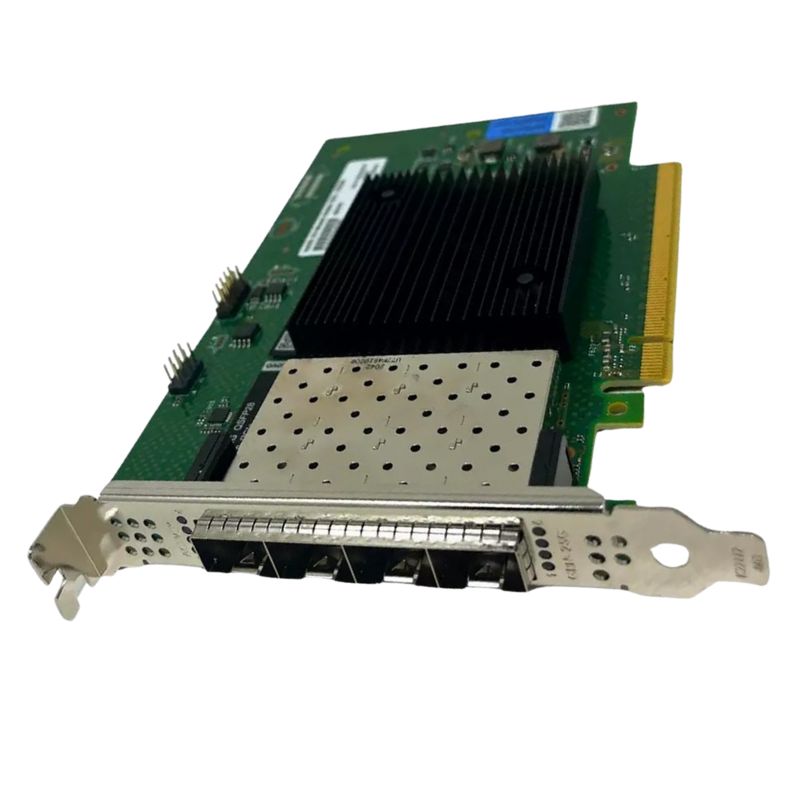
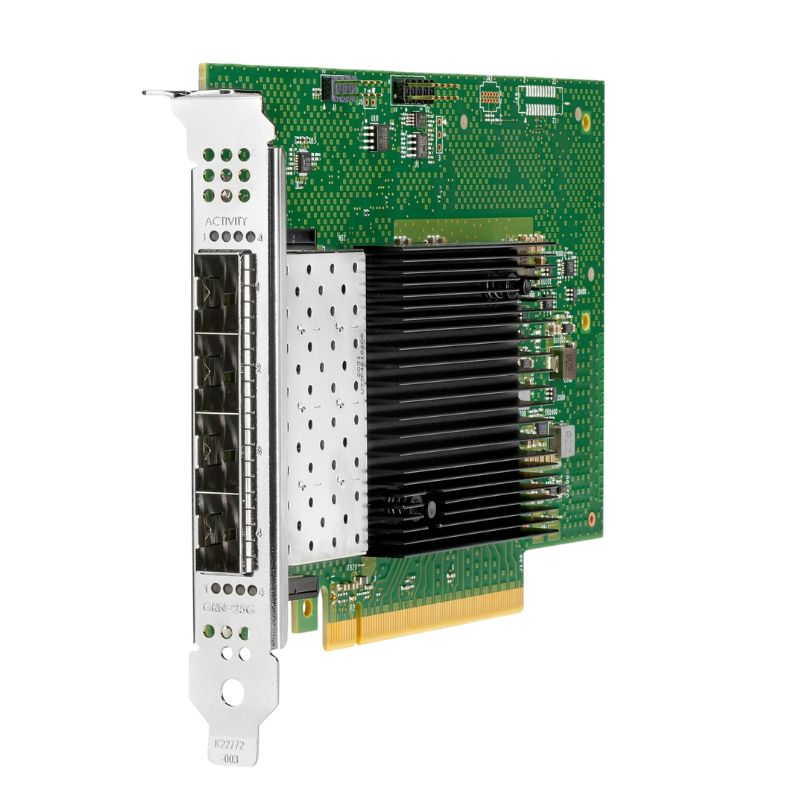
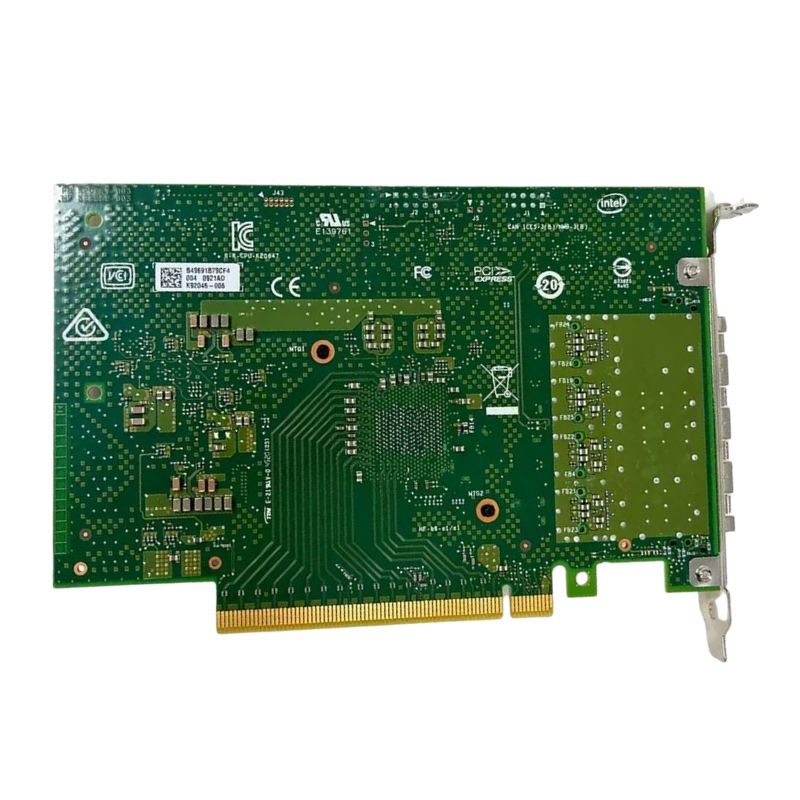
Dell CT6D5 Intel E810 4 Ports 10/25GbE SFP28 PCIe Full Height Adapter. New Sealed in Box (NIB) with 1 year Warranty
The Dell CT6D5 Intel E810 Network Adapter is a high-performance PCIe Ethernet solution designed for modern data centers, enterprise servers, and cloud infrastructures. Built to deliver fast, stable, and scalable connectivity, this adapter supports multi-speed networking to meet demanding workloads.
At the heart of the Dell CT6D5 lies the Intel Ethernet Controller E810, a cornerstone of modern network acceleration. This controller is architected from the ground up to handle the massive data flows characteristic of today's virtualized data centers, storage area networks (SAN), and telco cloud deployments.
The E810 controller features a highly advanced queueing architecture with support for up to 2,048 queue pairs per port. This massive scalability is essential for isolating traffic in virtualized environments, where each virtual machine (VM), container, or network function requires dedicated queues to prevent performance interference and ensure consistent service levels.
While not a full IPU, the E810 integrates several key hardware accelerations that offload work from the host CPU, dramatically improving overall system efficiency. These include:
Receive-Side Scaling (RSS) and Flow Director: Intelligently distributes network processing across multiple CPU cores, maximizing core utilization and reducing latency.
SR-IOV (Single Root I/O Virtualization): Allows a single physical adapter to be partitioned into multiple virtual functions (VFs), which can be assigned directly to VMs. This bypasses the hypervisor's virtual switch, yielding near-native network performance for critical virtual workloads.
GPUDirect RDMA (Remote Direct Memory Access): When paired with compatible GPUs and software, this feature enables data to move directly between the network card and GPU memory, a crucial capability for AI/ML training clusters and HPC applications.
Designed for always-on operations, the E810 controller and Dell's implementation include advanced RAS features such as link performance telemetry, device self-healing capabilities, and comprehensive error reporting. These features simplify root cause analysis and improve mean time to resolution (MTTR) during network issues.
The Dell CT6D5 is offered in a full-height bracket configuration, making it compatible with a wide range of Dell PowerEdge servers and most standard rackmount server chassis. This form factor is standard for general-purpose and storage-optimized servers where rear I/O space is readily available.
While low-profile cards are designed for space-constrained environments like compact or blade servers, the full-height design of the CT6D5 offers distinct advantages. It often allows for larger, more robust heatsinks, which contribute to better thermal management under sustained high-load conditions—a key consideration for a 4-port, 100Gbps aggregate bandwidth card. The full-height bracket also provides a more secure physical connection in deep PCIe slots, reducing the risk of loosening under vibration.
The adapter utilizes a PCI Express 3.0 x8 host interface. This provides a theoretical bidirectional bandwidth of approximately 16 GB/s (128 Gb/s), which is more than sufficient to handle the aggregate throughput of four 25GbE ports (100 Gb/s total) while leaving ample headroom for protocol overhead and control traffic. This ensures the link will not become a bottleneck, allowing the card to operate at full wire-speed across all ports simultaneously.
The Dell CT6D5 is not a general-purpose NIC but a strategic investment for specific high-performance scenarios. Its capabilities unlock new levels of efficiency and performance in several critical areas.
In HCI platforms like VMware vSAN, Microsoft Storage Spaces Direct, or Dell VxRail, the network is the backbone of the storage fabric. The CT6D5's 25GbE ports provide the necessary low-latency, high-bandwidth links for synchronously replicating data between nodes. Features like RDMA over Converged Ethernet (RoCE) can be leveraged to offload storage traffic, drastically reducing CPU utilization and improving storage I/O performance, directly translating to faster VM operations and application response times.
In financial services, microseconds matter. The combination of ultra-low latency, predictable performance, and support for kernel-bypass technologies like DPDK (Data Plane Development Kit) makes the CT6D5 an ideal candidate for trading platforms and real-time risk analysis systems. The ability to use PCIe-attached flash storage in conjunction with the high-speed network further minimizes data access times.
Training complex artificial intelligence models requires moving massive datasets between servers, storage, and GPU arrays. The CT6D5's support for GPUDirect RDMA is a game-changer here. It allows data to flow from NVMe storage or other nodes directly into GPU memory without multiple buffering copies in system RAM, significantly accelerating training cycles and improving GPU utilization.
Telecommunications providers deploying 5G core networks rely on NFVi platforms that require high packet-processing performance. The CT6D5, with its high queue count, SR-IOV, and hardware accelerations for QoS and packet classification, provides the deterministic performance needed for virtualized network functions (VNFs) like routers, firewalls, and session border controllers.
Beyond raw speed, the Dell CT6D5 supports a comprehensive suite of enterprise and cloud networking protocols that enable modern, agile infrastructure.
Remote Direct Memory Access is a pivotal technology for data center efficiency. The CT6D5 supports both RoCEv2 (RDMA over Converged Ethernet version 2) and iWARP protocols. RoCEv2, which runs over routable IP networks, is particularly popular for storage and HPC clusters due to its excellent performance and lower CPU overhead compared to traditional TCP/IP networking.
As mentioned, SR-IOV is a flagship feature. The CT6D5 can be configured with numerous virtual functions, each appearing as a dedicated physical NIC to the guest VM. This eliminates the "vSwitch tax," providing the lowest possible latency and highest throughput for network-intensive VMs, such as database servers or real-time analytics engines.
Virtual Machine Device Queues (VMDq) is a complementary technology that offloads packet sorting and delivery to the NIC hardware. While the hypervisor's virtual switch retains control, VMDq significantly reduces its processing burden by pre-sorting packets destined for different VMs into separate queues. This improves overall host efficiency and is often used in conjunction with SR-IOV for a balanced virtualization strategy.
The adapter supports sophisticated traffic shaping and prioritization mechanisms, including IEEE 802.1p prioritization and Diffserv. This allows network administrators to guarantee bandwidth for critical applications (like live migration or VoIP) and manage contention during peak usage periods, ensuring service level agreements (SLAs) are met.
The Dell CT6D5 is designed to seamlessly integrate into both Dell-specific and broader industry ecosystems.
The card is extensively qualified and certified across the Dell PowerEdge portfolio, including the latest generations of rack (R-Series), tower (T-Series), and modular (MX-Series) servers. This ensures optimal performance, thermal compatibility, and streamlined management through integrated Dell tools like OpenManage Enterprise.
Dell provides standardized drivers (ixgbe and ice drivers for Linux, base drivers for Windows, VMware ESXi) through its support site and repository systems like the Dell Online Catalog. Firmware updates are delivered alongside system BIOS updates, ensuring a cohesive and tested software stack.
The CT6D5 enjoys broad OS and hypervisor support, a critical factor for heterogeneous data centers. Certified support typically includes:
VMware ESXi 7.0 and laterMicrosoft Windows Server 2016, 2019, and 2022
Major Linux distributions from Red Hat Enterprise Linux, SUSE Linux Enterprise Server, and Canonical Ubuntu
Citrix Hypervisor
This wide support matrix allows the adapter to be deployed consistently across different workload domains.
The four ports use SFP28 (Small Form-factor Pluggable 28 Gbps) cages, offering flexibility in connectivity choices. Users can populate these with:
SFP28 Direct Attach Copper (DAC) cables: For cost-effective, low-latency connections within the same rack or adjacent racks (typically up to 5 meters).
SFP28 Active Optical Cables (AOCs): For longer in-rack or intra-data center runs where flexibility and lighter weight are needed.
SFP28 Optical Transceivers (SR/LR): For connections to structured cabling via fiber optic patch panels, supporting multi-mode (SR) or single-mode (LR) fiber for distances up to hundreds of meters or kilometers.
It is crucial to use Dell-branded or qualified transceivers to ensure full compatibility, performance, and access to digital diagnostics monitoring (DDM) information.


 Contact Us
 Information
 Catalog
 Solid State Drives (SSD)
 Network Switches
 Hard Disk Drives
 HBA & Controllers
 PC & Servers
 PC & Server Memory
 CPU & Processors
 Network Routers
 Power Supplies
 Tape Drives & Libraries
 Network Devices
 Computer & Network Cables