(7% discount is applied at checkout)
Cart is empty
Your go-to destination for cutting-edge server products
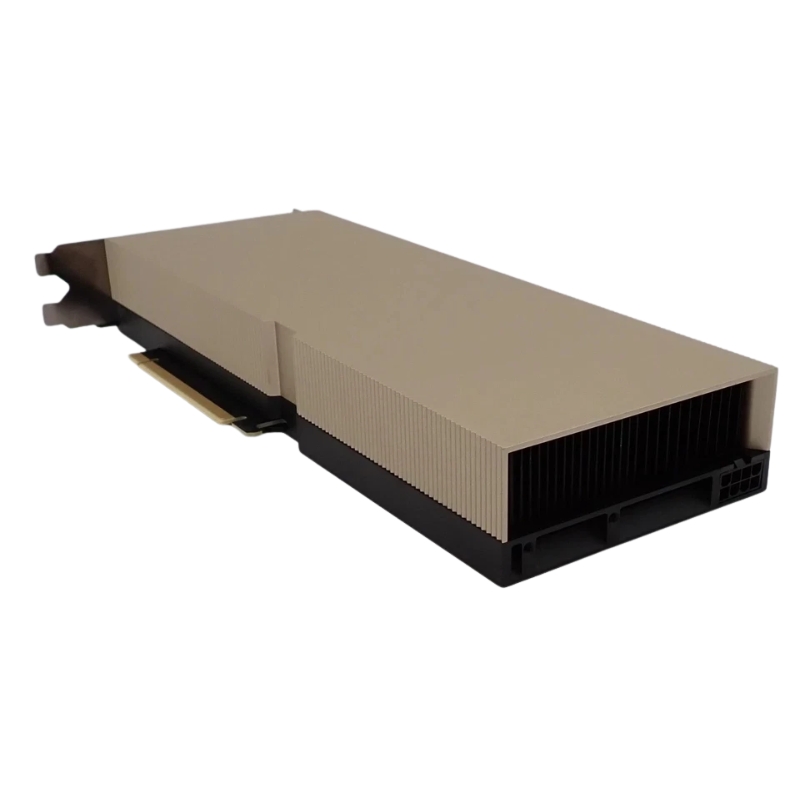


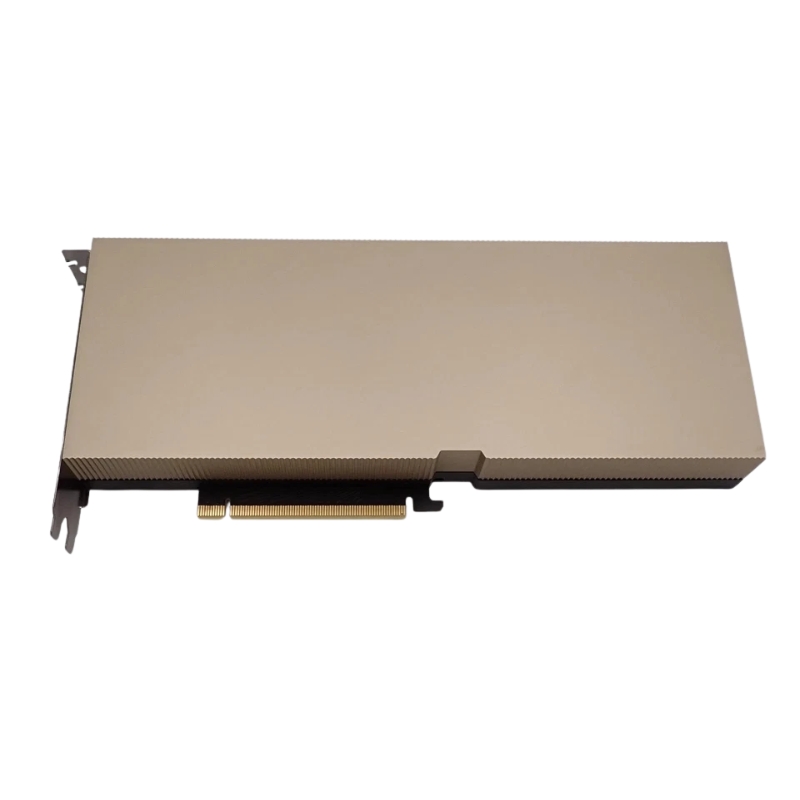
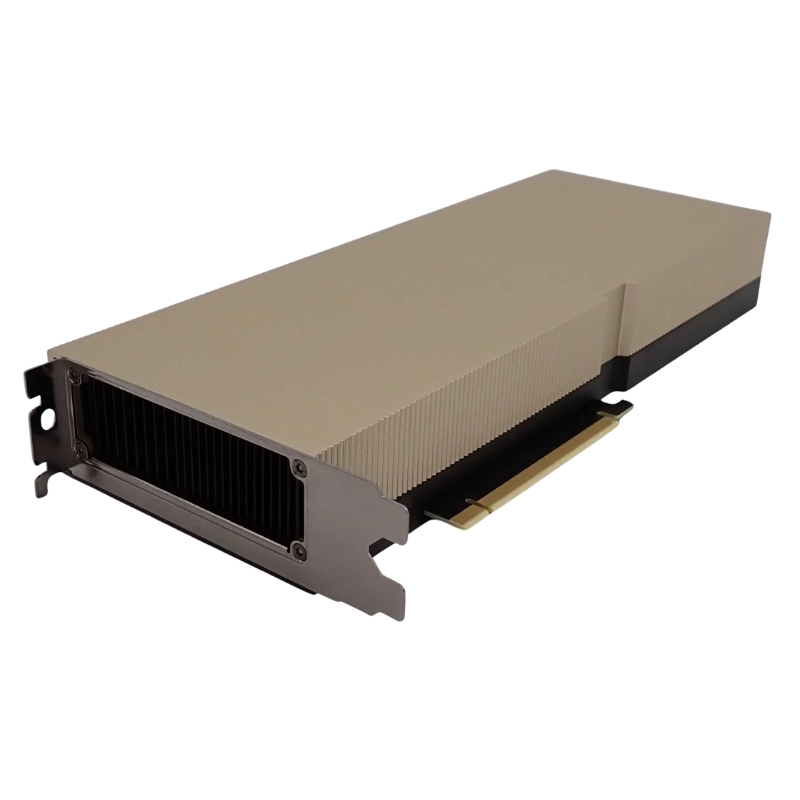
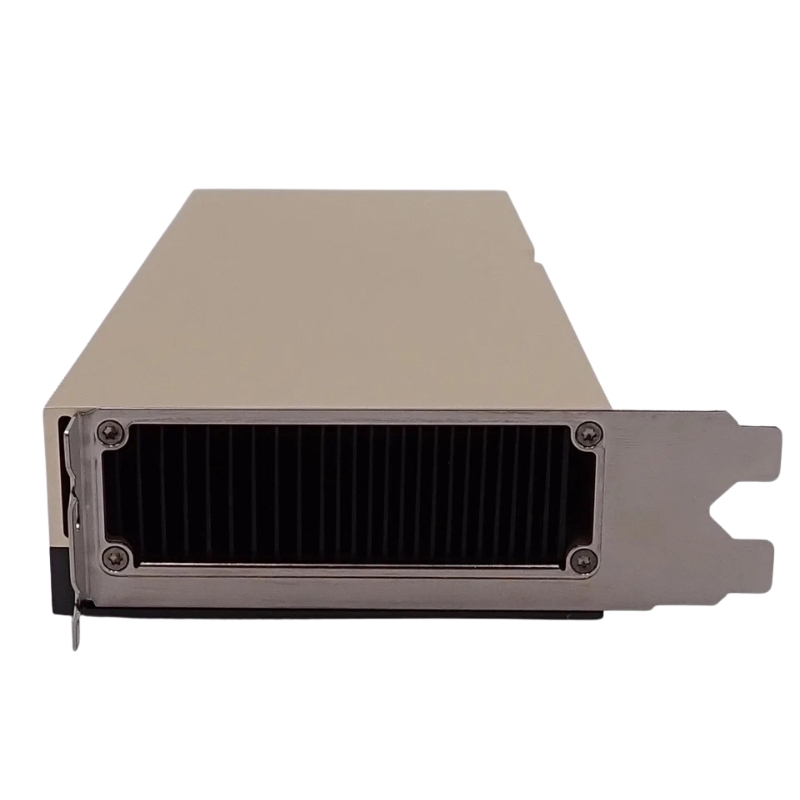
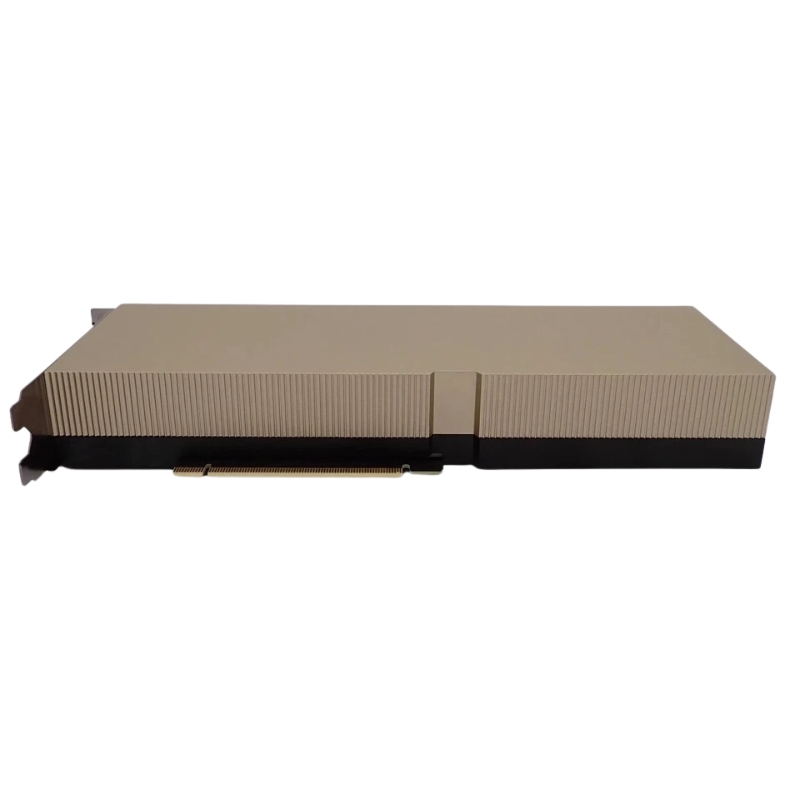
Dell D1P1T Tesla A16 64GB GDDR6 Passive CUDA PCI-E 4.0 x16 Accelerator Graphics Card. Excellent Refurbished with 1-Year Replacement Warranty. No Cancel No Return.
The Dell D1P1T Tesla A16 64GB GDDR6 Passive CUDA PCI-E 4.0 x16 accelerator is a high-density, inference-optimized GPU card designed for data center AI inference workloads, large-scale video transcoding, and multi-tenant GPU virtualization. Built around the NVIDIA Ampere-derived Tesla A16 architecture, this card pairs 64GB of GDDR6 memory with an efficient passive cooling design to fit blade and rack server thermal profiles. The product targets service providers, enterprise inference clusters, and media processing farms requiring simultaneous multi-instance GPU acceleration with predictable per-instance performance and low power per instance.
Form factor: Full-height, half-length PCIe card compatible with standard server chassis supporting PCI-E 4.0 x16 lanes. Memory: 64GB GDDR6 with a high-efficiency memory controller tuned for inference and video workloads. Compute: CUDA cores and dedicated tensor cores optimized for INT8/FP16 mixed precision inference operations. Interconnect: PCI-Express 4.0 x16 host interface providing high bandwidth to host memory and NVMe attachments where supported. Power draw: Designed for efficient power density with a typical board power (TDP) suitable for passive cooling environments in enterprise servers. Cooling: Passive heatsink and bracket to leverage server chassis airflow; thermal throttling thresholds and power management tuned for steady state operation in dense racks.
The 64GB GDDR6 memory on the D1P1T Tesla A16 is configured to provide the large model capacity and batch processing headroom required by modern transformer-based models and multi-stream video workloads. Memory bandwidth is engineered to balance bandwidth per watt with capacity, ensuring large embedding tables and attention weights remain on-device for inference, reducing CPU-GPU round trips. This configuration enables lower latency for models that need large context windows or multiple concurrent model instances per physical GPU through MIG (Multi-Instance GPU) style partitioning or equivalent virtualization techniques supported by Dell and NVIDIA software stacks.
The Tesla A16 architecture supports mixed precision operations, enabling high throughput for INT8 and FP16 inferencing while maintaining accuracy via quantization-aware techniques. Tensor cores are leveraged to accelerate matrix multiply-and-accumulate operations central to deep learning inference (transformer attention, convolutional layers for video models). The card delivers consistent per-instance compute using partitioning and scheduling features, making it suitable for multi-tenant inference where predictable SLA enforcement is critical. CUDA compatibility ensures broad software ecosystem support including popular frameworks and runtimes.
On the D1P1T Tesla A16, tensor cores accelerate dense linear algebra operations critical to inference and video decoding tasks. The card is optimized for batched matrix multiplications, enabling high throughput for smaller batch sizes via tensor core kernels designed for low-precision data types. CUDA cores complement tensor cores in handling control flow, activation functions, and parts of the model graph not divisible into large matrix multiplies. Together, these resources deliver efficient execution of end-to-end inference pipelines, from pre-processing kernels to final post-processing operations.
Dell engineers the D1P1T Tesla A16 for seamless integration with Dell PowerEdge servers and enterprise chassis that provide appropriate passive cooling and power headroom. The passive bracket design requires server airflow rather than on-card fans, reducing noise and failure points and improving system MTBF. Compatibility matrices list supported PowerEdge models and BIOS versions; system integrators should reference Dell support documentation for exact combinations of motherboard, riser cards, and firmware required to unlock full PCIe Gen4 speeds and power management features.
When installed in a PCI-E 4.0 x16 slot, the D1P1T Tesla A16 benefits from doubled per-lane bandwidth compared with Gen3, reducing host–device transfer times for large weight sets or media streams. For optimal performance, system architects should ensure the host platform provides a true x16 slot with full Gen4 signaling to the CPU or root complex. Where bifurcation or shared lanes are used in high-density systems, careful planning of lane assignments and firmware configuration minimizes contention and preserves predictable latency for inference services.
To preserve sustained performance, deploy the D1P1T Tesla A16 in servers with front-to-back airflow and per-slot cooling budgets aligned to the card’s TDP. Dell’s recommended configurations specify slot placement relative to other hot components, and guidelines detail chassis fan speed profiles to prevent thermal throttling under high inference loads. Dense deployments should include rack-level airflow engineering, blanking panels, and monitored intake temperatures to maintain consistent GPU performance across the cluster.
The Tesla A16 platform is tailored to multi-instance GPU (MIG) style partitioning, enabling multiple isolated GPU instances on a single physical card. This capability allows service providers and internal platforms to run multiple smaller inference tasks concurrently, maximizing utilization and providing strict tenancy isolation. Virtualization support integrates with NVIDIA GRID and other hypervisor toolchains to present virtual GPUs to VMs or containerized workloads, enabling Infrastructure as a Service (IaaS) or GPU-as-a-Service offerings with predictable SLAs.
The D1P1T Tesla A16 excels in low-latency, high-concurrency inference scenarios including large language model (LLM) serving, recommendation systems, speech recognition, video analytics, and transcoding tasks. For LLMs, the card supports serving models with large parameter counts by leveraging the 64GB memory to hold substantial portions of model weights and activations on device. For recommendation engines with large embedding tables, the on-device memory reduces network I/O and host memory traffic, improving end-to-end response times.
Architects often balance throughput and tail latency by tuning batch sizes, concurrency levels, and model quantization. The D1P1T Tesla A16 supports quantized INT8 execution with careful calibration to preserve model accuracy while increasing throughput. Small batch sizes and dynamic batching policies favor low latency, while larger batches maximize throughput. Dell’s performance guides provide sample configurations and benchmark results across common models to illustrate these trade-offs and help system integrators choose appropriate defaults for production deployments.
Beyond neural inference, the card’s hardware acceleration and memory size support large-scale video analytics and real-time transcoding. The on-card memory enables buffering of multiple streams concurrently, reducing host CPU overhead and enabling pipeline parallelism where decode, inference, and encode stages run concurrently on the GPU. This reduces end-to-end latency for live video analytics applications such as multi-camera surveillance, live content moderation, and cloud video transcoding services.
Security considerations include firmware signing, secure boot compatibility, and driver hardening to comply with data center security policies. Dell and NVIDIA collaborate on firmware and driver validation to ensure secure boot chains and signed firmware updates where applicable. Reliability is addressed through extensive thermal validation, conservative power-on sequences, and industry-standard error detection and correction for memory where supported. The card exposes SMART-like health reporting and telemetry to standard management frameworks for proactive monitoring.
Integration with container orchestration platforms enables autoscaling of inference services. Kubernetes device plugins for NVIDIA GPUs allow scheduling of GPU resources at the pod level and facilitate GPU resource partitioning for multi-tenant clusters. Autoscaling policies based on per-model utilization, queue length, and observed latency enable efficient capacity planning and cost-effective delivery of inference services. Dell’s reference architectures outline autoscaling behaviors and metrics to observe when tuning autoscaler thresholds in production environments.
Interoperability information includes supported OS versions, kernel modules, BIOS revisions, and validated server platforms. Dell’s compatibility matrix details which PowerEdge models, riser cards, and chassis are validated for this card and enumerates any special requirements such as backplane firmware, specific BIOS settings, or HBA versions for NVMe passthrough when using direct-attached NVMe storage alongside the GPU. Given the rapid pace of platform firmware changes, administrators should reference the latest compatibility documentation prior to procurement and deployment.
Supported accessories include appropriate riser cards or PCIe expanders for dense systems, power distribution modules compatible with the server chassis, and passive airflow ducts or baffles recommended for specific PowerEdge configurations. Dell supplies part numbers for accessory kits tested in conjunction with the D1P1T Tesla A16 to minimize integration risk and provide a single-source procurement path for complete system builds.
Example integration scenarios include multi-tenant inference clouds offering pay-per-inference APIs, on-premises inference clusters serving enterprise LLM assistants, media processing farms performing real-time video analytics and transcoding, and telecommunications edge sites requiring compact, passive-cooled inference accelerators to run real-time video and voice models. For each scenario, the D1P1T Tesla A16 delivers a balance of memory capacity, partitionable compute, and passive form factor conducive to server-dense environments.


 Contact Us
 Information
 Catalog
 Solid State Drives (SSD)
 Network Switches
 Hard Disk Drives
 HBA & Controllers
 PC & Servers
 PC & Server Memory
 CPU & Processors
 Network Routers
 Power Supplies
 Tape Drives & Libraries
 Network Devices
 Computer & Network Cables