(7% discount is applied at checkout)
Cart is empty
Your go-to destination for cutting-edge server products
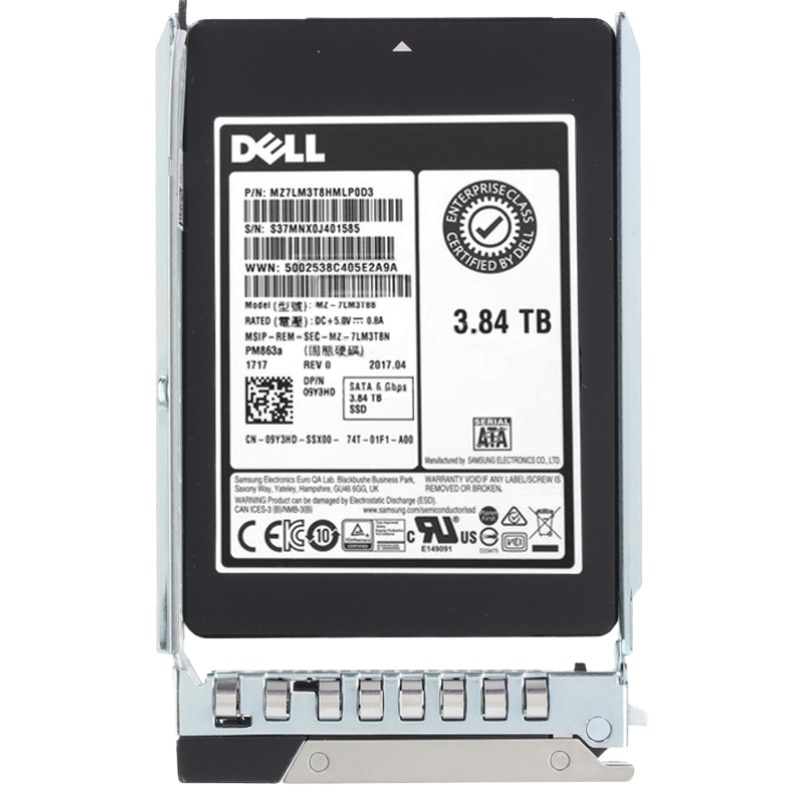


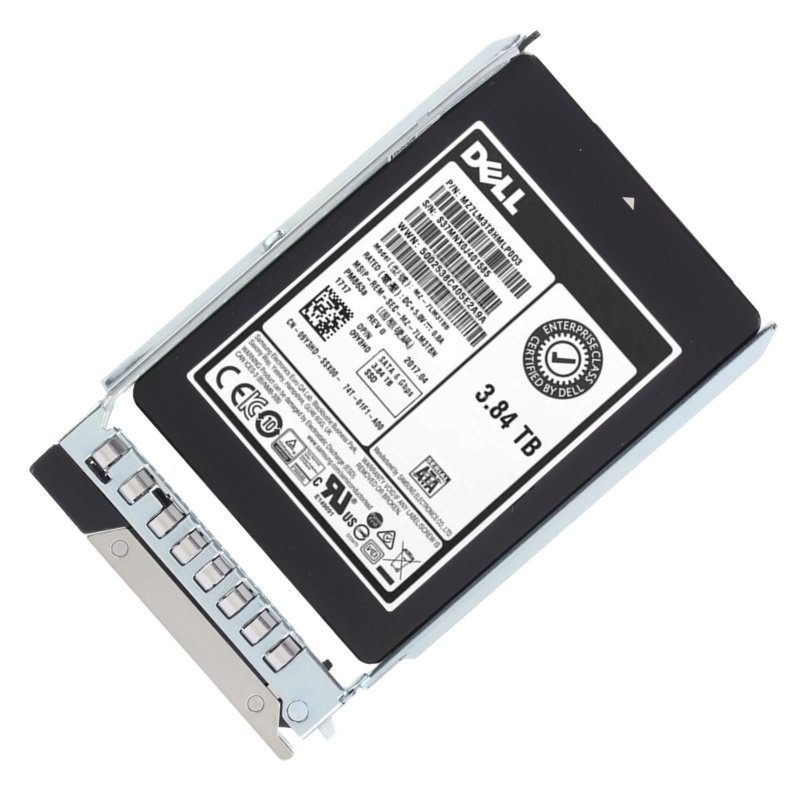
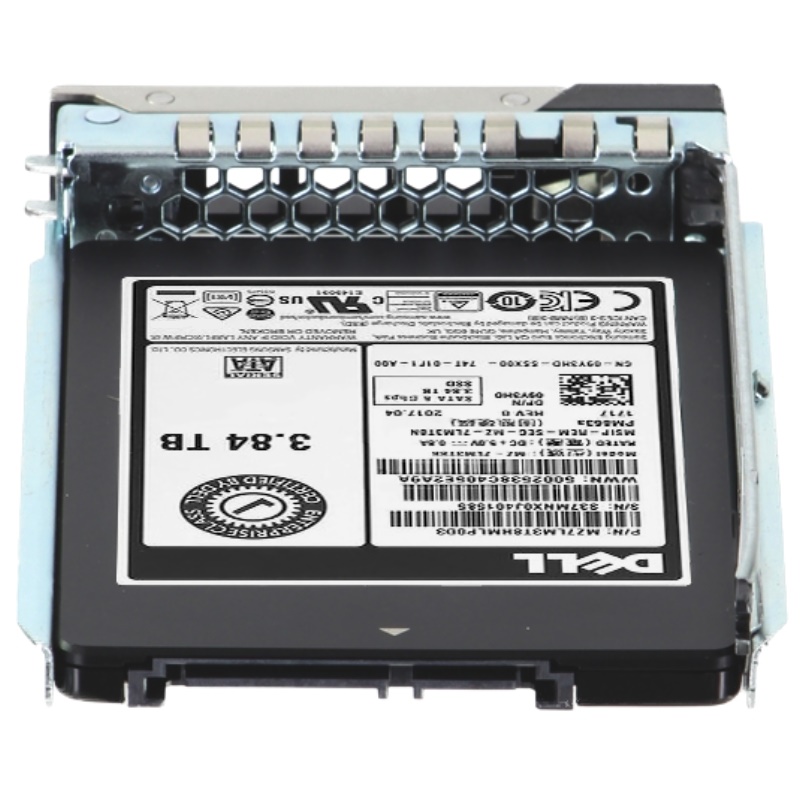
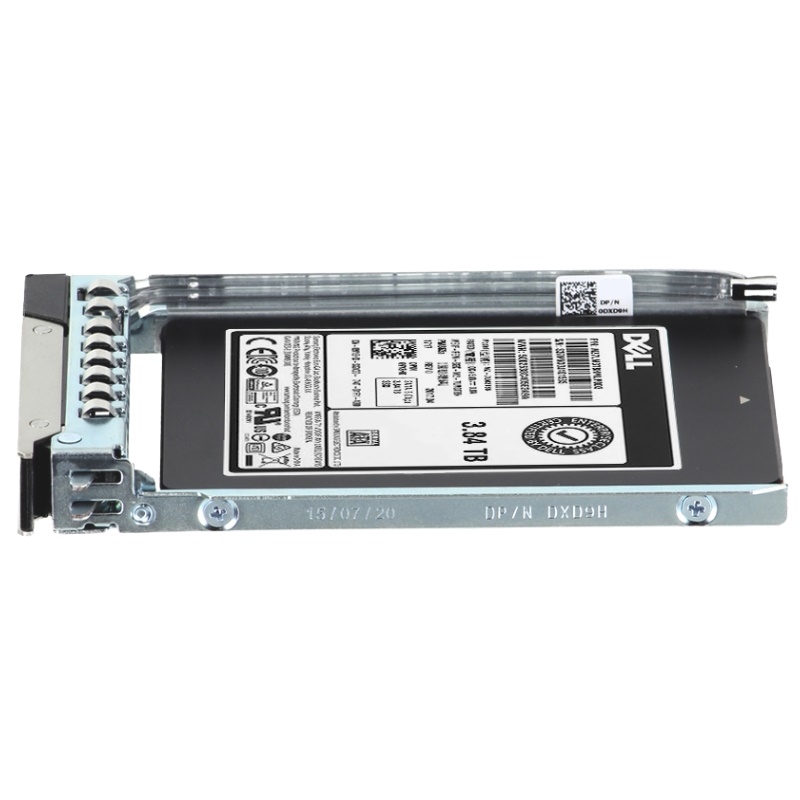
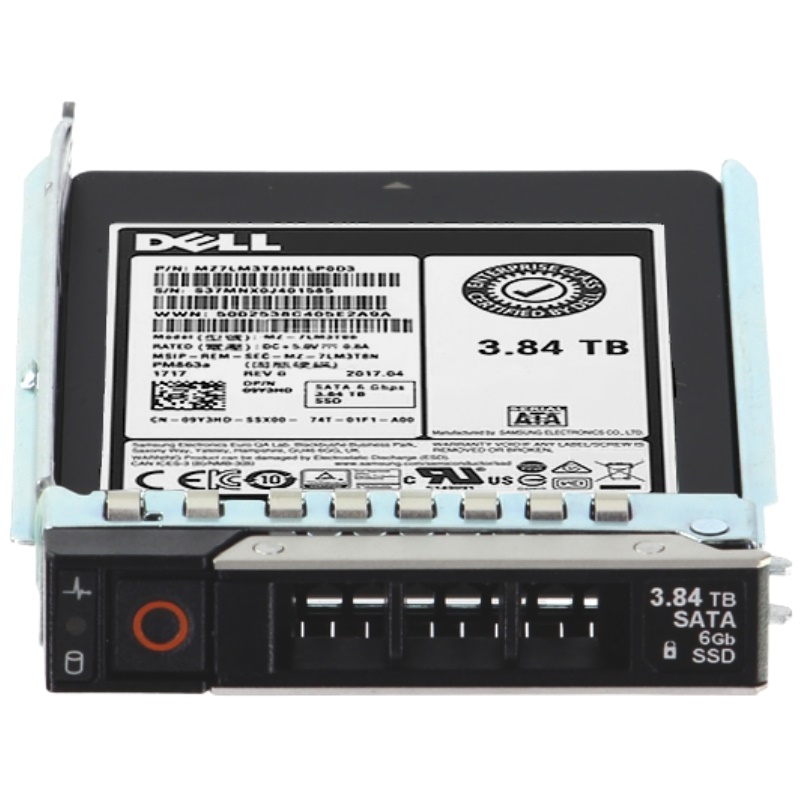
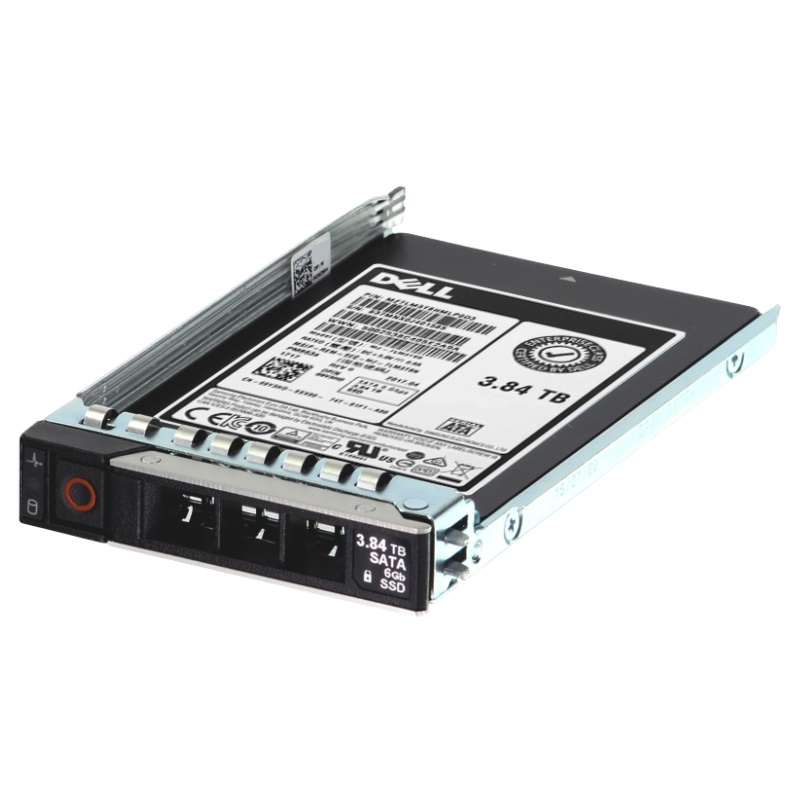
Dell D7V89 3.84TB SATA-6GBPS Read Intensive TLC SFF Hot-Plug Certified with tray Solid State Drive. New Sealed in Box (NIB) with 1-Year Replacement Warranty
The Dell D7V89 3.84TB SATA-6GBPS Read Intensive TLC SFF Hot-Plug Certified Solid State Drive with tray for 14G/15G/16G PowerEdge Server represents a refined category of enterprise-class storage designed specifically for read-heavy workloads in modern datacenter environments. This category of small form factor (SFF) SATA solid state drives emphasizes sustained read performance, predictable latency, and compatibility with widely deployed Dell PowerEdge server families, notably the 14G, 15G, and 16G generations. Drives in this category pair triple-level cell (TLC) NAND optimized for read-intensive use with robust controller firmware, power-loss protection where applicable, and hot-plug trays that match Dell’s sled and caddy standards. For customers focused on accelerating read-heavy applications such as virtualization read caches, large-scale database query workloads, content delivery, and analytics, the combination of 3.84TB capacity, SATA 6Gbps interface, and a certified design for PowerEdge servers offers immediate integration benefits while balancing cost, capacity, and performance.
This category is defined by several technical characteristics that make it distinct in enterprise procurement decisions. The 3.84TB capacity addresses mid-to-large scale storage needs in individual server nodes without resorting to NVMe or SAS architectures. The SATA 6Gbps interface preserves compatibility across a wide range of storage backplanes and RAID controllers, enabling IT teams to upgrade storage capacity without a wholesale infrastructure change. The read-intensive TLC NAND configuration is tuned to deliver higher sustained read IOPS and throughput relative to consumer-grade TLC, with firmware-level optimizations that prioritize read latency consistency and error correction tailored for enterprise workloads. Small form factor (SFF) construction reduces physical footprint while enabling dense server configurations, and the hot-plug certified tray facilitates safe insertion and removal during maintenance windows, reducing downtime risk and simplifying replacement procedures. The drive’s certification for Dell PowerEdge 14G/15G/16G servers means that system firmware, BIOS, and iDRAC utilities will recognize the device and accurately report SMART attributes, health metrics, and predictive failure alerts, an important operational benefit for capacity planning and drive lifecycle management.
Drives in this category are engineered to excel in environments where read operations dominate. Read-intensive TLC is optimized to handle high sequential and random read loads without sacrificing data integrity. The firmware and internal caching strategies reduce read amplification and maintain consistent response times under sustained load, which is critical for database index scanning, OLAP query acceleration, and content delivery networks running on commodity servers. While write endurance is lower than enterprise-grade SLC or MLC options, read-optimized TLC provides a compelling price-to-performance ratio for workloads that generate relatively low write traffic or where write operations are primarily sequential and predictable. The 3.84TB capacity allows significant dataset portioning locally on a node, decreasing network dependencies for frequently accessed data and reducing read latency compared with remote network-attached stores. Furthermore, the SATA 6Gbps link remains adequate for many read-focused applications, enabling throughput that matches typical server backplane capabilities while maintaining broad compatibility and cost efficiency.
Compatibility is central to this category; the Dell D7V89 family explicitly includes trays that align with the mechanical and electrical specifications of Dell’s PowerEdge 14G, 15G, and 16G generations. Certified compatibility signifies that Dell has validated the drive across firmware revisions and chassis variants common to those server families, including single-socket and dual-socket configurations, various RAID controllers, and common storage backplanes. For administrators this means predictable behavior under OS-level storage management, reliable hardware inventory reporting through iDRAC and OpenManage, and a reduction in edge cases where a non-certified drive might be recognized but perform suboptimally or fail to report correct status. Certification also streamlines warranty and support workflows since support teams can quickly identify the drive model and its approved deployment scenarios.
The read-intensive SSD category is particularly well suited to several enterprise and service provider use cases. Virtual desktop infrastructure and virtualization platforms gain faster boot storms and lower read latency for large pools of VMs when persistent images or read caches are hosted on read-optimized flash. Web servers and content caches see improved request response times when static assets are stored locally on these drives. Analytical platforms and business intelligence applications benefit from reduced query times and higher concurrency for read-heavy operations. Additionally, log analytics, time-series databases, and other append-light, read-heavy workloads can be cost-effectively migrated from rotating media to solid state storage to dramatically lower query latency and increase user-perceived performance. Because these drives are hot-pluggable and certified, they are ideal for operational environments where replacement speed and operational continuity are important, allowing technicians to swap drives without powering down servers and without risking extended service outages.
When procuring drives in this category, buyers should consult Dell compatibility matrices and confirm support for the specific PowerEdge model, RAID controller version, and server BIOS/firmware revision. Because server platforms are updated across generations, compatibility with 14G, 15G, and 16G PowerEdge servers implies broad support but administrators should still validate against their exact system and controller revisions. Procurement decisions should factor in warranty terms, available firmware support, spares kits, and cross-shipment options that Dell or authorized resellers provide. Lifecycle support includes an understanding of warranty replacement terms, availability of replacement trays or caddies, and access to firmware updates. Enterprises with long-term deployments should consider multi-year support contracts to ensure rapid replacement and access to certified parts, minimizing mean time to repair for critical systems.
Operational best practices for deploying drives from this category begin with pre-deployment acceptance testing. New drives should be run through vendor-recommended diagnostics and compatibility checks before being placed into production arrays. RAID rebuild and resynchronization policies must be defined to minimize performance impact and to avoid multiple drive rebuilds happening simultaneously. Monitoring and alerting thresholds should reflect typical read-heavy performance profiles while still being sensitive to early signs of failure. Backup and snapshot policies should account for the fact that while SSDs improve read performance, they do not eliminate the need for robust data protection and off-node redundancy. For high-availability clusters, replication strategies and failover testing are critical to ensure that data can be recovered or served by other nodes in the event of drive or server failure.
Compared to spinning disk alternatives, the Dell D7V89 category achieves dramatic improvements in read latency and consistent OPS under random-read workloads, with a notable reduction in mechanical failure modes associated with HDDs. Versus NVMe drives, SATA 6Gbps SSDs are more cost effective on a per-gigabyte basis and offer simpler integration in legacy controller environments that lack NVMe native support. The trade-offs include lower peak throughput and slightly higher latencies than NVMe solutions, but the category’s strength lies in predictable read performance, compatibility, and total cost of ownership for large-capacity, read-heavy applications. Within flash categories, read-intensive TLC fills a niche where density and economics are favored over drive endurance for write-heavy database logging or other heavy write scenarios. Organizations should select this category when workload analysis shows sustained read dominance and when sensor telemetry predicts manageable write amplification within specified endurance limits.


 Contact Us
 Information
 Catalog
 Solid State Drives (SSD)
 Network Switches
 Hard Disk Drives
 HBA & Controllers
 PC & Servers
 PC & Server Memory
 CPU & Processors
 Network Routers
 Power Supplies
 Tape Drives & Libraries
 Network Devices
 Computer & Network Cables