(7% discount is applied at checkout)
Cart is empty
Your go-to destination for cutting-edge server products
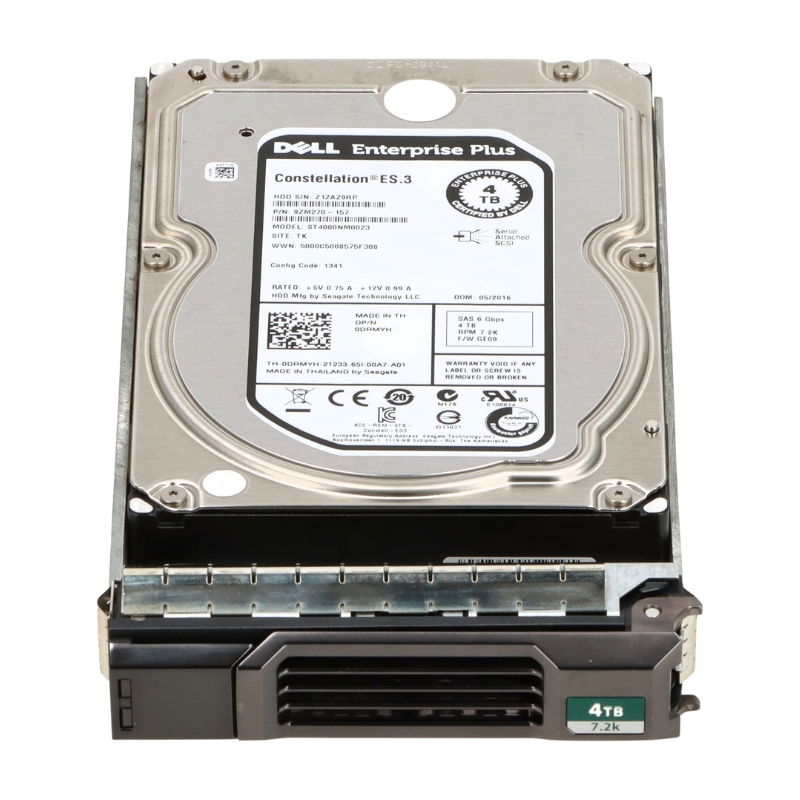


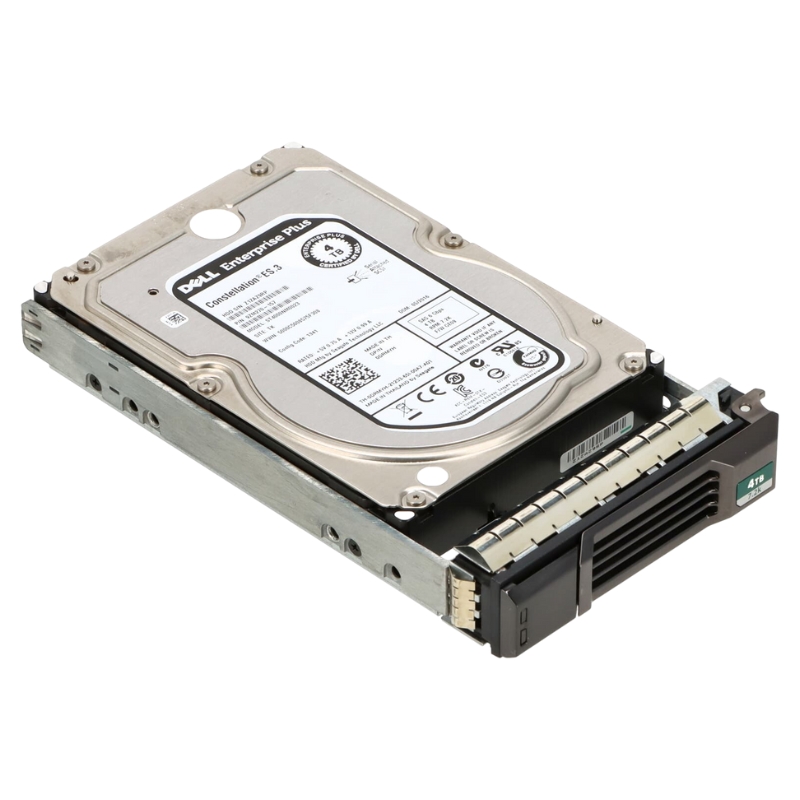
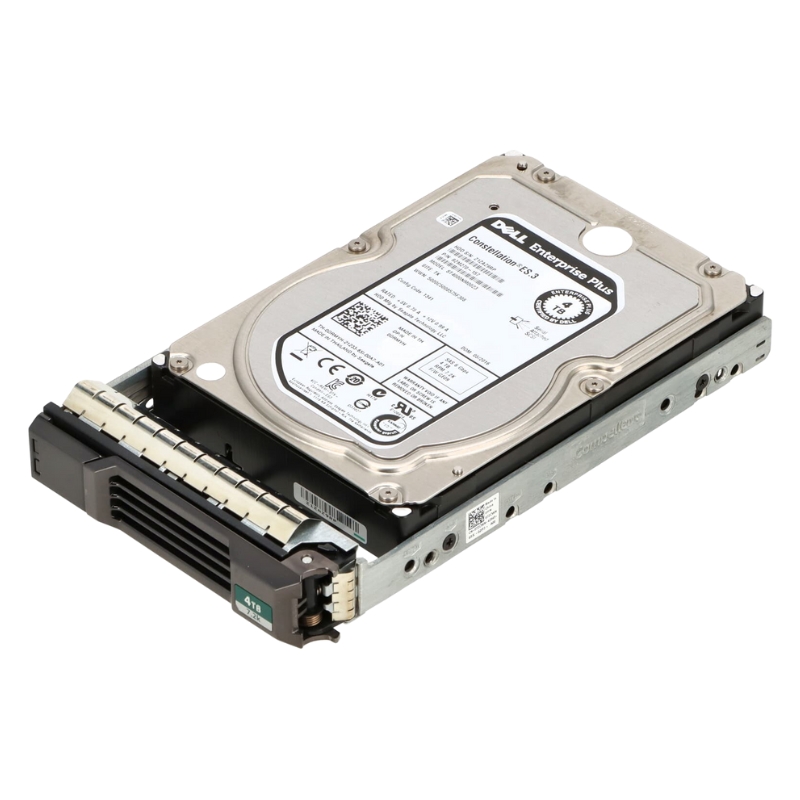
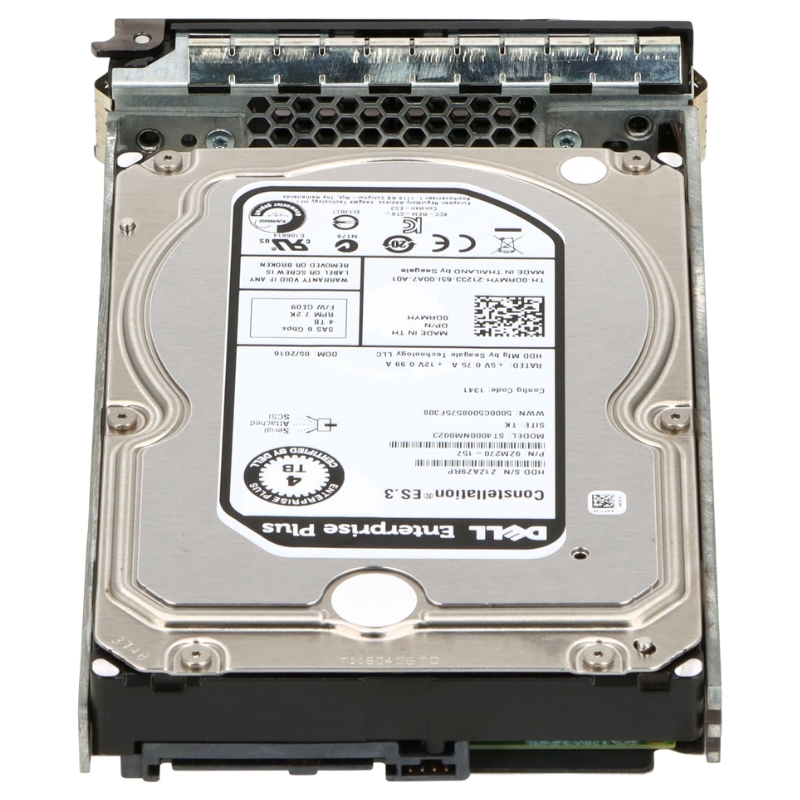
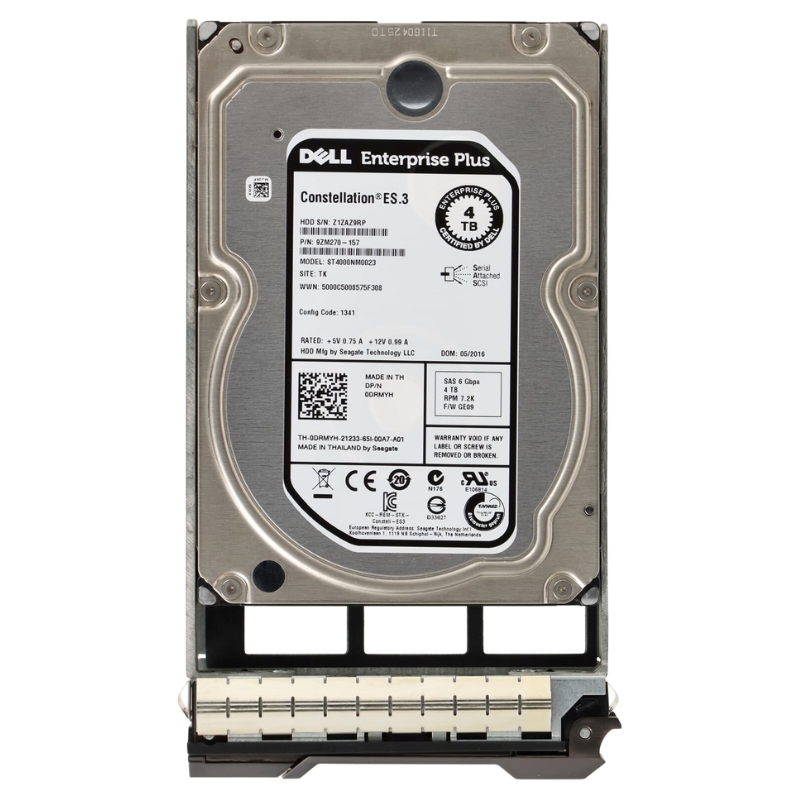
Dell DPP2M 4TB 7200rpm Line SAS 12GBPS 3.5 Inch Hot Plug Hard Drive With Tray. New Sealed in Box (NIB) with 1 Year Warranty
The Dell DPP2M is a reliable large-capacity 4TB nearline SAS hard drive designed for enterprise-level storage arrays. With hot-plug support and a 3.5-inch form factor, it integrates seamlessly into Dell Power Vault ME5 storage solutions.
The Dell DPP2M is fully supported by Dell PowerVault storage systems:
The Dell DPP2M 4TB 7200rpm Line SAS 12Gbps 3.5-inch hot-plug hard drive with tray occupies a distinct space in enterprise storage: it’s a capacity-first, performance-aware, cost-efficient mechanical disk designed for mixed-workload servers and storage arrays. This category overview explores the drive family’s defining attributes — physical form factor, interface speed, rotational speed, capacity class, hot-swap capability and tray integration — and clarifies where the DPP2M line best fits inside data centers, server rooms, and high-density storage chassis.
Drives in this category combine several technical elements that determine their operational envelope. The 3.5-inch form factor enables larger platters and higher capacity per unit, the 7200 RPM spindle speed balances throughput and power consumption, and the 12Gbps SAS interface provides multi-path, low-latency connectivity suited to enterprise controllers. The hot-plug design and included service tray mean minimal downtime during replacement, and numerous Dell-branded or OEM-certified firmware options further tailor behavior for RAID and SAN deployments.
Expect consistent sequential throughput and respectable random I/O for mechanical media in this category. A 7200 RPM SAS drive typically delivers better sustained sequential read/write rates than 5400 RPM disks while remaining more economical than SSDs. The 12Gbps SAS link ensures the host interface is not the rate-limiting factor for many workloads; instead, latency and IOPS are bounded by mechanical seek times and rotational latency. For bulk storage, media streaming, media servers, backup targets, or tiered storage tiers, these drives provide a pragmatic balance of speed, capacity and cost per terabyte.
Drives labeled for enterprise use — such as the DPP2M series — typically include enhanced reliability characteristics relative to consumer HDDs. This includes longer mean time between failures (MTBF) ratings, advanced error correction algorithms, stable firmware revisions optimized for RAID environments, vibration-tolerant mechanics for multi-drive enclosures, and support for power-loss protection behavior. The tray simplifies hot-swap replacement and helps ensure correct airflow and drive detection in Dell chassis and compatible systems.
The 3.5-inch mechanical platform supports large platter counts and higher areal density; the 7200 RPM speed is an industry standard for performance-balanced nearline HDDs. Drives in this class usually weigh between 400–700 grams depending on tray assembly, and include vibration mitigation features to preserve performance in multi-bay servers. Mechanical tolerances and acoustic ratings are tuned for rackmount environments.
The SAS 12Gbps interface presents multiple advantages compared to SATA: full duplex communication, dual-port connectivity (on applicable models), and enterprise feature sets for path redundancy and multi-initiator access. While the drive’s physical media can’t saturate 12Gbps, the higher bandwidth removes host bottlenecks during peak sequential transfers and helps during RAID rebuild operations where aggregated throughput matters.
Enterprise drives often ship with vendor-tuned firmware that manages error recovery behaviour, timed-write caching, and time-limited error recovery (TLER) settings to avoid drive dropouts in RAID arrays. Dell certified firmware for this category ensures compatibility with PowerEdge servers, Dell storage enclosures, and iDRAC monitoring. S.M.A.R.T. attributes report relevant health metrics — reallocated sector counts, seek error rates, and temperature — enabling predictive maintenance through monitoring tools.
While exact model specifications vary by batch and revision, representative technical metrics for a 4TB 7200rpm 12Gbps SAS 3.5" enterprise drive look like:
In real-world benchmarks, a 4TB 7200 RPM SAS drive will show strong sequential read/write numbers — usually in the range of 200–250 MB/s sustained for large block transfers — while random IOPS for small 4K reads/writes will be modest, typically in the low hundreds. The 12Gbps SAS interface ensures data transfers from host to drive are not constrained at the controller level for sequential workloads; mechanical latency remains the main limiter for random access I/O.
Because capacity is large, RAID rebuild durations can be lengthy and stress neighboring drives. The DPP2M class benefits from features like TLER and vibration tolerance which reduce the chance of drive dropouts under rebuild. Administrators should factor rebuild windows into resilience planning and may use mixed RAID tiers (RAID-6 or erasure coding in modern distributed systems) to balance rebuild impact and usable capacity.
Backup target: High sequential throughput reduces backup windows — multiple streams of compressed backups will easily saturate a drive’s sequential capability.
Archive / cold data tier: Lower random IOPS are acceptable; cost/GB and capacity per enclosure dominate purchase decisions.
Virtual server datastore: Adequate for boot and bulk VM storage; pair with caching SSD tiers for hot data.
The 3.5-inch hot-plug tray included with the Dell DPP2M line is designed to drop into Dell PowerEdge bays and many industry standard 3.5" hot-swap sled systems. Compatibility varies by server generation and backplane; always verify part numbers, firmware compatibility and service tag support before deploying. Hot-plug capability allows removal and insertion while the server is powered, supporting true high-availability maintenance procedures.
SAS controllers with 12Gbps ports support this drive class natively. In SAN deployments, multipath I/O drivers and dual-ported SAS backplanes enable failover paths and higher aggregate bandwidth in clustered storage controllers. Ensure that host drivers and HBA firmware are up to date to maximize compatibility and to use advanced enterprise features like zoned arbitration and link speed negotiation.
Compared to SATA, SAS offers better enterprise features, path redundancy, and robust command handling; compared to NVMe and SSDs, SAS HDDs provide far lower cost per terabyte but significantly higher latency and lower IOPS for small random workloads. Use SAS HDDs for capacity tiers, SATA for cost-sensitive bulk storage when advanced features aren’t needed, and NVMe/SSD for latency-sensitive hot tiers.
If your workload comprises high random read/write rates, low latency demands (databases, real-time analytics), or heavy virtual desktop infrastructure (VDI) usage, SSDs or NVMe drives are appropriate despite higher cost per GB. Otherwise, the DPP2M 4TB SAS class remains compelling for capacity-focused tiers.
If you need larger capacity with similar performance envelope, look at 6TB, 8TB or higher nearline SAS options; if lower latency and higher endurance are required, 10k or 15k RPM enterprise SAS drives or SSDs are alternatives. The 7200 RPM family balances energy consumption and media throughput and is typically the sweet spot for mixed workloads.


 Contact Us
 Information
 Catalog
 Solid State Drives (SSD)
 Network Switches
 Hard Disk Drives
 HBA & Controllers
 PC & Servers
 PC & Server Memory
 CPU & Processors
 Network Routers
 Power Supplies
 Tape Drives & Libraries
 Network Devices
 Computer & Network Cables