(7% discount is applied at checkout)
Cart is empty
Your go-to destination for cutting-edge server products
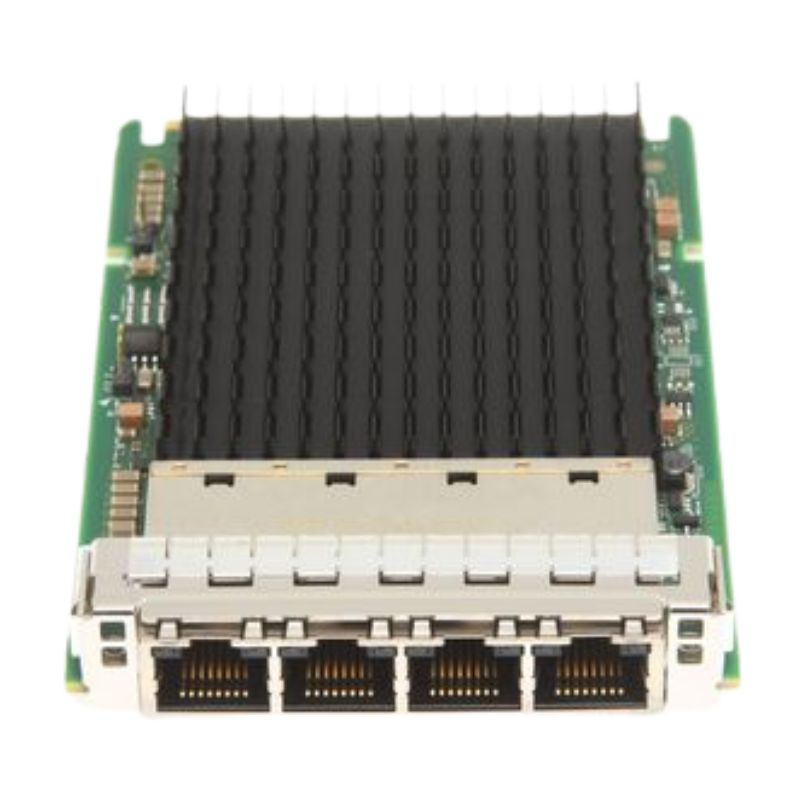


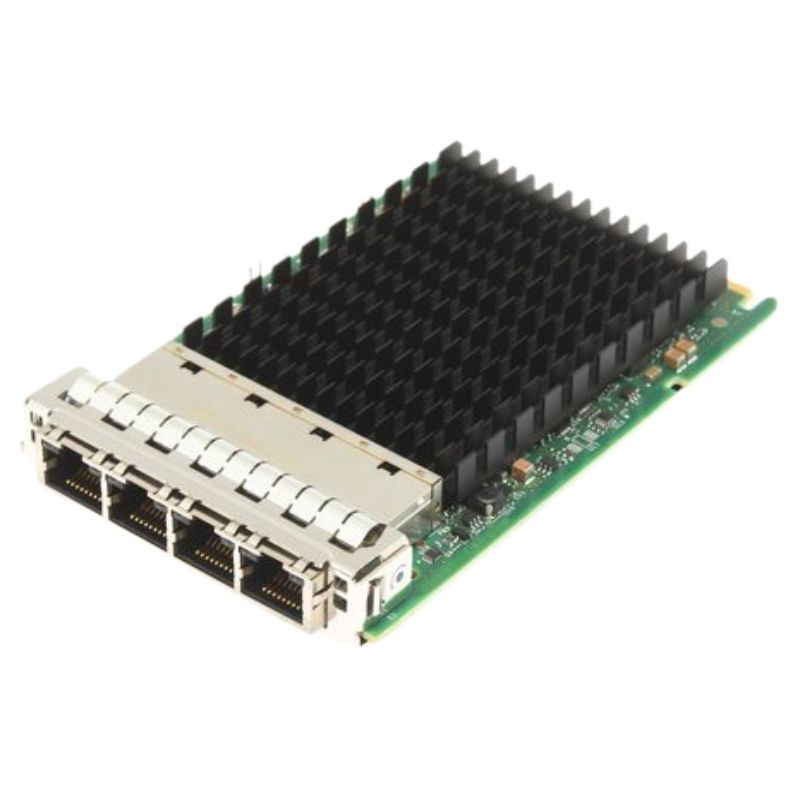
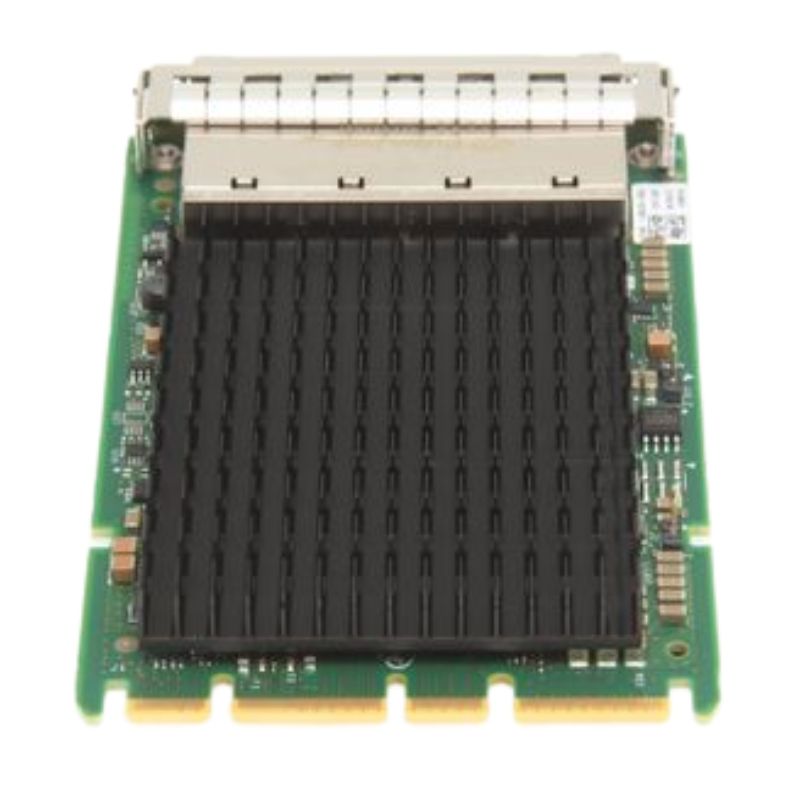
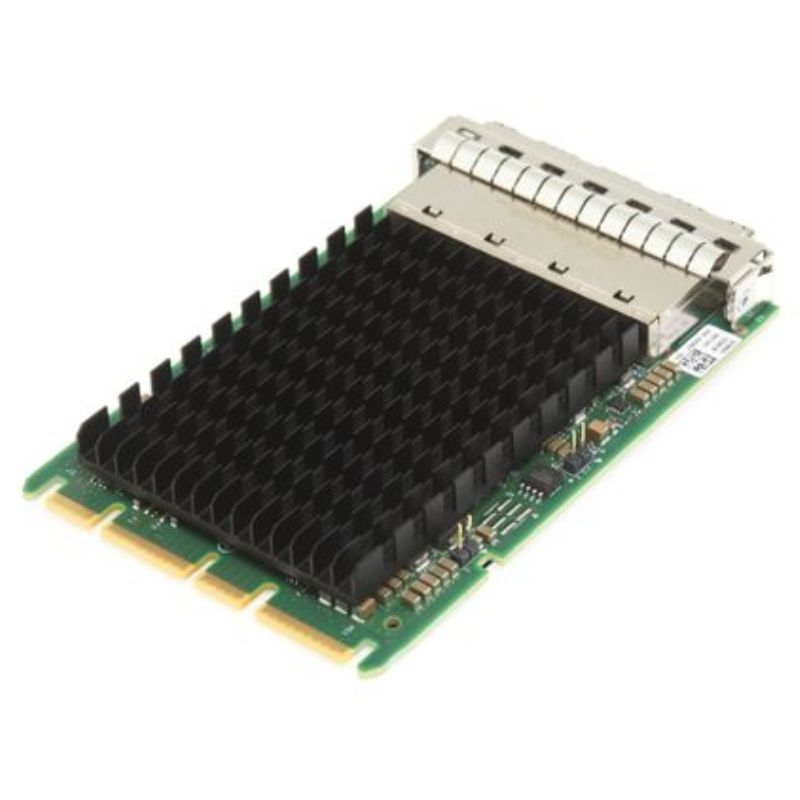
Dell DVCGC Intel Gigabit Ethernet Network Adapters 4 Port. New Sealed in Box (NIB) with 1-Year Replacement Warranty - Intel Version
Overview of Dell 4 Ports Gigabit Ethernet Network Adapter
The Dell DVCGC Intel X710-T4L OCP 3.0 Ethernet Network Adapter is engineered to deliver scalable, high-throughput networking performance for enterprise servers and data-intensive infrastructures. Built on PCI Express 3.0 x8 architecture, this advanced network interface card provides flexible multi-speed support ranging from 100Mb to 10Gb Ethernet, ensuring seamless adaptability across diverse networking environments.
The Dell DVCGC Intel X710-T4LOCPV3 Ethernet Network Adapter, based on the Intel X710-T4L controller architecture, represents a high-density, multi-port networking solution engineered for enterprise servers, virtualization clusters, cloud infrastructure, and scalable data center deployments. Designed with an OCP 3.0 (Open Compute Project) form factor and PCIe 3.0 x8 interface compatibility, this adapter is optimized to deliver flexible bandwidth provisioning across multiple Ethernet speeds ranging from 100 Mbps, 1 Gbps, 2.5 Gbps, 5 Gbps, up to 10 Gbps per port. The four independent ports provide exceptional network consolidation capabilities, reducing server NIC count while increasing throughput efficiency and minimizing latency in high-demand workloads.
The Intel X710-T4L platform is built on a highly scalable controller architecture that prioritizes deterministic performance, hardware-based offloading, and energy efficiency. The Dell DVCGC implementation integrates this chipset into an OCP 3.0 NIC design, enabling compatibility with next-generation modular server architectures. The PCIe 3.0 x8 host interface ensures sufficient upstream bandwidth for simultaneous multi-port traffic aggregation, allowing each Ethernet port to operate independently without congestion under heavy I/O workloads.
One of the defining capabilities of this adapter is its multi-speed Ethernet support. Each of the four ports can dynamically negotiate link speeds including 100BASE-T, 1GBASE-T, 2.5GBASE-T, 5GBASE-T, and 10GBASE-T. This flexibility allows seamless integration into mixed-generation network environments where legacy infrastructure coexists with modern high-speed switching fabrics. It also enables incremental infrastructure upgrades without requiring full network overhauls.
The OCP 3.0 specification is designed to optimize server hardware modularity, airflow efficiency, and serviceability in hyperscale and enterprise environments. The Dell DVCGC Intel X710-T4LOCPV3 adapter leverages this standard to deliver a compact, thermally efficient, and highly serviceable networking module. By aligning with OCP 3.0 guidelines, the adapter ensures compatibility with a wide range of modern server chassis that prioritize open hardware ecosystems.
In high-density data center environments, thermal constraints play a critical role in system stability and longevity. The OCP 3.0 design of this adapter enables optimized airflow paths within server enclosures, reducing thermal hotspots and improving cooling efficiency. This is particularly important in deployments involving virtualization clusters, AI compute nodes, and high-frequency trading platforms where continuous uptime and thermal consistency are essential.
The modular nature of OCP 3.0 NICs allows for simplified maintenance workflows. In supported systems, the Dell DVCGC adapter can be replaced or upgraded without significant system downtime. This contributes to reduced operational costs and improved service-level agreement (SLA) compliance in enterprise IT environments.
The PCI Express 3.0 x8 interface provides a robust upstream data pathway between the network adapter and the host CPU. With a theoretical bandwidth capacity sufficient to support full utilization of all four 10G Ethernet ports simultaneously, the interface ensures that packet processing, DMA transfers, and offload operations occur without bottlenecking at the system bus level.
Each PCIe lane in version 3.0 provides approximately 1 GB/s of bidirectional throughput. With eight lanes available, the aggregate bandwidth supports high-volume packet flows, making the adapter suitable for environments with heavy east-west traffic patterns such as distributed storage systems, microservices architectures, and virtual machine clusters.
The integration of Intel’s networking acceleration technologies ensures minimal latency during packet ingress and egress operations. This is critical for latency-sensitive applications including financial trading platforms, real-time analytics systems, and high-performance computing workloads.
The Intel X710 controller embedded in the Dell DVCGC adapter is engineered to offload compute-intensive networking tasks from the host CPU. This includes checksum offload, segmentation offload, and packet classification operations. By shifting these responsibilities to dedicated silicon, overall system CPU utilization is reduced, freeing processing resources for application workloads.
The TCP segmentation offload (TSO) and large receive offload (LRO) capabilities significantly improve throughput efficiency in high-bandwidth environments. These features reduce per-packet CPU overhead and enhance streaming performance for large-scale data transfers, such as database replication and backup operations.
Receive Side Scaling (RSS) enables the distribution of network processing workloads across multiple CPU cores. This ensures balanced utilization of multi-core server architectures and prevents single-core saturation under heavy traffic loads. It is particularly beneficial in virtualized environments where multiple guest workloads share physical network interfaces.
Single Root I/O Virtualization (SR-IOV) is a critical feature supported by the Intel X710 architecture, enabling a single physical NIC to present multiple virtual functions directly to virtual machines. This reduces hypervisor overhead and enhances I/O performance for virtualized workloads.
By enabling direct device assignment, the Dell DVCGC adapter increases virtual machine density per physical host while maintaining consistent network performance. This is essential for cloud service providers and enterprise virtualization platforms running VMware, Hyper-V, or KVM-based infrastructures.
SR-IOV also enhances network isolation between virtual machines, ensuring secure and predictable traffic flows. Each virtual function operates independently, reducing the risk of cross-VM network interference and improving compliance with enterprise security policies.
The Dell DVCGC Intel X710-T4LOCPV3 adapter is widely deployed in enterprise servers requiring high-density network aggregation. Its four-port design reduces the need for multiple discrete NICs, simplifying cable management and improving rack-level airflow efficiency.
In cloud environments, this adapter supports multi-tenant workloads, containerized applications, and distributed storage systems. Its ability to handle variable workloads across multiple speeds ensures compatibility with diverse service-level requirements.
High-throughput Ethernet connectivity is essential for modern storage architectures, including NVMe over Fabrics (NVMe-oF). The adapter’s low latency and high bandwidth characteristics make it suitable for storage replication, backup acceleration, and distributed file system synchronization.
In HPC clusters, the adapter provides reliable and consistent inter-node communication, which is essential for parallel computing workloads. The combination of multi-port architecture and hardware offloading reduces communication overhead between compute nodes.
The Intel X710 architecture incorporates advanced power management features that dynamically adjust power consumption based on network load. This ensures optimal energy efficiency without compromising performance during peak traffic conditions.
Each Ethernet port can independently adjust power usage based on link speed and traffic demand. This fine-grained control reduces overall server power consumption in large-scale deployments where hundreds or thousands of NICs operate simultaneously.
Thermal sensors integrated into the adapter allow for real-time monitoring of operating conditions. The system can adjust performance parameters to maintain stability in high-temperature environments, ensuring long-term hardware reliability.
The adapter supports a wide range of Ethernet standards and protocols, ensuring seamless integration into heterogeneous network infrastructures. This includes backward compatibility with legacy systems while maintaining forward compatibility with modern high-speed switching technologies.
Quality of Service (QoS) mechanisms enable prioritization of critical traffic streams. This is essential for applications requiring guaranteed bandwidth, such as VoIP, video streaming, and real-time analytics systems.
Advanced traffic shaping capabilities allow administrators to define bandwidth allocation policies across different ports and workloads. This ensures fair distribution of network resources and prevents congestion in shared environments.
The Dell DVCGC Intel X710-T4LOCPV3 adapter is designed to support both horizontal scaling across distributed systems and vertical scaling within high-performance servers. Its multi-port architecture enables flexible deployment strategies in evolving IT environments.
Software-Defined Networking (SDN) environments benefit from the adapter’s programmable features and virtualization support. It enables dynamic network reconfiguration based on application demands and workload distribution.
With support for multiple Ethernet speeds and advanced virtualization capabilities, the adapter provides a future-proof networking foundation for evolving enterprise requirements. It ensures compatibility with next-generation data center architectures and emerging cloud technologies.


 Contact Us
 Information
 Catalog
 Solid State Drives (SSD)
 Network Switches
 Hard Disk Drives
 HBA & Controllers
 PC & Servers
 PC & Server Memory
 CPU & Processors
 Network Routers
 Power Supplies
 Tape Drives & Libraries
 Network Devices
 Computer & Network Cables