(7% discount is applied at checkout)
Cart is empty
Your go-to destination for cutting-edge server products
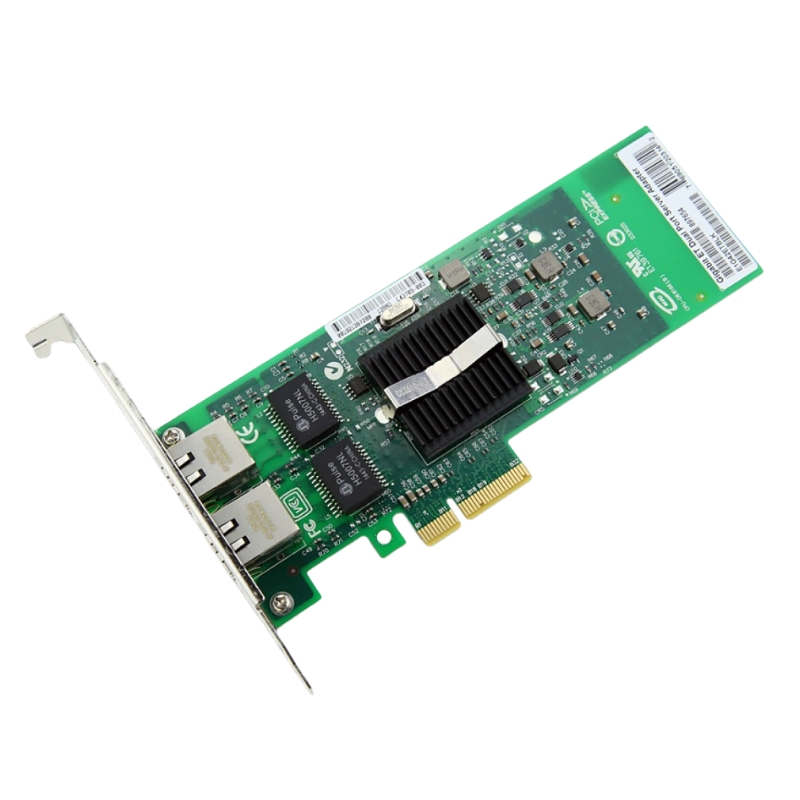


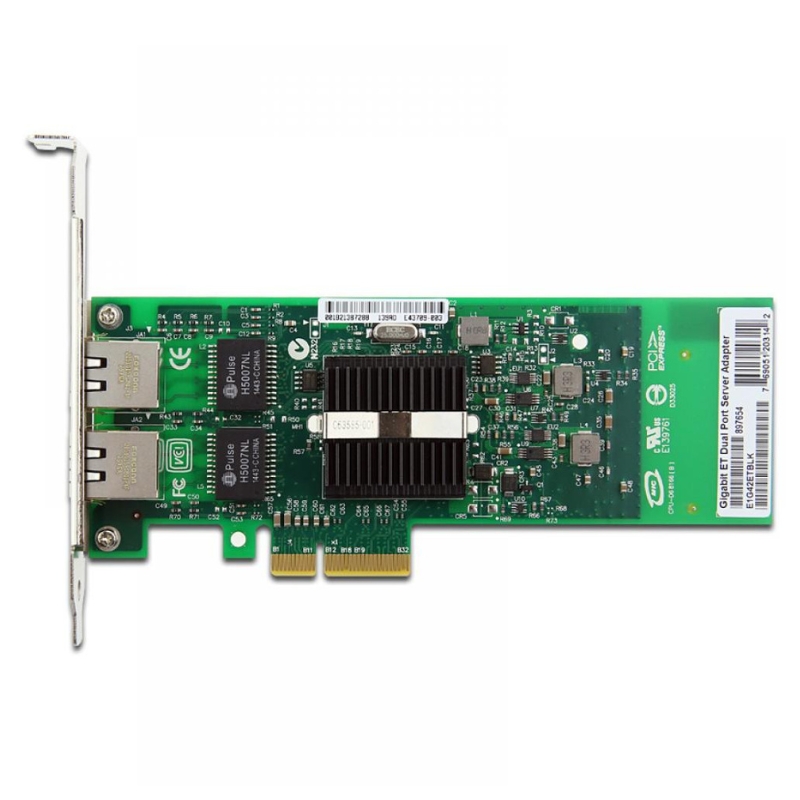
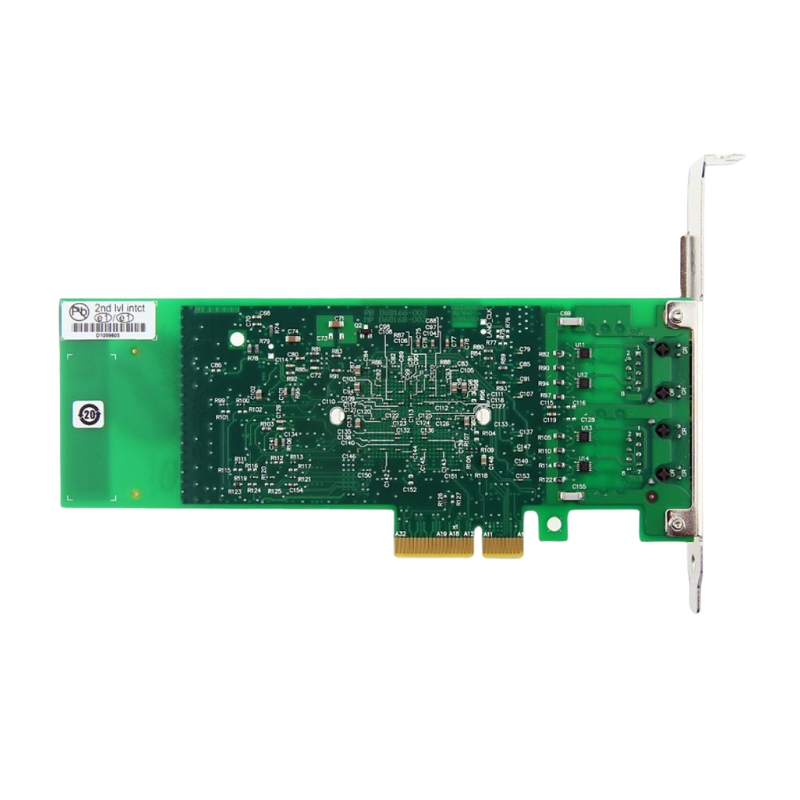
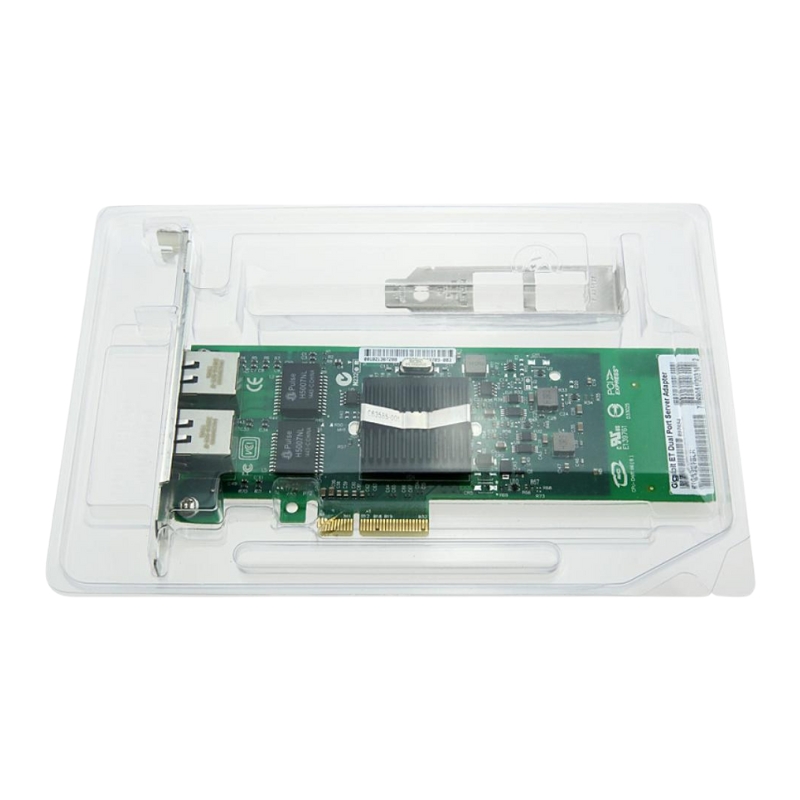
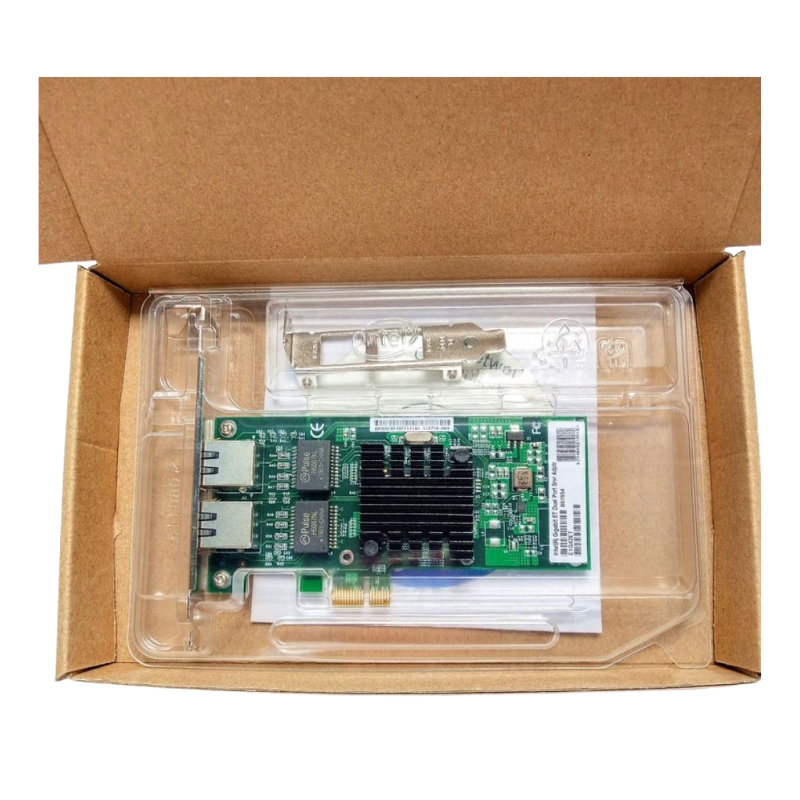
Dell E1G42ET-DELL Gigabit ET 2-Port Server Adapter. Excellent Refurbished with 1 year replacement warranty
The Dell E1G42ET-DELL Gigabit ET 2-Port Server Adapter is a dual-port network interface card designed to deliver dependable Gigabit Ethernet connectivity for server environments that require stable throughput, efficient traffic handling, and flexible deployment. Although listed under Dell, this adapter is based on the Intel Gigabit ET platform and is engineered for enterprise networking tasks such as virtualization, load balancing, failover support, and high-availability server communication. It features two RJ-45 Gigabit Ethernet ports and uses a PCI Express 2.0 x4 interface, making it a practical solution for rack servers, tower servers, and other business systems that need reliable wired networking performance. With support for 10/100/1000Base-T networking, the adapter helps improve bandwidth availability while maintaining broad compatibility with common server operating systems and infrastructure setups.
Brand: Dell
Part Number: E1G42ET-DELL
Product Type: Dual Port Network Adapter
The Dell E1G42ET-DELL Gigabit ET 2-Port Server Adapter is a server-class network interface solution designed to provide dependable wired connectivity, stable Gigabit Ethernet performance, and flexible integration for enterprise server environments. Positioned within the broader category of Dell server networking accessories and Ethernet server adapters, this dual-port adapter is intended for organizations that require consistent network throughput, support for virtualization, efficient traffic distribution, and reliable connectivity between servers and business-critical network infrastructure. In modern IT environments, server adapters are more than simple connectivity components. They act as a fundamental layer between processing resources and the broader network ecosystem, enabling communication between servers, switches, storage resources, management systems, cloud-connected platforms, and virtualized workloads.
The Gigabit ET 2-Port Server Adapter category addresses the needs of data centers, enterprise offices, branch infrastructures, virtualization clusters, database environments, backup systems, web hosting platforms, and application delivery architectures. A dual-port adapter such as the Dell E1G42ET-DELL offers network administrators greater flexibility than a single-port interface because it supports traffic segmentation, redundancy planning, load distribution, and multi-network connectivity from a single server. This design is especially valuable in organizations that want to optimize rack space, reduce complexity, and maintain predictable wired Ethernet performance without moving to higher-cost networking interfaces when Gigabit connectivity remains the right fit for the workload.
Gigabit Ethernet continues to play an important role in enterprise networking because many business applications, server management tasks, file services, authentication platforms, and general-purpose workloads do not require 10GbE or faster links in every deployment scenario. Instead, they require mature, proven, stable, and cost-efficient networking hardware that integrates cleanly into existing server infrastructure. The Dell E1G42ET-DELL adapter fits into that requirement by offering dual-port Gigabit connectivity for environments that prioritize compatibility, reliability, and manageable performance for common server operations. It can be used to connect a server to multiple subnets, separate production and management traffic, support failover strategies, or provide increased aggregate network capacity across two ports.
A defining characteristic of the Dell E1G42ET-DELL Gigabit ET 2-Port Server Adapter is its dual-port architecture. In server environments, dual-port networking hardware offers practical advantages over single-port designs because it allows administrators to connect one physical server to two network paths without requiring separate single-port adapters. This can improve cable organization, conserve PCIe slot space, simplify network topology planning, and provide multiple options for traffic handling across production systems.
Each Gigabit Ethernet port can be used independently or strategically in relation to the other. One port may be assigned to primary business application traffic while the second port is used for backup communication, management traffic, replication traffic, monitoring, or a secondary VLAN path. In virtualized hosts, separate ports can be assigned to different virtual switch roles, allowing cleaner segmentation of management, virtual machine, storage-adjacent, or migration-related network activity. This becomes especially useful in environments where security policies or performance planning require logical isolation between traffic classes.
The dual-port design also supports the common enterprise objective of network resilience. If one network path experiences a switch issue, cable fault, or configuration problem, the second port can be part of a failover design that helps maintain availability for important services. Even in smaller organizations, this flexibility adds value because a server may host multiple applications with different networking requirements. Instead of deploying extra hardware, administrators can take advantage of the integrated two-port structure to build a more adaptable connectivity plan.
One of the strongest benefits of a two-port server adapter is the ability to separate traffic by role. Business networks often carry different classes of communication, including user application traffic, backup traffic, monitoring, patch management, authentication requests, remote management sessions, storage-related transfers, and internal replication. When all of this passes through a single interface, it becomes harder to manage prioritization and isolation. With the Dell E1G42ET-DELL adapter, administrators can assign ports according to operational purpose, which helps create a cleaner and more predictable network design.
For example, a Windows or Linux application server may use one port for production client traffic while the second port handles backup synchronization or administrative access. A virtualization host may dedicate one port to hypervisor management and another to virtual machine network activity. A file server may use one port for employee access and another for replication or maintenance workflows. In a branch office environment, one port may connect to the primary switching fabric while the second supports a secondary segment, testing environment, or out-of-band management network. These deployment patterns help organizations align physical connectivity with security zones, performance objectives, and administrative practices.
Network redundancy is a core requirement in server infrastructure because even a brief loss of connectivity can affect applications, user access, monitoring visibility, and business continuity. The dual-port structure of the Dell E1G42ET-DELL makes it a practical building block for redundancy strategies. Rather than relying on a single cable and single switch path, administrators can design a server connection model in which one interface provides active service and the other is available as part of a failover configuration or teamed networking design, depending on platform support and environment requirements.
This approach is particularly valuable for domain controllers, application servers, print servers, monitoring platforms, edge management systems, and line-of-business workloads that must remain reachable during maintenance or isolated network disruptions. The value of redundancy is not limited to very large data centers. Small and midsize businesses can also benefit because the cost of downtime is often high relative to available IT resources. A dual-port server adapter offers a straightforward way to improve resilience without a major architectural overhaul.
The Dell E1G42ET-DELL Gigabit ET 2-Port Server Adapter belongs to the class of PCI Express server networking cards that expand server capabilities through a dedicated add-in interface. PCIe-based server adapters remain widely used because they offer a practical balance of bandwidth, compatibility, and physical integration with tower servers, rack servers, and custom enterprise systems. In the context of Dell server environments, a PCIe network adapter can provide a clean upgrade path for systems that need more network interfaces than those available on the motherboard or that require a particular type of validated Ethernet controller.
PCI Express connectivity is important because it provides dedicated communication between the adapter and the server platform, allowing the network interface to operate with the stability and responsiveness required for enterprise tasks. In server deployments, a PCIe network card is often selected when administrators need to add ports, replace aging interfaces, standardize on a specific network chipset family, or separate certain traffic classes from onboard networking resources. The Dell E1G42ET-DELL category therefore appeals not only to buyers replacing a failed NIC, but also to infrastructure teams planning deliberate capacity expansion or server role specialization.
Physical installation flexibility matters in data centers and server rooms where chassis dimensions, slot availability, and airflow design affect hardware choices. Adapters in the Gigabit ET category are commonly selected for their ability to integrate into standard server expansion architectures while maintaining a compact and efficient footprint. This makes them useful in environments where rack density, serviceability, and clean cable routing are part of the deployment strategy. A well-matched server adapter reduces the need for external workarounds and helps preserve a tidy and supportable hardware layout.
One of the practical advantages of the Dell E1G42ET-DELL adapter category is that it allows network expansion without replacing an otherwise capable server. Many organizations operate stable server platforms for several years, and those servers may continue to provide ample CPU, memory, and storage performance. However, changing workload patterns can create a need for additional network interfaces. Instead of retiring the server or introducing a more complex external solution, administrators can add a dual-port adapter and extend the server’s usefulness within the infrastructure.
This type of upgrade is particularly attractive for file servers, virtualization hosts, backup targets, internal web servers, test platforms, security appliances running on standard server hardware, and branch office systems that need more connectivity than originally provisioned. The adapter effectively expands the communication options of the host while protecting existing hardware investment. For businesses managing IT budgets carefully, that can translate into meaningful value over the life of the server.
Rack and tower servers often have limited expansion slots, so every installed component must justify the space it occupies. A dual-port network adapter is more efficient than using two separate single-port cards because it consolidates connectivity into one add-in device. This helps preserve expansion capacity for other server upgrades such as storage controllers, accelerators, or specialty interface cards. It also simplifies cable mapping and can reduce the physical clutter associated with multiple individual adapters.
In dense environments where servers are installed side by side and airflow is carefully managed, compact hardware design contributes to better serviceability. Administrators can standardize on a dual-port Gigabit adapter category to keep deployments consistent across multiple hosts, making it easier to document port assignments, replacement procedures, and lifecycle planning. Consistency becomes especially important in branch rollouts, education environments, healthcare facilities, and distributed retail infrastructure where similar server builds are deployed repeatedly across many sites.
The Dell E1G42ET-DELL Gigabit ET 2-Port Server Adapter is designed for Gigabit Ethernet connectivity, a speed class that continues to serve a large range of real-world server workloads effectively. While high-speed networking receives significant attention in large-scale cloud and storage environments, 1GbE remains highly relevant for countless business systems, especially when the goal is stable throughput, broad compatibility, and dependable communication rather than maximum bandwidth at any cost. The adapter category is therefore well suited to organizations that want enterprise-grade connectivity for workloads that align naturally with Gigabit Ethernet.
Typical business applications often operate comfortably within Gigabit constraints, especially when traffic is distributed intelligently across multiple systems and services. Directory services, DNS, DHCP, print services, internal web applications, ERP front ends, accounting systems, ticketing platforms, remote management tools, branch file sharing, imaging repositories, moderate database access, and software deployment systems may all function efficiently over 1GbE, depending on workload scale. A dual-port adapter adds additional flexibility by allowing administrators to allocate one port to production use and the second to support secondary traffic or resiliency objectives.
Another reason Gigabit Ethernet remains relevant is the installed base of switching infrastructure. Many organizations still operate 1GbE access and server edge environments because the economics, cabling, and application profiles make that the right fit. Upgrading every switch port, transceiver path, and cable plant to faster standards may not be justified when the server workloads themselves do not require it. In these scenarios, a high-quality dual-port Gigabit adapter represents a balanced investment that supports business continuity and infrastructure efficiency without forcing unnecessary change.
Server workloads are rarely defined by raw network speed alone. Responsiveness, stability, driver maturity, compatibility, and predictable behavior under sustained operation are often more important than peak throughput numbers. The Dell E1G42ET-DELL adapter fits well in environments where business services must run continuously and reliably across standard Ethernet networks. For example, a departmental application server may serve hundreds of users throughout the day without approaching the practical limits of a well-managed Gigabit link. Likewise, a backup coordination server, patch repository, license server, or management appliance may benefit more from dual-port flexibility and dependable driver support than from a transition to higher-speed networking.
In many cases, the performance conversation is not about replacing every Gigabit interface, but about deploying the right adapter in the right place. A dual-port Gigabit server NIC can support a broad set of operational needs while leaving budget available for targeted upgrades elsewhere in the infrastructure. This is often the most rational approach in mixed environments where some workloads require 10GbE or faster, while others remain well matched to 1GbE.
Enterprise networks often evolve gradually rather than all at once. It is common to find a mixture of older servers, newer virtualization hosts, different switch generations, and multiple business units with varying performance requirements. In this kind of mixed environment, the Dell E1G42ET-DELL adapter category offers practical value because it supports a proven and universally understood networking standard while fitting naturally into modern server deployment practices. Administrators can use it to extend the life of legacy platforms, add network capacity to secondary systems, or maintain consistency across a fleet of business servers that do not all need the same speed tier.
This balance of maturity and relevance is one reason dual-port Gigabit server adapters continue to be purchased long after faster standards have become available. They remain useful not because organizations are unaware of newer technology, but because the adapter meets a specific operational requirement with a sensible combination of cost, reliability, and integration simplicity.
The Dell E1G42ET-DELL Gigabit ET 2-Port Server Adapter is particularly relevant in virtualization and multi-workload server environments because dual-port Ethernet connectivity can support more organized network segmentation for hypervisors and consolidated server roles. Virtualization changes the networking profile of a server by allowing many logical workloads to share one physical host. As a result, network planning becomes more important because the host may carry management traffic, virtual machine traffic, backup flows, monitoring data, and possibly storage-adjacent communications at the same time.
Although very large virtualization clusters may standardize on 10GbE or faster, many small and midsize virtualized environments still rely on Gigabit connectivity for branch servers, test clusters, management hosts, and lightly loaded production systems. In these cases, a dual-port Gigabit adapter can be an effective tool for creating cleaner separation between management and guest traffic or for supporting redundancy across the host’s network connections. It may also complement onboard interfaces, giving the hypervisor additional physical uplinks for more flexible virtual switch design.
Virtualization administrators frequently seek adapters with mature driver ecosystems and broad platform familiarity. A Dell-supported server adapter category is attractive because it aligns with enterprise procurement and support expectations, especially when the host itself is a Dell server. Maintaining validated compatibility across the hardware stack can reduce deployment friction and simplify troubleshooting during operating system or hypervisor updates.
In a hypervisor environment, physical network interfaces are often mapped to different logical functions. One uplink may serve host management access while another carries virtual machine traffic. Additional interfaces may be used for live migration, replication, or backup transport if the environment is large enough. The Dell E1G42ET-DELL adapter gives administrators more options for structuring this design. Even when only two ports are available, the separation they provide can be operationally meaningful, especially in branch or departmental virtualization deployments where hardware resources are limited and simplicity matters.
A practical example is a two-host virtualization cluster in a remote office. One port on each adapter can be reserved for management and infrastructure communication, while the other is assigned to production virtual machine traffic. This improves organization and can reduce the chance that administrative tasks interfere with user-facing workloads. If the host also includes onboard NICs, the add-in adapter can extend that design further, allowing more specialized network roles without changing the physical server platform.
Not every server environment uses a dedicated one-application-per-server model. In many businesses, a single physical server may run several services at once, such as file sharing, print services, authentication, management agents, and line-of-business applications. When multiple workloads coexist on one host, network planning becomes more important because each service may have different performance and security expectations. A dual-port adapter helps administrators design a more disciplined connectivity strategy by assigning distinct traffic roles to each port or using one as part of a resiliency configuration.
This flexibility is useful in smaller offices, healthcare clinics, educational institutions, warehouses, and regional branches where a single server may support many local functions. The Dell E1G42ET-DELL category aligns well with these scenarios because it provides enterprise-oriented networking capability without imposing the cost and infrastructure requirements of higher-speed specialized adapters.
For many buyers, one of the most important aspects of the Dell E1G42ET-DELL Gigabit ET 2-Port Server Adapter is its place within the Dell server ecosystem. Server hardware decisions are rarely made in isolation. Organizations typically evaluate compatibility with existing platforms, expected driver behavior, lifecycle support, replacement planning, and operational consistency across multiple sites. A Dell-associated server adapter can support those goals by fitting more naturally into Dell-oriented procurement and maintenance processes than an unknown third-party alternative.
Compatibility matters because network adapters interact closely with server firmware, BIOS settings, operating system drivers, hypervisors, and sometimes remote management frameworks. When an adapter has been validated for use in Dell server environments, infrastructure teams can deploy it with greater confidence that it will integrate cleanly with the systems they already operate. This is particularly valuable in standardized data centers and distributed enterprise environments where the same server models and accessory classes are deployed repeatedly.
Operational consistency is another major advantage. If an organization uses the same adapter family across multiple hosts, it becomes easier to document network builds, train support staff, maintain spare inventory, and streamline replacement procedures. Standardization reduces ambiguity. Port naming conventions, driver packages, firmware planning, and cabling expectations can all be aligned across the server fleet. Over time, this can reduce support overhead and improve service predictability.


 Contact Us
 Information
 Catalog
 Solid State Drives (SSD)
 Network Switches
 Hard Disk Drives
 HBA & Controllers
 PC & Servers
 PC & Server Memory
 CPU & Processors
 Network Routers
 Power Supplies
 Tape Drives & Libraries
 Network Devices
 Computer & Network Cables