(7% discount is applied at checkout)
Cart is empty
Your go-to destination for cutting-edge server products
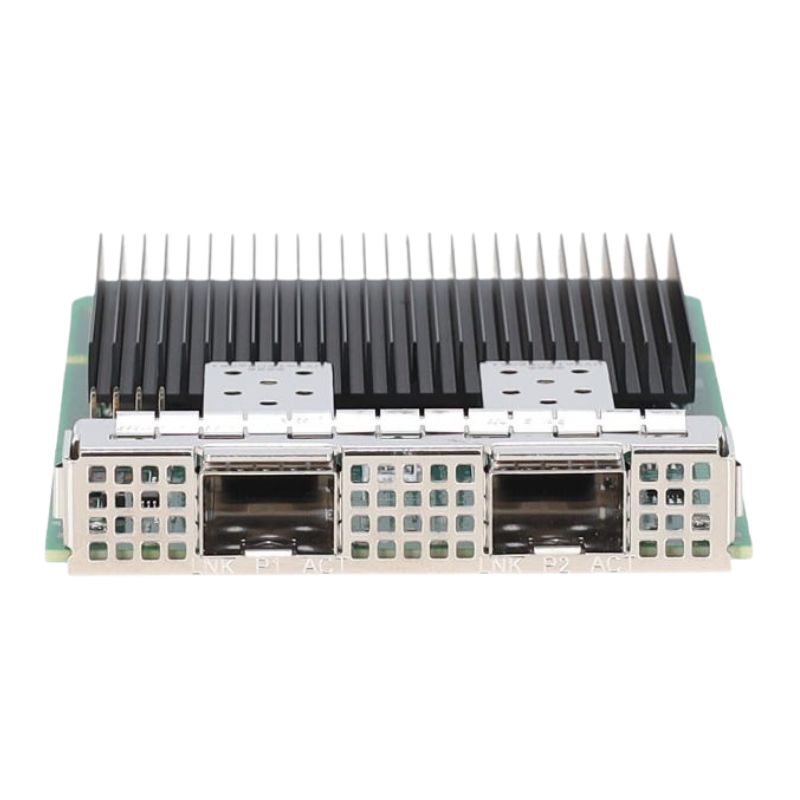


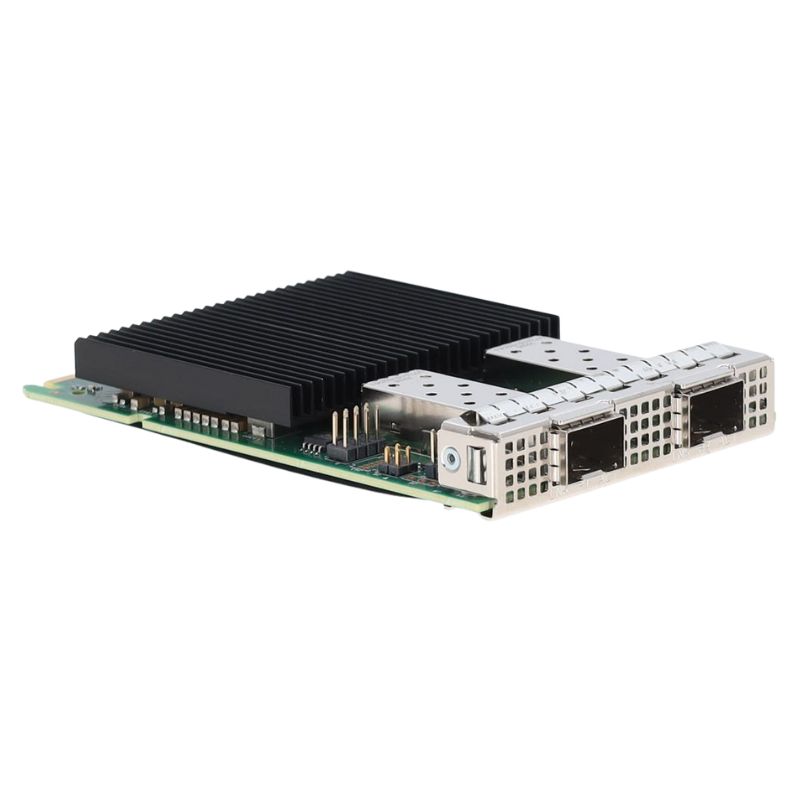
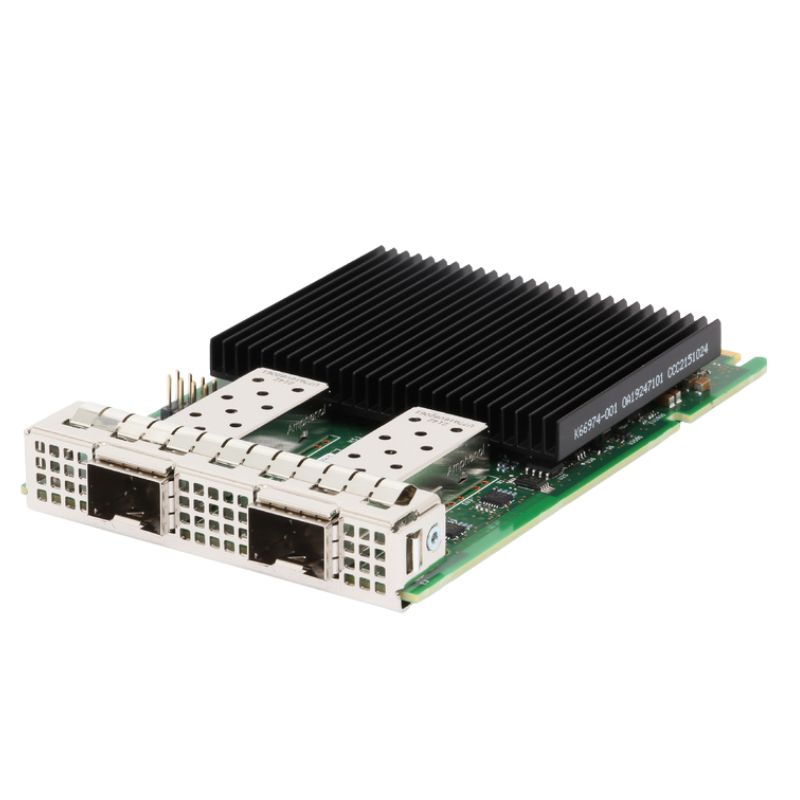
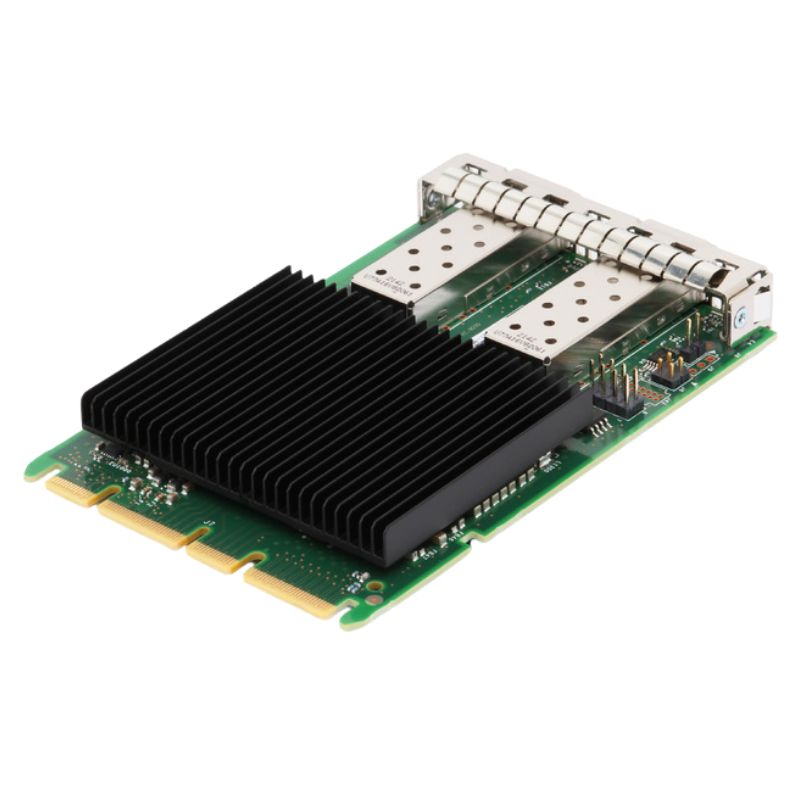
Dell DV72X Intel E810 2 Port 25GbE SFP28 OCP NIC 3.0 Adapter. New Sealed in Box (NIB) with 1-Year Replacement Warranty - Intel Version
Overview of Dell DV72X Intel 2 Port 25GbE SFP28 OCP Adapter
The Dell DV72X Intel E810xxvda2ocpv3 Dual Port 25GbE SFP28 OCP NIC 3.0 is engineered to deliver ultra-efficient, high-bandwidth networking performance for demanding enterprise and cloud environments. Built on an advanced Open Compute Project (OCP) 3.0 mezzanine architecture, this adapter ensures seamless integration into modern server platforms while supporting scalable and flexible network deployments.
The Dell DV72X Intel E810XXVDA2OCPV3 Dual Port 25GbE SFP28 OCP NIC belongs to a highly specialized category of enterprise-grade network interface controllers designed for modern hyperscale, cloud-native, and virtualization-intensive infrastructures. This class of networking hardware is built around the Open Compute Project (OCP) 3.0 standard, which emphasizes modularity, thermal efficiency, and high-density integration for next-generation server architectures. Unlike traditional PCIe-based NICs, OCP NICs are designed to integrate directly into server platforms through a dedicated OCP mezzanine slot, enabling improved airflow, reduced cable clutter, and higher system efficiency.
Within the broader networking ecosystem, this category represents the evolution of high-throughput Ethernet adapters that support increasing bandwidth demands driven by artificial intelligence workloads, distributed storage systems, software-defined networking, and real-time analytics. The Dell DV72X, powered by Intel’s E810 controller architecture, is positioned at the intersection of performance optimization and scalable cloud infrastructure design, making it suitable for enterprise data centers transitioning toward 25GbE and beyond.
At the core of this category is the Intel Ethernet Controller E810 series, which delivers a highly optimized architecture for multi-speed networking environments. The controller is engineered to support flexible port configurations, enabling dual-port 25GbE SFP28 interfaces that significantly enhance network density and throughput efficiency. This silicon platform integrates advanced packet processing capabilities, hardware-based load balancing, and deep packet inspection acceleration, which reduces CPU overhead and improves system-level performance in data-intensive environments.
The E810 architecture is designed with scalability in mind, allowing seamless integration into virtualized environments where network traffic must be dynamically distributed across multiple virtual machines and containers. This makes the Dell DV72X category highly relevant in cloud computing environments, where elasticity and workload balancing are critical. The controller also supports advanced telemetry and diagnostic features that enable real-time monitoring of network performance, helping administrators optimize traffic flows and detect anomalies at scale.
The Dell DV72X NIC category leverages SFP28 interface technology, which is specifically designed to support 25 Gigabit Ethernet transmission speeds. This interface represents a critical upgrade from older SFP+ 10GbE standards, offering 2.5 times the bandwidth while maintaining compatibility with existing optical transceivers and direct attach copper solutions. The dual-port configuration further enhances network redundancy and load distribution, ensuring uninterrupted connectivity in mission-critical environments.
SFP28 modules within this category enable flexible deployment options, including short-range direct attach copper (DAC) cables for rack-level connectivity and optical transceivers for extended-distance communication between data center racks and aggregation layers. This versatility makes the Dell DV72X category highly adaptable to diverse infrastructure designs, ranging from compact enterprise server rooms to large-scale hyperscale cloud facilities.
The adoption of 25GbE technology also plays a crucial role in reducing network congestion in modern distributed systems. As workloads such as artificial intelligence training, high-performance computing, and big data analytics continue to grow, the need for higher per-lane bandwidth becomes essential. This category addresses those requirements by providing a balanced combination of throughput, efficiency, and cost-effectiveness.
The OCP 3.0 NIC form factor used in the Dell DV72X category is engineered to improve server-level integration by eliminating traditional PCIe bracket constraints and optimizing airflow pathways within rack-mounted systems. This design reduces thermal hotspots and enables more efficient cooling strategies, which is particularly important in dense compute environments where multiple high-speed NICs operate simultaneously.
The mechanical design of OCP NICs also allows for easier serviceability and modular upgrades. In enterprise environments where downtime must be minimized, the ability to replace or upgrade network interface modules without disrupting the entire system architecture is a significant operational advantage. This contributes to reduced total cost of ownership and improved lifecycle management for IT infrastructure.
Additionally, OCP NICs like the Dell DV72X are designed to support standardized power delivery and signal integrity requirements, ensuring consistent performance across a wide range of server platforms. This standardization is a key factor in large-scale deployments where interoperability and hardware consistency are essential.
One of the defining features of this NIC category is its dual-port configuration, which enables simultaneous operation of two independent 25GbE connections. This architecture supports advanced networking strategies such as link aggregation, failover redundancy, and traffic segmentation. In enterprise environments, these capabilities are critical for ensuring continuous uptime and optimal bandwidth utilization.
The dual-port design also enhances workload distribution across multiple network paths, reducing the risk of bottlenecks and improving overall system responsiveness. In virtualization-heavy environments, where hundreds or thousands of virtual machines may depend on shared network resources, this level of redundancy ensures consistent performance under peak load conditions.
Failover mechanisms built into this category allow automatic rerouting of traffic in the event of a link failure, minimizing downtime and maintaining service continuity. This is particularly important in mission-critical applications such as financial trading systems, cloud service providers, and enterprise storage networks.
The Dell DV72X category is optimized for virtualized workloads through support for technologies such as Single Root I/O Virtualization (SR-IOV), which allows a single physical NIC to be partitioned into multiple virtual functions. This enables direct assignment of network resources to virtual machines, reducing latency and improving throughput consistency.
In modern cloud environments, where container orchestration platforms such as Kubernetes dominate infrastructure design, efficient network interface utilization is essential. The E810-based architecture supports hardware offloading for virtual switching functions, reducing CPU overhead and improving packet processing efficiency across distributed systems.
This category is also well-suited for microservices architectures, where east-west traffic between services can create significant network load. The high bandwidth and low latency characteristics of 25GbE connectivity ensure smooth communication between distributed application components, improving overall system performance and scalability.
Remote Direct Memory Access (RDMA) support is a key feature in this NIC category, enabling direct memory-to-memory data transfer between systems without involving the CPU in packet processing. This significantly reduces latency and increases throughput efficiency in high-performance computing environments.
The Dell DV72X category supports RoCE (RDMA over Converged Ethernet), which allows RDMA functionality to operate over standard Ethernet infrastructure. This is particularly valuable in distributed storage systems, where rapid data synchronization and replication are required. By minimizing CPU intervention, RDMA enhances system efficiency and frees up processing resources for application-level tasks.
In AI training clusters and GPU-accelerated computing environments, RDMA plays a crucial role in reducing communication overhead between nodes. This enables faster model training cycles and improved scalability for large-scale machine learning workloads.
The Dell DV72X NIC category is widely used in enterprise storage networks where high-speed data replication and synchronization are required. The 25GbE bandwidth provides sufficient throughput to support modern storage protocols, including NVMe over Fabrics (NVMe-oF), which relies on low-latency networking to deliver storage performance comparable to local SSDs.
In software-defined storage environments, network interfaces play a critical role in distributing data across multiple nodes. The dual-port configuration ensures that storage traffic can be segmented from application traffic, improving performance isolation and reducing contention.
Backup and disaster recovery systems also benefit from this category’s high bandwidth capabilities, enabling faster data replication across geographically distributed data centers. This ensures improved data durability and reduced recovery time objectives (RTOs).
Energy efficiency is a key consideration in the design of modern NIC categories, and the Dell DV72X is engineered to minimize power consumption while delivering high throughput performance. The Intel E810 controller incorporates advanced power management features that dynamically adjust performance states based on workload demand.
In large-scale data centers, even small improvements in power efficiency can result in significant operational cost savings. The OCP 3.0 form factor further enhances thermal efficiency by improving airflow and reducing heat accumulation within server chassis.
This category is particularly well-suited for high-density rack deployments where thermal constraints are a major design consideration. Efficient heat dissipation ensures stable performance even under sustained network load conditions.
The Dell DV72X Intel E810XXVDA2OCPV3 Dual Port 25GbE SFP28 OCP NIC category is widely deployed across hyperscale data centers, cloud service provider environments, and enterprise IT infrastructures. Its scalability and performance characteristics make it ideal for both centralized and edge computing scenarios.
In edge computing environments, where processing occurs closer to data sources, low-latency and high-bandwidth networking is essential. This NIC category enables efficient data aggregation and transmission between edge nodes and central data centers.


 Contact Us
 Information
 Catalog
 Solid State Drives (SSD)
 Network Switches
 Hard Disk Drives
 HBA & Controllers
 PC & Servers
 PC & Server Memory
 CPU & Processors
 Network Routers
 Power Supplies
 Tape Drives & Libraries
 Network Devices
 Computer & Network Cables