(7% discount is applied at checkout)
Cart is empty
Your go-to destination for cutting-edge server products
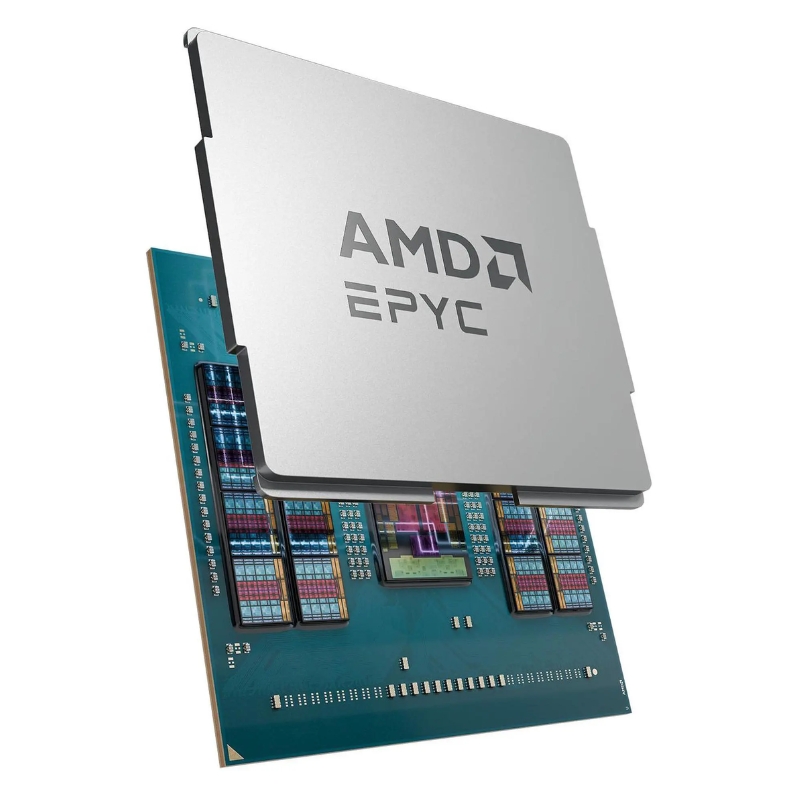


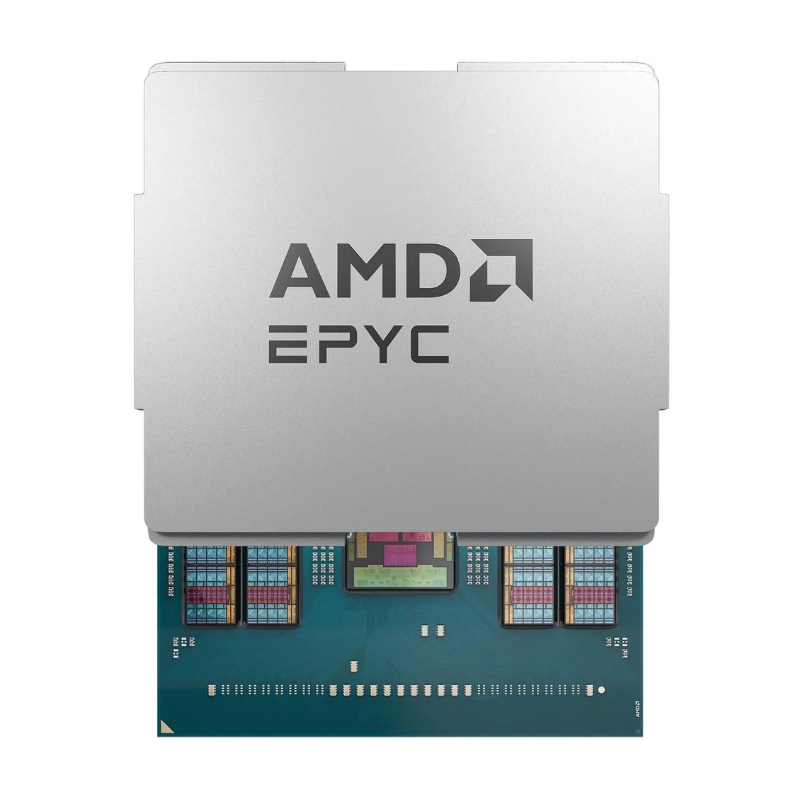
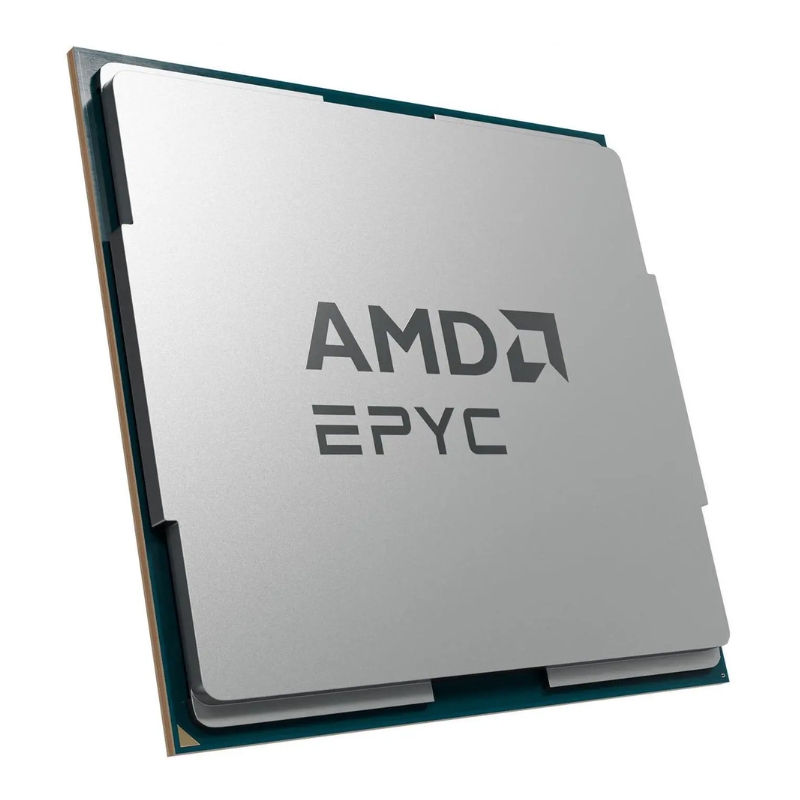
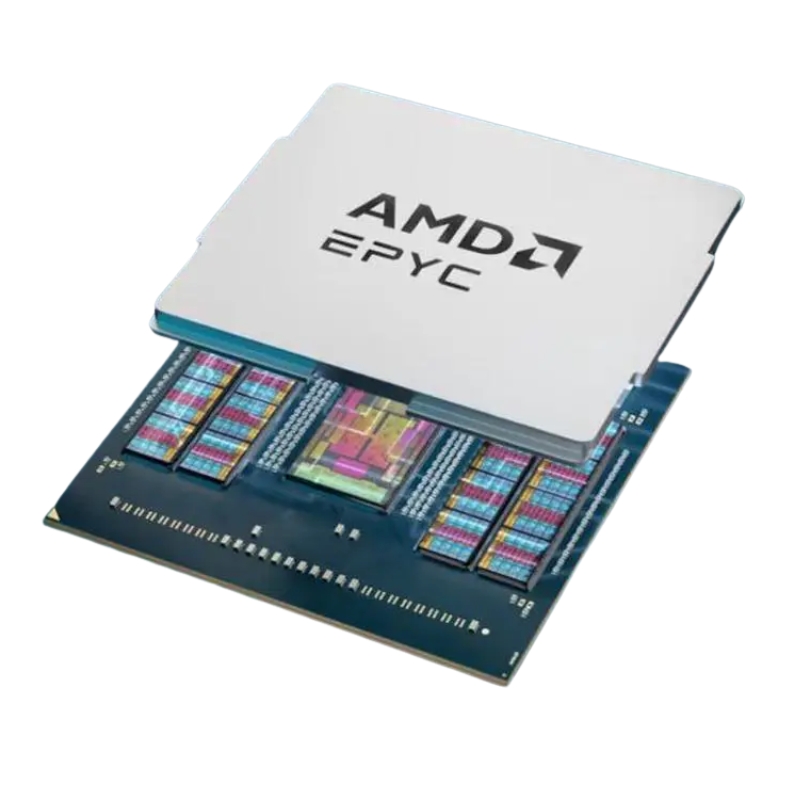
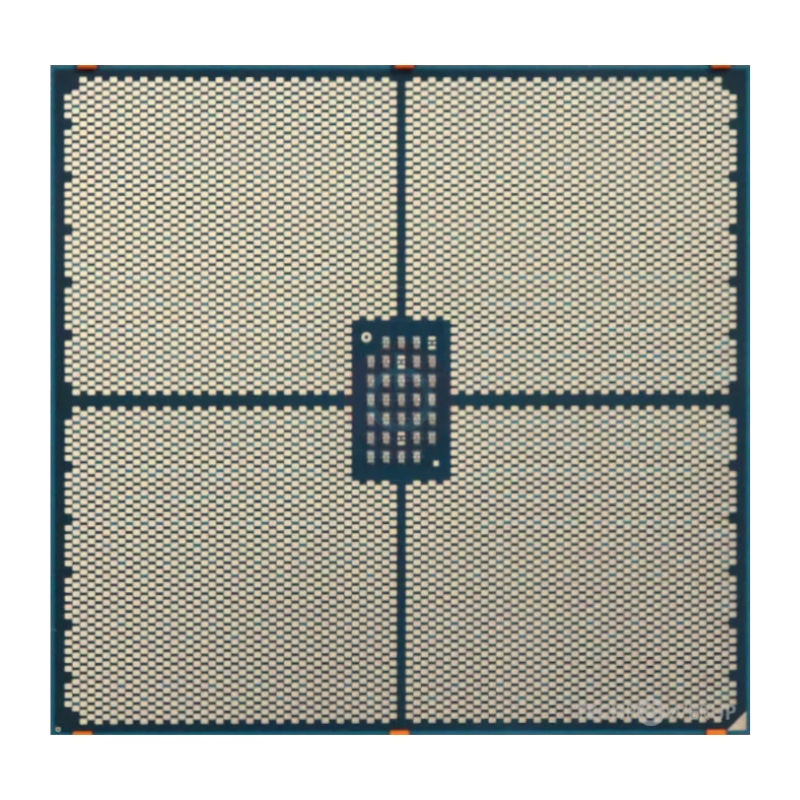
Dell EPYC YJV7C 9655P 2.6GHz 96-Core 400w Processor. New Sealed in Box (NIB) with 1 Year Warranty
The Dell EPYC YJV7C 9655P 2.6GHz 96-Core Processor is an advanced, high-density server CPU engineered for demanding enterprise workloads. Built on next-generation EPYC architecture, this processor delivers exceptional multi-thread performance, scalable memory bandwidth, and efficient power utilization for modern data centers.
The Dell EPYC YJV7C 9655P 2.6GHz 96-Core 400W Processor represents a monumental advancement in high-performance computing, server virtualization, cloud workloads, data center efficiency, and computational scalability. Built on AMD’s EPYC architecture and optimized for Dell’s enterprise-grade server platforms, this processor delivers unmatched multi-core performance with exceptional throughput, energy balance, and operational reliability. With 96 cores and 192 threads operating at a powerful base frequency of 2.6GHz, the Dell EPYC YJV7C 9655P processor is designed to power complex, data-heavy environments, including large virtualized infrastructures, AI workflows, high-density cloud clusters, hyper-converged systems, and containerized enterprise applications. The combination of ultra-high core density, next-generation security features, advanced memory bandwidth, and robust PCIe capabilities allows organizations to scale operations efficiently while maintaining exceptional performance per watt across mission-critical environments.
Built on AMD’s next-generation EPYC CPU architecture, the Dell EPYC YJV7C 9655P processor integrates cutting-edge innovations in multi-core scaling, pipeline efficiency, cache optimization, and memory throughput. The EPYC architecture emphasizes parallel execution, high bandwidth per core, and efficient workload balancing, enabling enterprise systems to manage large simultaneous task volumes without latency or performance degradation. The architectural design ensures that servers remain highly responsive under continuous, intensive workloads, catering to industries requiring heavy data processing, computational modeling, encryption, and large-scale virtualization.
With 96 cores and 192 threads, the Dell EPYC YJV7C 9655P processor delivers exceptional multi-threaded capability. The processor excels in multi-tenant cloud environments where numerous virtual machines operate simultaneously. The extraordinary core count ensures that even during peak computational hours, workloads are distributed evenly across processing units, eliminating bottlenecks associated with traditional multi-core CPUs. This multi-core environment provides an ideal platform for enterprise applications, from hyper-scale data analytics to high-volume transactional processing, delivering consistent performance and scalability as workloads evolve.
The incorporation of 192 simultaneous execution threads enhances throughput and responsiveness in applications requiring concurrent task execution. This includes environments such as enterprise resource planning systems, large-scale customer relationship management deployments, and distributed AI model execution. Thread-level optimization ensures each process receives dedicated processing bandwidth, significantly improving application speed and stability under heavy load. Thread management technologies work to maximize utilization while minimizing overhead, producing sustained performance even in computationally demanding conditions.
The 2.6GHz base clock speed of the Dell EPYC YJV7C 9655P offers a balanced operating point between power consumption and computational speed, making it ideal for continuous enterprise workloads. Unlike processors that rely heavily on boost frequencies, this CPU delivers solid, consistent performance at its base frequency, which is essential for applications requiring predictable execution speed. Systems running large databases, high-volume transaction processing, virtual desktop infrastructures, or distributed computing services benefit from the consistent responsiveness that this processor provides at its stable frequency range.
Although designed for multi-threaded workloads, the processor also maintains strong single-core performance, ensuring essential operations such as server management tasks, lightweight application threads, and sequential operations execute smoothly. This balance between single-core and multi-core computing ensures broad compatibility across various enterprise software environments, making the processor suitable for mixed workload deployments where both types of tasks are present concurrently.
Precision clock management within the processor maintains stable frequency output even during thermal fluctuations or heavy workload cycles. By dynamically adjusting internal pathways and maintaining optimized thermal distribution, the processor sustains its base frequency without throttling, contributing to long-term operational stability. This capability is vital for mission-critical environments where consistent execution speed is essential.
The 96-core configuration of the Dell EPYC YJV7C 9655P processor delivers substantial scalability for enterprises moving toward modernization initiatives. High-density computing reduces the physical footprint of servers required for large-scale processing tasks. Organizations can consolidate infrastructure, lower cooling requirements, and reduce power consumption across the board. As workloads grow, scaling can be achieved vertically through increased virtualization density or horizontally across distributed systems, all while maintaining enterprise reliability and performance.
Virtualization environments rely heavily on core count and parallel execution capabilities. With 96 cores, this processor can host significantly more virtual machines per server without compromising performance. This enables organizations to reduce hardware expenditure, streamline infrastructure deployment, and simplify resource management through hypervisors such as VMware ESXi, Microsoft Hyper-V, and Proxmox. High-density virtualization also reduces licensing costs tied to per-core or per-socket billing structures, offering a more cost-efficient long-term operational model.
The allocation of 192 threads provides granular control over resource assignment within complex virtual machines, containers, and orchestration frameworks such as Kubernetes. High-density threading enables efficient CPU scheduling, reduced latency between resource calls, and consistent workload performance across multi-tenant environments. Organizations running containerized microservices, distributed batch processing, or complex computational pipelines benefit greatly from such extensive thread availability.
The processor’s 400W thermal design power ensures robust performance while balancing energy consumption for high-density computing platforms. The TDP rating reflects the processor’s capability to maintain consistent performance under sustained load. Designed for powerful enterprise servers, the thermal envelope is supported by advanced cooling frameworks within Dell's PowerEdge systems, ensuring stable operation even under maximum computational stress. Efficient cooling and power distribution allow this processor to perform predictably and reliably in continuous, demanding environments.
Internal thermal control mechanisms work in real-time to maintain temperature equilibrium within the processor. These algorithms monitor and adjust internal component activity to optimize performance output without exceeding safe thermal thresholds. Combined with Dell’s proprietary cooling technologies, these systems ensure that even during peak processing loads, the processor maintains its performance levels without risk of overheating or unexpected throttling.
The processor’s power management architecture ensures that energy is distributed efficiently across cores and functional units. Using intelligent allocation systems, the processor ramps up power delivery to cores under load while reducing power consumption in idle or low-demand states. This creates a dynamic energy environment where performance and efficiency work in tandem to provide optimal operational balance for enterprise workloads.
The Dell EPYC YJV7C 9655P processor provides extensive memory support to manage data-intensive and latency-sensitive applications. High bandwidth memory throughput is essential for modern enterprises dealing with large datasets, real-time analytics, and multi-user platforms requiring rapid memory access. The processor’s advanced memory architecture ensures reduced wait times, improved data access speed, and higher overall system responsiveness. Fast memory performance is essential for high-performance computing environments and enterprise software frameworks that rely heavily on real-time data processing.
The processor supports a wide array of memory channels, allowing organizations to scale memory capacity across numerous DIMM slots for improved application performance. Multi-channel configurations enable faster data transfer and reduced memory latency across workloads such as virtualization clusters, blockchain nodes, and data modeling applications. This architecture ensures optimal memory parallelism, reducing bottlenecks that commonly occur in single-channel or limited-channel memory designs.
In enterprise environments where large memory allocations are necessary—for example, in-memory databases, AI inference platforms, or advanced scientific simulations—the processor supports enormous memory scalability. This ensures that organizations can handle increasing data loads with minimal system modification. With the ability to scale memory efficiently, enterprises gain the flexibility needed to adapt their infrastructure as operational needs grow.
The Dell EPYC YJV7C 9655P processor incorporates advanced security mechanisms designed to protect data at both hardware and software levels. Hardware-based encryption technologies safeguard sensitive information during transmission and storage. Multi-level security protocols work to isolate critical operations from potential threats. Combined with Dell’s server-level security frameworks, the processor provides a fortified environment suitable for government, finance, healthcare, and enterprise cloud sectors, where data confidentiality and system integrity are paramount.
The processor features hardware-rooted security designed to authenticate system components and ensure trusted execution workflows. This helps prevent malicious intrusion attempts, spoofed hardware, and unauthorized firmware modification. Hardware security anchors guarantee that systems boot from verified, uncompromised states, maintaining end-to-end system integrity.
Memory encryption ensures that all data stored in memory is protected from unauthorized access. In environments handling sensitive information such as financial transactions, personal user records, or proprietary data, memory encryption prevents data leakage caused by physical hardware access or side-channel exploits. This creates a secure computational environment for critical enterprise functions.
The extremely high number of cores allows for simultaneous execution of multiple AI pipeline stages. From data preprocessing to neural network computation and inference processing, the processor handles all tasks quickly and reliably. The improved concurrency reduces processing delays and allows faster turnaround times for AI deployments.
The processor's architecture enhances floating-point and integer calculation performance, which is crucial for AI workloads. In training environments where large datasets must be continuously processed, the processor minimizes delays and supports multi-user or multi-application AI clusters. For inference workloads, the processor ensures rapid response time and efficient execution for real-time AI applications.
The processor excels in cloud-centric environments where microservices, container orchestration, and distributed computing frameworks are dominant. The high core count enables large-scale containerized workloads to run simultaneously with minimal latency or contention. Kubernetes clusters, Docker-based microservices, and cloud-native applications benefit from improved scheduling efficiency across numerous physical cores, ensuring high throughput and service reliability.
In multi-node cluster environments such as cloud data centers or private cloud platforms, the processor’s scalability ensures efficient workload distribution across cluster nodes. The processor’s architecture enables reliable inter-node communication, making it ideal for large-scale deployments where performance consistency is essential.
Cloud applications depend heavily on consistent, redundant, and scalable compute environments. The processor supports high availability configurations, ensuring continuous uptime and failover protection. This reliability is essential for enterprise cloud services, ensuring smooth operation even during peak load or component failure scenarios.
The Dell EPYC YJV7C 9655P excels in database-driven environments requiring rapid read/write throughput and efficient simultaneous query processing. From SQL and NoSQL databases to ERP platforms and data warehousing systems, the processor ensures consistent and predictable performance across varying data workloads. The high core and thread count allow multiple queries, transactions, and data operations to be processed simultaneously, enhancing overall database responsiveness.
The extensive core architecture enables parallel query execution, improving performance in data-heavy systems. Applications involving real-time analytics, business intelligence dashboards, or high-frequency transaction systems benefit from faster response times and increased throughput.
The processor’s architecture helps maintain transactional consistency, ensuring reliable database operations even during simultaneous access requests. This is especially important for financial, retail, or supply chain environments where accuracy and operational integrity are essential.
The processor integrates seamlessly with Dell’s enterprise hardware ecosystem, ensuring optimal performance, system management, and long-term reliability. Dell PowerEdge servers, equipped with advanced thermal management, intelligent monitoring, and firmware-level optimizations, ensure that the processor operates at peak efficiency. Dell’s integrated server management systems enable real-time performance monitoring, predictive analytics, and automated system tuning.
Designed for multi-year operational stability, the Dell EPYC YJV7C 9655P processor upholds enterprise performance standards over extended deployment cycles. Dell’s extensive support framework ensures product longevity, stability updates, and compatibility enhancements as enterprise software environments evolve.
Dell management solutions such as iDRAC and OpenManage provide real-time system visibility, enabling administrators to manage processor workloads, monitor performance thresholds, and schedule diagnostic routines. This level of integration enhances long-term performance reliability and operational control.


 Contact Us
 Information
 Catalog
 Solid State Drives (SSD)
 Network Switches
 Hard Disk Drives
 HBA & Controllers
 PC & Servers
 PC & Server Memory
 CPU & Processors
 Network Routers
 Power Supplies
 Tape Drives & Libraries
 Network Devices
 Computer & Network Cables