(7% discount is applied at checkout)
Cart is empty
Your go-to destination for cutting-edge server products
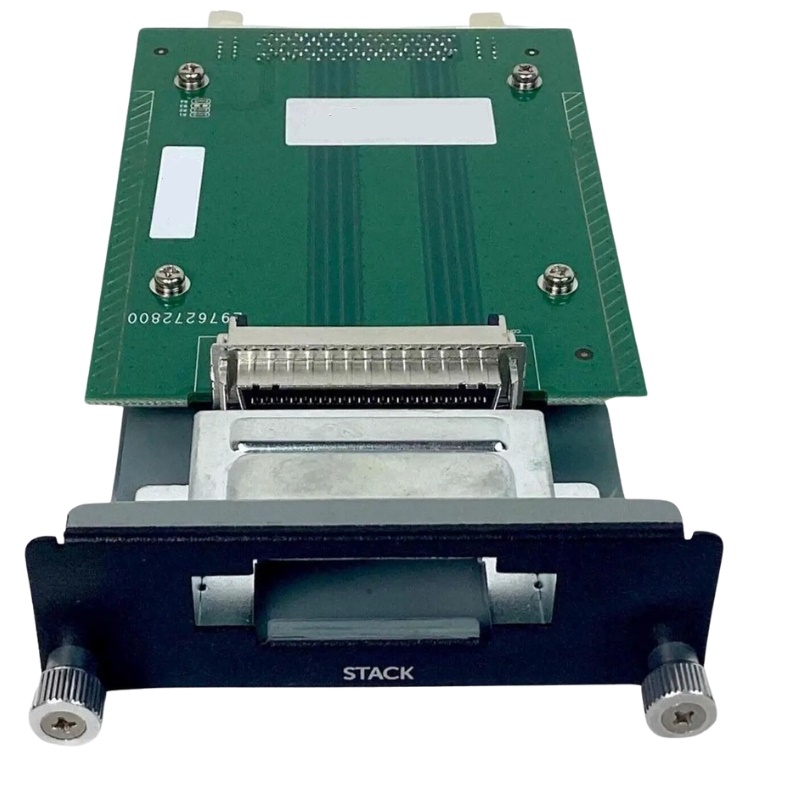


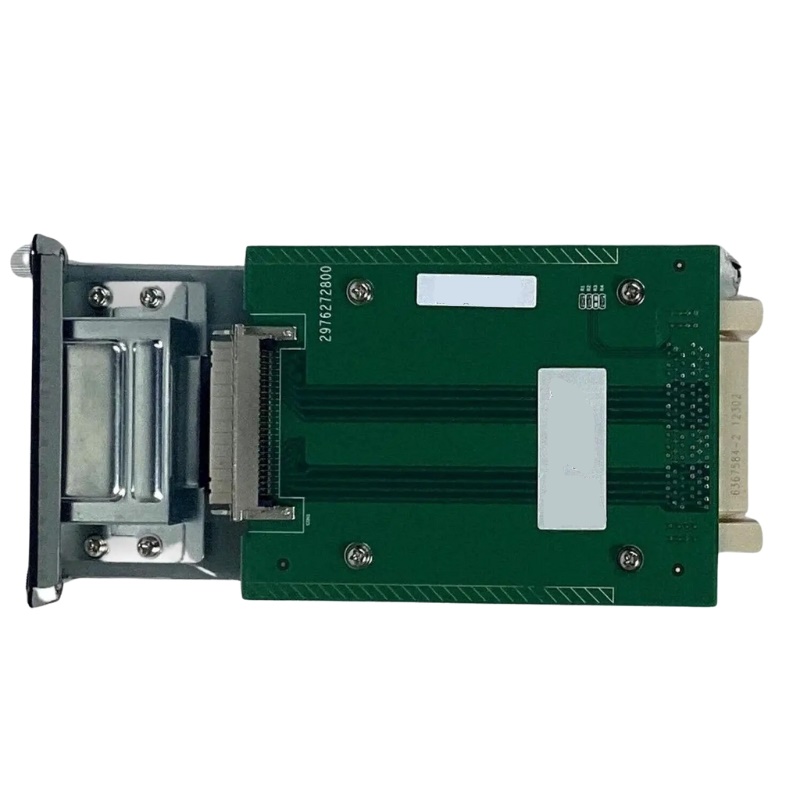
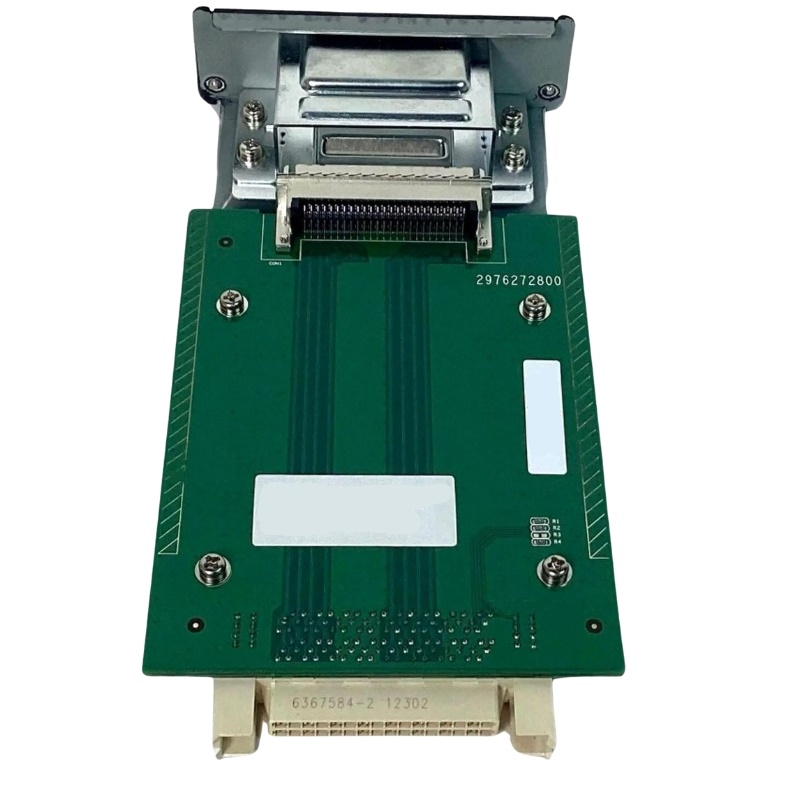
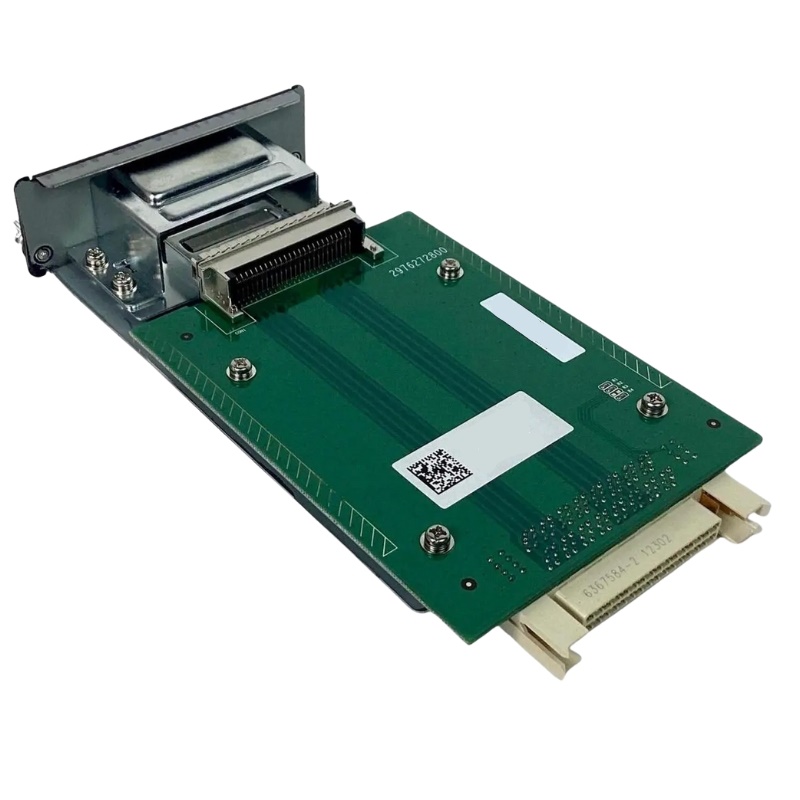
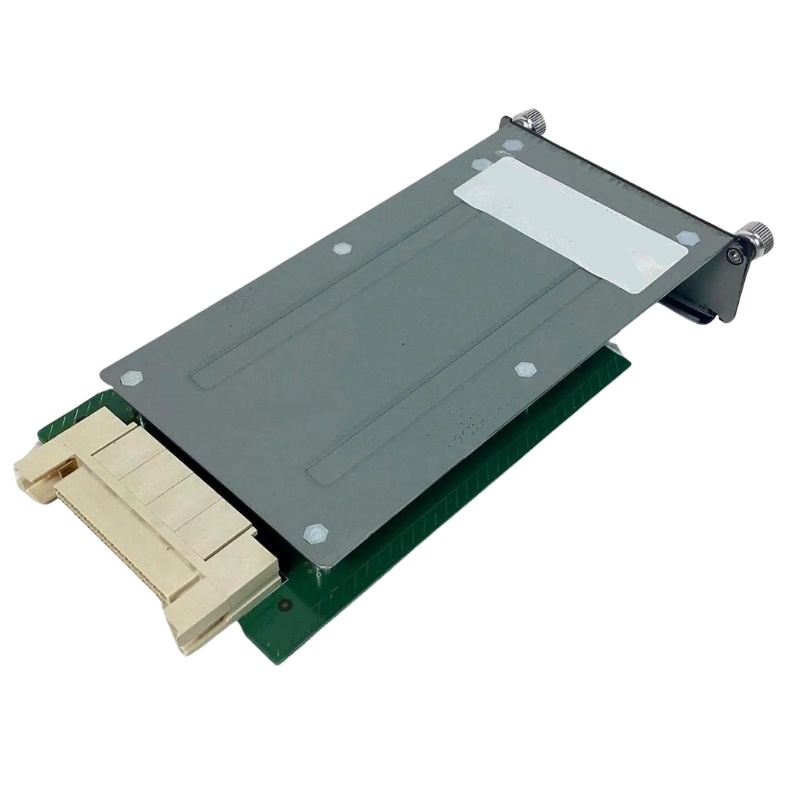
Dell FF3PC 1 Port and 24 GBPS Force10 with Stacking Module. Excellent Refurbished with 1 year replacement warranty. Call
The Dell FF3PC stacking module is a high-performance network expansion component designed for Force10 switch environments. Built for scalability and seamless interconnection, this module enhances switching capacity through fast stacking capabilities and reliable internal integration.
The Dell FF3PC 1 Port and 24 GBPS Force10 with Stacking Module represents a specialized category of high-performance networking hardware designed for scalable enterprise and data center switching environments. Built to enhance modular switching capabilities, this category focuses on delivering ultra-efficient stacking performance combined with predictable throughput behavior, making it suitable for organizations that require consistent network expansion without compromising latency or stability. Within modern IT infrastructures, especially those managed under enterprise-grade requirements, this type of switching module plays a crucial role in maintaining seamless interconnectivity between multiple chassis systems while preserving deterministic data flow.
As part of the broader networking portfolio developed under the FF3PC Force10-based stacking module category emphasizes integration, scalability, and operational resilience. It is engineered for environments where bandwidth demand is continuously increasing and where traditional single-switch architectures are no longer sufficient. The 24 Gbps signaling capability ensures that stacked switch systems maintain high-speed internal communication, effectively reducing bottlenecks that could otherwise degrade performance in multi-switch deployments.
The Dell FF3PC 1 Port and 24 GBPS Force10 with Stacking Module category is not simply a hardware component classification; it is an architectural enabler for distributed switching frameworks. It allows multiple switches to function as a unified logical system, simplifying management while increasing aggregate throughput and redundancy. This makes it especially valuable in environments where uptime, predictable performance, and scalable architecture are essential requirements.
The engineering foundation of the Dell FF3PC 1 Port and 24 GBPS Force10 with Stacking Module is rooted in high-efficiency packet switching design principles. The Force10 architecture is known for its emphasis on low-latency forwarding, non-blocking fabric design, and deterministic traffic handling. These characteristics are particularly important in stacked configurations, where multiple switches must behave as a single logical entity without introducing inconsistencies in forwarding tables or control plane synchronization.
At the core of this category lies the 24 Gbps stacking fabric, which acts as a high-speed interconnect backbone between switches. This backplane is engineered to ensure that traffic between stacked units flows with minimal delay and without contention under normal operating conditions. The design ensures that data packets traversing between switches are handled with the same priority and efficiency as intra-switch forwarding operations, effectively extending the internal switching fabric across multiple physical units.
The 24 Gbps architecture also plays a key role in maintaining consistent throughput during peak loads. By distributing traffic across multiple pathways within the stack, the system reduces congestion risks and ensures that performance remains stable even under high utilization scenarios. This makes it particularly suitable for data center environments where traffic patterns are unpredictable and often burst-intensive.
The stacking module integration within the Dell FF3PC category is designed to be both physically compact and logically robust. The module serves as the communication bridge between individual switches, enabling them to exchange synchronization data, routing updates, and forwarding decisions in real time. This tight integration ensures that all switches within the stack maintain a unified operational state.
From a design perspective, stacking modules must maintain signal integrity over high-speed transmission channels. The engineering approach used in this category minimizes signal degradation through optimized circuit design, shielding techniques, and efficient connector interfaces. This ensures that stacking performance remains stable even in densely packed rack environments where electromagnetic interference may otherwise be a concern.
The hardware specifications of the Dell FF3PC 1 Port and 24 GBPS Force10 with Stacking Module category are optimized for enterprise-grade performance. The module is designed to handle continuous high-throughput communication between stacked switches while maintaining low latency and high reliability. Its architecture supports efficient data distribution across the switching fabric, enabling seamless scaling of network resources.
The single-port configuration of the module is engineered for dedicated stacking communication rather than general-purpose data transmission. This design decision ensures that all available bandwidth is reserved for inter-switch coordination and high-speed synchronization. The signal handling mechanisms are optimized to reduce jitter and latency variation, which is critical in maintaining consistency across stacked units.
The port operates with precise timing alignment to ensure that data packets are transmitted and received in a predictable sequence. This is especially important in environments where multiple switches must process identical traffic flows simultaneously without divergence in forwarding behavior.
Throughput optimization in the 24 Gbps stacking layer is achieved through a combination of hardware-level buffering, intelligent traffic scheduling, and efficient load distribution. The system ensures that no single link within the stacking fabric becomes a performance bottleneck by balancing traffic dynamically across available internal channels.
This optimization is particularly beneficial in virtualization-heavy environments, where multiple virtual machines generate concurrent network requests. By maintaining a stable and predictable throughput layer, the stacking module ensures that overall network performance remains consistent even under heavy computational workloads.
Scalability is one of the defining characteristics of the Dell FF3PC 1 Port and 24 GBPS Force10 with Stacking Module category. The ability to expand network capacity without redesigning the entire switching infrastructure makes this module essential for growing organizations. Stacking enables multiple switches to function as a single logical unit, which simplifies scaling while preserving operational continuity.
Horizontal scaling is achieved by adding additional switches to an existing stack, which automatically integrates them into the unified switching system. This approach eliminates the need for complex reconfiguration and significantly reduces downtime during expansion. The stacking module ensures that new units synchronize their control planes and forwarding tables with existing members seamlessly.
This modular expansion approach is particularly valuable in environments where network demand grows incrementally rather than predictably. Organizations can deploy additional switching capacity as needed without disrupting existing network operations.
Latency management is a critical consideration in stacked switching environments. The Dell FF3PC 1 Port and 24 GBPS Force10 with Stacking Module minimizes inter-switch latency by using a high-speed dedicated communication channel that bypasses traditional routing overhead. This ensures that packet forwarding between switches occurs with minimal delay.
In multi-switch environments, maintaining consistent latency across all nodes is essential for applications such as real-time analytics, financial transaction processing, and high-performance computing clusters. The stacking architecture ensures that latency remains uniform regardless of which switch in the stack processes the traffic.
Compatibility is a key advantage of the Dell FF3PC 1 Port and 24 GBPS Force10 with Stacking Module category. It is designed to integrate seamlessly within existing networking ecosystems, particularly those built around Dell networking infrastructure. This ensures that organizations can adopt stacking technology without requiring a complete overhaul of their existing hardware environment.
Within the broader ecosystem of networking solutions, the Force10 stacking module aligns with standardized management protocols and hardware interfaces. This alignment ensures that administrators can manage stacked switches using unified tools and interfaces, reducing operational complexity and improving network visibility.
The ecosystem compatibility also extends to interoperability with various switching layers, enabling hybrid deployments where stacked and standalone switches coexist within the same network architecture.
The deployment flexibility of the Dell FF3PC 1 Port and 24 GBPS Force10 with Stacking Module category makes it suitable for a wide range of industry applications. Its ability to support high-density switching environments ensures that it can be effectively deployed in both enterprise and large-scale data center infrastructures.
In high-density server environments, the stacking module enables efficient communication between multiple access-layer switches. This ensures that server clusters maintain high-speed connectivity while minimizing network congestion. The stacked architecture allows administrators to manage large numbers of server connections as a single logical system.
Cloud computing environments benefit significantly from the scalability and low-latency characteristics of the stacking module. Virtualization clusters rely on consistent network performance to support workload distribution, live migration, and storage synchronization. The 24 Gbps stacking backbone ensures that these operations occur without network-induced delays.
In enterprise campus deployments, the stacking module simplifies network design by reducing the need for complex hierarchical switching architectures. Multiple access switches can be unified into a single stack, streamlining configuration and improving fault tolerance across distributed office environments.
Reliability is a central design principle of the Dell FF3PC 1 Port and 24 GBPS Force10 with Stacking Module category. The system is engineered to maintain continuous operation even in the event of partial hardware failure within the stack. This ensures that network availability remains high even under adverse conditions.
Proper configuration is essential for maximizing the performance of the Dell FF3PC 1 Port and 24 GBPS Force10 with Stacking Module. Network optimization strategies focus on balancing traffic, minimizing congestion, and ensuring efficient use of available bandwidth across the stack.
Quality of Service configurations allow administrators to prioritize critical traffic types within the stacked environment. This ensures that latency-sensitive applications receive preferential treatment, maintaining performance consistency even during peak usage periods.
Security is integrated into the architecture of the Dell FF3PC 1 Port and 24 GBPS Force10 with Stacking Module through multiple layers of protection. These include access control mechanisms, traffic filtering, and segmentation strategies designed to minimize exposure to unauthorized access.
Access control mechanisms ensure that only authorized devices and users can interact with the network stack. Combined with segmentation strategies, this creates a controlled environment where traffic flows are tightly regulated and monitored.
Energy efficiency is an important consideration in the design of the Dell FF3PC 1 Port and 24 GBPS Force10 with Stacking Module category. The system is engineered to deliver high performance while minimizing power consumption and thermal output.
Efficient power distribution ensures that the stacking module operates reliably under continuous load conditions. The hardware design optimizes voltage regulation and power delivery pathways to minimize energy loss.


 Contact Us
 Information
 Catalog
 Solid State Drives (SSD)
 Network Switches
 Hard Disk Drives
 HBA & Controllers
 PC & Servers
 PC & Server Memory
 CPU & Processors
 Network Routers
 Power Supplies
 Tape Drives & Libraries
 Network Devices
 Computer & Network Cables