(7% discount is applied at checkout)
Cart is empty
Your go-to destination for cutting-edge server products
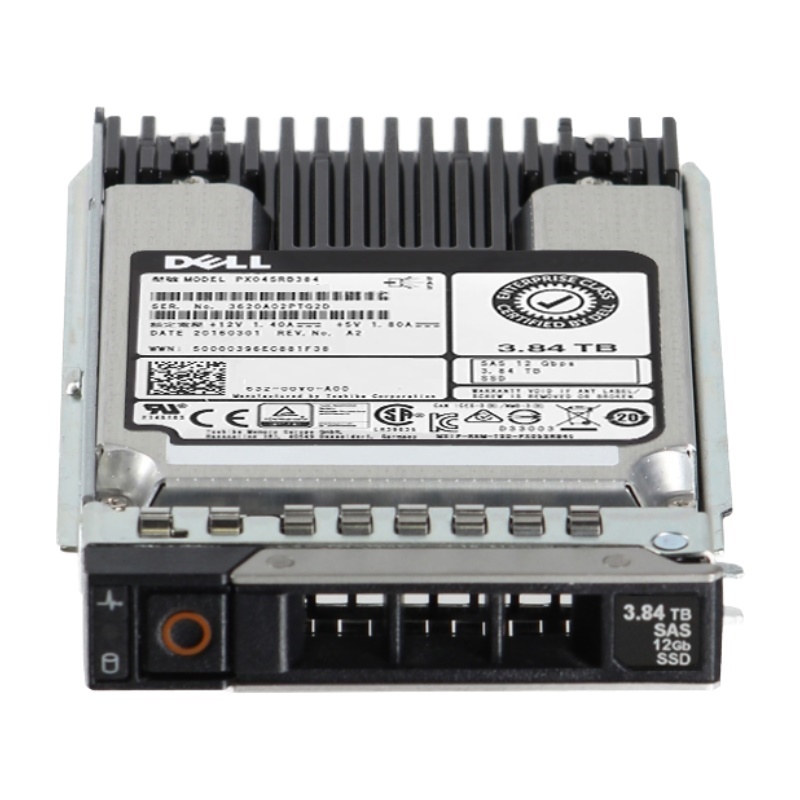


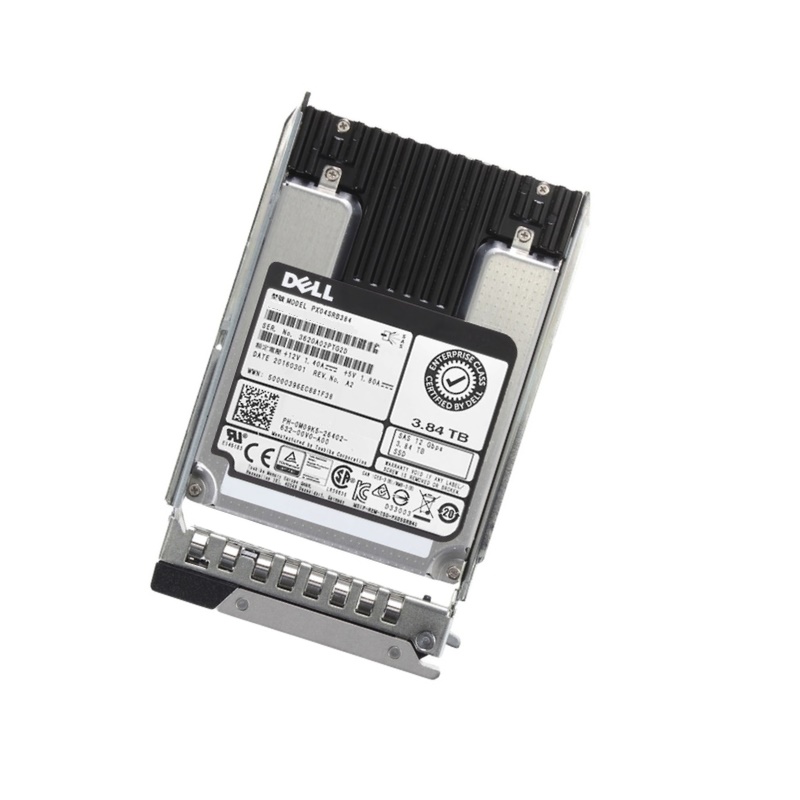
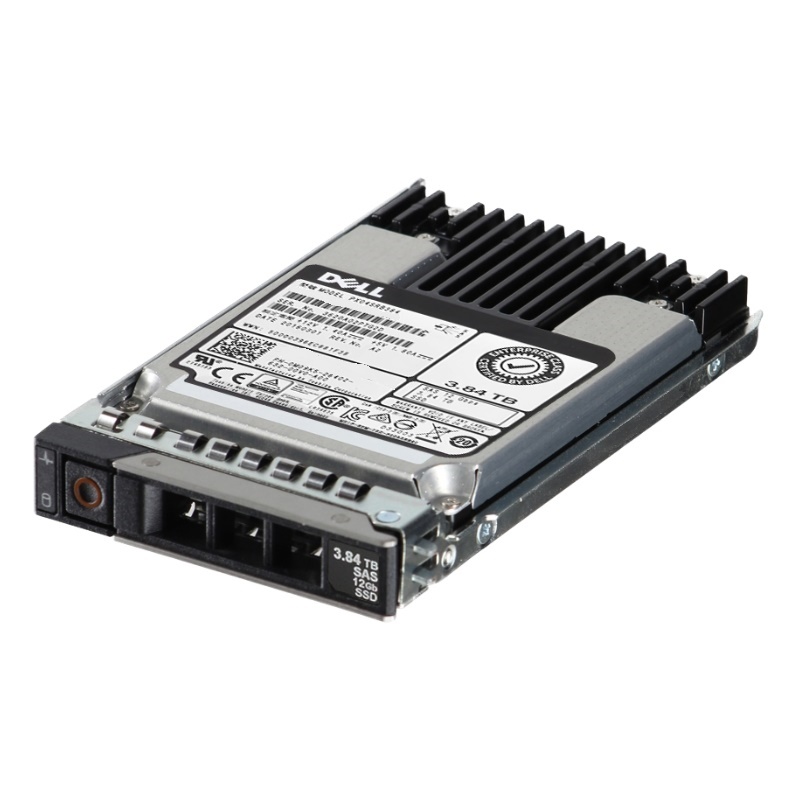
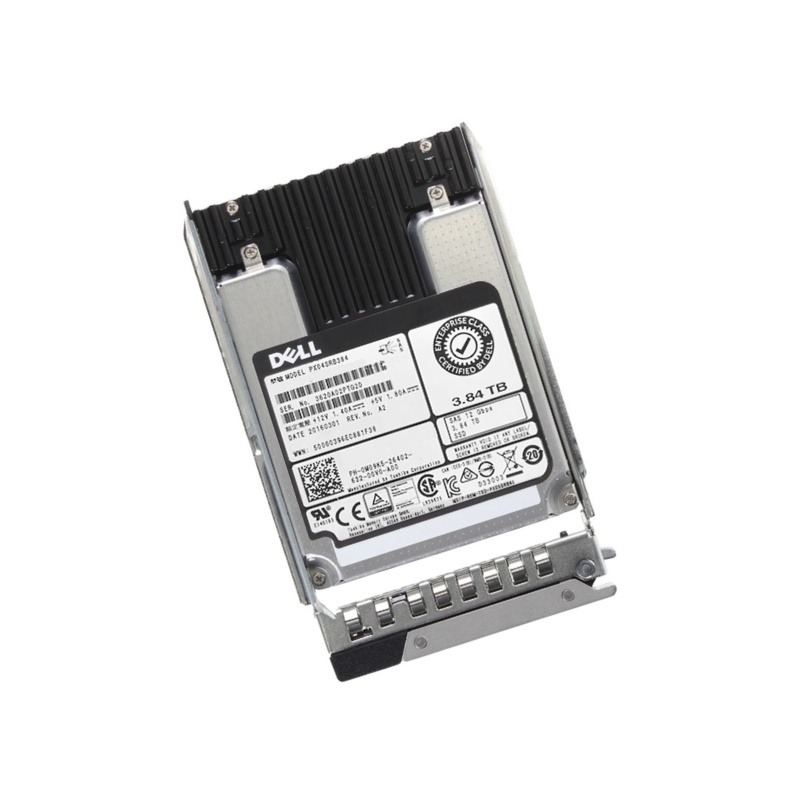
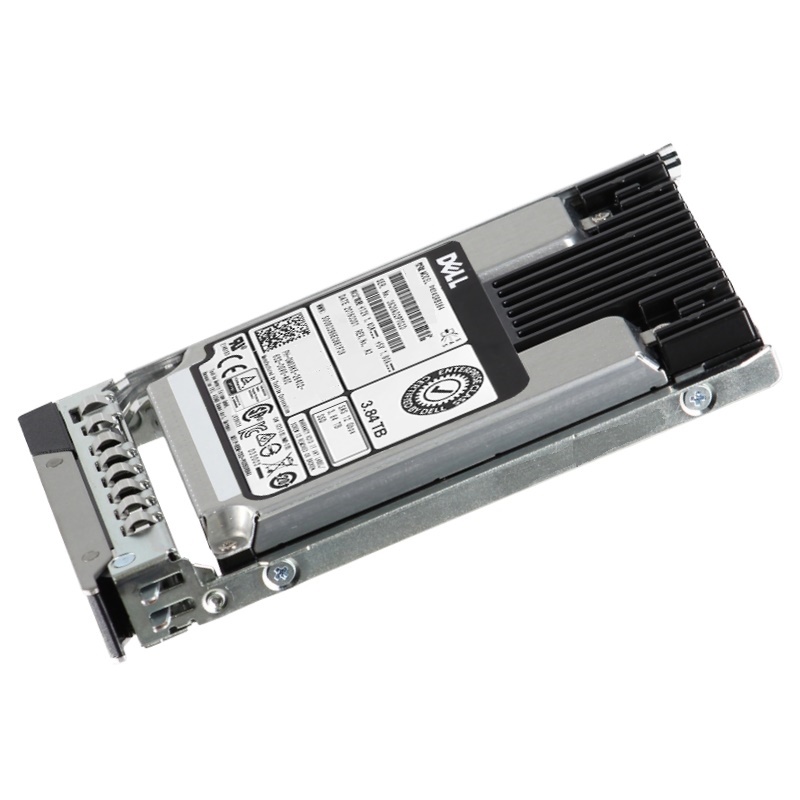
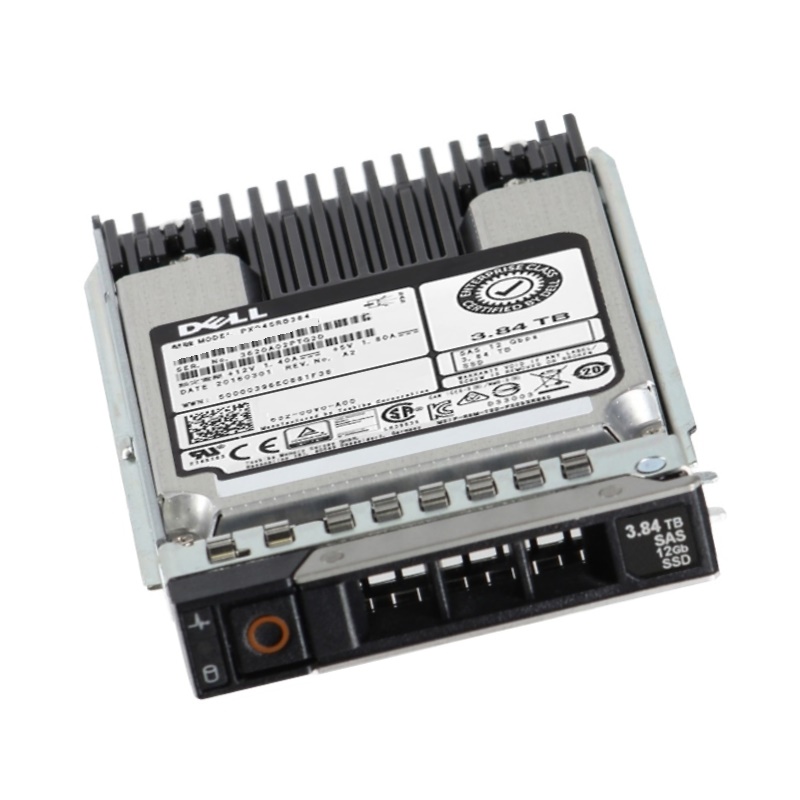
Dell FGDVM Internal SSD 3.84TB SAS 12GBPS. Excellent Refurbished with 1 year replacement warranty
The DELL FGDVM 3.84TB Read-Intensive TLC SAS 12Gbps 512e 2.5-inch Internal Solid State Drive is engineered for outstanding efficiency and seamless performance in 14th generation Dell PowerEdge servers. This enterprise-grade SSD delivers reliable storage capacity with advanced read-intensive endurance, making it a dependable choice for data-driven environments that demand speed, stability, and scalability.
The DELL FGDVM 3.84TB SAS 12Gbps Read-Intensive SSD offers a powerful balance of performance, reliability, and scalability. Built for Dell PowerEdge servers, this enterprise-grade solution is an excellent choice for organizations looking to improve efficiency in mission-critical IT environments while maintaining dependable data access speed and endurance.
The FGDVM Dell 3.84TB SAS 12Gbps Internal SSD represents a high-capacity, enterprise-class storage solution engineered for demanding server and storage array environments. Designed to exploit the enterprise-grade SAS 12Gbps interface, this drive combines substantial usable capacity with advanced flash management, latency control, and durability features tailored for mixed and read/write intensive workloads. The 3.84 terabyte capacity positions this SSD as a mid-to-upper tier option for data center architects seeking to consolidate capacity without sacrificing the deterministic performance and reliability that mission-critical applications require. As an internal drive, it integrates with established Dell server platforms and validated storage enclosures, enabling predictable behavior in clustered and scale-out topologies while supporting enterprise lifecycle, firmware, and support practices.
This SSD utilizes the SAS 12Gbps protocol, offering full-duplex communication and enterprise-level command sets that provide robust error recovery, multi-pathing capability, and compatibility with SAS backplanes and HBA/RAID controllers. The physical form factor is optimized for internal rack and blade servers: the drive’s mechanical and electrical design adheres to Dell’s internal mounting and hot-swap carrier conventions, ensuring secure fitment and proper thermal conduction in dense rack scenarios. Because SAS supports dual-port attachment in many configurations, the FGDVM model can be used in high-availability topologies where redundant connectivity is required.
At the heart of the 3.84TB drive sits enterprise-grade NAND flash managed by an advanced controller that focuses on longevity, error correction and consistent latency. The controller implements sophisticated wear-leveling algorithms, powerful BCH or LDPC error-correcting code, and firmware-controlled background operations including garbage collection and bad block management. Depending on SKU variations, the drive may include onboard DRAM cache or DRAM-less designs with host memory buffer (HMB) support; the specific trade-offs between DRAM and DRAM-less architectures influence startup performance, sustained throughput under mixed workloads, and the drive’s price-performance ratio.
Enterprise deployments demand resilience in unexpected power events. The FGDVM Dell 3.84TB SAS SSD is engineered with metadata protection strategies which can include on-board capacitive elements or firmware techniques to ensure mapping tables and critical metadata are preserved during sudden power loss. Additionally, end-to-end data protection features are implemented to protect against silent data corruption by ensuring checksum verification from host to NAND and back through the controller pipeline. These mechanisms help maintain data integrity for enterprise databases, virtual machines, and storage arrays where silent corruption would be unacceptable.
Because the FGDVM leverages SAS 12Gbps, sequential read and write throughput can exceed SATA-based limits, allowing higher sustained streaming performance when the host architecture supports it. Random I/O performance, measured in IOPS (input/output operations per second), is a critical metric for transactional systems, database workloads, and virtualization platforms. The drive’s performance profile aims to deliver low-latency random reads and consistent write behavior under enterprise queue depths, making it well-suited for mixed workload patterns that combine small-block random operations with larger sequential transfers for logging, snapshots or backup streaming.
Latency determinism is one of the most valuable attributes in enterprise SSDs. The FGDVM product line emphasizes minimized average latency and tight worst-case (tail) latency control through controller-level QoS mechanisms, command prioritization, and background task scheduling that avoids impacting foreground I/O. For environments such as OLTP databases, real-time analytics, and virtualization hosts, predictable response times are often more valuable than peak throughput numbers.
Out-of-box performance is often optimistic; steady-state behavior after the drive is exercised and flash blocks have been partially used will define realistic expectations. Vendors often tune over-provisioning, background garbage collection, and IO scheduling to optimize steady-state throughput. When benchmarking or designing SLAs, measure the FGDVM SSD under realistic duty cycles and queue depths to capture performance after the drive reaches equilibrium under your specific workload.
Endurance for enterprise flash is typically expressed as Terabytes Written (TBW) or drive writes per day (DWPD) over the warranty period. The 3.84TB capacity and the chosen NAND type influence TBW; enterprise-grade NAND and controller firmware aim to strike a balance between endurance and cost. For sustained mixed workloads, plan lifecycle calculations using expected daily write volumes to estimate replacement timelines and budget for spares.
Manufacturers provide Mean Time Between Failures (MTBF) figures derived from accelerated testing. While MTBF is a statistical metric rather than a single-drive guarantee, it gives system designers a baseline for availability planning and informs decisions regarding redundancy, hot spare policies, and spare inventory levels. The FGDVM model is designed to meet enterprise MTBF standards suitable for deployment in clusters and storage arrays.
The drive exposes S.M.A.R.T. telemetry and vendor-specific health attributes that allow monitoring systems to detect wear, temperature anomalies, power cycle counts, and error rates. Integrating these metrics into a monitoring stack enables predictive maintenance, automated alerts for pre-failure indicators, and better-informed replacement policies that prioritize minimizing unplanned downtime and rebuild stress on arrays.
In hyperconverged and virtualized environments, the FGDVM 3.84TB SAS SSD can serve as primary VM storage for workloads that demand a combination of capacity and consistent IOPS. The drive’s capacity allows consolidation of multiple VMs per host while SAS connectivity and enterprise controller features maintain QoS under multi-tenant and bursty access patterns. In addition, dual-port SAS models can be utilized in clustered hypervisor architectures that require shared-disk access and multipathing.
Transactional databases and application servers often benefit from SSD tiers that reduce query latency and transaction times. The 3.84TB size is large enough to hold hot-table partitions or frequently accessed indexes, enabling architects to reduce the working set on higher-latency HDD tiers. Using the drive as an acceleration tier can also reduce the number of backend HDD spindles required, simplifying infrastructure and lowering power consumption.
Storage arrays can use these SSDs in hybrid configurations where a flash tier complements a large-capacity HDD tier. The SSDs serve as tiering or cache devices for frequently accessed data, giving applications faster access while preserving overall capacity economics. Caching algorithms that intelligently promote and evict objects based on access patterns can maximize the effectiveness of these drives in array-level or software-defined storage deployments.
Large-scale analytics platforms and search index servers, which frequently perform random reads across large datasets, gain measurable improvements from a SAS-based SSD tiering approach. Index shards and intermediate query caches stored on FGDVM drives accelerate lookups and reduce query latencies during high concurrency peaks.
Before deployment, verify compatibility with the target server models, backplanes, and RAID or HBA controllers. SAS 12Gbps offers backward compatibility with earlier SAS generations, but to achieve full performance the full SAS 12Gbps stack must be supported. Consult Dell compatibility matrices and controller vendor notes for known interactions, validated firmware pairs and recommended settings to ensure stable operation.
Installation into a hot-swap carrier should follow vendor-prescribed seating and caddy orientation to maintain airflow and electrical contact integrity. Hot-swap procedures should include validating that write caches are flushed, that the operating system or RAID controller recognizes safe removal, and that the replacement drive matches required firmware versions to avoid mismatch issues in arrays. Periodic cleaning of backplane contacts and inspection of caddies prevents intermittent connectivity which can masquerade as drive failures.
Firmware updates can bring performance improvements, security fixes, and increased reliability, yet they should be applied carefully. Use a staged approach: validate updates on non-production hardware, review release notes for known regressions, ensure a tested rollback procedure exists, and schedule updates during defined maintenance windows to avoid disruption. Keep firmware parity across spares and active drives to reduce integration surprises during replacement.
Selecting the appropriate RAID level depends on trade-offs between redundancy, write amplification during rebuilds, and read/write performance balance. RAID 10 provides strong performance and redundancy at the cost of raw capacity. RAID 6 offers higher capacity efficiency with additional parity at the expense of more complex rebuild operations. For mixed I/O patterns, ensure controller cache settings and stripe widths are tuned to your workload’s dominant I/O sizes to avoid unnecessary overhead during common operations.
Tuning the filesystem and mount options can greatly reduce unnecessary writes and prolong flash life. Consider disabling or reducing atime updates where permissible, adjusting journal configurations for heavy write loads, and enabling discard (TRIM) only if the entire I/O path supports it. On virtualized platforms, coordinate with hypervisor settings to avoid double-caching or redundant write amplification between guest and host layers.
While OEMs ship drives with factory-set over-provisioning, it can be advantageous to reserve additional host-side free capacity for write amplification mitigation under heavy write bursts. This practice helps maintain sustained performance and reduces the frequency of intensive background garbage collection cycles which can otherwise affect foreground latency.
Many enterprise SAS SSDs support self-encrypting drive (SED) capabilities, enabling hardware AES encryption for data-at-rest protection. Integrating SED with enterprise key management solutions (KMIP-compliant) ensures secure key lifecycle management, simplifies decommissioning workflows and helps meet regulatory controls. When used correctly, hardware encryption provides a robust defense against data exposure if physical media are lost or stolen.
When retiring or repurposing drives, use vendor-supported secure erase utilities to ensure data cannot be recovered. For regulated sectors, follow documented, auditable procedures consistent with NIST or local standards for sanitization and maintain chain-of-custody records. Logical deletion or simple formatting is not sufficient for compliance where regulated data must be irrecoverably destroyed.
Prefer drives that use signed firmware updates and supply chain controls to reduce the risk of unauthorized modification. Implement internal policies to verify firmware signatures and to track update provenance, particularly for drives used in regulated or sensitive environments.
NVMe solutions provide higher raw bandwidth and lower protocol overhead, making them attractive for ultra-low-latency, high-concurrency workloads. However, SAS 12Gbps SSDs remain compelling in environments that rely on existing SAS infrastructure, require dual-port capabilities, or where management and lifecycle integration with SAS backplanes and HBA/RAID controllers is advantageous. The FGDVM 3.84TB SSD can deliver a more straightforward integration path while offering strong performance for many enterprise workloads.
Intermittent connectivity often traces back to carrier alignment, backplane particulate contamination, or worn connectors. Regular physical audits, preventive cleaning and carriage inspections can help prevent hard-to-diagnose intermittent faults. Replace carriers that show mechanical wear to protect backplane connectors and ensure consistent electrical contact.


 Contact Us
 Information
 Catalog
 Solid State Drives (SSD)
 Network Switches
 Hard Disk Drives
 HBA & Controllers
 PC & Servers
 PC & Server Memory
 CPU & Processors
 Network Routers
 Power Supplies
 Tape Drives & Libraries
 Network Devices
 Computer & Network Cables