(7% discount is applied at checkout)
Cart is empty
Your go-to destination for cutting-edge server products
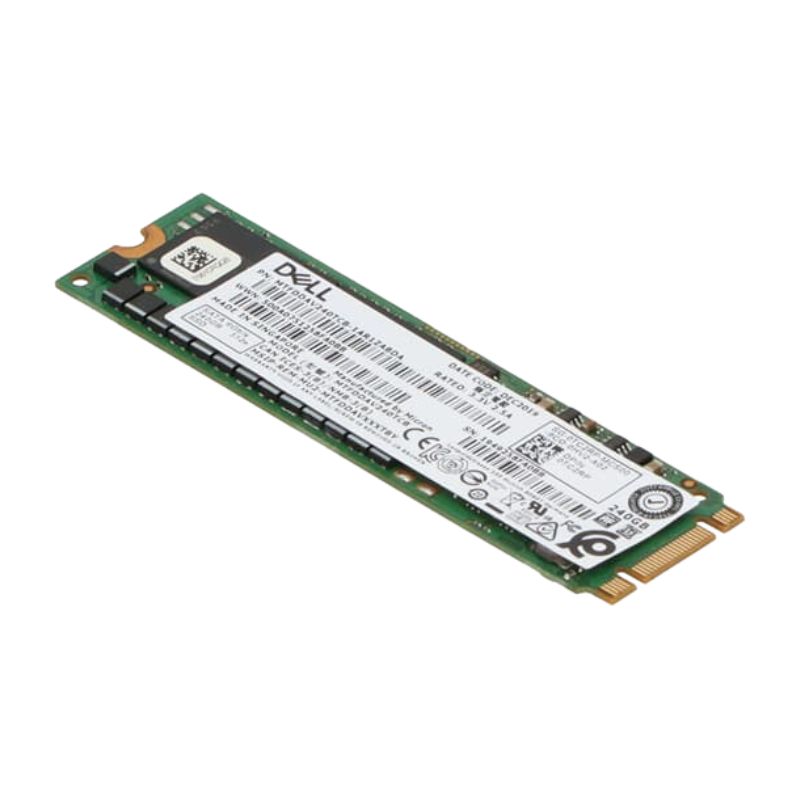


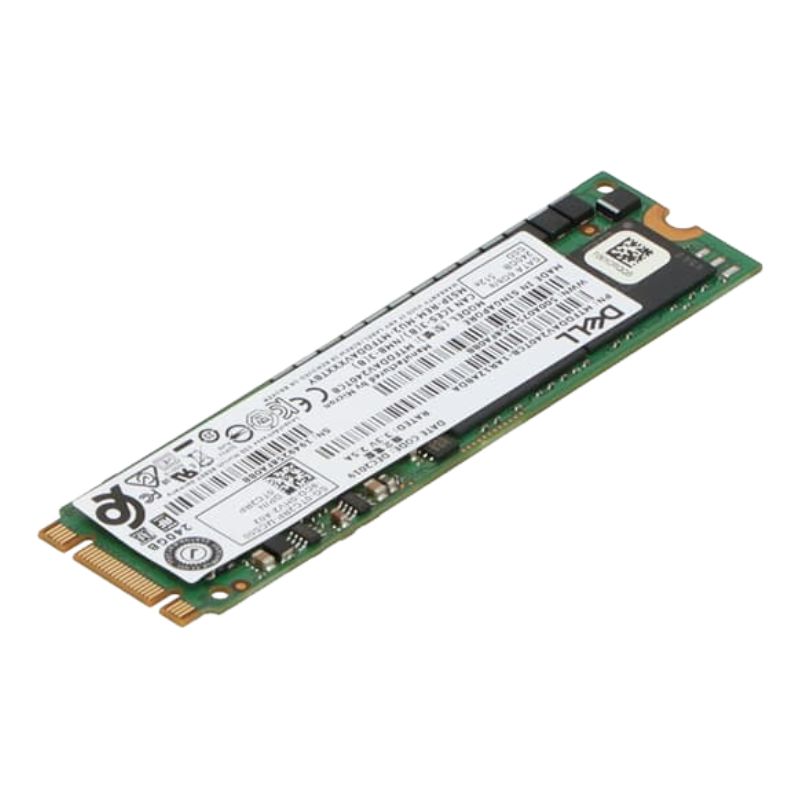
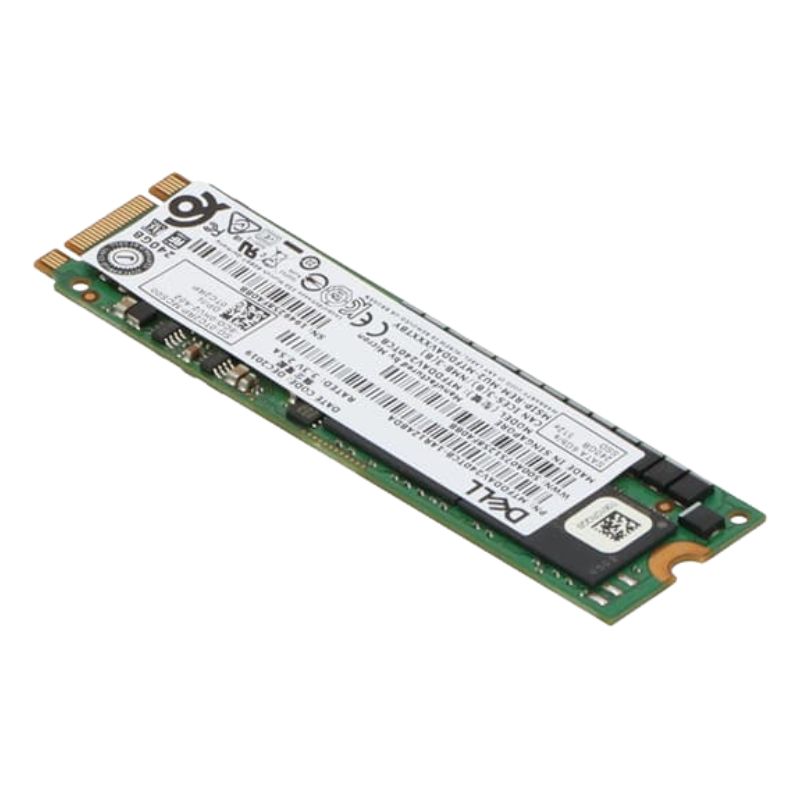
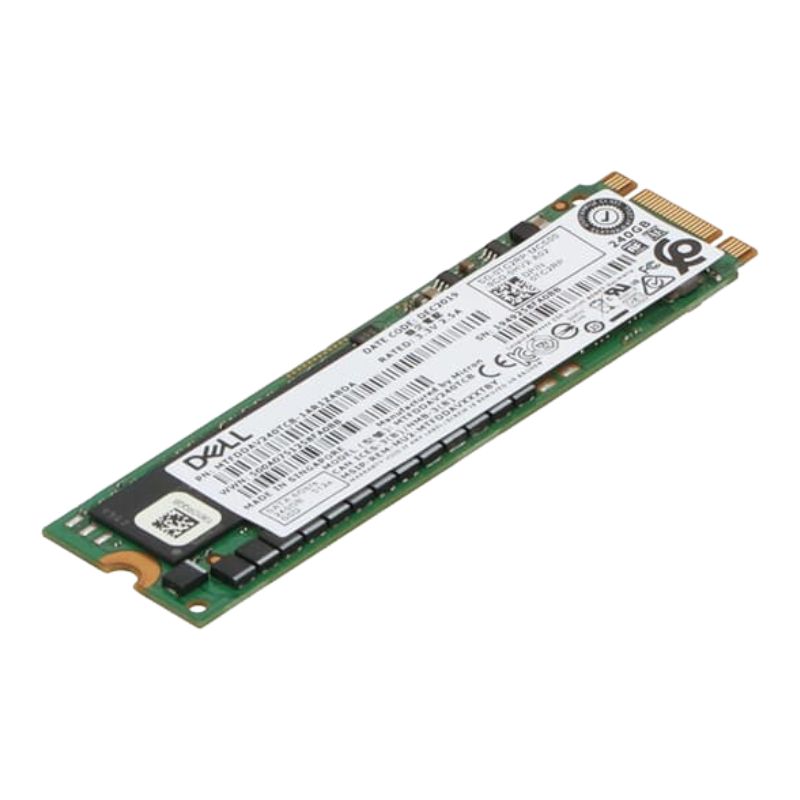
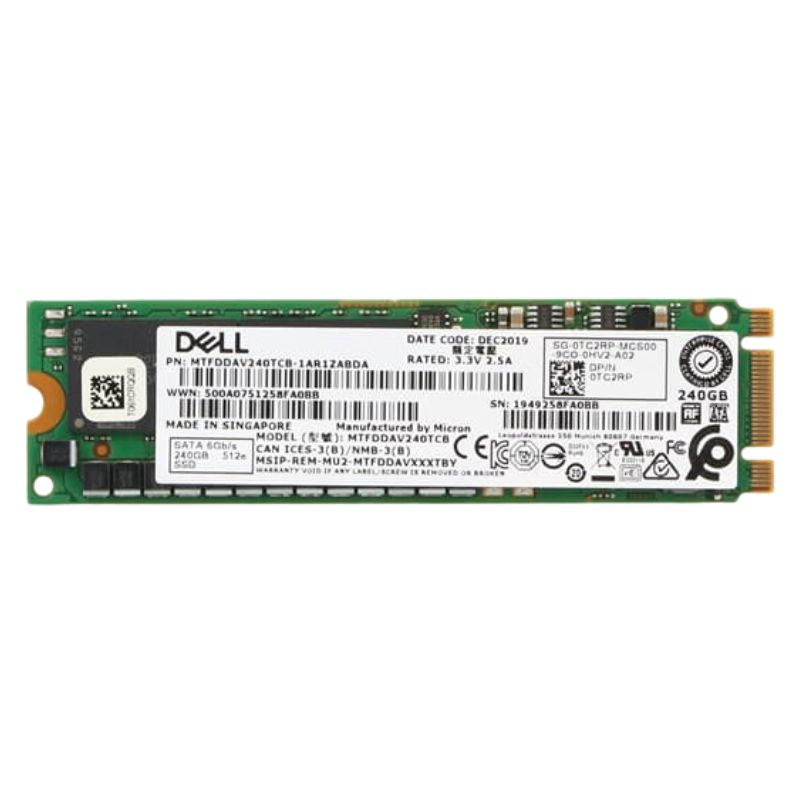
Dell FHN7X 240GB SATA 6GBPS M.2 Card 64-layer Triple Level Cell Tlc 3d Nand Solid State Drive. Excellent Refurbished with 1-Year Replacement Warranty
The Dell FHN7X solid state drive delivers reliable storage performance using advanced 3D NAND flash technology. Designed in a compact M.2 card format, this SSD offers fast data access while maintaining energy efficiency for modern computing environments. Built with advanced 3D NAND architecture, this compact M.2 drive enhances system responsiveness while maintaining long-term durability.
In the ever-evolving landscape of data storage, the shift from traditional hard disk drives (HDDs) to solid-state drives (SSDs) has been revolutionary. Within this paradigm, the Dell FHN7X 240GB SATA 6Gbps M.2 SSD emerges as a pivotal component, expertly balancing capacity, speed, and cutting-edge NAND technology. This category encompasses drives designed for users seeking a reliable storage upgrade for laptops, desktops, or specific enterprise applications, leveraging the M.2 form factor with the ubiquitous SATA interface. It represents a critical intersection of accessibility and modern engineering, providing a significant performance leap over HDDs without requiring a motherboard with the latest PCIe NVME SSD.
Offering 240GB of solid-state storage, this drive is crafted using Triple Level Cell flash technology combined with 64-layer 3D NAND. This structure improves data density while supporting efficient performance for daily operations.
The M.2 form factor, formerly known as Next Generation Form Factor (NGFF), is a cornerstone of modern compact computing. The Dell FHN7X utilizes this specification, which offers distinct advantages over older 2.5-inch SATA SSDs.
M.2 drives are characterized by a compact, card-like design, typically 22mm wide. The length can vary, with common sizes being 42mm, 60mm, 80mm, and 110mm. The Dell FHN7X 240GB model typically conforms to the M.2 2280 specification—22mm wide and 80mm long, the most common size for client devices. Crucially, M.2 slots and drives use "keying" notches to prevent incompatible drives from being inserted into slots they cannot functionally use. This drive uses a B+M key configuration.
By adopting the M.2 form factor, this SSD eliminates the need for power and data cables, enabling cleaner system builds, improved airflow, and easier installation in space-constrained devices like ultra-thin laptops and small form factor PCs. It mounts directly onto the motherboard, reducing clutter and potential points of connection failure.
While housed in an M.2 form factor, the Dell FHN7X communicates via the Serial ATA (SATA) Revision 3.0 interface, colloquially known as SATA 6Gbps. This interface defines the maximum theoretical bandwidth limit for this drive category.
It is paramount to understand that M.2 is a form factor, not an interface. The two primary interfaces used by M.2 SSDs are SATA (like this drive) and NVMe (over PCIe). NVMe drives offer significantly higher sequential read/write speeds, often exceeding 3,000 MB/s. The Dell FHN7X, as a SATA drive, is constrained by the SATA 6Gbps limit, which translates to a maximum theoretical throughput of approximately 600 MB/s. In real-world benchmarks, users can expect sequential read/write speeds in the range of 540-560 MB/s.
This performance tier remains exceptionally relevant. For systems with an available M.2 slot but without NVMe protocol support (common in many mid-range laptops and desktops from a few years ago), this drive is the perfect upgrade path. It delivers the full saturation of the SATA bus, combined with the physical benefits of M.2, making it ideal for:
The most technically significant aspect of the Dell FHN7X 240GB SSD is its use of 64-layer Triple-Level Cell (TLC) 3D NAND flash memory. This represents several generations of advancement over older planar (2D) NAND and other cell types like SLC (Single-Level Cell) and MLC (Multi-Level Cell). TLC NAND stores 3 bits of data per memory cell. This is a higher density than SLC (1 bit/cell) and MLC (2 bits/cell), making it more cost-effective for consumer-grade capacities like 240GB. However, storing more bits per cell introduces complexity in reading and writing data, which can impact performance and endurance relative to SLC/MLC.
The NAND flash is managed by an onboard controller, which is the "brain" of the SSD. While the exact controller in the Dell FHN7X may vary by manufacturing lot, its primary functions are critical. Many SSDs in this class also include a DRAM cache. This is a small amount of volatile memory (e.g., 256MB for a 240GB drive) that acts as a fast lookup table for the drive's mapping data (FTL - Flash Translation Layer). The presence of a DRAM cache significantly improves random read/write performance and overall latency compared to DRAM-less designs, contributing to the consistent responsiveness expected from a quality SSD like the Dell FHN7X.
The specific combination of features in the Dell FHN7X 240GB SSD defines its optimal placement in the storage ecosystem. It is not a flagship performance drive for 4K video editing, but rather a highly competent and reliable workhorse for defined use cases. In a modern desktop with an NVMe primary drive, this SSD can serve as excellent secondary storage. Its speed is more than sufficient for holding a game library, where it will drastically reduce load times compared to an HDD, or for storing active project files and media libraries that benefit from quick access.
The presence of both B and M key notches indicates interface compatibility. This dual-key design signifies that the Dell FHN7X is designed to work in M.2 sockets configured for either SATA or PCIe x2 interfaces. However, critically, this specific drive operates exclusively on the SATA 6Gbps protocol. The physical keying ensures broad socket compatibility, but the underlying technology remains SATA. This is a vital distinction for users: an M.2 slot does not automatically mean NVMe speeds; the slot must support SATA mode for this drive to function.


 Contact Us
 Information
 Catalog
 Solid State Drives (SSD)
 Network Switches
 Hard Disk Drives
 HBA & Controllers
 PC & Servers
 PC & Server Memory
 CPU & Processors
 Network Routers
 Power Supplies
 Tape Drives & Libraries
 Network Devices
 Computer & Network Cables