(7% discount is applied at checkout)
Cart is empty
Your go-to destination for cutting-edge server products
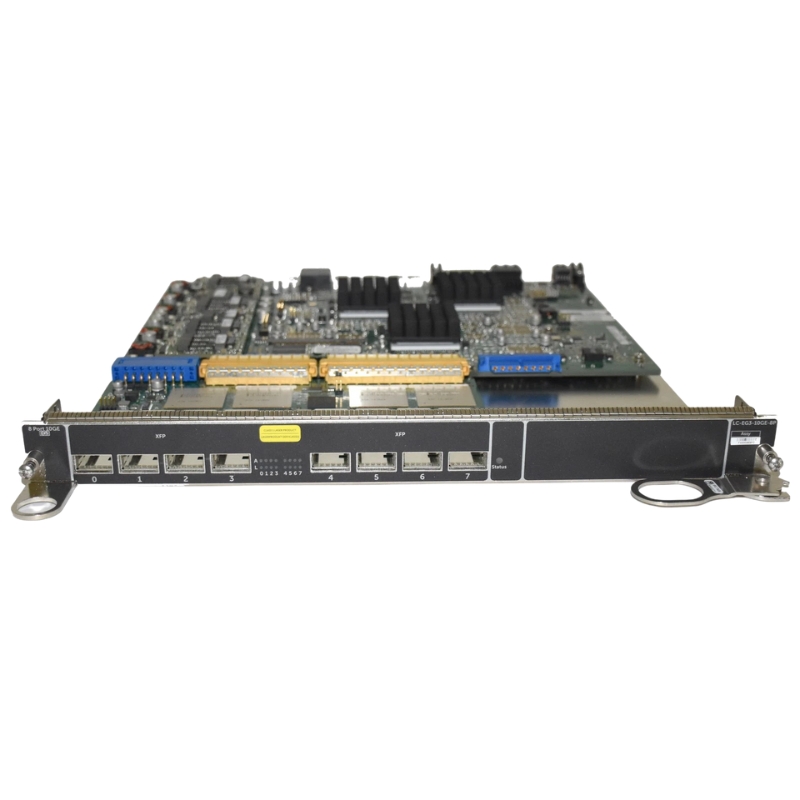


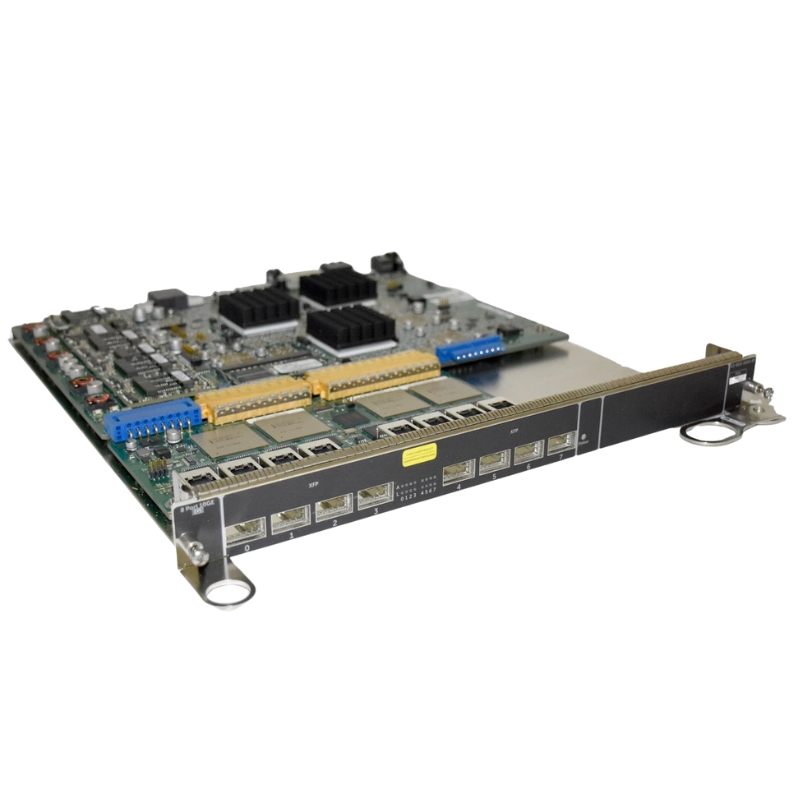
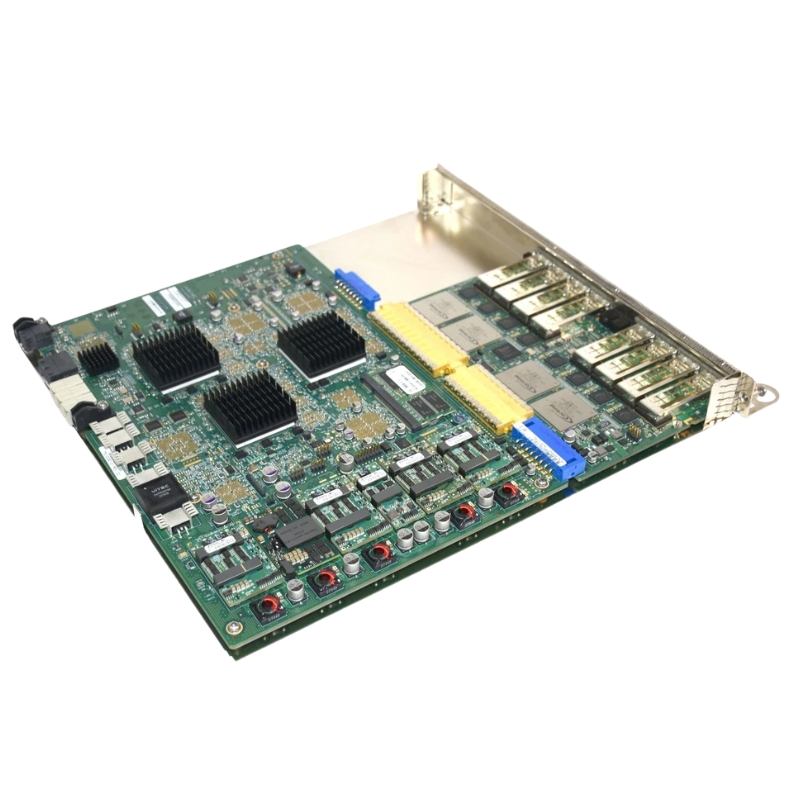
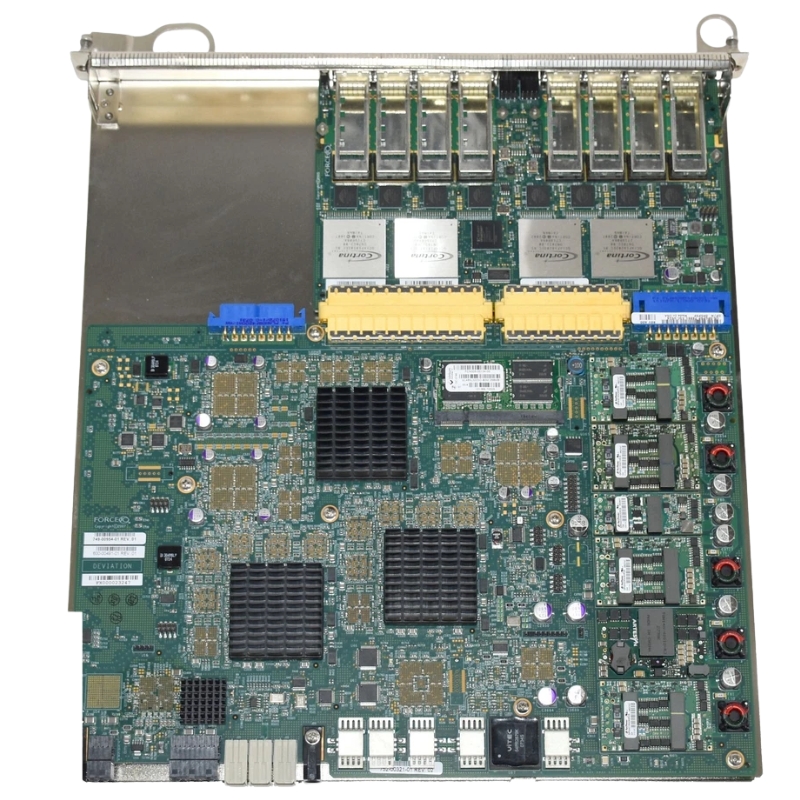
Dell F98MY Force 10 E300 8 Port 10GE EF3 Module. Excellent Refurbished with 1 year replacement warranty
The Dell F98MY Force10 E300 EF3 Module is a high-performance networking component designed to enhance data center connectivity. Built for reliability and speed, this expansion module delivers advanced 10 Gigabit Ethernet capabilities for enterprise-grade environments.
The Dell F98MY Force10 E300 8 Port 10GE EF3 Module represents a specialized category of high-performance network expansion components designed for modular switching platforms in enterprise and data center environments. This category is defined by its focus on delivering scalable 10 Gigabit Ethernet (10GE) connectivity through a compact, high-throughput line card architecture that integrates seamlessly into Dell Force10 E-Series chassis systems. As organizations continue to demand higher bandwidth, lower latency, and more flexible network topologies, modules in this category serve as critical building blocks for modern switching infrastructures that support virtualization, cloud computing, and high-performance computing workloads.
The EF3 module architecture is engineered around high-density port aggregation, enabling multiple 10 Gigabit Ethernet interfaces within a single modular slot. This allows network architects to scale bandwidth without increasing rack space consumption. The Dell F98MY Force10 E300 8 Port 10GE EF3 Module is specifically designed to optimize port density while maintaining consistent forwarding performance across all interfaces. This balance of density and performance is essential in environments where space, cooling, and power budgets are tightly constrained.
A defining characteristic of the EF3 module category is its tight integration with the chassis backplane and switching fabric. The module communicates directly with the core switching architecture of the E300 platform, ensuring that traffic flows are processed with minimal overhead. This backplane-centric design reduces bottlenecks and enables full wire-speed forwarding across all active ports. The architecture is particularly suited for environments requiring non-blocking performance, where simultaneous traffic streams must be handled without packet loss or congestion-induced delay.
The Dell F98MY Force10 E300 8 Port 10GE EF3 Module category is built around the principle of wire-speed performance. Each 10GE port is capable of handling full duplex traffic at maximum throughput, ensuring that data packets are transmitted and received without degradation under normal operating conditions. This capability is crucial for data-intensive applications such as storage replication, virtualization clustering, and real-time analytics workloads that require predictable network behavior.
Latency is a critical performance metric in high-speed networking, and EF3-based modules are optimized to minimize internal switching delays. By leveraging hardware-based forwarding mechanisms, these modules reduce reliance on CPU processing for packet handling. This results in deterministic latency profiles, which are especially important in financial trading systems, distributed databases, and latency-sensitive application architectures. The hardware forwarding pipeline ensures consistent performance even under heavy traffic loads.
The Dell F98MY Force10 E300 8 Port 10GE EF3 Module operates as part of a larger chassis-based switching ecosystem, where scalability is achieved through modular expansion rather than fixed-port limitations. The E300 chassis provides power, cooling, and switching fabric resources, while the EF3 module contributes high-speed interface capacity. This separation of concerns allows organizations to scale incrementally, adding modules as bandwidth requirements increase over time.
Modules in this category are designed to integrate with Dell Force10 network operating systems that manage configuration, routing protocols, and switching behavior. The software layer provides centralized control over VLAN configuration, link aggregation, and routing policies, ensuring that the physical module functions as part of a cohesive logical network architecture. This tight coupling between hardware and software enhances operational consistency and reduces configuration complexity.
In modern data center architectures, the Dell F98MY Force10 E300 8 Port 10GE EF3 Module is frequently deployed at the aggregation layer, where it consolidates traffic from multiple access-layer switches. Its high-density 10GE ports make it suitable for aggregating server racks, virtualization clusters, and storage arrays into a unified high-speed backbone. This reduces oversubscription ratios and improves overall network efficiency.
Within enterprise core networks, EF3 modules contribute to backbone connectivity by providing high-throughput links between distribution and core layers. Their ability to handle large volumes of east-west traffic makes them suitable for environments with heavy internal communication requirements, such as large corporate campuses, financial institutions, and research organizations.
Cloud computing environments rely heavily on scalable and resilient networking infrastructure. The EF3 module category supports these requirements by enabling rapid expansion of 10GE connectivity for virtual machine clusters and containerized workloads. The consistent performance characteristics of these modules ensure that virtualized environments maintain predictable network behavior even under dynamic workload changes.
The Dell F98MY Force10 E300 8 Port 10GE EF3 Module is designed with high availability in mind, incorporating hardware redundancy mechanisms that allow continuous operation even in the event of partial system failures. When deployed in redundant chassis configurations, these modules contribute to failover strategies that minimize downtime and ensure uninterrupted network services.
Thermal and power management are critical aspects of modular networking hardware. EF3 modules are engineered to operate within tightly controlled thermal envelopes, ensuring stable performance under sustained high-load conditions. The chassis-based power distribution system provides regulated energy delivery to each module, preventing performance degradation due to power fluctuations or overheating.
Network administrators managing the Dell F98MY Force10 E300 8 Port 10GE EF3 Module category rely on robust command-line interfaces to configure and monitor network behavior. These interfaces provide granular control over port settings, routing protocols, and traffic management policies. The structured configuration model allows administrators to implement consistent network policies across multiple modules and chassis systems.
One of the defining advantages of the Dell F98MY Force10 E300 8 Port 10GE EF3 Module category is its ability to support incremental network scaling. Organizations can expand their network capacity by adding additional modules to existing chassis infrastructure without requiring complete system replacements. This modular approach reduces capital expenditure and simplifies long-term network evolution strategies.
As additional EF3 modules are deployed, bandwidth aggregation across the switching fabric increases proportionally. This enables more efficient load distribution across network paths, reducing congestion and improving overall throughput. Advanced load balancing mechanisms ensure that traffic is evenly distributed across available links, optimizing utilization of network resources.
The Dell F98MY Force10 E300 8 Port 10GE EF3 Module category is designed for hot-swappable operation within compatible chassis systems. This allows modules to be replaced or upgraded without powering down the entire system, significantly reducing maintenance downtime. This feature is especially valuable in mission-critical environments where continuous availability is required.
Modules in this category are designed to fit within standardized chassis slots, allowing seamless integration into existing rack-mounted infrastructure. The compact form factor ensures efficient use of rack space while maximizing port density. This is particularly important in high-density data center environments where physical space is at a premium.
Effective airflow management is essential for maintaining optimal operating temperatures. EF3 modules are designed to align with chassis airflow patterns, ensuring consistent cooling across all components. Proper thermal design prevents overheating and contributes to long-term hardware reliability.
To achieve maximum throughput, network engineers may implement link aggregation and optimized routing configurations. These techniques ensure that available 10GE ports are fully utilized and that traffic is distributed efficiently across the switching fabric. The result is a highly efficient and responsive network infrastructure capable of handling demanding workloads.


 Contact Us
 Information
 Catalog
 Solid State Drives (SSD)
 Network Switches
 Hard Disk Drives
 HBA & Controllers
 PC & Servers
 PC & Server Memory
 CPU & Processors
 Network Routers
 Power Supplies
 Tape Drives & Libraries
 Network Devices
 Computer & Network Cables