(7% discount is applied at checkout)
Cart is empty
Your go-to destination for cutting-edge server products
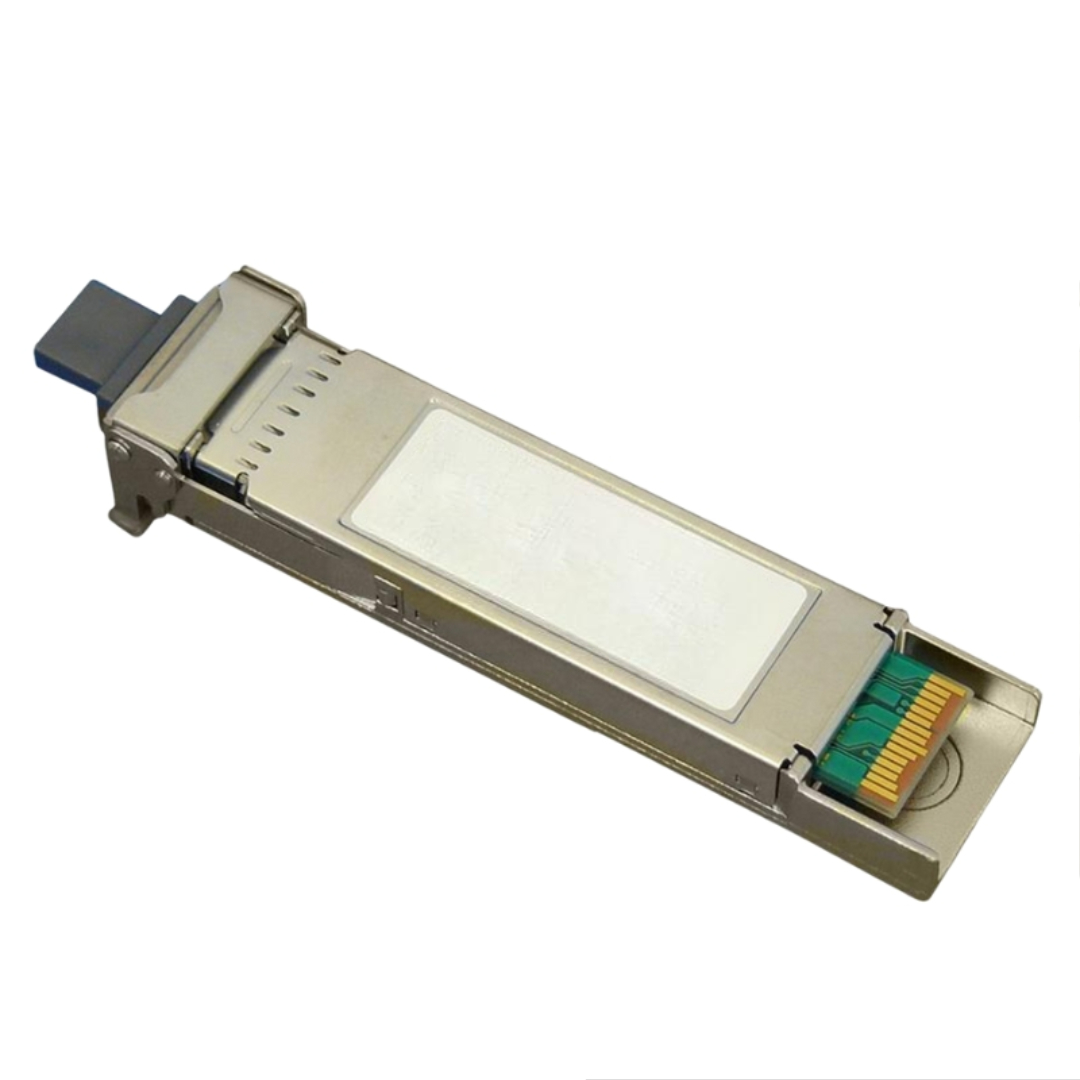


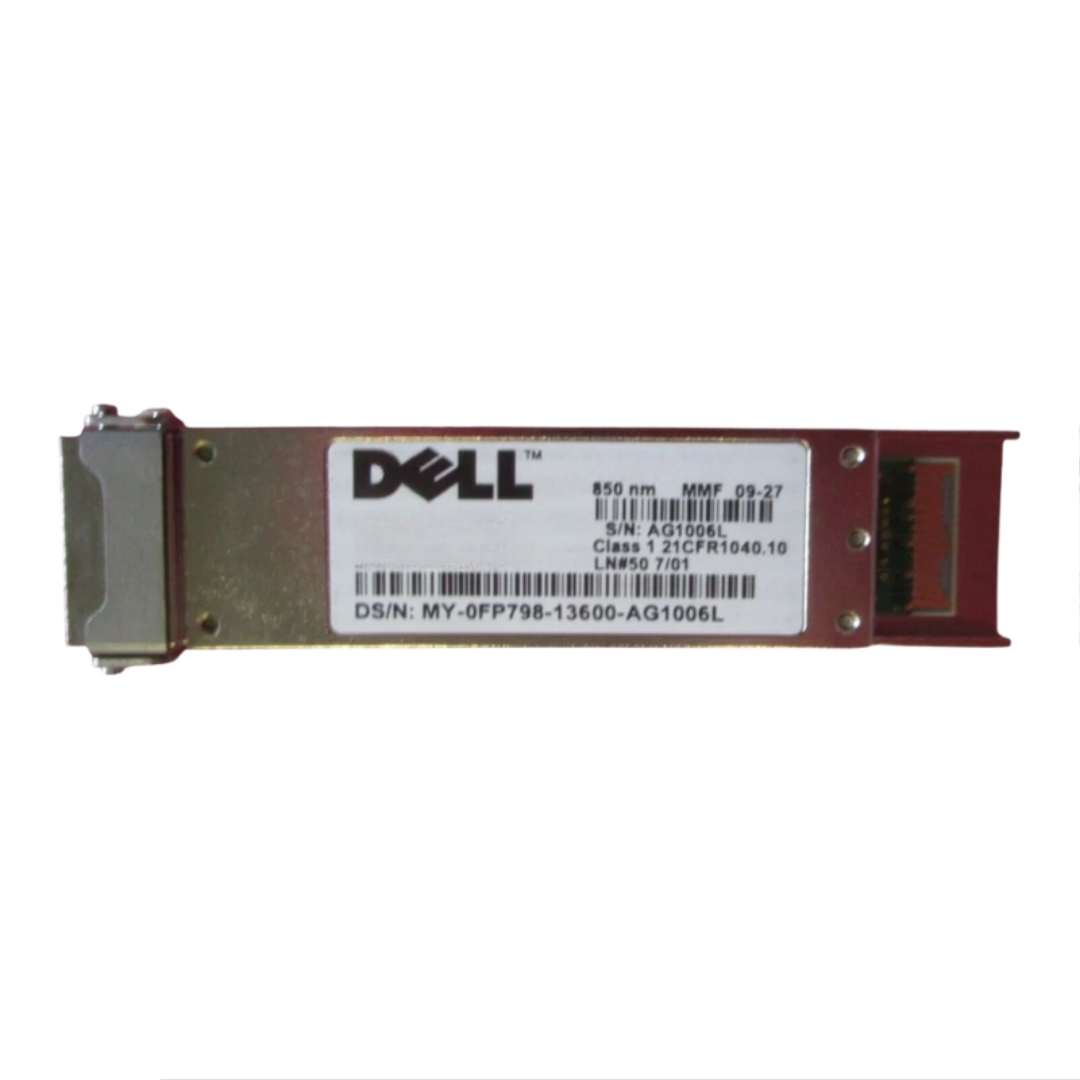
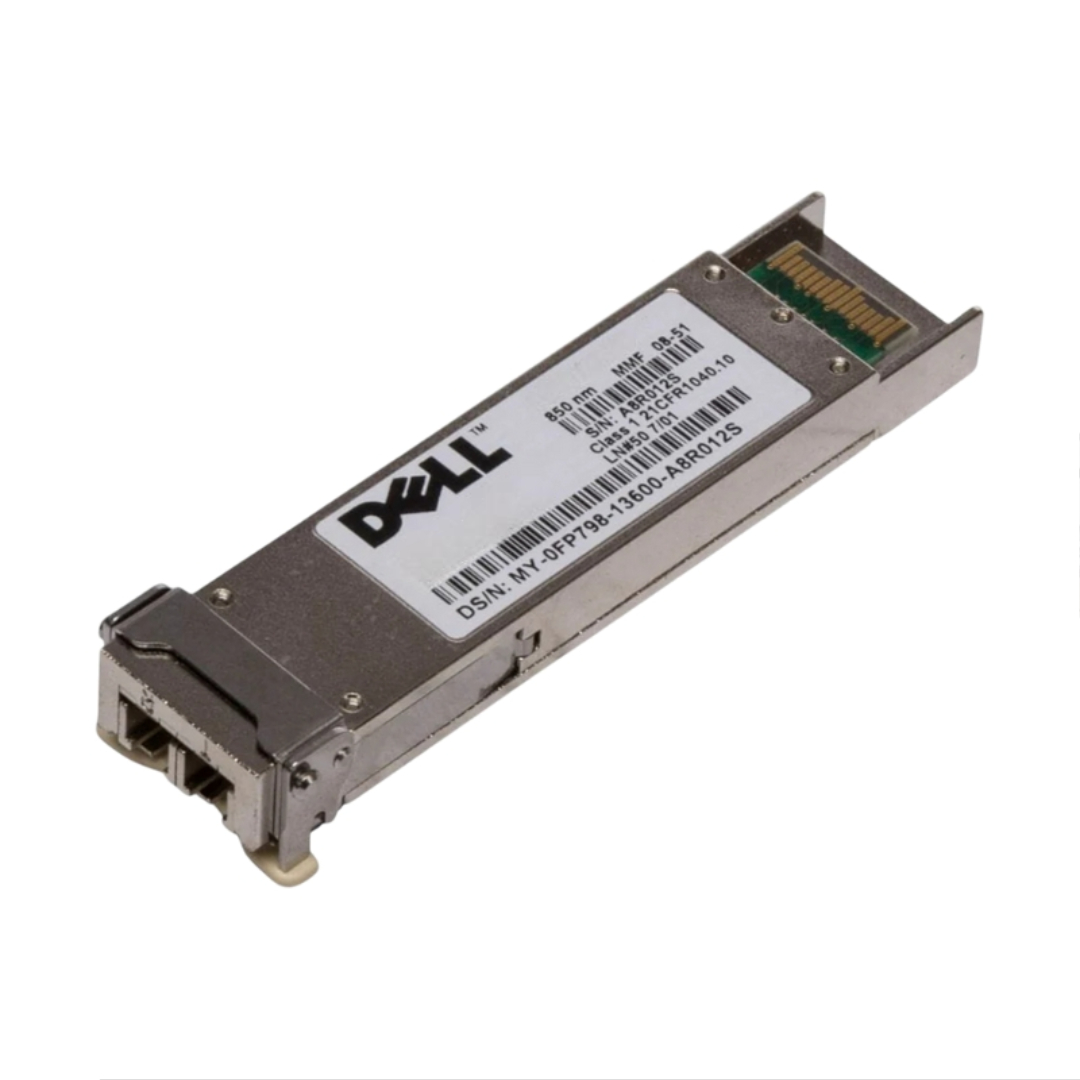
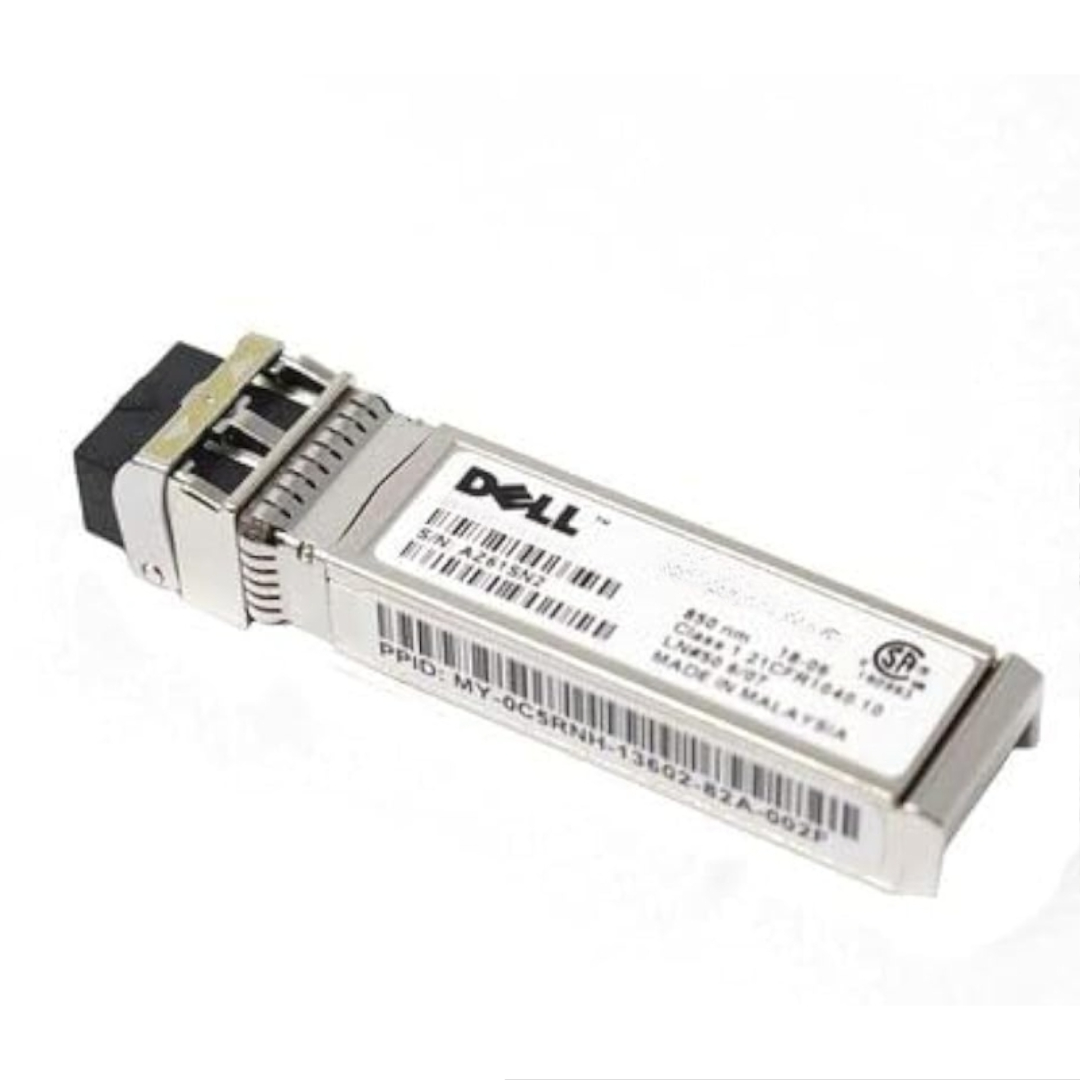
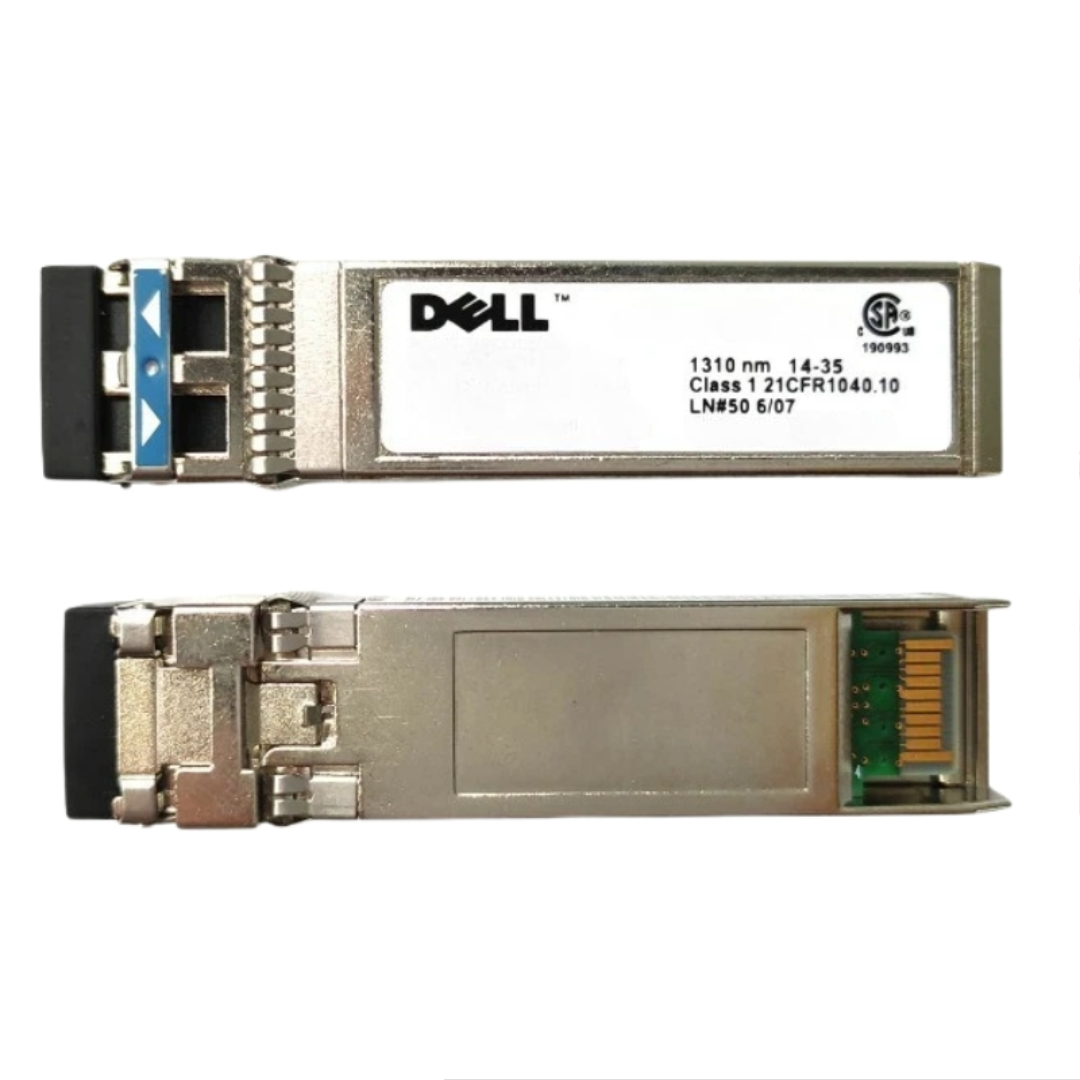
Dell FP798 GBIC 10G XFP Transceiver. Excellent Refurbished with 1 year replacement warranty
The Dell FP798 GBIC 10G XFP Transceiver is a high-performance networking module engineered to deliver reliable and efficient 10 Gigabit connectivity across enterprise-grade environments. Designed for seamless integration into compatible Dell networking infrastructure, this optical transceiver ensures stable data transmission, enhanced bandwidth capacity, and optimized network performance for demanding business operations and data center applications.
Dell FP798 GBIC 10G XFP Transceiver
The Dell FP798 GBIC 10G XFP Transceiver represents a high performance optical networking component designed for enterprise grade data transmission, high bandwidth communication systems, and carrier class infrastructure environments. This transceiver category is engineered to support ten gigabit Ethernet signaling across optical fiber links, enabling long distance, low latency, and highly stable data exchange across distributed networking architectures. It is commonly deployed in environments where consistent throughput, signal integrity, and modular optical scalability are essential to maintain operational continuity and service reliability across mission critical systems.
Modern networking environments depend on optical transceivers to bridge physical connectivity between switches, routers, storage platforms, and long distance communication nodes. The Dell FP798 GBIC 10G XFP Transceiver category is positioned within this ecosystem as a modular interface solution that supports high density optical connectivity while maintaining compatibility with advanced networking hardware platforms. Its design philosophy emphasizes flexibility, thermal stability, optical precision, and seamless integration into enterprise networking infrastructures.
The optical transmission architecture of the Dell FP798 GBIC 10G XFP Transceiver category is centered on the ability to convert electrical signals into optical signals and vice versa with minimal distortion and latency. This conversion process is essential in enabling long range communication across fiber optic channels. The XFP form factor supports ten gigabit per second data rates, making it suitable for backbone networks, aggregation layers, and high throughput interconnect systems.
The architecture is built around precision laser components, photodiode receivers, signal conditioning circuits, and advanced clock recovery mechanisms. These elements work together to ensure that data integrity is preserved even across extended fiber distances. The design supports high frequency modulation, enabling efficient utilization of optical bandwidth and ensuring that enterprise systems can maintain consistent throughput under heavy traffic loads.
Signal conversion efficiency is a critical aspect of this category, as even minor distortions in optical transmission can result in packet loss or retransmission overhead. The Dell FP798 GBIC 10G XFP Transceiver category mitigates these risks through optimized signal amplification, noise reduction mechanisms, and adaptive optical calibration processes that maintain stable communication across variable environmental conditions.
Data center environments rely heavily on optical transceiver modules to support scalable network architectures. The Dell FP798 GBIC 10G XFP Transceiver category is designed to integrate into high density switching fabrics, enabling seamless communication between server clusters, storage arrays, and network distribution layers. Its high speed transmission capability supports virtualization platforms, cloud infrastructure systems, and large scale distributed computing environments.
Within data center topologies, this transceiver category is commonly deployed in aggregation switches and core switching layers where bandwidth demands are significantly higher. The ability to maintain low latency communication is particularly important in environments where real time data processing, financial transactions, or large scale database synchronization occurs continuously.
Thermal stability is another critical requirement in data center environments. The Dell FP798 GBIC 10G XFP Transceiver category is engineered to operate within controlled airflow systems and high density rack configurations without compromising optical performance. Heat dissipation mechanisms and power efficient design ensure that modules remain operational even under sustained workloads.
Cloud computing architectures require reliable and scalable network interconnectivity between physical infrastructure components and virtualized resource layers. The Dell FP798 GBIC 10G XFP Transceiver category plays a key role in supporting these environments by enabling high speed optical links between compute nodes and storage systems.
Cloud environments demand predictable network performance, and optical transceivers contribute significantly to achieving consistent latency and throughput levels. The ability to scale network bandwidth dynamically is essential in multi tenant cloud systems, where workloads fluctuate based on user demand and application requirements.
This transceiver category supports distributed computing models by ensuring that data replication, workload balancing, and service orchestration processes occur without network bottlenecks. The result is improved service availability and enhanced system responsiveness across cloud based infrastructures.
The Dell FP798 GBIC 10G XFP Transceiver category is aligned with ten gigabit Ethernet optical communication standards that define how high speed data is transmitted across fiber optic networks. These standards ensure interoperability between different networking equipment vendors and provide a consistent framework for optical communication.
Ten gigabit Ethernet over fiber is widely used in backbone networks due to its ability to support large data flows with minimal latency. The transceiver category supports both short range and long range optical transmission depending on fiber type and wavelength configuration. This flexibility allows network architects to design scalable systems that meet both metropolitan and global connectivity requirements.
Optical modulation techniques used in this category ensure that data signals remain stable even over long distances. The system is designed to minimize dispersion and attenuation effects that can degrade signal quality in fiber optic communication channels.
The wavelength characteristics of the Dell FP798 GBIC 10G XFP Transceiver category determine its operational range and fiber compatibility. Different wavelength configurations allow the module to operate across single mode and multimode fiber infrastructures. Single mode fiber supports long distance transmission, making it suitable for metropolitan and intercity networks, while multimode fiber is typically used for shorter distance communication within data centers.
Signal propagation within optical fiber is influenced by factors such as attenuation, dispersion, and connector quality. The transceiver category is designed to optimize these variables through precise optical alignment and signal conditioning techniques that reduce transmission errors and enhance communication stability.
Telecommunication networks depend heavily on optical transceivers to manage large scale data transmission across regional and global infrastructures. The Dell FP798 GBIC 10G XFP Transceiver category is suitable for deployment in telecom environments where high bandwidth and reliable connectivity are essential for voice, video, and data services.
In telecom architectures, optical transceivers are used in backbone networks, metro aggregation systems, and long haul communication links. The ability to maintain high data integrity across these environments ensures uninterrupted service delivery to end users.
Carrier grade networks require components that can withstand continuous operation under varying environmental conditions. The Dell FP798 GBIC 10G XFP Transceiver category is designed to meet these demands through robust optical components and stable electrical interfaces.
Network design involving the Dell FP798 GBIC 10G XFP Transceiver category requires careful consideration of fiber optic compatibility, distance requirements, and signal strength parameters. Fiber selection plays a critical role in determining overall network performance and reliability.
Single mode fiber is typically used for long distance communication due to its ability to minimize signal dispersion. Multimode fiber, on the other hand, is used for shorter distances where cost efficiency and ease of installation are important factors. The transceiver category supports integration into both fiber types depending on system configuration requirements.
Network designers must also consider optical power budgets when deploying transceivers. Power budget calculations ensure that signal strength remains within acceptable thresholds across the entire transmission path. Proper planning helps prevent data loss and ensures stable communication across interconnected systems.
Signal integrity is a fundamental requirement in optical networking systems. The Dell FP798 GBIC 10G XFP Transceiver category incorporates advanced signal conditioning mechanisms to maintain stable transmission across varying environmental conditions. These mechanisms reduce noise interference and ensure that transmitted data remains accurate throughout the communication process.
Transmission stability is influenced by factors such as fiber quality, connector cleanliness, and environmental temperature. The transceiver category is designed to mitigate these factors through adaptive optical calibration and robust hardware design.
The hot swappable design of the Dell FP798 GBIC 10G XFP Transceiver category allows network administrators to replace or upgrade modules without shutting down network systems. This capability is essential in environments where continuous uptime is required and service interruptions must be minimized.
Operational efficiency is enhanced through modular design principles that simplify installation and maintenance processes. Network operators can deploy transceivers quickly and efficiently, reducing downtime and improving overall system availability.
Hot swap functionality also supports dynamic network scaling, allowing organizations to adjust capacity based on evolving traffic demands without major infrastructure changes.
The Dell FP798 GBIC 10G XFP Transceiver category often includes digital diagnostic monitoring features that provide real time visibility into operational performance. These monitoring capabilities allow administrators to track parameters such as optical power levels, temperature conditions, and signal quality metrics.
Access to diagnostic data enables proactive maintenance strategies that help prevent network failures before they occur. By continuously monitoring system performance, administrators can identify potential issues and implement corrective actions in advance.
This level of visibility is particularly important in large scale network environments where manual monitoring would be inefficient and error prone.
High density network environments require careful performance optimization to ensure that multiple transceiver modules operate efficiently without interference. The Dell FP798 GBIC 10G XFP Transceiver category is designed to maintain consistent performance even in densely populated switch configurations.
Optimization strategies include efficient power usage, thermal management, and signal isolation techniques. These features help prevent performance degradation when multiple high speed modules are operating simultaneously within the same system chassis.
Network administrators often implement structured cabling systems and airflow management strategies to complement transceiver performance and ensure optimal operational conditions.


 Contact Us
 Information
 Catalog
 Solid State Drives (SSD)
 Network Switches
 Hard Disk Drives
 HBA & Controllers
 PC & Servers
 PC & Server Memory
 CPU & Processors
 Network Routers
 Power Supplies
 Tape Drives & Libraries
 Network Devices
 Computer & Network Cables