(7% discount is applied at checkout)
Cart is empty
Your go-to destination for cutting-edge server products
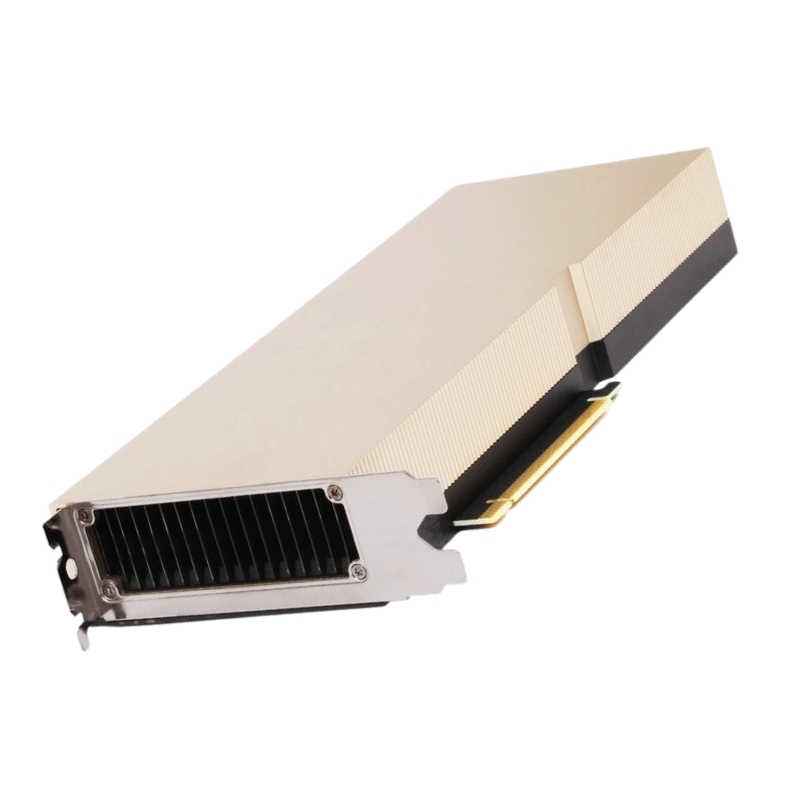


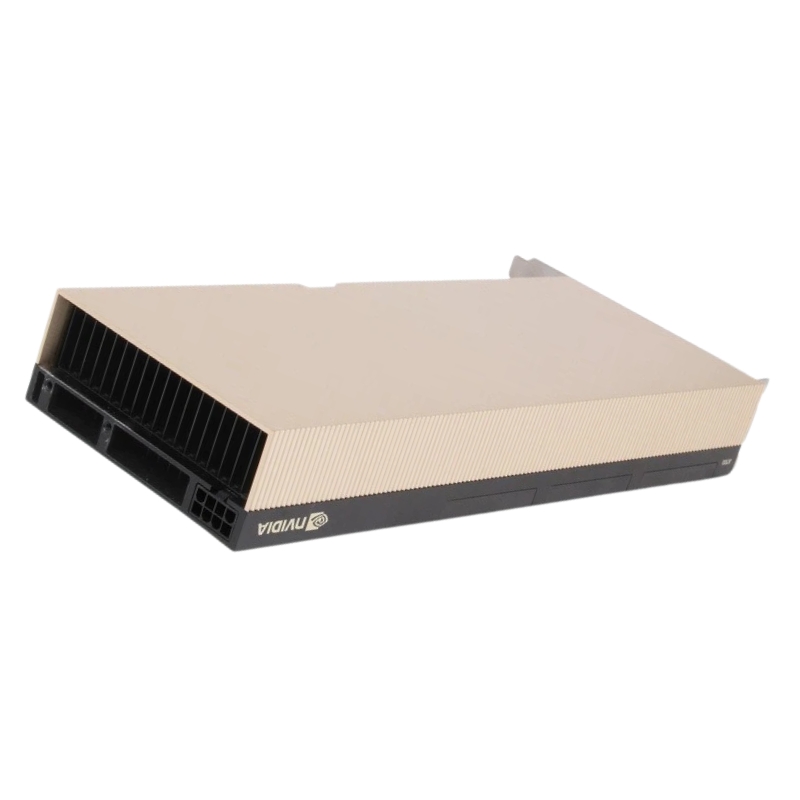
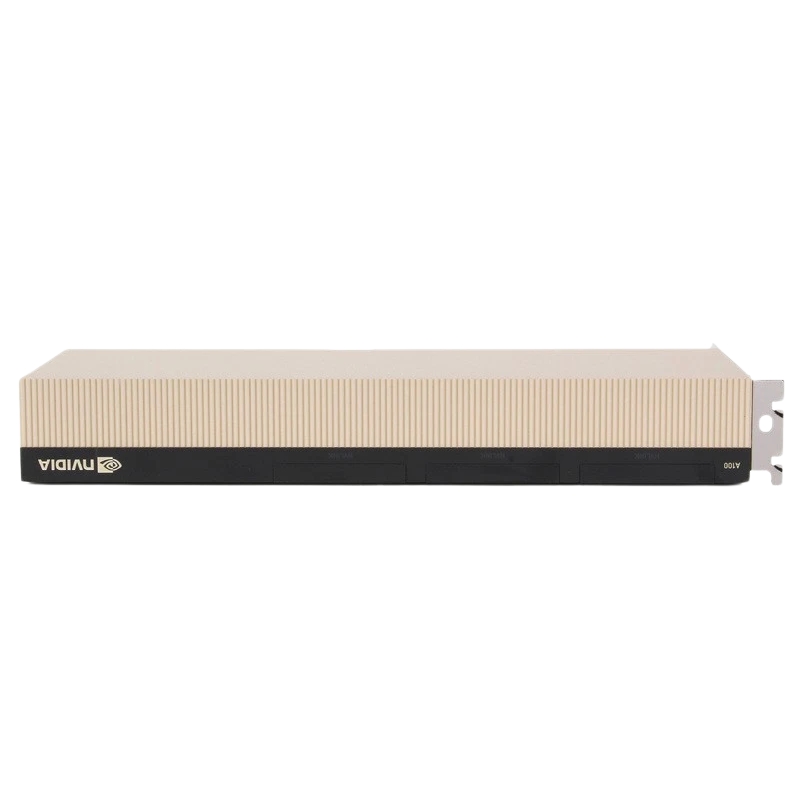
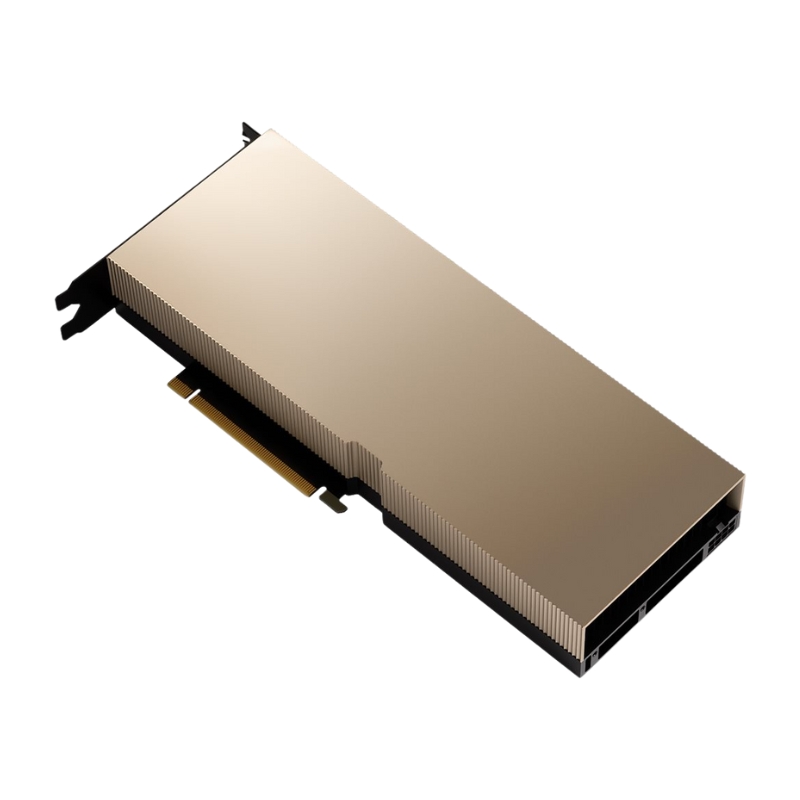
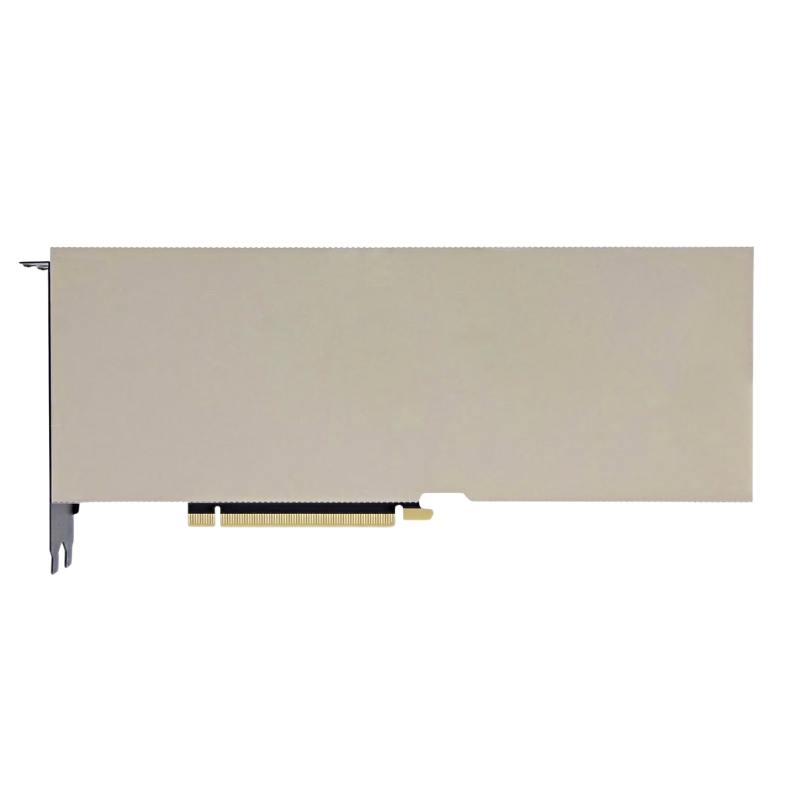
Dell G6JCY Nvidia Ampere A100 PCI-E 300W 80GB Passive Double Wide Graphics Processing Unit. Excellent Refurbished with 1 year replacement warranty
The Dell G6JCY featuring the Nvidia Ampere A100 PCIe 80GB is a data-center class accelerator engineered for large-scale compute, machine learning training and inference, and high-performance scientific workloads. This variant is a passive, double-wide, 300W PCI-Express card designed to integrate into server chassis that provide directed airflow and chassis fans; it occupies two expansion slots and conforms to a full-height, full-length PCIe form factor suitable for mainstream rack servers. The product pairs Ampere architecture advances — including third-generation Tensor Cores, structural sparsity improvements, and HBM2e high-capacity memory — with a PCIe edge connection to deliver wide compatibility with standard server platforms without requiring SXM sockets.
The Dell G6JCY is a passive cooling, double-wide PCIe card engineered for front-to-rear airflow systems. Its passive heatsink design relies on the server's cooling infrastructure rather than an on-board blower or fan. The card's double-slot width requires servers with adjacent slot clearance and appropriate bracket support. Physical integration considerations include chassis depth for the card length and full-height bracket rails. The passive nature means rack systems must be validated for sufficient inlet airflow and exhaust capacity to maintain thermal headroom under sustained 300W loads.
As a PCIe accelerator, this A100 variant uses a PCIe Gen4 x16 interface to maximize host bandwidth for DMA traffic, kernel launches, and host-device transfers. The card's electrical design expects a 300W total board power envelope; system integrators must ensure motherboard PCIe power delivery, auxiliary power connectors (if used in the specific Dell implementation), and power supply margins are sufficient. Typical server deployments allocate headroom per slot for power spikes and thermal dissipation to retain reliability under extended training or simulation sessions.
The defining memory characteristic of this model is the 80GB of high-bandwidth memory, implemented as HBM2e, which provides both high capacity and very high aggregate memory bandwidth. The large on-board memory footprint enables training of larger models and larger batch sizes without out-of-core transfers to host DRAM. For data-intensive inference and mixed precision workflows, the 80GB capacity reduces memory fragmentation and supports very large parameter sets and embeddings directly on the device.
The Ampere GPU architecture in the A100 integrates advanced streaming multiprocessors (SMs) and third-generation Tensor Cores. These Tensor Cores accelerate matrix multiply-accumulate operations across a wide range of precisions including TF32, FP16, BFLOAT16, INT8 and lower precision integer formats used for quantized inference. The architecture also incorporates hardware support for sparsity and compressed matrix math where applicable, enabling higher effective throughput for models and kernels that leverage sparse matrix formats.
MIG capability enables partitioning of a single physical A100 into multiple secure GPU instances, each with dedicated compute, memory, and cache resources. This partitioning allows efficient consolidation of workloads with different size and isolation requirements, from many small inference contexts to larger training jobs that can consume the entire device. The Dell G6JCY supports logical device subdivision through standard MIG controls in Nvidia drivers and the Nvidia Data Center GPU Manager (DCGM) ecosystem, permitting system administrators to allocate and manage GPU slices dynamically.
The device supports a broad precision spectrum and software features that enable migration from research prototypes to production inference. Native support for TF32 provides a matrix math format that approximates FP32 training accuracy while benefiting from Tensor Core acceleration, minimizing code changes for models that were originally developed in FP32. Mixed precision training workflows that combine FP32 master weights with reduced precision compute are fully supported and widely used to accelerate training while preserving model fidelity.
Because the G6JCY is a passive card, system integrators must plan chassis fan curves, airflow paths, and rack cooling capacity. Passive GPU cards are intended for deployment in front-to-rear cooled servers where the server's fan modules force airflow across the heatsink. Thermal management includes ensuring clean air intake, minimal obstruction in the PCIe slot area, and correct orientation in multi-GPU servers to avoid recirculation or thermal throttling. Rack planning should account for the summed heat load of multiple 300W cards, redundant power supplies, and room HVAC capacity.
Each A100 consumes up to 300W under sustained high-utilization workloads. Power planning must ensure power supplies, power distribution units (PDUs), and UPS systems provide continuous support for peak loads plus redundancy margins. In clustered deployments with multiple G6JCY cards, administrators should budget for simultaneous peak consumption and incorporate power sequencing, fuse ratings, and monitoring to prevent thermal and electrical faults. Power efficiency strategies may include dynamic clock and power capping, workload scheduling to distribute peak periods, and host-level power policies exposed via DCGM.
The card integrates into containerized workflows through the Nvidia Container Toolkit and GPU operator solutions for Kubernetes. These integrations enable GPU resource scheduling, monitoring, and metrics export to telemetry systems. For multi-tenant clusters, MIG combined with container runtimes allows per-container GPU allocation with enforced isolation, simplifying secure sharing of GPU hardware among teams or services. Orchestrators can be configured to request devices by MIG slice, full GPU, or through custom device plugins that abstract hardware specifics from application developers.
For inference, the large memory pool supports large batch inference and multi-model consolidation on a single device. Precision reduction, quantization, and graph optimizations further reduce latency and improve throughput when using TensorRT or other inference runtimes. MIG mode allows operators to carve smaller dedicated instances for low-latency, high-isolation inference services while concurrently running batch workloads in larger slices, providing an efficient balance between consolidation and predictable latency.
Compute-intensive HPC kernels benefit from the A100's mixed precision capabilities and wide memory bandwidth. Simulation, computational fluid dynamics, finite element analysis, and other dense linear algebra workloads can leverage GPU accelerated libraries to achieve dramatic reductions in time-to-solution compared to CPU-only runs. While the PCIe form factor provides excellent compatibility, workloads that require node-local GPU interconnects at NVLink scale should be architected with the SXM variant in mind; the Dell G6JCY is optimized for high host interop and single-GPU or modest multi-GPU server configurations where PCIe connectivity is preferred.
Enterprise GPU hardware includes error correction mechanisms and health reporting for device memory and internal data paths. ECC functionality helps mitigate silent errors in memory under heavy compute stress, and telemetry APIs surface corrected and uncorrected error counts. Operators should instrument error thresholds and scheduled maintenance windows to investigate devices that report persistent or increasing error rates.
When deploying multiple Dell G6JCY cards per rack, plan spacing to reduce thermal interference between adjacent GPUs and consider airflow baffles or blanking panels to force proper cooling. Density planning must balance compute density against cooling capacity and power distribution. Hot aisle / cold aisle containment strategies and raised-floor or overhead cooling systems should be evaluated to accommodate the cumulative heat output when many 300W cards are active simultaneously.
Use scheduling policies that align GPU allocation with expected workload duration and resource intensity. Long-running training jobs are often best placed on nodes with full GPU allocations to avoid noisy neighbor contention; conversely, inference microservices may benefit from smaller MIG slices to maximize concurrency. Scheduling systems should incorporate GPU health and thermal telemetry into placement decisions to avoid sudden preemption or throttling related to hardware stress.
Large model workflows often require fast access to training datasets and checkpoints. Coupling the Dell G6JCY with high throughput NVMe or parallel filesystems reduces host-side transfer bottlenecks and keeps the GPU compute pipelines saturated. Checkpoint strategies that use incremental or asynchronous snapshotting minimize training interruptions and reduce the frequency of large host-device transfers.
The combination of high memory capacity and tensor acceleration makes this GPU well suited to pretraining transformer models and to fine-tuning large models with sizable contexts. Training regimes that require large sequences or large attention matrices benefit from the 80GB device memory, enabling researchers and engineers to iterate faster and reduce distributed memory complexity.
Recommendation models that rely on large embedding tables can place embeddings directly in GPU memory to accelerate candidate scoring and nearest neighbor computations. The high capacity reduces the need for sharding embeddings across many devices and enables more compact inference topologies with fewer internode communications.
MIG and container tooling enable service providers and enterprises to consolidate diverse GPU tasks — from small, latency-sensitive inference endpoints to medium-sized development jobs — on the same physical hardware. This consolidation improves utilization and lowers total infrastructure cost while preserving performance isolation through logical slicing.


 Contact Us
 Information
 Catalog
 Solid State Drives (SSD)
 Network Switches
 Hard Disk Drives
 HBA & Controllers
 PC & Servers
 PC & Server Memory
 CPU & Processors
 Network Routers
 Power Supplies
 Tape Drives & Libraries
 Network Devices
 Computer & Network Cables