
(7% discount is applied at checkout)
Cart is empty
Your go-to destination for cutting-edge server products
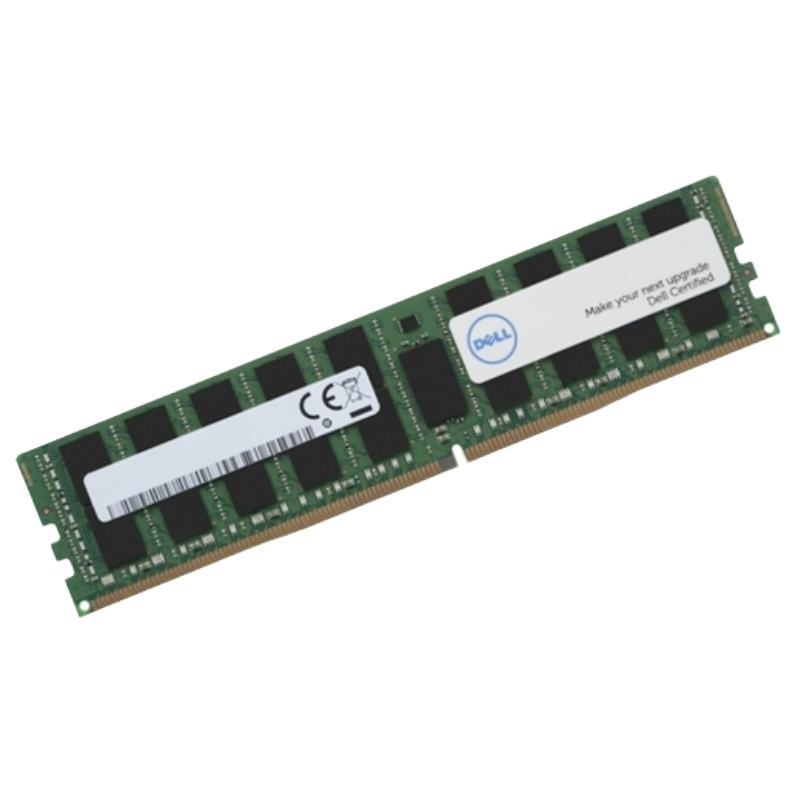
Dell GD7H7 128GB DDR5 PC5-44800 Registered CL46 SDDR5 288-pin RDIMM Memory Module. New Sealed in Box (NIB) - Hynix Version
| SKU/MPN | Warranty | Price | Condition | You save |
|---|---|---|---|---|
| GD7H7 | 1 Year Warranty | $6,144.00 | New (System) Pull | You save: $2,150.40 (26%) |
| GD7H7 | 1 Year Warranty | $8,160.00 | New Sealed in Box (NIB) | You save: $2,856.00 (26%) |
The Dell GD7H7 128GB DDR5 Registered Memory Module is engineered to deliver exceptional performance, stability, and efficiency for enterprise-grade servers. Designed with the latest DDR5 technology, this high-capacity RDIMM enhances multitasking, accelerates data processing, and ensures optimal reliability for mission-critical workloads.
Supported Server Models
The Dell GD7H7 128GB DDR5 PC5-44800 Registered CL46 SDDR5 288-pin RDIMM Memory Module represents a powerful advancement in server memory technology, specifically engineered for modern enterprise workloads that demand higher bandwidth, expanded capacity, improved stability, and exceptional efficiency. This memory module stands within the high-performance DDR5 RDIMM category, a class designed to meet the evolving needs of data centers, virtualization infrastructures, cloud platforms, and mission-critical enterprise applications. Its combination of massive 128GB capacity, PC5-44800 speed rating, and registered architecture ensures an optimized computing environment where speed and reliability work seamlessly together.
DDR5 technology marks a major leap forward from previous generations, especially in reliability, performance, and scalable operation within demanding server environments. The Dell GD7H7 uses this new generation to deliver significantly higher bandwidth compared to DDR4, enabling faster data transfer while reducing latency and improving multitasking potential across heavy workloads. With the growing need for instantaneous data processing, large-scale analytics, distributed computing, and AI-driven workloads, DDR5’s enhancements directly translate into more efficient resource utilization and superior handling of complex computational tasks.
The Dell GD7H7 operates at an impressive PC5-44800 speed rating, which allows it to manage extremely data-intensive operations without bottlenecking. Higher bandwidth is especially beneficial for applications such as machine learning, engineering simulations, virtualized environments, and large database operations. As organizations adopt more advanced tools, analytics, and cloud frameworks, the demand for ultra-fast memory modules grows. DDR5 memory modules like the GD7H7 ensure that servers maintain the speed required to support concurrent operations and large data flows.
Registered DIMMs feature an integrated register between the DRAM modules and the memory controller. This design stabilizes memory signals and enables servers to support much larger memory capacities without compromising performance or reliability. The Dell GD7H7 benefits from this architecture by providing consistent high-level performance even when multiple RDIMM modules operate in demanding server configurations. The registered design is especially crucial in enterprise-grade systems where uptime, data integrity, and sustained performance are non-negotiable.
A single 128GB RDIMM holds immense potential for servers that need substantial memory pools to run virtual machines, process extensive datasets, and support expansive enterprise applications. Many modern organizations rely on servers that must manage dozens or hundreds of virtual instances simultaneously. The large capacity offered by the Dell GD7H7 ensures that systems can provide sufficient allocations for each workload without introducing performance degradation. It also supports improved scalability since multiple modules can be deployed to reach terabytes of system memory when required.
Modern enterprises increasingly work with real-time data, whether in financial trading, online transaction processing, cyber threat analysis, or IoT-driven data streams. Real-time operations require high-speed memory capable of handling rapid read-and-write cycles without latency spikes. With its DDR5 architecture and powerful 128GB capacity, the Dell GD7H7 provides the responsiveness needed to support ongoing data-driven decision-making processes, ensuring that servers continually deliver reliable performance in live environments.
Understanding the specific technical characteristics of this module helps illustrate its positioning within the enterprise-grade memory landscape. The Dell GD7H7 features 288 pins, following the standard RDIMM form factor for DDR5 memory. This ensures compatibility with a wide range of server platforms designed to maximize power efficiency and thermal performance. The module's CL46 latency value supports optimized timing, enabling effective balance between high speed and reliable system response.
The PC5-44800 specification indicates that the module can deliver a transfer rate of up to 44.8GB/s, significantly surpassing the performance metrics of DDR4 memory. This makes it suitable for next-generation applications including high-frequency trading simulations, AI model training, machine learning data pipelines, and high-performance computing clusters. By enabling quick data access and minimizing delays, this memory module supports superior workload orchestration.
The 288-pin RDIMM remains the standard interface for DDR5 server memory, ensuring proper mechanical and electrical connection within high-performance server motherboards. The SDDR5 subtype employed in this module supports improved efficiency, enhanced error correction, and greater stability under heavy computational loads. Servers built with DDR5 RDIMM compatibility are engineered to accommodate dual independent memory channels, which further improves data transfer efficiency.
CAS Latency (CL) plays a crucial role in memory response performance. With a CL46 rating, the Dell GD7H7 strikes a balance between high-frequency operation and the predictable timing required for stable enterprise system performance. Lower latency values are ideal, but as memory frequencies increase dramatically—as seen in DDR5 modules—CAS timings naturally expand. However, DDR5 memory compensates for this by introducing architectural improvements that ultimately reduce real-world latency and enhance throughput.
DDR5 technology integrates power management circuitry directly on the module, rather than relying on the motherboard. This enhances voltage regulation accuracy and reduces energy waste while improving thermal consistency. The Dell GD7H7 benefits from these innovations, making it a more efficient option for large-scale server deployments. The improved power distribution contributes to better stability, longer component life cycles, and reduced cooling demands across data center infrastructures.
The transition to DDR5 memory is essential as organizations modernize their infrastructure to handle rapidly evolving computing demands. The Dell GD7H7 enables enterprises to expand their memory capabilities significantly, ensuring that their systems remain relevant and efficient for years to come. DDR5 offers improved scalability through double the density potential of DDR4, allowing server manufacturers to design platforms supporting extremely large memory capacities.
Large-scale server environments often run multiple simultaneous workloads, each requiring dedicated memory bandwidth. DDR5’s enhanced channel architecture and higher transfer speeds help maintain consistent performance, even during peak operational periods. The Dell GD7H7 128GB module supports efficient multitasking and ensures seamless transitions between workloads without performance losses.
ECC (Error-Correcting Code) capabilities are fundamental in enterprise memory modules, and the Dell GD7H7 benefits from advanced error-correcting technology built into DDR5 RDIMMs. These capabilities minimize system crashes, protect data integrity, and support continuous uptime—essential factors for mission-critical industries including finance, healthcare, telecommunications, and manufacturing systems.
Many servers require running multiple high-capacity RDIMM modules simultaneously. The registered architecture of the Dell GD7H7 ensures stable performance under these setups. By reducing electrical load on the memory controller, the design allows systems to maintain speed and consistency even when fully populated with high-density modules.
Modern server platforms, especially those powered by next-gen Intel Xeon and AMD EPYC processors, are built to leverage DDR5 memory improvements. The Dell GD7H7 aligns with these architectures, enabling organizations to take full advantage of cutting-edge computing performance, optimized CPU-memory synergy, and improved power efficiency.
The Dell GD7H7 module is built for seamless compatibility with Dell’s server platforms as well as other systems supporting DDR5 RDIMM memory. Its adherence to JEDEC DDR5 standards ensures broad support, predictable operation, and secure integration into data center environments adhering to best practices in hardware configuration.
Many Dell PowerEdge servers are engineered with native support for DDR5 RDIMMs, enabling businesses to upgrade their systems with the GD7H7 module easily. The memory’s firmware and architectural design align closely with Dell’s standards, promoting improved stability, efficiency, and performance within these systems.
As organizations grow, memory requirements naturally increase. The GD7H7 module supports scalable deployments where multiple modules can be added over time, enabling servers to meet new demands without needing a full hardware replacement. This incremental upgrade capability offers cost efficiency and operational flexibility.
In multi-DIMM configurations, the stability and error correction of DDR5 RDIMMs become essential for maintaining system reliability. The Dell GD7H7 integrates robust ECC mechanisms, consistent signal stability, and reduced electrical strain, making it suitable for organizations that rely on large memory pools for mission-critical services.
DDR5 memory modules work within dual-channel architecture to maximize performance. The GD7H7 fully supports this enhancement, enabling servers to operate at peak efficiency where bandwidth is distributed evenly across memory channels. This improves performance across analytics platforms, multi-threaded applications, and virtualization frameworks.


 Contact Us
 Information
 Catalog
 Solid State Drives (SSD)
 Network Switches
 Hard Disk Drives
 HBA & Controllers
 PC & Servers
 PC & Server Memory
 CPU & Processors
 Network Routers
 Power Supplies
 Tape Drives & Libraries
 Network Devices
 Computer & Network Cables